We build these things, so you already know which way I lean. That is exactly why I want to be blunt about the opposite case: most people who ask whether to upgrade an ATN thermal scope to Generation 6 are asking the wrong question. The right one is narrower. What specifically is your current scope failing to do on the nights you actually hunt? If you can answer that in one sentence, the decision takes about two minutes. If you cannot, the honest advice is to keep your money and keep hunting. Below is the case for moving to Gen 6, the case for staying where you are, and the line I would draw between them.
Upgrade if your complaints are about the picture — mush at the far end of the field, a washed-out image on humid nights, no usable footage of the shot. Stay put if your complaints are about where you sit, how you call, or how you shoot. A new sensor fixes the first list and none of the second.
Stay or move: the short comparison
| Stay with the scope you own | Move to Generation 6 | |
|---|---|---|
| Cost tonight | Zero. The rifle is already zeroed and you already know the menus. | $2,295 promotional on the ThOR 6 640x512 | 2-16x, against a $3,625 list price. A 384×288 Gen 6 scope starts lower. |
| Sensor | Whatever you bought it for. You already know its limits. | 640×512 on a 12µm pixel pitch, 50 Hz, ≤15mK NETD. |
| Image processing | Unchanged. | SharpIR AI enhancement on the live image, running in real time. |
| Reach and frame | Known quantity on your ground. | 3100 m published detection range, 12.52° × 9.41° field of view on the 35 mm model. |
| Display | Whatever it has. | 0.49-inch 1920×1080 OLED. |
| Recording | Depends on your device. | Recoil Activated Video, up to 10 seconds either side of the shot, with audio, to 64 GB internal storage. |
| Power | Your current setup, and you know how long it lasts. | One internal plus one replaceable 18650, around 9 hours, USB Type-C external power, under 7 seconds from cold start. |
| Build | It has survived this long. | Magnesium alloy, IP67, 6000 Joules recoil rating, −30°C to 55°C, 830 g / 1.83 lbs, 5-year warranty. |
| Mounting | Already mounted. | 30 mm rings on the full-size ThOR 6; the ThOR 6 Mini mounts to a Picatinny rail instead. |
How staying on an older generation works
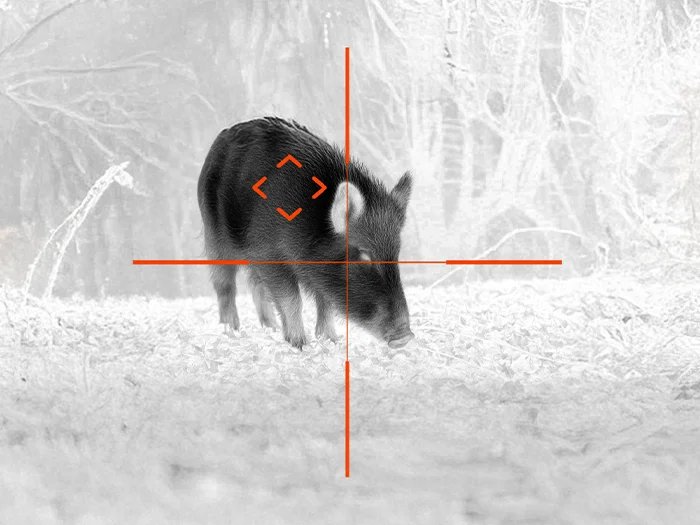
It works fine, and that is the part the industry never says out loud. A Gen 4 or Gen 5 scope that holds zero, survives recoil and shows you an animal at the distance you shoot is doing its job. Nothing about a newer sensor expires the one you own. The honest limits of an older generation are the ones you already feel: the image gets soft earlier when you zoom, thin-contrast nights look worse than clear cold ones, and every improvement made since then lives in a box you do not have. Muscle memory counts too. You know your menus, your reticle, your zero and your battery habits, and there is a real cost to throwing that away in the middle of a season.
How Generation 6 works
Three layers, and they stack. The sensor comes first: a 12µm VOx uncooled focal plane array at 640×512, running 50 Hz with ≤15mK thermal sensitivity. More pixels across an animal, a faster refresh behind a moving one, and a lower noise floor on the nights when a field and the deer standing in it are nearly the same temperature. Then processing: SharpIR AI runs on the live image rather than on saved footage, sharpening edges and target contrast as you watch. Then the display: a 0.49-inch, 1920×1080 OLED, so the cleaner signal is not thrown away at the last step. On top of that sit the things you touch — ten reticle styles with transparency control, Zeroing Freeze, Picture-in-Picture, Hot Point Tracking, a digital focus ring, six palettes, 64 GB of storage and a Wi-Fi link to the ATN Connect 6 app, which carries an AI assistant trained on the product's own manual.
When to stay where you are
Stay if you shoot inside 150 yards. At that distance resolution stops being the limiting factor and your shooting is. Stay if your current scope still holds zero through a season and you have not had a failure. Stay if the nights you miss animals are nights you picked the wrong field, not nights you could not see. Stay if you hunt four or five times a year — the per-outing cost of a new optic gets silly fast at that rate, and the money does more for you in a thermal handheld for scanning or in a better rest. And stay if you are mid-season with a zero you trust. Changing optics in October is a decision people regret in November. Buy in the spring, break it in on hogs through the summer, trust it by fall.
When to upgrade
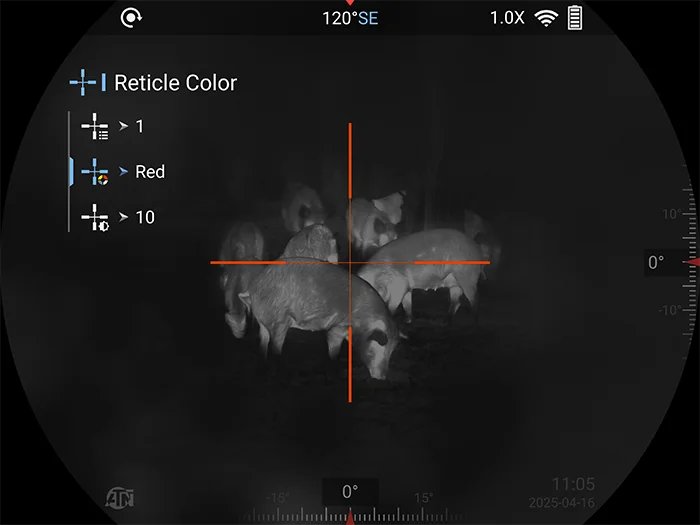
Upgrade when your complaint is the picture. If the honest description of your bad nights is that the animal turned into a smudge before you could tell what it was, that is a resolution and sensitivity problem, and 640×512 at ≤15mK is the direct answer. Upgrade if you hunt humid country or wet, mild winters, because thin thermal contrast is precisely what a lower noise floor buys back. Upgrade if you need the footage — landowners, depredation permits, anything you have to document — because Recoil Activated Video captures up to 10 seconds either side of the shot with audio without you touching a button. Upgrade if long nights are your normal, since nine hours on one internal and one replaceable 18650, plus USB Type-C power, changes how you plan. And upgrade if you are running a second rifle anyway. Then it is not a replacement, it is a second scope, and the maths is different.
The scope I would put on the rifle
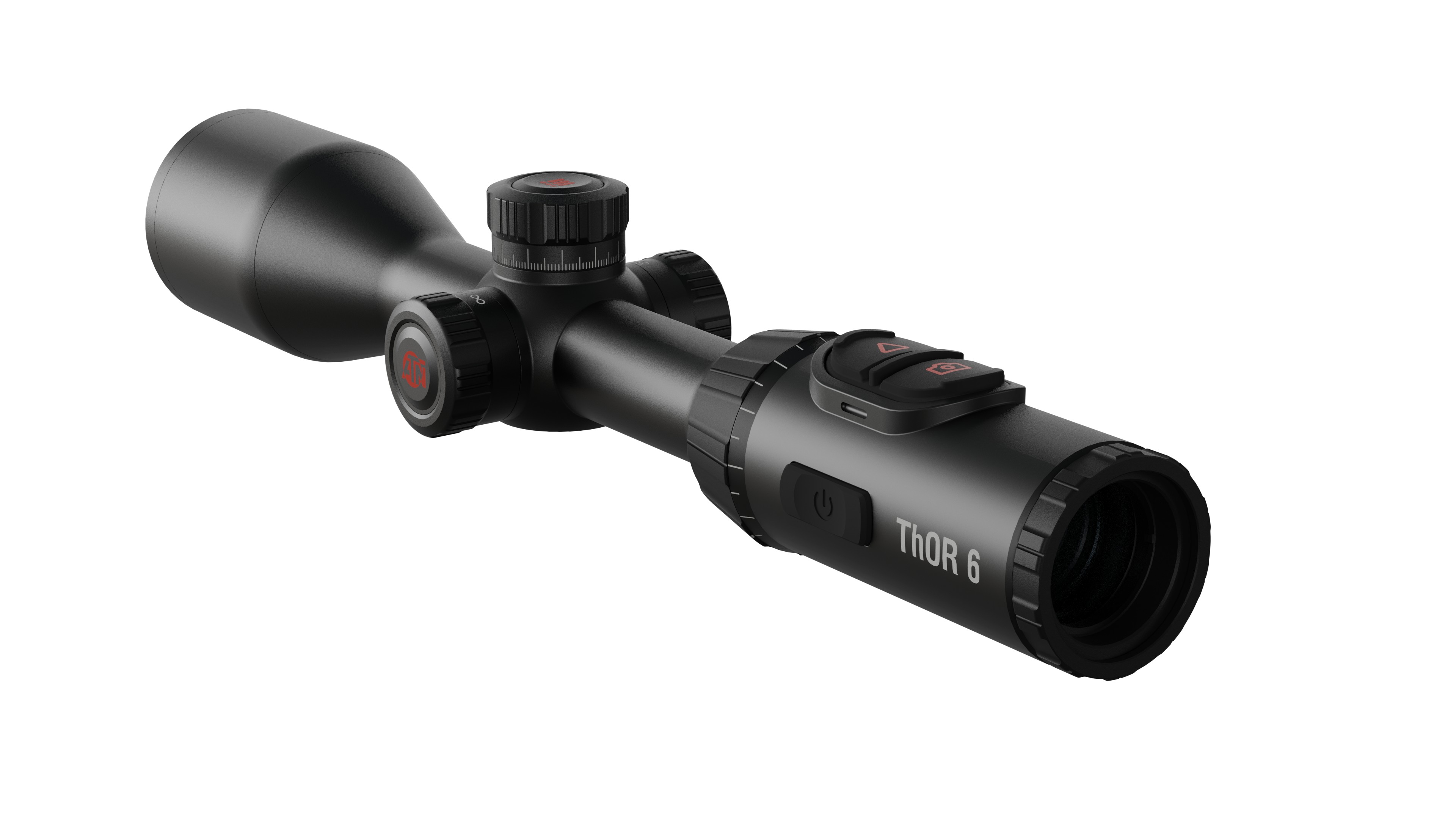
The ATN ThOR 6 640x512 | 2-16x is the one I would buy, and the reason is the frame. It runs that 640×512, 12µm array at 50 Hz and ≤15mK behind a 35 mm germanium objective at F/1.0, giving 12.52° × 9.41° of view and 3100 m of published detection range, with digital zoom at 1×, 2×, 4× and 8×. Magnesium alloy, IP67, 6000 Joules, −30°C to 55°C, 830 g / 1.83 lbs, 30 mm rings, 5-year warranty. $3,625 list, $2,295 promotional. Want more reach and accept a narrower window? The 3-24x on a 50 mm objective goes to 3650 m at 8.78° × 6.59° and lists at $4,175 with a $2,595 promotional price. Want the lowest cost of entry into Gen 6? The 384×288 2.5-20x holds the same ≤15mK sensitivity on a 25 mm objective, 2300 m, 790 g, at $2,195 list and $1,595 promotional. Want light? The ThOR 6 Mini 640x512 | 2-16x comes in at 540 g / 1.19 lbs with ≤18mK, 3000 m and a 12.5° × 10.0° frame — and note it mounts to a Picatinny rail, not to 30 mm rings, so budget for the right mount.
Upgrading to Gen 6: common questions
Is upgrading a thermal scope worth it?
It is worth it when your bad nights are picture problems rather than hunting problems. Resolution, thermal sensitivity and real-time image processing fix soft images and low-contrast scenes. They do not fix wind, position or marksmanship, and no sensor ever has.
What is the biggest difference in the sixth generation?
The combination rather than any single number: a 640×512 sensor on a 12µm pitch at ≤15mK, SharpIR AI processing on the live image, and a 1920×1080 OLED to show the result. Each link in that chain limits the others, which is why they moved together.
Will my old mount and rings fit a new ATN scope?
Check the model. The full-size ATN ThOR 6 uses 30 mm rings, which are not included. The ThOR 6 Mini mounts to a Picatinny rail instead, so a ring set from an older build will not carry over to it.
Do I have to re-zero after upgrading?
Yes, every time an optic changes. Zeroing Freeze makes it quick: the image pauses at the moment of impact so you can move the reticle onto the hole without rushing, and the scope stores separate weapon profiles.
Is the ThOR 6 640 or the 384 the better upgrade?
The 640×512 if you shoot past a couple of hundred yards or need to tell animals apart at distance. The 384×288 2.5-20x carries the same ≤15mK sensitivity and lists 2300 m of detection at $2,195 list and $1,595 promotional, which makes it the sensible entry into the generation.
Can I trade in or sell my current scope toward it?
Many owners do, and I would rather see an older optic go to a new hunter than sit in a safe. Check current offers on atncorp.com before you commit, since promotional pricing changes and affects the real cost of the move.
How long does a Gen 6 scope last before it is outdated?
Generations arrive every few years, and that has never made the previous one stop working. Buy for the nights you hunt now. The five-year warranty on these scopes is a better planning horizon than the release calendar.
The verdict
Buy this if your picture gives out before your shooting does, if you hunt humid or mild-winter country, or if you need video of every shot without touching a button. Skip this if you shoot close, hunt a handful of nights a year, or are mid-season with a zero you trust. I have spent thirty years building this category, and the thing I keep relearning is that the best optic is the one you have practised with. If that is still true for you, wait. If it is not, the field review of the Gen 6 line covers half a year of use, the processing story is in how SharpIR AI actually works, and the current lineup is on the ATN thermal scopes page.