It's 9 p.m. on the edge of a 200-acre pasture, and you're deciding what to carry: a spotting scope, a night vision monocular, a rangefinder, and a thermal handheld — or one device that does all four jobs. That decision gets made every night before boots hit gravel, and it decides how much of the property you actually cover before your arms give out. The best thermal binoculars solve this by putting thermal detection, 4K daylight glass, and a laser rangefinder behind two eyepieces instead of scattering that capability across three bags.
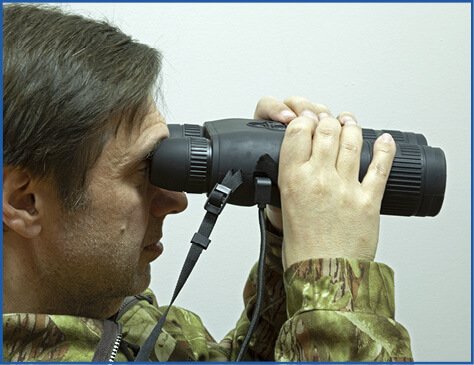
This isn't a nostalgia pitch for old-school glassing. It's an operational one. Two-eyed viewing reduces eye strain over a four-hour sit, gives you depth perception a monocular can't, and — when the unit is multispectral — lets you switch from daylight recon to thermal detection to night vision without swapping gear. That's the angle this guide takes: which binocular gets you through a full night without forcing a gear change, and why the ATN Binox-6 Dual 640 3-24x (MSBNB6635A) is the one currently doing that job across the widest range of conditions.
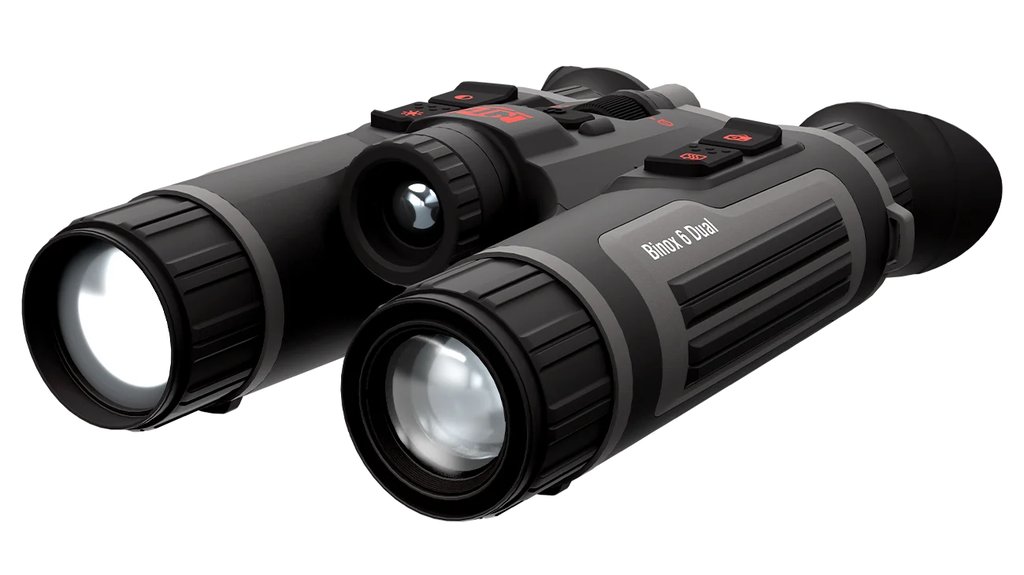
The ATN Binox-6 Dual 640 3-24x pairs a 640×512 thermal sensor with a 4K daylight camera and a built-in laser rangefinder in one magnesium-alloy body, so you can glass at dusk, confirm heat signatures after dark, and range a target without reaching for a second device.
Quick answer: best thermal binoculars by use case
- Best overall: ATN Binox-6 Dual 640 3-24x (MSBNB6635A) — 640×512 thermal, 4K day sensor, built-in LRF, four vision modes in one housing.
- Best for extended-range detection: ATN Binox-6 Dual 640 3-24x — 3,100 m thermal detection range on the 640 sensor.
- Best for lower-light daylight work and closer glassing: ATN Binox-6 Dual 384 5.5-44x (MSBNB6335A) — same 4-in-1 architecture on a 384×288 thermal sensor.
- Best for long observation sits: ATN Binox-6 Dual 640 3-24x — 8-hour battery life on two swappable 18650 cells.
- Budget-conscious pick within the platform: ATN Binox-6 Dual 384 5.5-44x — same feature set, lower thermal resolution, lower price point.
Why the latest generation of thermal binoculars stands out
The generation gap here isn't marketing. ATN's 6th Generation thermal engine runs a 12 μm VOx uncooled focal plane array at ≤15 mK sensitivity with a 50 Hz refresh rate — the difference between a heat blob that might be a hog or might be a rock, and a shape you can call with confidence at distance. Pair that with a 1.8" CMOS sensor delivering true 4K Ultra HD (3840×2160) for daylight and twilight work, and you've collapsed what used to be two separate optics — a daytime binocular and a handheld thermal — into one unit that switches modes instead of bags.
The practical gain is workflow. Glass a treeline in Day mode at dusk, watch the light drop and flip to Twilight mode without losing contrast, then go full Thermal when it's dark enough that color vision stops being useful. Each transition happens on the same eyepieces, at the same interpupillary setting, without you breaking position or fumbling for a second device in the dark.
Thermal binocular comparison
| Model | Thermal sensor | NETD | Magnification | Detection range | Battery | Weight | Price |
|---|---|---|---|---|---|---|---|
| Binox-6 Dual 640 3-24x (MSBNB6635A) | 640×512 | ≤15 mK | 3-24x (8x digital) | 3,100 m | ~8 hrs | 730 g / 1.61 lbs | $3,955.00 |
| Binox-6 Dual 384 5.5-44x (MSBNB6335A) | 384×288 | ≤15 mK | 5.5-44x (8x digital) | 2,750 m | ~8 hrs | 720 g / 1.59 lbs | $3,185.00 |
Best overall: ATN Binox-6 Dual 640 3-24x
This is the featured pick because it's built around the sensor combination that actually matters for glassing: a 640×512 thermal core paired with a 4K daylight sensor, both behind the same two eyepieces.
Image quality
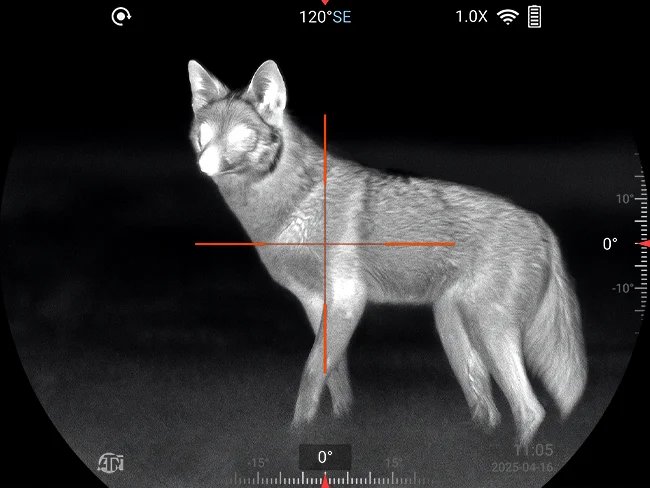
The 640×512 sensor at ≤15 mK NETD resolves fine temperature differences — the kind that separate fur texture from background clutter at range. SharpIR AI image enhancement sharpens edges in real time, and Wide Dynamic Range keeps detail visible in both the hot and cold parts of the same frame, so you're not blowing out a warm animal against a cold background or losing it against a warm one. DeFOG mode kicks in automatically when mist or thermal bloom starts softening contrast. On the daylight side, the 1.8" CMOS sensor delivers 3840×2160 resolution — enough to read brand markings on a distant gate, not just confirm something is there.
Range and magnification
3-24x optical magnification on the thermal channel, with an additional 8x digital zoom (1x/2x/4x/8x steps) for closing in without moving. ATN rates detection range at 3,100 m on the 640 sensor — that's identification of a heat source at distance, not just knowing something is out there. The built-in laser rangefinder measures out to 1,000 yards with ±1 m accuracy, so once you spot something worth confirming, you range it without lowering the binocular.
Battery and build
Two replaceable 18650 rechargeable batteries deliver roughly 8 hours of continuous operation, and the USB-C port accepts external power banks if you're running an all-night sit. The housing is magnesium alloy — impact-resistant, dustproof, IP67 waterproof-rated — built for a device that's going to ride in a truck console and a chest harness in the same week. Working temperature range runs -30°C to 55°C, so cold-weather predator work in January isn't a concern.
Smart features
Hot Point Tracking automatically flags the hottest object in the frame — useful when you're scanning a large field fast and don't want to miss a bedded animal against warm ground. Six color palettes (White Hot, Black Hot, Iron Red, Alarm, Green Hot, Sepia) let you match the palette to conditions. Built-in Wi-Fi through the ATN Connect 6 app streams live video to a phone or tablet, and 64 GB of onboard storage records 4K daytime and 1080p thermal video directly to the device — useful if you need to document activity on a property, not just observe it.
Buy this if: you want one binocular that covers daylight glassing, twilight transition, thermal detection, and ranging without a gear swap, and you're covering enough ground per night that eye strain from a monocular is a real cost.
Skip it if: you only ever glass in daylight and never need thermal — a dedicated 4K day binocular will be lighter on your budget.
Best for lighter budgets on the same platform: ATN Binox-6 Dual 384 5.5-44x
Image quality
The 384×288 sensor carries the same ≤15 mK NETD rating and the same SharpIR, WDR, and DeFOG processing as the 640 model — the difference is resolution, not sensitivity. You still get sharp, stable thermal imaging, just with less fine detail at long range. The 4K daylight sensor and Night Vision Mode with IR illuminator are identical across both models.
Range and magnification
5.5-44x magnification range with the same 8x digital zoom, and a detection range of 2,750 m — still well beyond what most properties require for a full scan. The same 1,000-yard laser rangefinder is built in.
Battery and build
Same two-battery 18650 setup, same ~8-hour runtime, same magnesium alloy IP67 housing at nearly identical weight (720 g vs. 730 g).
Smart features
Every feature on the 640 model carries over: Hot Point Tracking, six color palettes, Wi-Fi streaming through ATN Connect 6, GPS, compass, and 64 GB onboard recording.
Buy this if: your glassing distances are realistic — most properties don't need 3,100 m of detection range — and you'd rather put the savings toward ammunition or a mount.
Skip it if: you regularly work open country where the extra resolution of the 640 sensor pays for itself in identification distance.
How to choose the right thermal binoculars
Start with distance. If most of your glassing happens inside 500 yards — brush country, tree lines, tight pastures — a 384 sensor identifies plenty. If you're working open pasture, agricultural fields, or anywhere you need to call an animal at 800+ yards before deciding whether to move, the 640 sensor's extra resolution turns a heat blob into a confirmed target sooner.
Next, think about terrain and how long you'll be stationary. A dual-sensor binocular earns its weight when you're glassing for hours from one position — you want daylight clarity at dusk, a clean transition to thermal after dark, and the ability to range a target without lowering the optic. If you're doing short scans while moving, weight and one-hand grip matter more than magnification range.
Weight is a real factor on long sits. Both Binox-6 Dual models sit right around 730 g — comparable to a mid-size daylight binocular, not a burden for a multi-hour glass. Budget last, not first: decide what sensor resolution your terrain actually requires, then let that decision set the price point, rather than starting from a number and working backward into a spec that doesn't match your ground.
FAQ
What's the difference between thermal binoculars and a thermal monocular?
Binoculars use two eyepieces for both-eye viewing, which reduces eye strain on long glassing sessions and gives better depth perception. A monocular is lighter and one-handed but forces you to close one eye for extended periods, which fatigues faster during multi-hour observation.
Do I need a 640 or 384 thermal sensor for binoculars?
A 640×512 sensor resolves more detail at distance, useful for open country and longer identification ranges. A 384×288 sensor is lighter on the budget and still identifies clearly inside a few hundred yards, which covers most brush and tree-line glassing.
Can thermal binoculars replace a spotting scope?
For heat-signature detection and identification, yes — a multispectral model like the Binox-6 Dual adds a 4K daylight sensor that covers standard daytime glassing too. For extreme daytime magnification beyond what an 8x digital zoom provides, a dedicated spotting scope still has an edge.
How far can thermal binoculars detect an animal?
On the Binox-6 Dual 640, ATN rates detection range at 3,100 m. Detection means spotting a heat signature; confident identification of species happens at a shorter distance, depending on the animal's size and the background clutter.
Do thermal binoculars work in daylight?
A multispectral model like the Binox-6 Dual switches to a 4K CMOS daylight sensor for full-color daytime viewing, then to Thermal or Night mode as light drops — so yes, but you're using a different sensor, not the thermal core, during the day.
How long does the battery last on a thermal binocular?
The Binox-6 Dual runs approximately 8 hours per charge on two replaceable 18650 batteries, with USB-C support for external power banks on longer sits.
Are thermal binoculars waterproof?
The Binox-6 Dual carries an IP67 rating, meaning it's protected against dust and temporary water immersion — built for field use in rain and dew, not for submersion.
The bottom line
A dedicated thermal, a night vision monocular, and a rangefinder each do one job well. A multispectral binocular does all three from one position, on one battery system, without asking you to reach for a different device mid-scan. If your nights involve long glassing sessions and you need daylight, twilight, and thermal capability without swapping gear, the ATN Binox-6 Dual 640 3-24x is built for exactly that. See full specs and availability on the Binox-6 Dual 640 product page, browse the full lineup on the thermal binoculars category page, or read our breakdown on choosing thermal binoculars for coyote hunting if predator work is your primary use case.