Seeing Beyond Darkness
The Night is Full of Secrets. Thermal Vision Reveals Them All.
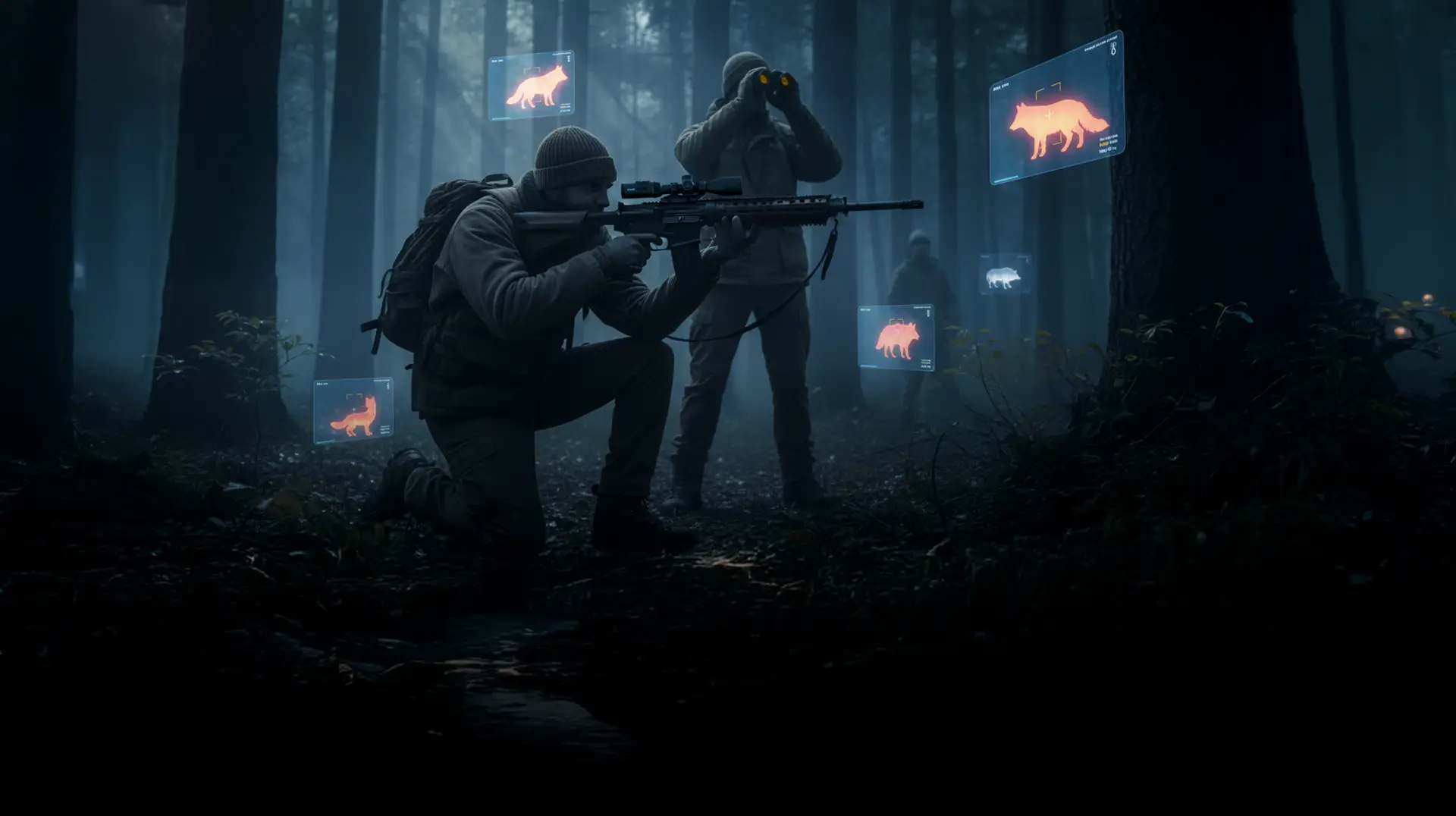
Thermal imaging technology allows you to see what the human eye cannot. By detecting the heat energy emitted by objects, it creates a clear picture even in total darkness, dense fog, or heavy vegetation. It is the science that turns night into day and gives hunters and professionals a decisive advantage in any condition.
The Fundamental Question: What is Thermal Imaging?
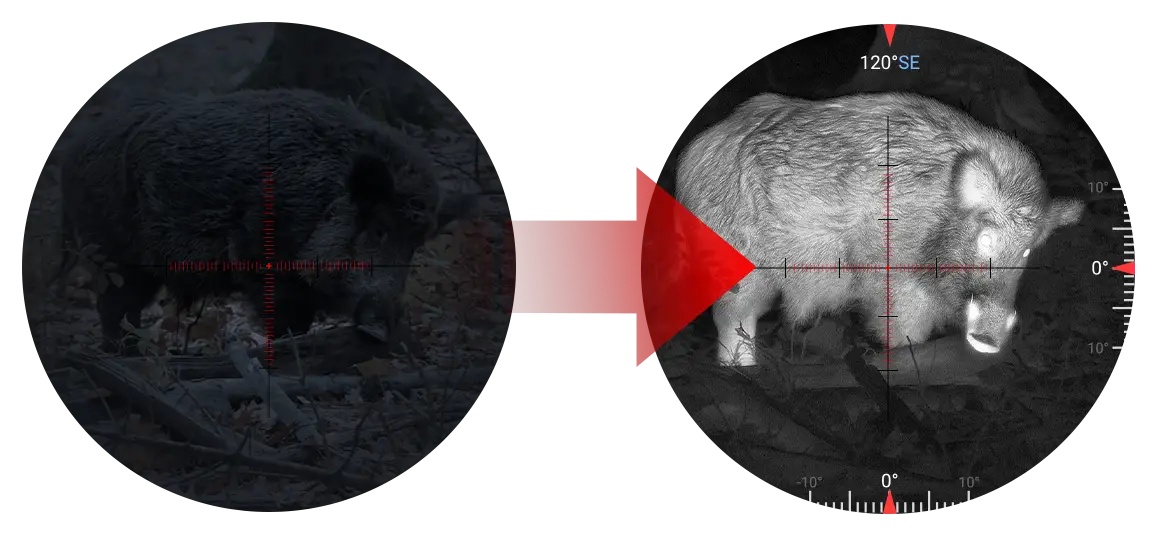
It’s Not Amplifying Light. It’s Seeing Heat.
Every object emits infrared energy — also known as heat. Thermal imaging devices use highly sensitive sensors to detect this radiation, even when there’s no visible light at all. Instead of relying on starlight or IR illuminators (as traditional night vision does), thermal sensors measure the temperature differences between objects in a scene. They then convert those invisible infrared waves into a visual “heat map” image that the human eye can interpret. This is why thermal scopes can see through complete darkness, smoke, or light vegetation — the image isn’t based on light reflection but on energy emission.
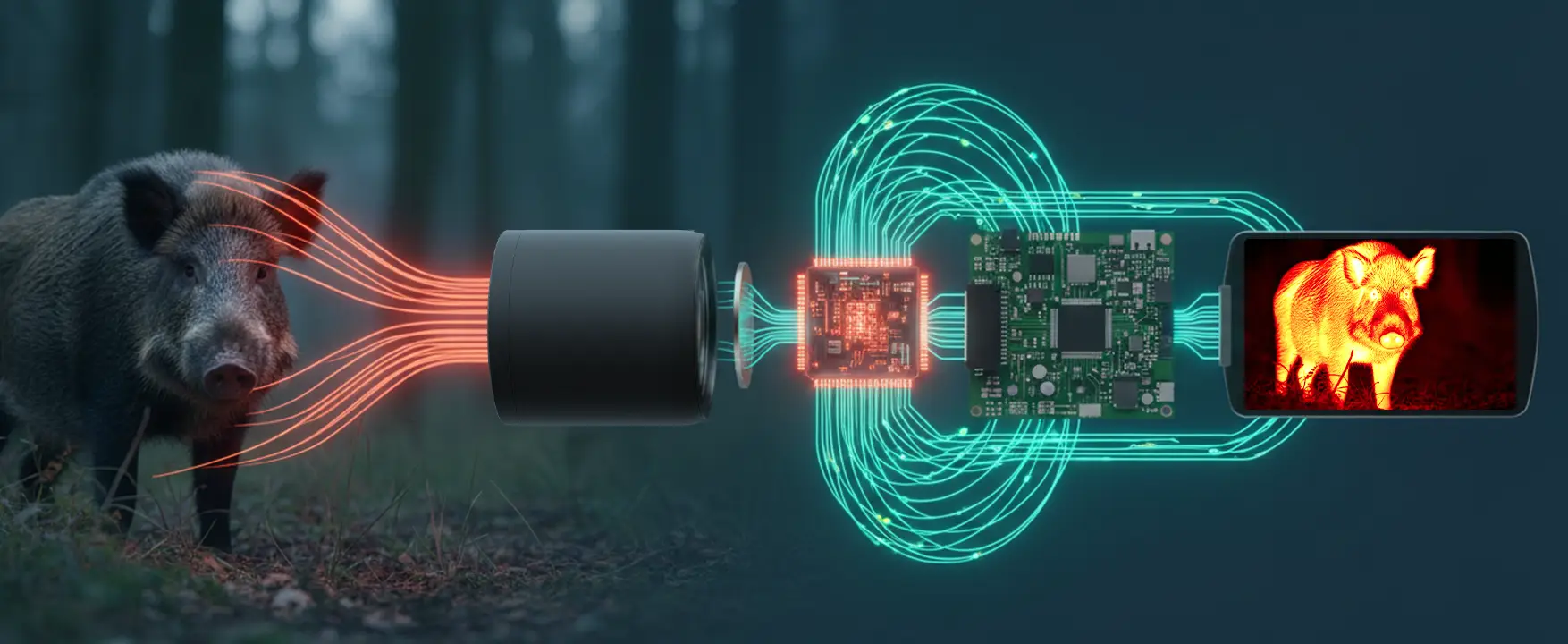
Critical Choice: Thermal vs. Traditional Night Vision
Detection vs. Identification: Choosing the Right Tool for the Job.
Both night vision and thermal imaging serve the same goal — seeing when the human eye cannot — but they achieve it in entirely different ways. Traditional Night Vision: Amplifies existing light (from the moon, stars, or IR illuminators). It allows clear facial recognition and detailed visuals in low light, but struggles in total darkness or fog. Thermal Imaging: Detects heat, not light. It can instantly spot warm-blooded animals, vehicles, or people — even camouflaged or hidden in dense cover. Think of night vision as turning up the brightness on the night — while thermal imaging lets you see what the night itself can’t hide.
Feature
Thermal Imaging
Night Vision
Works in total darkness

Capable

Not Possible
Sees through fog/smoke
Capable
Not Possible
Detects camouflaged targets
Capable
Not Possible
Shows real-life colors
Not Possible
Capable
Identifies facial details
Capable
Capable
Requires ambient light
Not Needed
Must Have
Key Technical Specs: What Separates a Good Thermal from a Great One
Not All Thermal is Created Equal: Understanding the Specs That Matter.
The power of a thermal optic depends on how well its components work together: sensor, lens, and firmware. These elements determine how quickly the optic reacts, how sharp the image appears, and how well you can distinguish your target from its surroundings. Together, these parameters form the concept of the Detection, Identification, and Recognition range.
Resolution — The Foundation of Clarity
The sensor is the foundation of every imaging system — it captures infrared radiation and converts it into a visible image. The sensor's size and design directly impact image clarity, brightness, and range. A larger sensor can gather more heat data. Think of it like a bigger net catching more fish — the more information it collects, the more precise and accurate the image.
- Higher image resolution — More surface area allows for more pixels, producing finer detail.
- Improved low-light performance — A larger sensor captures more signal, reducing noise and boosting contrast.
- Wider field of view (FOV) — You can observe more of the scene without moving the device.
While smaller sensors excel in keeping optics lightweight and compact, they can limit the precision and fine detail achievable at long distances. The right sensor size depends on your goals:
- Long-range precision — Larger sensor
- Compact mobility — Smaller sensor
- General use — Balanced mid-sized sensor
Beyond size, one of the most important characteristics of a sensor is its pixel pitch — the distance between the centers of two adjacent pixels, usually measured in micrometers (µm). Smaller pixel pitch (e.g., 12 µm) means more pixels packed into the same area, resulting in sharper images and better target definition. This allows for enhanced recognition of small or distant objects. Larger pixel pitch (e.g., 17 µm or above) offers higher sensitivity, which can be advantageous in detecting faint heat signatures, but at the expense of image resolution.
- Small pixel pitch = finer details, higher resolution
- Large pixel pitch = stronger signal, better sensitivity
For example, a 1280×1024 thermal sensor with a fine 12 µm
pixel pitch offers an incredibly detailed image even at long
distances. This allows users to spot faint heat signatures
or subtle movements that smaller sensors might miss.
In contrast, a smaller sensor is usually lighter and more
compact, which can be ideal for handheld or helmet-mounted
devices. However, smaller sensors capture less detail and
generally have a narrower field of view — making them better
suited for close- to mid-range observation.
Common Resolutions:
256x196
A solid entry point for short-range detection and basic scanning.
384x288
The sweet spot for most hunters — delivering excellent clarity and value.
640x480
High-definition imaging for long-range detection and clear identification.
1280x1024
(And Beyond)
Professional-grade Ultra HD thermal sensors offering unmatched precision and depth
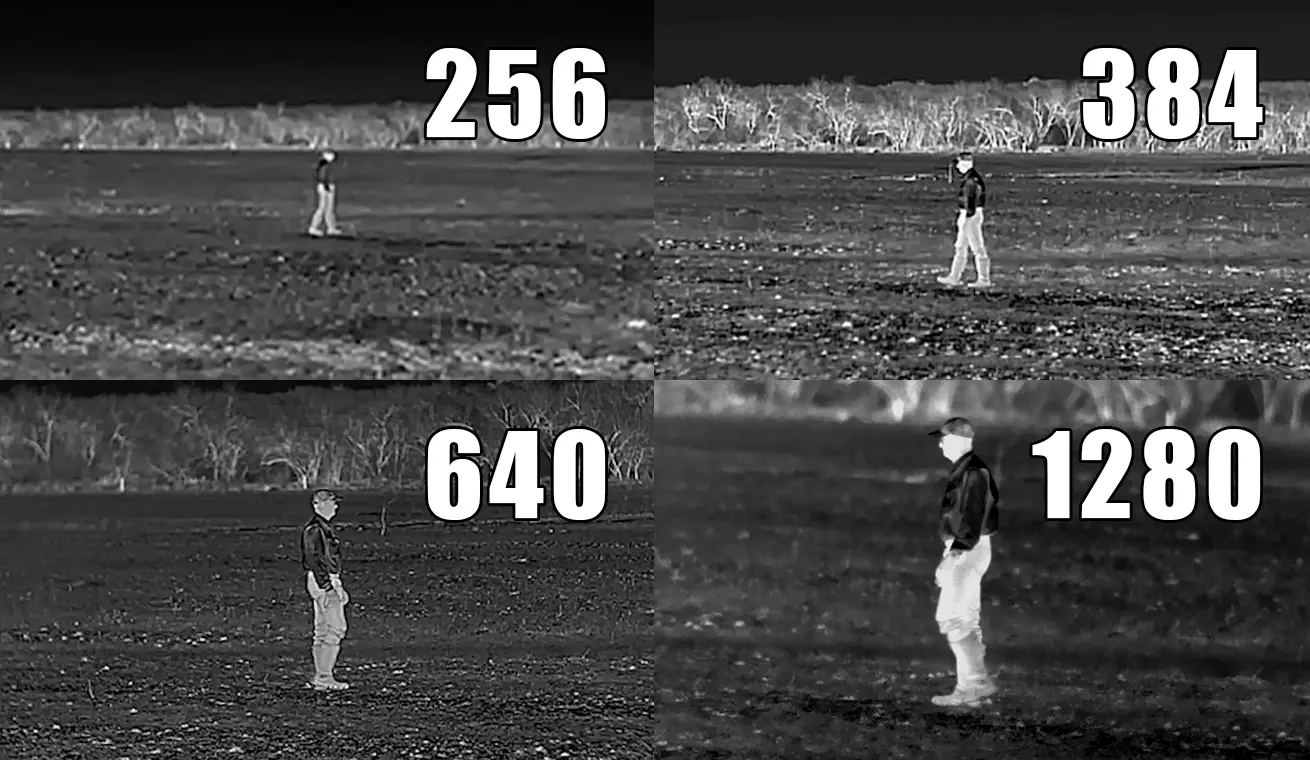
Thermal Image Comparison with different thermal sensors

Thermal Sensitivity (NETD) — The Power to See the Subtle
Thermal sensitivity, often labeled NETD (Noise Equivalent Temperature Difference), measures how small a temperature difference the sensor can detect. It’s expressed in milliKelvins (mK). A lower mK value means greater sensitivity. For example, a 25mK sensor can detect even the faintest thermal contrasts — like a warm track in cool soil or the residual heat from a recently passed animal.
Why It Matters: Higher sensitivity produces smoother
gradients, more fur and terrain detail, and less image
noise. It’s especially crucial when thermal contrast is low
in humid or mild temperatures.
Pro Insight: A top-tier thermal optic with <25mK
sensitivity can reveal what others miss — subtle movements,
heat trails, and small game that blend into the background.

The Core Processor — The Brains Behind the Image
The thermal sensor collects raw data, but the processor turns that data into a viewable image. A powerful processor ensures real-time image rendering without lag — vital when tracking moving targets or scanning wide areas. It interprets thousands of data points per second, running algorithms that clean up noise, balance contrast, and optimize sharpness.
A cutting-edge 6th Generation thermal core doesn't just process data; it runs sophisticated algorithms and advanced firmware to actively clean up noise and extract more detail, delivering a final image that is richer and clearer than the raw sensor data alone could provide.

Image Enhancement Algorithms — The Invisible Advantage
Even the best hardware benefits from smart software. Top optics include proprietary firmware enhancements like ATN’s SharpIR™ technology, which analyzes every frame to extract hidden detail.
How It Works: Algorithms dynamically enhance contrast and definition in real time, sharpening edges and separating heat signatures from background clutter. You’ll notice more detail in fur, branches, or terrain — all of which help confirm your target before taking the shot.
Effect in Action: Imagine scanning a wooded ridge. Without enhancement, the image looks flat. With advanced firmware active, the outline of a coyote pops out from the brush — clear, crisp, and unmistakable.
Lens and Magnification
Unlike traditional glass lenses used in visible-light optics, thermal lenses are made from special materials that transmit infrared radiation rather than visible light. Regular optical glass blocks infrared waves, making it unsuitable for thermal imaging. Common materials for thermal lenses include:
- Germanium (Ge): The most widely used material. It has excellent infrared transmission in the 8–14 µm wavelength range, which covers most thermal imaging applications. Germanium also provides a smooth, high-quality optical surface, allowing for precise focusing.
- Zinc Selenide (ZnSe): Offers high transmission for both infrared and CO₂ laser wavelengths. It’s used in certain mid-infrared systems where clarity and low absorption are crucial.
- Chalcogenide Glass: A newer, cost-effective alternative that is lighter and more durable than germanium, while still providing strong infrared transparency.
Because germanium and other IR materials are dense and
brittle, thermal lenses often require special coatings to
reduce reflections and protect against scratches. A typical
thermal lens will have an anti-reflective (AR) coating to
improve transmission efficiency and enhance contrast.
Thermal lenses are precision-engineered to work seamlessly
with sensors — focusing invisible infrared energy onto the
detector with maximum accuracy. Their design ensures that
even subtle temperature differences become visible as
detailed, high-contrast images.
Magnification determines how close a distant object appears and how much detail can be seen. It depends heavily on the lens system, which directs and focuses incoming IR-waves. Magnification can be Optical and Digital:
- Optical magnification comes from the physical lens design. Unlike digital zoom, which enlarges the image electronically, optical magnification increases image size naturally, preserving fine detail and contrast.
The lense diametre, measured in millimeters (mm), determines both magnification and field of view:
- Small lenses (e.g., 19 mm, 25 mm) — offer wide FOV, ideal for scanning large areas or tracking movement.
- Big lenses (e.g., 50 mm, 60 mm) — provide high magnification, perfect for long-range observation, though with a narrower FOV.
A balanced lense size gives the best of both worlds: a wide scanning view combined with the ability to zoom in on distant targets. Digital magnification enlarges the image electronically by scaling pixels. While it can slightly reduce fine detail, modern image processing significantly minimizes this loss, maintaining high visual quality even at extended digital zoom levels.
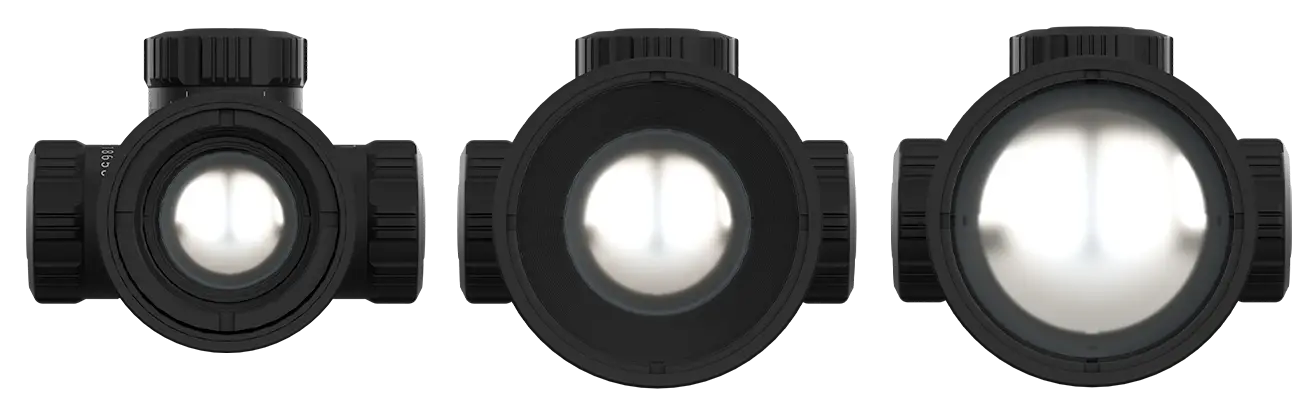
19 mm
35 mm
50 mm
Detection, Recognition, and Identification range
Optical and thermal systems are often measured using DRI standards — short for Detection, Recognition, and Identification. Following Johnson's Criteria (a set of standards used to determine the resolution required for a vision system), these define how well an observer can distinguish a target at different distances.
Detection:
- Being able to tell that something is present. The object stands out against the background, but details aren’t visible.
- Example: Detecting a human-sized heat signature at over 3,000 yards using a high-quality 75 mm lens.
3000 yards
Recognition:
- Being able to tell what the object is — human, animal, or vehicle — without identifying finer details.
- Example: Recognizing a person or vehicle at 1,500–1,800 yards under clear conditions.
1500 yards
Identification:
- Being able to determine specific features — such as whether a person is carrying equipment or the make of a vehicle.
- Example: Identifying a person’s posture or distinguishing gear at 800–1,000 yards.
800 yards
These performance levels depend on:
- Sensor resolution and pixel pitch
- Lens quality and focal length
- Atmospheric conditions (humidity, fog, dust)
- Thermal contrast between target and environment
Color Palettes (The Right View for Any Environment)
Thermal color palettes determine how temperature differences are visually represented. Each palette emphasizes contrast in a different way, helping your eyes adapt to varying conditions or terrain types. Switching palettes during a hunt can reduce eye strain and help maintain situational awareness in changing light or weather.
Most Common Palettes:
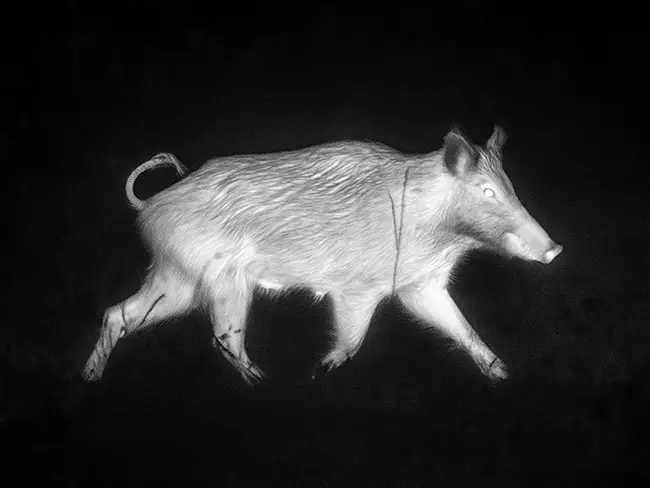
White Hot
Hot objects appear bright. Excellent for open country and long-distance detection.
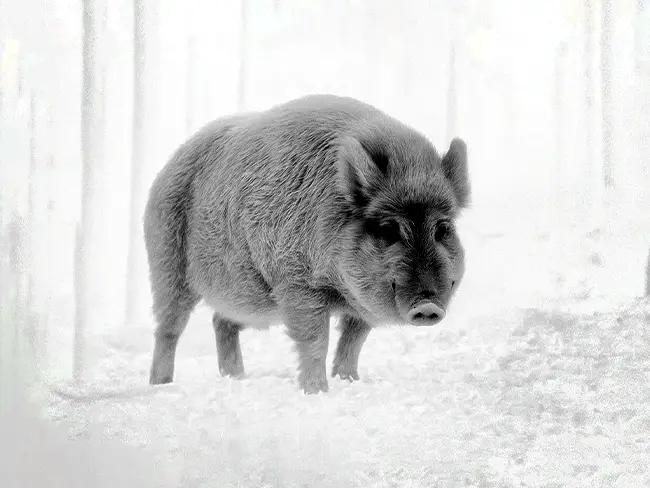
Black Hot
Hot objects appear dark. Many hunters prefer it for dense woods and detailed recognition.
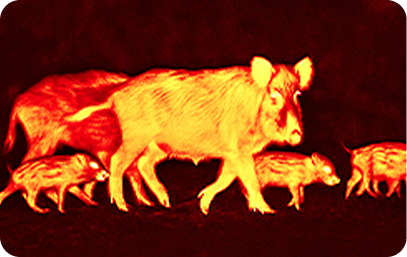
Color Palettes
Use bright gradients to highlight the hottest areas — ideal for spotting blood trails, recovering downed game, or differentiating animals at close range.
Switching palettes during a hunt can reduce eye strain and help maintain situational awareness in changing light or weather.
The Premier Use Case: Dominating Hog & Varmint Hunting
Turning the Predator's Greatest Advantage—Night—Against Them.
Wild hogs and coyotes thrive in darkness — relying on stealth and cover to stay undetected. Thermal imaging erases that advantage. By detecting body heat instantly, it transforms a pitch-black field into a landscape of visible targets.
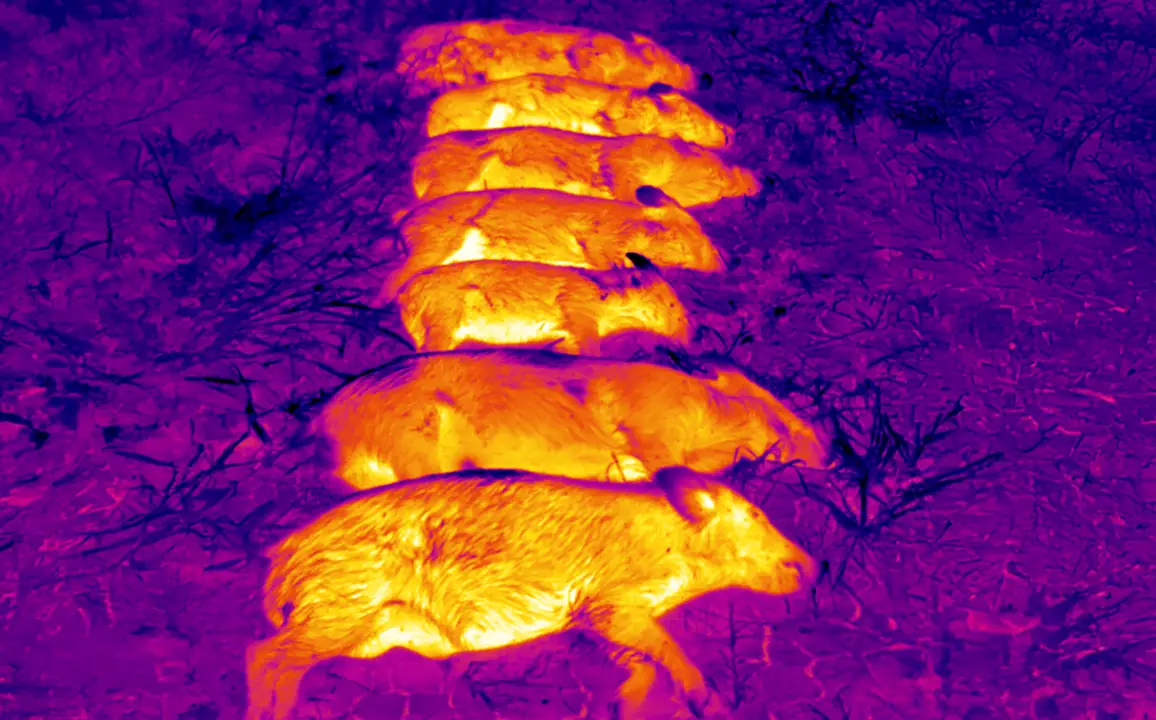
Practical Advantages:

Effortless Scanning
Sweep fields or tree lines to find heat signatures instantly.

Detect Through Cover
Brush, fog, or smoke can’t conceal heat.

Certainty Before the Shotr
Distinguish between species and identify targets with precision.

Instant Game Recovery
Follow the residual heat trail to quickly recover your game — even minutes after the shot.
REDEFINING THE HUNT: THERMAL HUNTING USE CASES
Tracking Wounded Game
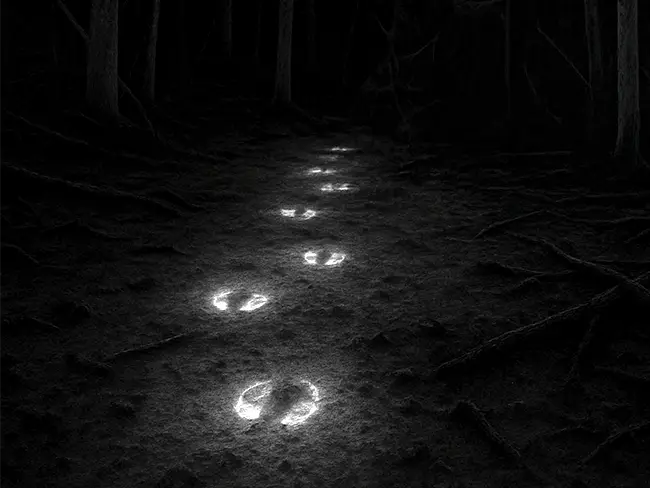
Thermal optics excel in game recovery. Even when the trail is faint or the terrain is dense, an animal's residual body heat remains visible for several minutes. This ensures faster recovery, reduces animal suffering, and helps maintain ethical hunting practices. No more searching aimlessly with a flashlight—thermal vision provides a direct path to your target.
Wildlife Management and Population Control
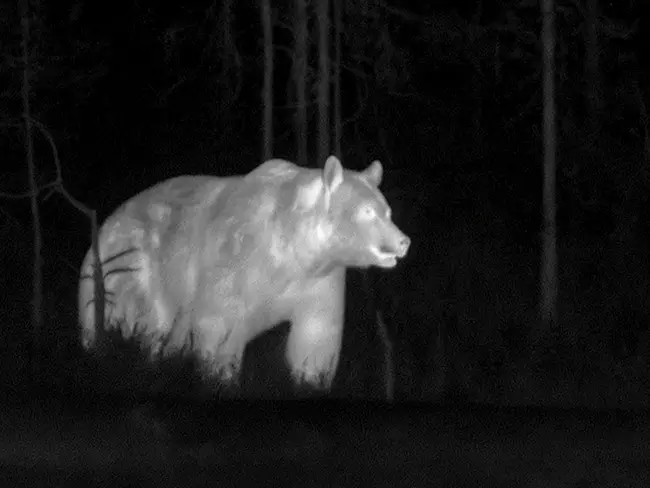
Hunters and landowners benefit from using thermal optics to monitor and manage wildlife populations. Observe nocturnal activity, identify animal density in specific areas, and make informed decisions that contribute to sustainable ecosystem balance. Thermal technology helps manage overpopulated species or invasive animals without disrupting natural behavior.
Long-Range Precision Shooting
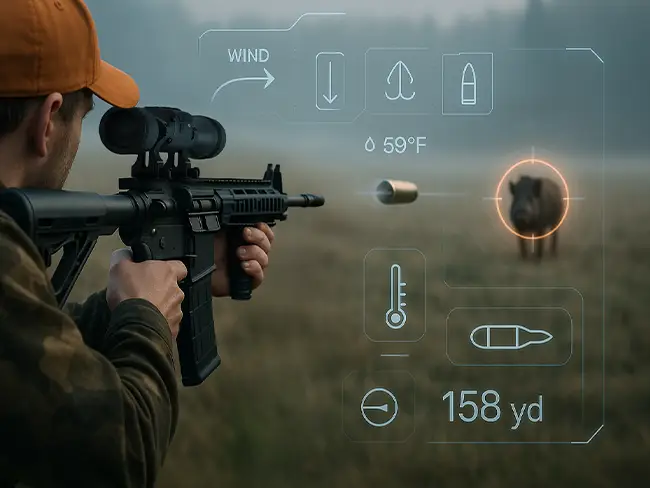
When distance and accuracy matter, pairing a thermal scope with a ballistic calculator provides unmatched precision. Account for range, elevation, and environmental factors in real time. With crystal-clear thermal imaging, long-distance hunters can spot and engage targets confidently — even in complete darkness or extreme weather.
Spot-and-Stalk Hunting
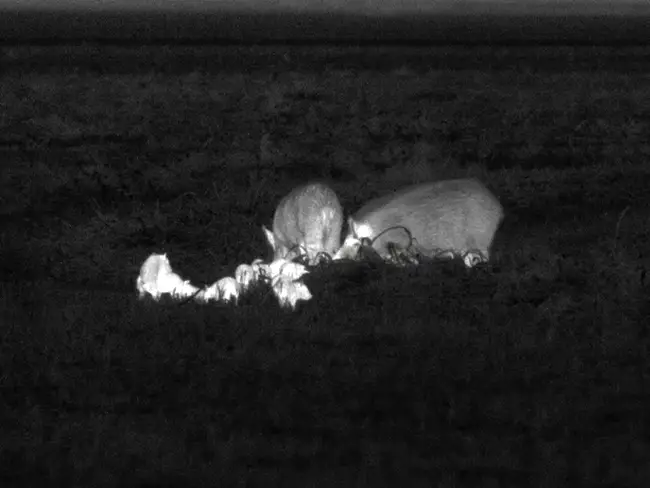
Hunters and landowners benefit from using thermal optics to monitor and manage wildlife populations. Observe nocturnal activity, identify animal density in specific areas, and make informed decisions that contribute to sustainable ecosystem balance. Thermal technology helps manage overpopulated species or invasive animals without disrupting natural behavior.
Scouting and Pattern Observation
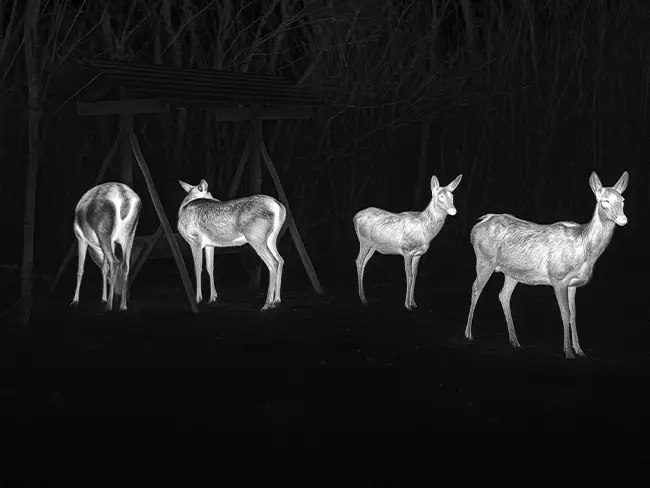
Thermal technology is not just for active hunting — it’s an invaluable scouting tool. Use it to monitor trails, feeding areas, or bedding sites to understand animal habits and timing. Track movement patterns over days or weeks and develop a deeper understanding of your environment. The result: smarter setups, fewer missed opportunities.
Team Hunting and Coordination
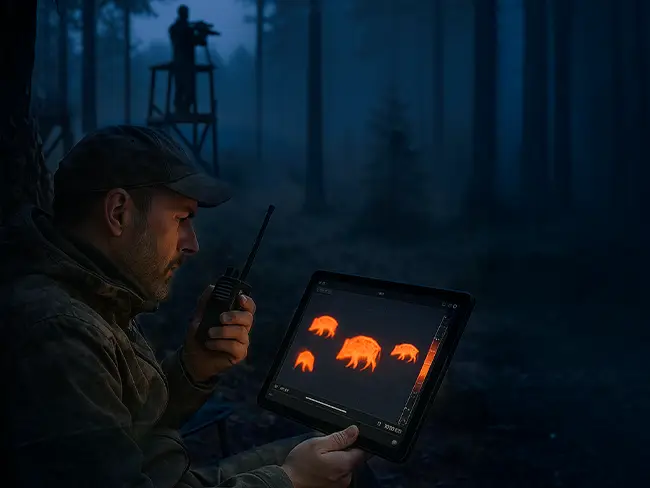
When hunting in groups, communication and safety are key. Thermal devices allow every member to maintain full situational awareness — tracking game, identifying teammates, and ensuring clear lines of fire. Even across large areas or dense vegetation, everyone can see what matters without relying on visual cues or artificial light.
Small Game and Pest Detection
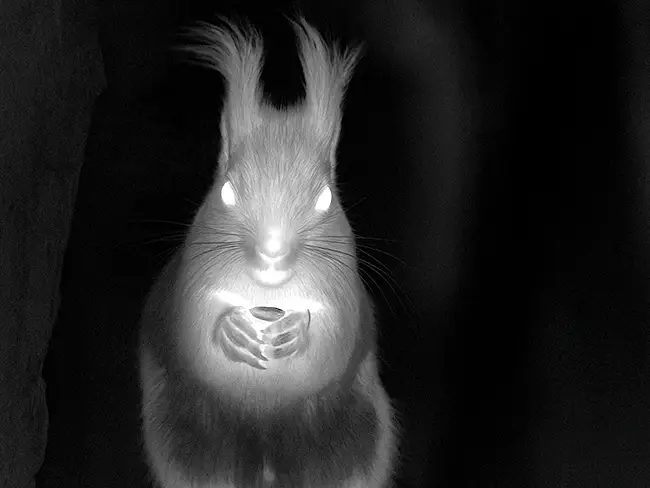
Thermal optics provide a distinct edge when targeting small game or nuisance animals that are difficult to spot visually. Even small heat signatures stand out sharply, allowing for faster identification and cleaner shots. This is especially valuable for crop protection, varmint management, or property defense where precision and quick response are vital.
Hunting in Adverse Conditions
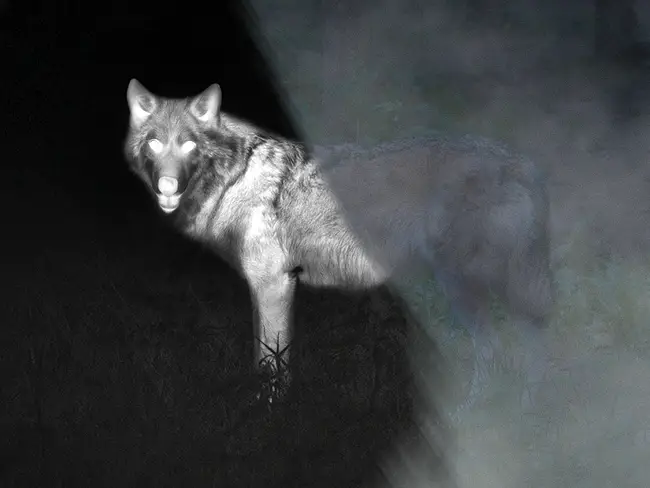
Low visibility no longer limits the hunt. Fog, rain, or early morning haze can blind traditional optics — but thermal vision cuts through it effortlessly. Whether you’re navigating thick brush, hunting in pre-dawn hours, or enduring inclement weather, thermal imaging ensures consistent detection and performance.
Safety and Awareness in the Field
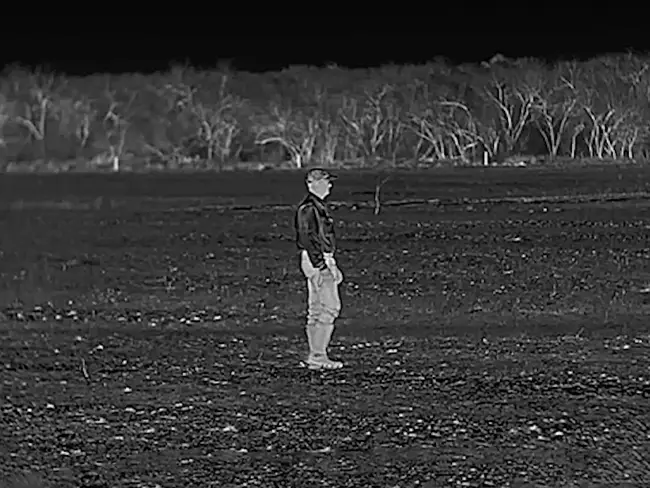
In dark or unfamiliar terrain, thermal optics add an essential layer of safety. Detect other hunters, animals, or obstacles that may not be visible under low light. By expanding your awareness beyond visible light, you minimize risks and maintain full control of your environment — especially during nighttime or group hunts.
Training, Footage Review, and Skill Development
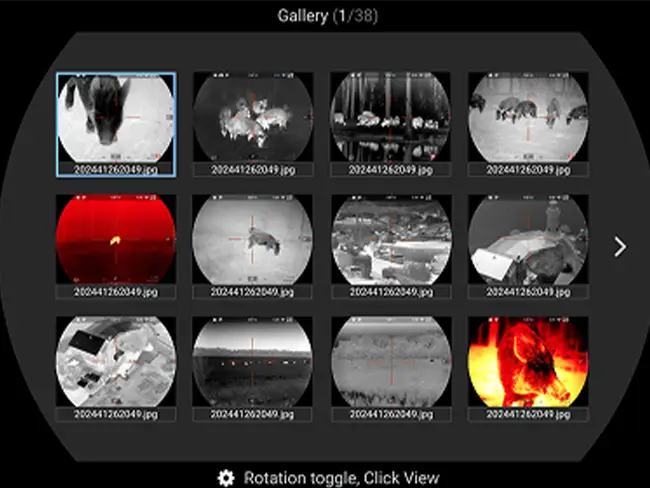
Many modern thermal scopes include video recording capabilities, allowing you to capture your hunts for analysis or enjoyment. Reviewing this footage helps refine your skills — studying animal behavior, improving shot placement, and assessing movement strategy. For new hunters, it also serves as an educational tool for learning from real-world experience.
Conservation and Research Applications
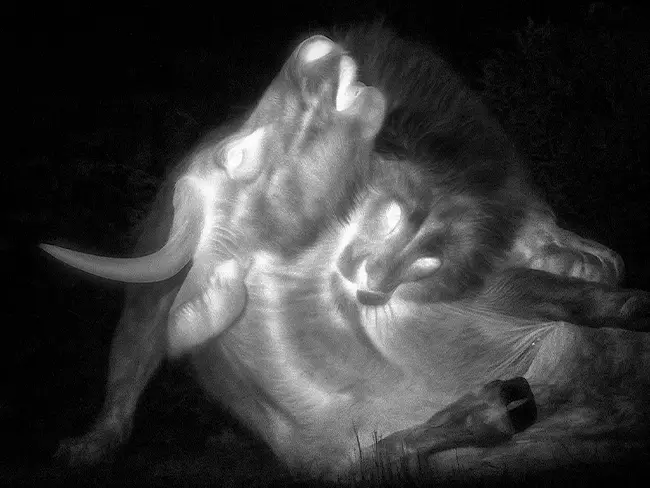
Beyond hunting, thermal optics support wildlife conservation and study. Researchers and responsible hunters can use them to monitor herds, count populations, and identify injured or sick animals without disturbing their natural environment. It’s a tool that blends passion for the outdoors with stewardship of nature.
Property Protection and Farm Security
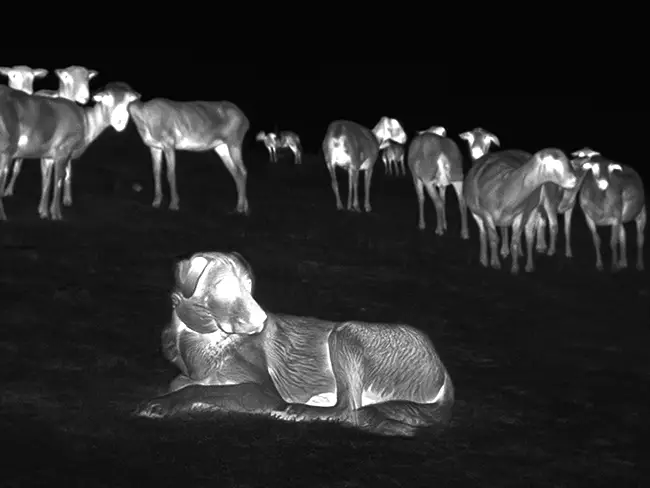
Thermal vision can safeguard rural property and farmlands by detecting unwanted intrusions or animal activity during the night. From livestock monitoring to perimeter checks, it provides clear visibility over wide areas without the need for lighting or cameras.
Water Edge and Dense Terrain Hunting

In wetlands, swamps, or wooded valleys, visibility is often limited by terrain and vegetation. Thermal optics overcome these challenges effortlessly, highlighting game hidden in reeds, underbrush, or near water surfaces. No matter the landscape, your sight remains clear and reliable.
Ethical and Responsible Hunting
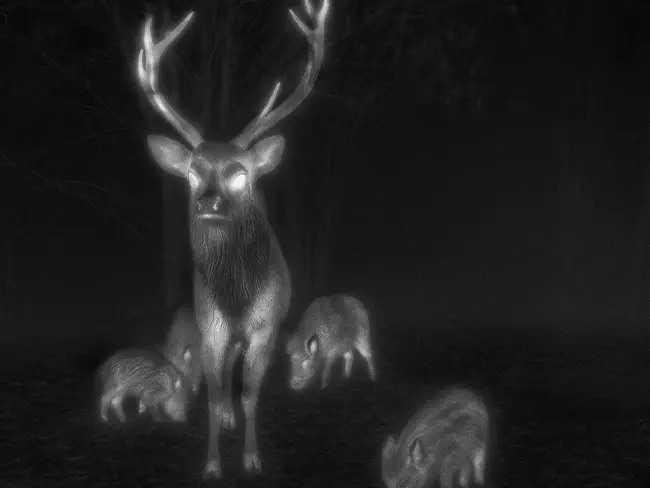
Thermal technology supports responsible hunting by promoting accurate target identification and reducing the chance of wounding non-target animals. This ensures a humane harvest and reinforces hunting as a disciplined, ethical pursuit rooted in respect for wildlife.
Expanding the Mission: Versatility Beyond the Hunt
Thermal optics are no longer tools just for hunters — they’ve become essential instruments for security, rescue, navigation, exploration, and industrial safety. By detecting heat signatures invisible to the human eye, thermal imaging enhances awareness, protection, and precision in any low-light or high-stakes situation.
Property & Livestock Security
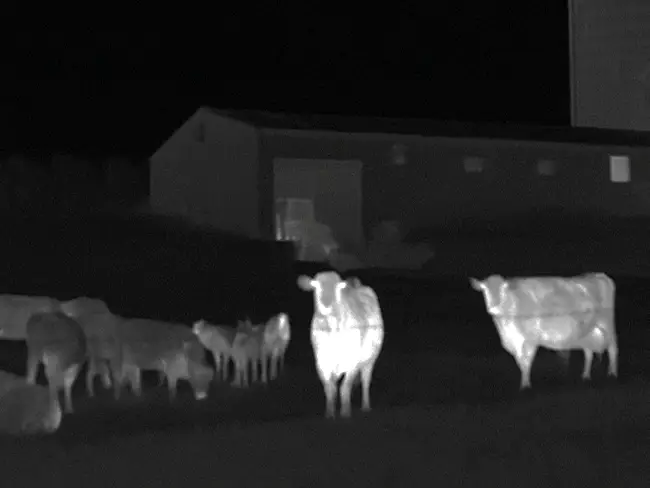
Monitor wide open spaces, barns, or remote properties at night without relying on lights or cameras. Thermal imaging makes it possible to detect trespassers, stray animals, or unusual activity instantly — even through fog, rain, or vegetation — giving property owners constant awareness and peace of mind.
Search & Rescue

In emergencies, thermal vision can be life-saving. It allows rescuers to locate missing persons or lost animals through dense forests, debris, or poor weather conditions. The ability to detect human body heat through visual barriers enables faster response times and more successful recoveries in critical situations.
Outdoor Navigation
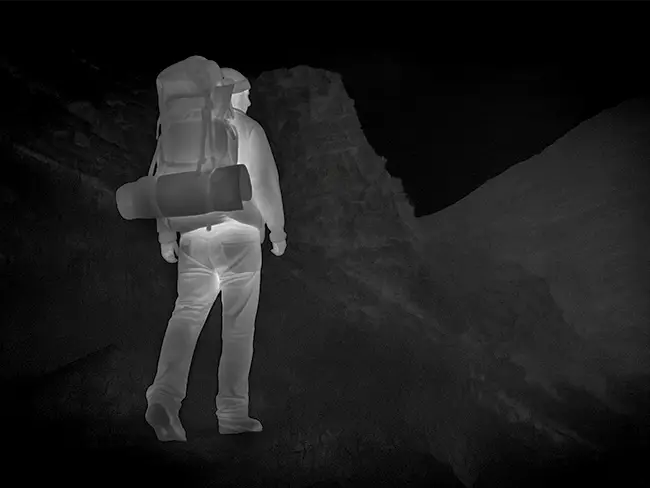
When hiking, camping, or off-roading after dark, thermal optics reveal terrain features and obstacles that remain invisible to headlights or flashlights. They enhance safety and confidence in low-light environments, helping explorers navigate trails, rivers, or rugged terrain with complete visibility.
Home & Perimeter Security

Thermal optics extend security far beyond what standard cameras can capture. They detect any heat-emitting presence around your home — whether human or animal — regardless of lighting conditions. This allows for silent, reliable surveillance that works through smoke, fog, and total darkness without false alarms or visible light exposure.
Firefighting & Hotspot Detection
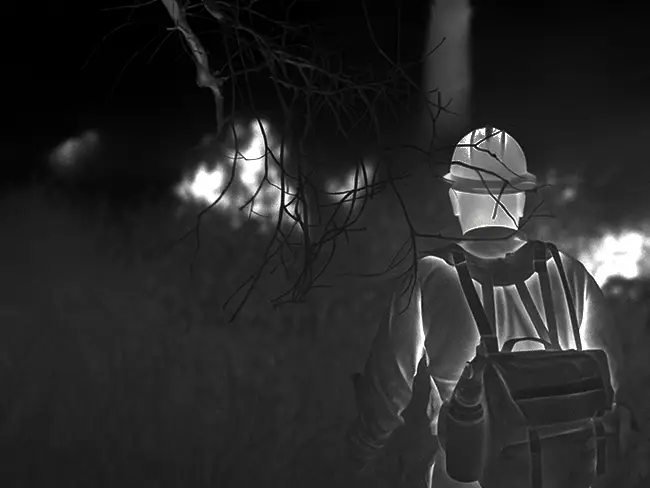
Firefighters rely on thermal imaging to see through smoke and darkness, locate people trapped inside buildings, and identify hidden hotspots. Thermal vision helps them assess structural integrity, prevent flare-ups, and operate safely in zero-visibility environments, dramatically improving response efficiency.
Law Enforcement & Surveillance
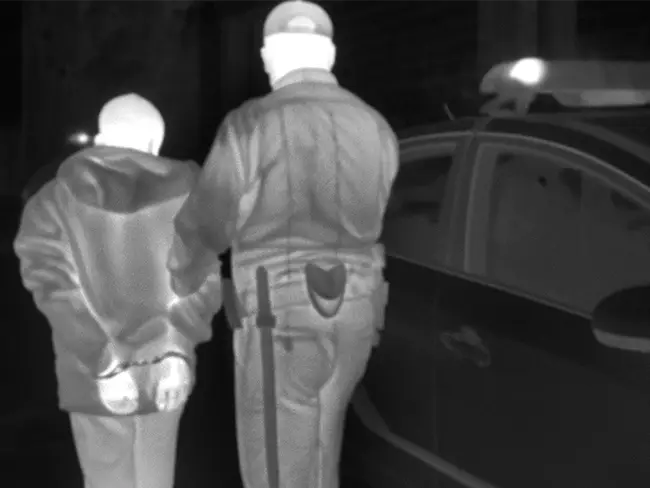
Thermal optics enhance law enforcement operations by revealing movement, tracking suspects, and maintaining situational awareness during nighttime patrols. They allow officers to detect hidden threats or persons behind foliage or barriers, improving safety and tactical precision during critical missions.
Building & Energy Inspection
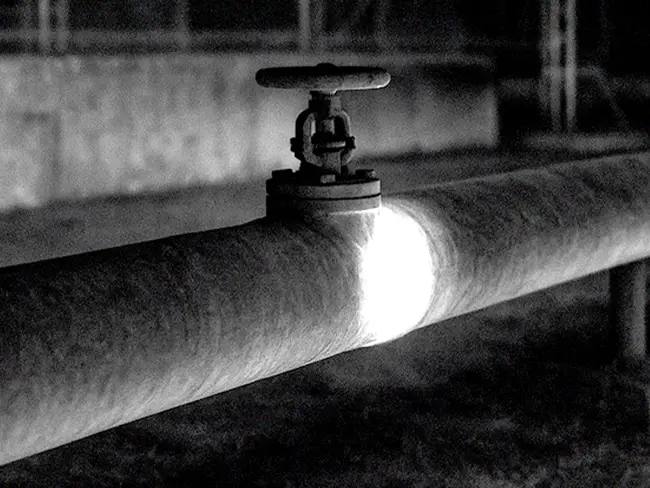
Thermal technology uncovers insulation leaks, moisture intrusion, and faulty wiring by visualizing temperature differences. Inspectors can instantly identify heat loss or electrical issues, saving time, reducing energy waste, and preventing costly damage before it escalates.
Mechanical & Equipment Maintenance
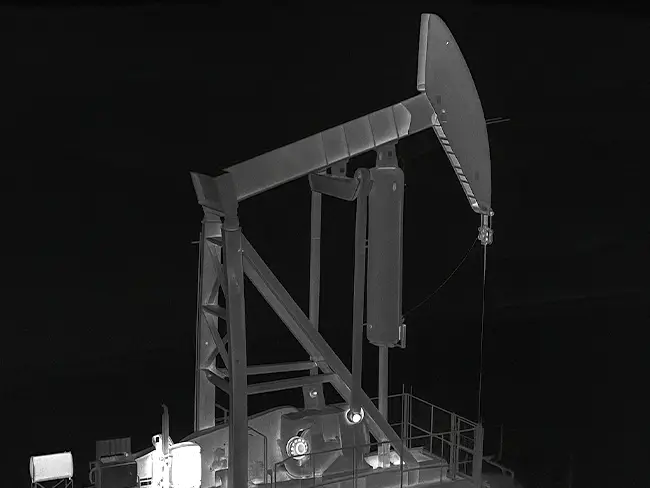
In industrial settings, thermal imaging helps technicians detect overheating components, worn bearings, or malfunctioning electrical circuits. This early warning system allows for proactive maintenance, minimizing downtime, preventing equipment failure, and extending operational lifespan.
Maritime & Boating Safety

Navigating open water at night or in fog becomes far safer with thermal optics. They help identify other vessels, floating debris, or people in the water when visibility is nearly zero. Mariners can travel with confidence, avoid collisions, and react faster to potential hazards long before they become visible to the eye.
Camping & Outdoor Exploration
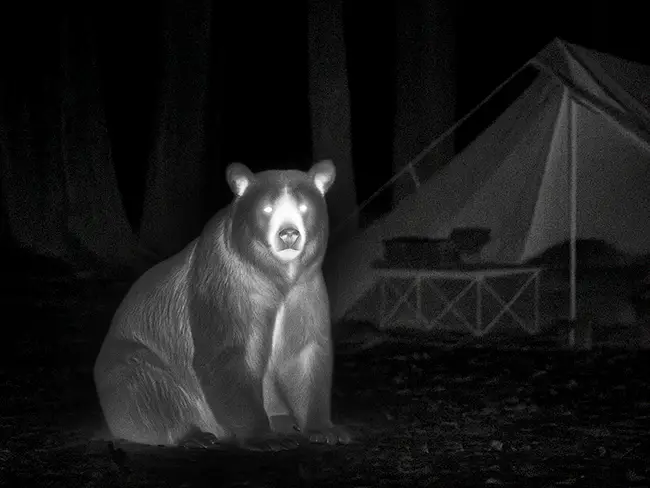
Thermal vision enhances safety for campers and outdoor enthusiasts by revealing wildlife nearby, tracking movement around camp, or spotting lost companions. It allows for effortless orientation and awareness at night, ensuring a calm and secure outdoor experience no matter how dark the surroundings.
Disaster Response & Humanitarian Aid
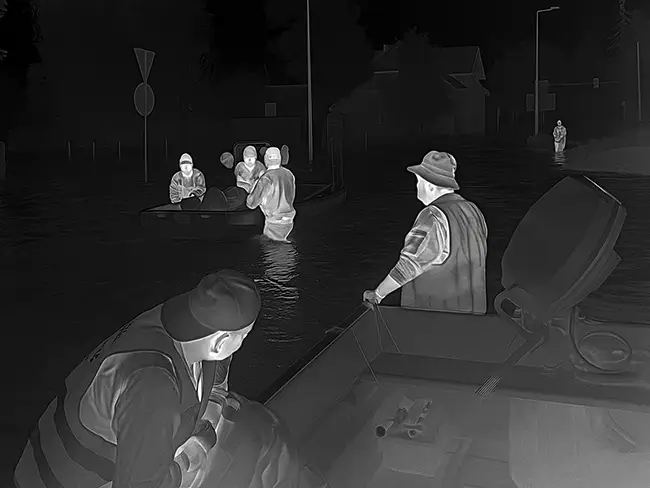
In disaster zones, thermal imaging is critical for locating survivors trapped under debris or displaced in harsh conditions. It cuts through dust, smoke, and chaos, giving emergency teams a reliable way to identify life forms and focus rescue efforts where they’re needed most.
Wildlife Observation & Research
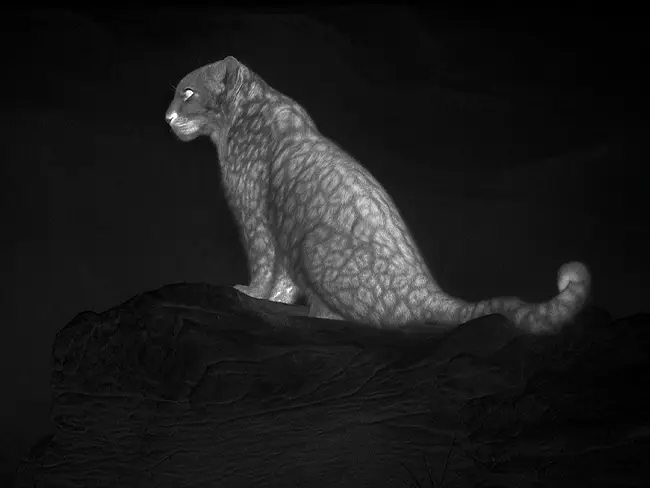
Thermal technology enables researchers and photographers to observe animals in their natural habitats without disturbing them. It reveals nocturnal activity, movement patterns, and nesting behaviors invisible to traditional optics, supporting responsible wildlife monitoring and conservation.
Automotive Safety & Driver Assistance

Thermal vision adds another layer of awareness to night driving, detecting pedestrians, animals, or obstacles well beyond the reach of headlights. Drivers gain more reaction time and improved safety in fog, rain, or rural areas where visibility can vanish unexpectedly.
Industrial & onstruction Monitoring
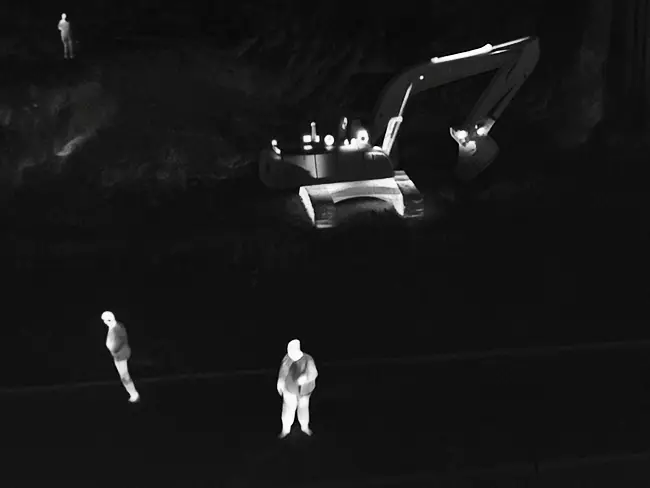
On active job sites, thermal optics help supervisors and safety officers identify overheating materials, monitor equipment, and detect unauthorized access after hours. They create safer working conditions, improve compliance, and ensure that potential hazards are caught before they become incidents.
Medical & Veterinary Applications
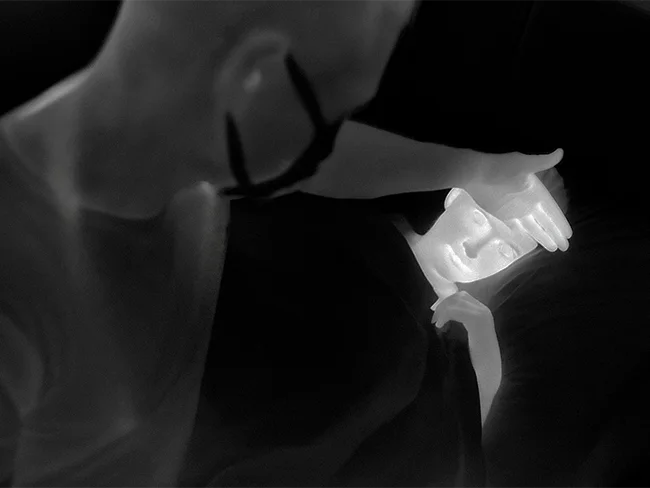
Thermal imaging provides a non-invasive method to visualize changes in blood flow, inflammation, or infection in both humans and animals. It supports diagnostics, rehabilitation, and preventive care by identifying early signs of issues that may not be visible on the surface.
Aviation & Drone Operations

Mounted on aircraft or drones, thermal cameras extend visual capabilities far beyond daylight conditions. They allow pilots, inspectors, and surveyors to detect heat variations on land or structures, identify people or animals from the air, and navigate safely in total darkness.
Environmental Monitoring
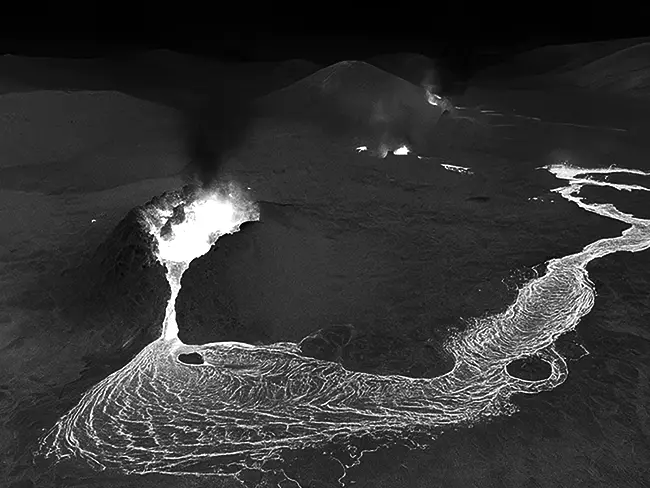
Thermal optics help monitor environmental changes such as wildfires, water temperature fluctuations, or gas emissions. They play an essential role in early detection and prevention, giving scientists and responders real-time insights to protect ecosystems and communities.
Lawful Tactical Operations
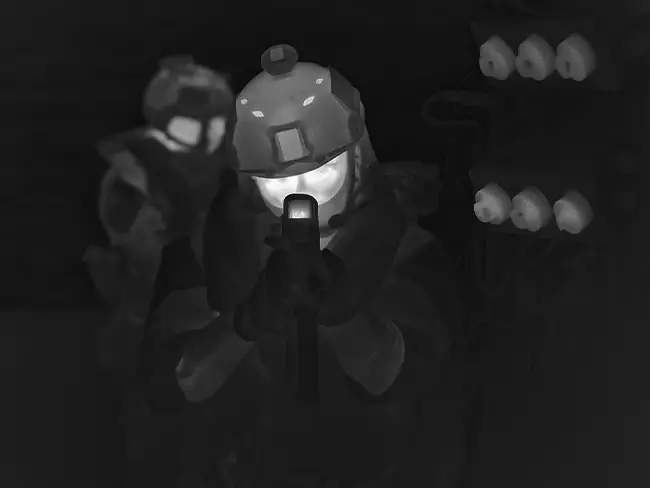
Security professionals and tactical teams use thermal vision for perimeter sweeps, nighttime surveillance, and safe movement in low-light missions. By revealing hidden movement and maintaining operational awareness, thermal technology enhances precision, coordination, and safety under pressure.
How to Choose the Right Thermal Optic For You
Choosing the right thermal optic isn’t just about specs — it’s about matching the device to your mission.
-
1. Define Your Purpose
Before diving into specs and numbers, think about what you’ll actually use the thermal imager for.
- Hunters should prioritize detection range, refresh rate, and aiming precision.
- Outdoor explorers might prefer lightweight, pocket-sized monoculars with long battery life.
- Home or property owners may focus on wide fields of view and quick startup for security.
Your intended use determines the features that truly matter — so don’t overpay for capabilities you’ll never need.
-
2. Understand Sensor Resolution
The thermal sensor is the heart of your device. It detects tiny differences in heat and converts them into the images you see.
- Entry-level: 160x120 or 320x240 sensors — good for close-range spotting and simple observation.
- Mid-range: 640x480 — ideal for hunting and tactical use, with crisp detail and solid range.
- High-end: 1024x768 or 1280x1024 — delivers exceptional clarity, especially for long distances or identifying small targets.
- Remember: better resolution means more accurate identification and greater confidence in every shot.
-
3. Detection Range
Detection range tells you how far the device can spot a heat signature — not necessarily identify what it is.
- For hunting, look for at least 1,000 yards or more so you can scan wide open areas with confidence.
- For security or short-range spotting, a 300–600 yard range is usually plenty.
A longer detection range gives you flexibility — but it also often means a larger lens and higher cost.
-
4. Refresh Rate & Optics
If you’ve ever used a device that feels laggy, you’ll appreciate a high refresh rate (50–60Hz). It makes movement appear smooth and natural — especially vital for tracking animals or moving vehicles.
Lens size also affects performance:- A larger objective lens (like 50mm or 75mm) collects more infrared light, giving better clarity at long distances. Smaller lenses are lighter and better for handheld use.
Think of it as the difference between binoculars for birdwatching versus a spotting scope for long-range shooting.
-
5. Battery Life & Recording Features
Thermal devices consume power quickly, especially at higher refresh rates and brightness. Look for at least 8 hours of continuous operation. Replaceable batteries or external power packs can be lifesavers during long hunts.
If you enjoy sharing your experiences or reviewing footage, consider models with built-in video recording, Wi-Fi streaming, or even smartphone connectivity. -
6. Ergonomics & Mounting
Comfort matters more than most people think.
- For handheld monoculars, prioritize compact designs and intuitive controls.
- For mounted scopes, balance is key — too heavy, and it’ll affect your aim and endurance.
Modern devices often feature quick-detach mounts, letting you easily switch between weapons or tripods.
-
7. Advanced Features to Consider
- Laser Rangefinder (LRF): Calculates exact distance to your target for precise shooting.
- Ballistic Calculator: Automatically adjusts your reticle for bullet drop — a must for long-range accuracy.
- Custom Reticles: Personalize your aim to your shooting style.
- Wi-Fi & Bluetooth Connectivity: Instantly share footage or stream live hunts.
- Rugged Design: Weatherproof and shock-resistant construction ensures reliability in harsh conditions.
-
8. Budget vs. Performance
Thermal imagers range from a few hundred to several thousand dollars. It’s tempting to buy the cheapest one — but performance differences are massive.
- Entry-level devices are great for beginners and casual use.
- Mid-tier units balance cost and performance, ideal for serious enthusiasts.
Premium models deliver unmatched clarity, features, and reliability for professionals.
Think of your purchase as a long-term investment — a high-quality thermal scope will serve you for years.
FAQ
General Function Questions
Your Thermal Questions, Answered.
Can I use a thermal scope during the day?
Absolutely. Thermal optics detect heat, not light, so they perform equally well in daylight or darkness.
What’s a good detection range?
Detection range depends on sensor resolution, lens size, and conditions — from 500 yards for compact optics to over 2000 yards for high-end models.
Does the color palette affect performance?
No — it’s purely visual. Palettes help adapt to terrain or personal preference without changing detection ability.
What’s the best mK rating?
Under 40mK is very good. 25mK and below indicates elite-level sensitivity capable of fine thermal differentiation.
Don’t Let Darkness Hold You Back.
Thermal imaging isn’t just technology — it’s the evolution of vision itself. Understanding how resolution, sensitivity, and processing combine empowers you to select the perfect optic for your environment and mission. Once you’ve experienced the world through a thermal lens, darkness will never hide anything from you again.