Most hunters burn their best stand site before the season opens, and they do it while scouting it. Scouting deer with thermal removes the old excuse for walking a property in the dark — you can sit four hundred yards off and watch which gap in the cedars they step out of — but seeing in the dark is not permission to move in it. The rut is the stretch where deer tell you the most about their travel, and the stretch where three careless nights teach a mature buck to visit your corner of the farm at two in the morning, or never.
Scouting is information, not hunting. Watch from outside the ground you intend to hunt, collect the same four things every night — where they came out, which trail, what time, how far — and let that decide the stand.
What rut-season night scouting actually is
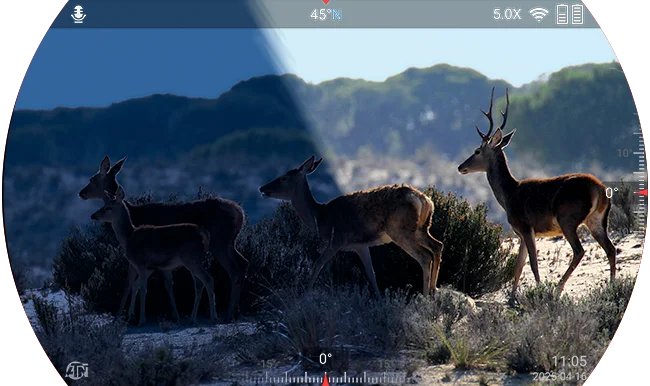
It is observation from a distance, with nothing in your hands but an optic. A thermal device reads the temperature difference between an animal and the ground behind it, so a doe in a cut bean field at midnight is a bright shape long before your eyes would find her. That matters during the rut because the picture changes: does keep feeding on their normal pattern, and bucks keep no pattern at all, cruising downwind of doe bedding at hours unrelated to sunrise. Daylight sign shows where the trails are. Night observation shows which ones are being used this week, and when.
How a scouting night runs, step by step
Same order every night, and the order is what keeps you honest.
- Pick a vantage you can reach without crossing huntable ground. A road, a gate, a hill on the neighbour's side with permission. If the only way in is through bedding cover, it is the wrong vantage.
- Be seated before legal light ends. Walking in after dark moves deer already on their feet.
- Sweep wide first, then study. One slow pass at low magnification to find bodies, then zoom on the ones worth a second look.
- Range what you see instead of estimating it. A measured crossing is a number you can trust in March. A guessed one is a story.
- Write the time with every sighting. First deer out, first buck out, the hour the field goes quiet. Time is half the data.
- Log direction as well as distance. Heading plus range puts a point on a map; distance alone puts it on a circle.
- Leave late and leave the long way. Wait until the field empties, then take the route that costs you the least ground.
Turning the notes into tree stand placement
Several nights of the same four columns will usually show one trail doing most of the work. That is the one to hang off — not on it. The stand goes downwind of the route, far enough back that a deer never crosses your scent cone, with an entry that touches neither the field nor the bedding cover. The time column does the rest: if most movement happens at ten at night, you want the morning stand closer to bedding, not the evening stand over food. Rut night scouting earns its keep by telling you which of your spots is a daylight spot.
Binoculars or a monocular: two jobs, two devices
They are not substitutes. Binoculars are the observation tool: two eyes, a steady image you can hold on an animal for ten minutes, magnification to pick antler shape out of a group, and a rangefinder to turn a sighting into a measurement. That one sits on a tripod for the whole sit. A thermal monocular is the movement tool — one hand, a jacket pocket, a wide field of view for the ditch you are about to walk through. Its real job is keeping you from bumping deer on the way in and out, the part most people get wrong. The rifle optic plays no part here; scouting is done without a weapon in your hands.
The features that matter for scouting
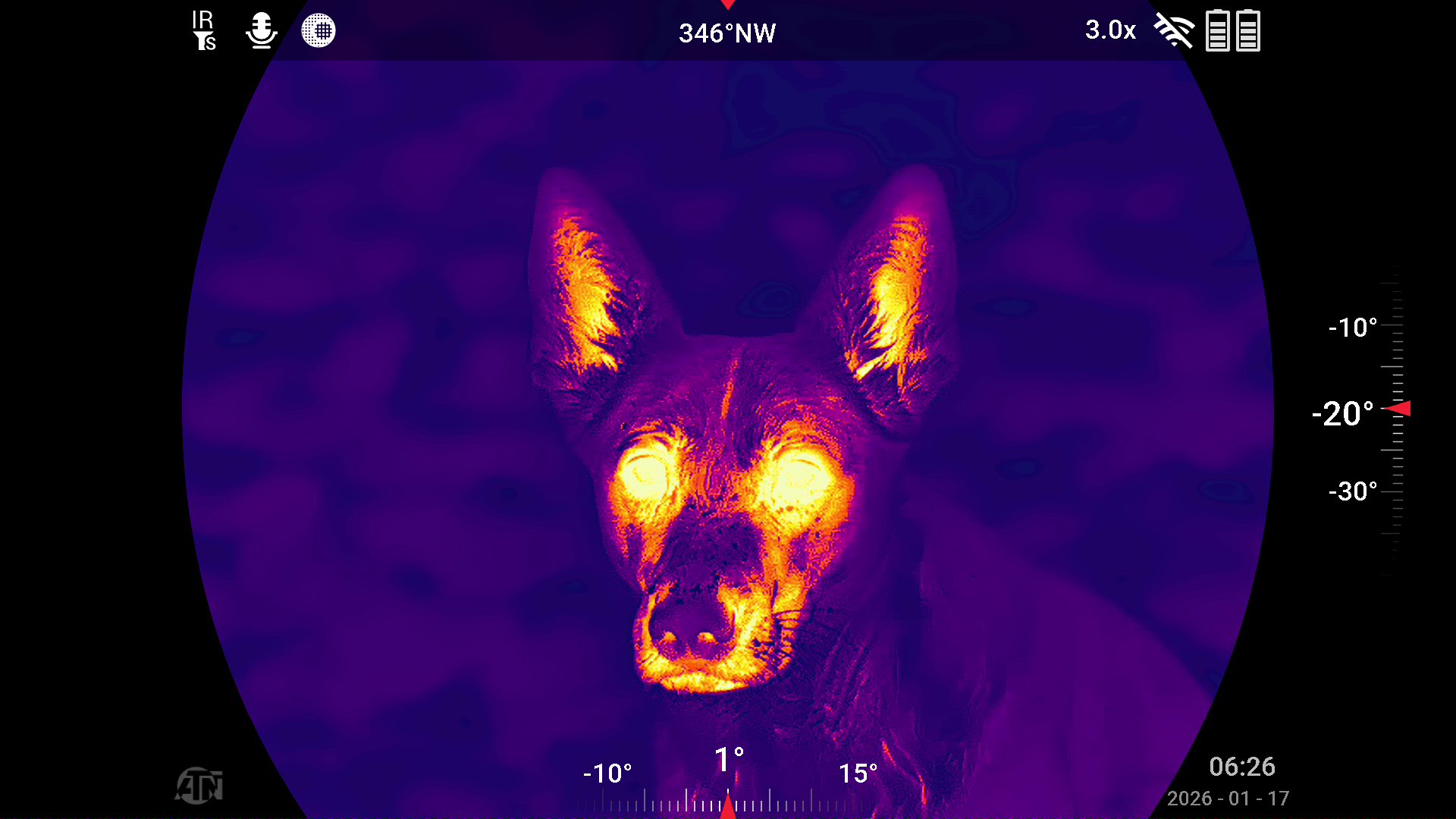
- Thermal sensitivity (NETD) — the smallest temperature difference the detector can separate from its own noise, in millikelvin, lower being better. The Binox-6 Dual 640 is specified at ≤15mK, which earns its keep on a damp November night.
- Sensor resolution — 640×512 on a 12µm VOx uncooled array at 50 Hz: the difference between a warm blob and a body you can study.
- Built-in laser rangefinder — ATN publishes 1000 m of range at ±1 m on an eye-safe 905 nm Class 1 laser. This is what makes a binocular a scouting instrument rather than a viewing toy.
- GPS and digital compass — onboard GPS for logging positions, plus a three-axis accelerometer and compass giving live heading, pitch and roll. Heading plus range is a coordinate; without them you are writing “left of the big oak” in a notebook.
- Recording and storage — 64 GB on board, 4K daytime and 1080p thermal video, and Wi-Fi to the ATN Connect 6 app. Footage settles arguments about what that deer actually was.
- Magnification and field of view — 3-24x behind a 35 mm germanium objective at F/1.0, with a 12.52° × 9.41° thermal field of view: wide enough to hold a field edge, long enough to study one animal in it.
- Palettes and image modes — six palettes (White Hot, Black Hot, Iron Red, Alarm, Green Hot, Sepia) plus Wide Dynamic Range, DeFog and Hot Point Tracking. Fog on a river bottom at three in the morning is a real problem; DeFog answers it.
- Batteries you can swap in the dark — two replaceable 18650 cells rated at roughly 8 hours, with USB Type-C power behind them.
What to check before you buy one for this work
Four things, in order. A rangefinder, because an unranged observation is half an observation. A compass or GPS, for the same reason. Then runtime: a scouting sit runs longer than a hunt, and a device that quits at hour five costs you the most informative part of the night. Last, weather sealing and a tripod mount — IP67 and a −30°C to 55°C working range cover a normal rut, and a tripod thread turns a two-hour hold into something your arms survive.
The mistakes that cost you the spot
The first is treating the ability to see as permission to walk: no optic masks scent, and deer remember human smell in a place that used to be safe. The second is scouting the stand site itself instead of watching it from outside. The third is calling one night a pattern — weather, moon and a single hot doe all move deer around. The fourth is collecting sightings without times, which leaves you a map and no schedule. The fifth is legal: rules on thermal at night, on being afield after hours and on what you may carry vary by state and sometimes by county, so read yours before the season.
The binoculars I scout with
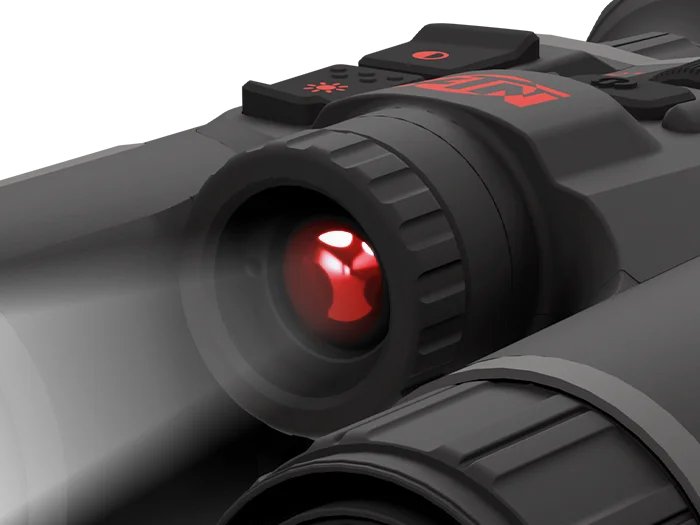
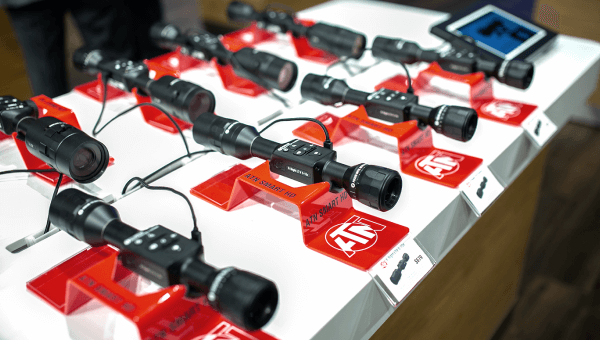
The ATN Binox-6 Dual 640x512 | 3-24x (SKU MSBNB6635A) is what sits on my tripod. Thermal side: 640×512, 12µm VOx uncooled, 50 Hz, ≤15mK NETD, 35 mm germanium objective at F/1.0, 12.52° × 9.41°, 3-24x, and a published detection range of 3100 m. Day and low-light side: a 4K 3840×2160 sensor behind a 55 mm F/2.0 lens with night and twilight modes and a Smart IR illuminator rated to 400 m at night — useful either side of dark, when deer are moving but thermal alone will not show antler detail. The rangefinder reaches 1000 m at ±1 m. Add GPS, compass, 64 GB of recording, two replaceable 18650 cells at about 8 hours, IP67, a tripod mount and 730 g / 1.61 lbs. It lists at $3,955 with a published promotional price of $2,895. For the walking part I carry the ATN BlazeTrek 6 640x512 | 1.5-12x (SKU TIMNBLT619G6): ≤18mK, a wide 22.8° × 18.3° field of view, 1000 m detection, about 6.5 hours of runtime and 320 g in a pocket, at $1,865 list / $1,299 promotional. Our guide to the best thermal binoculars covers the rest of the range.
Is thermal worth it for scouting alone?
If you hunt the same ground every year, yes, and the reason is pressure rather than pixels. Trail cameras tell you a deer passed a tree; they do not tell you the route he took or what he did in the forty minutes before. Walking the property to find that out is what costs you the season. An optic that collects the same information from four hundred yards off, night after night, without a boot print on the trail, pays for itself in the one thing you cannot buy back.
Rut-season night scouting: common questions
Can you scout deer at night with thermal legally?
That depends on where you are. Rules on thermal devices, night-time presence afield and what you may carry differ by state and sometimes by county, and scouting is often treated differently from hunting. Check your current regulations first.
How many nights of scouting do I need before I move a stand?
Several nights of the same observations, spread across different weather. One night is an anecdote. Repeat visits are what you are looking for, not the single best sighting.
Do thermal binoculars spook deer?
The device does not. Thermal is passive — it collects heat rather than projecting anything — so there is no beam to notice. What spooks deer is your scent, your silhouette and the noise of reaching your vantage.
How far away can thermal binoculars pick up a deer?
Further than you can identify one. ATN publishes a 3100 m detection range for the Binox-6 Dual 640x512 | 3-24x, and detection means a heat signature on the screen. Telling a buck from a doe happens at a fraction of that.
Is a thermal monocular enough for deer scouting?
For moving around, yes; for the sit itself it is the weaker tool. A monocular gives you one eye, no rangefinder and more fatigue over a long hold. Right for checking your entry route, wrong for two hours of watching a field.
What should I write down on a scouting night?
Four columns: where the animal entered the field, which trail it used, the time, and the measured distance and heading from your vantage. Put weather and wind direction at the top of the page.
The short version
Watch from outside the ground you intend to hunt, collect entry point, trail, time, range and heading, repeat for several nights, and hang the stand downwind of whatever the notes keep pointing at. Deer movement at night is readable now in a way it never was, but only if you stay off the property while you read it. Once the season opens and a shot goes wrong, read our guide to finding deer at night with thermal, or look through the current ATN thermal binoculars.
Quick spec reference
- Featured optic: ATN Binox-6 Dual 640x512 | 3-24x, SKU MSBNB6635A — $3,955 list / $2,895 promotional
- Thermal: 640×512, 12µm VOx, 50 Hz, ≤15mK NETD; 35 mm (Ge) F/1.0; 12.52° × 9.41°; 3-24x; 3100 m detection
- Day, night, ranging: 3840×2160 4K, 55 mm F/2.0; night and twilight modes; Smart IR to 400 m; LRF 1000 m at ±1 m, 905 nm Class 1
- Data and power: GPS, compass, 64 GB, Wi-Fi, two replaceable 18650 cells at ~8 hrs; IP67, 730 g / 1.61 lbs