The shot felt right, the deer ran, and now it is full dark and you are standing where you think it was standing. Nobody practices this part. Learning to find deer at night with thermal will not make a recovery automatic, but it changes what you can see while you work: a warm body against cool ground, an animal bedded sixty yards past where the blood quit. What it will not do is follow a blood trail for you. Below is how I use a handheld on a recovery, in the order the night actually happens.
Thermal finds bodies, not blood. Give the animal the time it needs, mark your last blood by hand, then sweep cover with a handheld — and understand that a dead deer cools toward the temperature of the ground around it, so the sooner you look, the brighter it reads.
What thermal recovery actually is
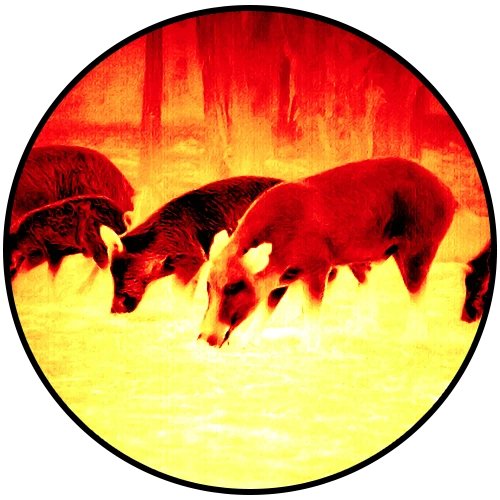
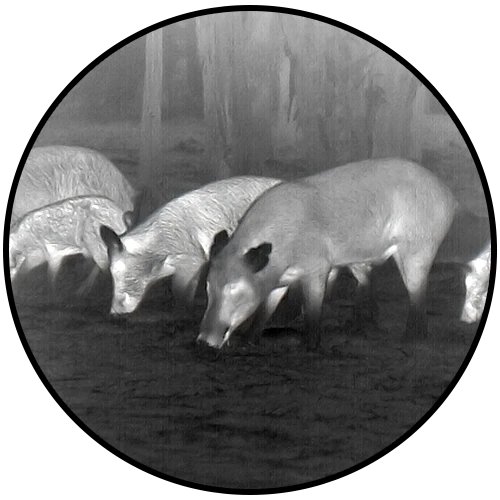
It is a search tool, not a tracking tool. A thermal monocular reads the temperature difference between an object and its background and paints that difference on a screen, so it shows you shapes warmer or cooler than the leaves, grass and dirt around them. On a recovery that buys three things: you check a bedding thicket from outside instead of crashing through it, you clear a field edge in one sweep instead of a grid walk, and you can see where everyone else in the party is standing. It does not read blood, it does not read hair, and it will not tell you which deer is yours when five are in the same field.
How a thermal recovery runs, step by step
Work it in this order and you will stop walking past animals.
- Mark the shot, then stop moving. Mark where you stood and where the deer stood — tape, a pin on your phone, a jacket on a limb.
- Give it time, and base the time on the hit. About half an hour for a clear lung hit, several hours for a liver hit, most of the night for a gut hit. Pushing a wounded animal is the most common way a recovery turns into a loss.
- Walk to first blood with a light. Blood, hair and track direction are a white-light job. Leave the thermal in your pocket.
- Trail the blood until it stops. Flag every spot, slow down as the trail thins, mark the last confirmed blood.
- Now bring the thermal up. From that last blood, stand still and sweep in slow overlapping arcs: near cover, field edge, far treeline. A deer that is down reads as a solid patch, not an outline.
- Check thick cover from outside it. Creek bottoms, blowdowns, cedar thickets, standing corn — walk the edge and look in.
- Confirm before you approach. A warm patch could be your deer, another deer, a hog, a coyote already on it, or a person. Identify it, call out to your party, approach from behind and to the side.
What the handheld is good for — and what it is not
It is good for covering ground. A monocular rides in a jacket pocket, comes up in one hand, and leaves the other hand free for a light, a sling or a fence wire. Scanning and aiming are two jobs and they deserve two devices: sweeping a pasture with a rifle-mounted optic points a muzzle at everything you are curious about, including your buddy. Where the handheld falls short is detail. A deer down for three hours in cool air is dimmer than one that went down twenty minutes ago, and a wet animal in rain can read almost flat against wet ground. Thermal narrows the search; your eyes and your light still close it.
Thermal, white light and the blood trail: three tools, three jobs
Each one does something the others cannot. White light reads blood, hair and the colour of what you find — bright and frothy, dark and tacky, green and sour — and that is how you decide how long to wait. The blood trail is the only thing that tells you where the animal actually travelled; thermal has no memory and shows you only this moment. Thermal is the wide net: it checks the places the trail suggests far faster than feet can, and it keeps you from stumbling into an animal that is still alive. Light to read the ground, trail to choose direction, thermal to search — in that order.
Key features to understand before you trust one on a recovery
- Sensor resolution — how many thermal pixels build the image. The ATN BlazeTrek 6 640x512 runs a 640×512 array on a 12µm pixel pitch: the difference between a recognisable animal shape and a warm smudge once you zoom.
- NETD — the smallest temperature difference the detector can pull out of its own noise, in millikelvin, lower being better. This one is specified at ≤18mK, and a cooling carcass losing contrast against the ground is exactly what that sensitivity is for.
- Field of view — how much is on screen at once. At 22.8° × 18.3° it is built for sweeping rather than reaching, which is the right trade for a search.
- Close focus — manual focus from 1 m to infinity, so the ground at your boots and the far fence both come clear.
- Hot Point Tracking — the device flags the hottest object in frame. In cool woods after midnight that is usually what you came for.
- Palettes — six: White Hot, Black Hot, Iron Red, Alarm, Green Hot and Sepia. Pick the one your eye reads fastest and leave it there.
- Recording — video, audio and stills to 32 GB of internal storage, off over USB Type-C or through the ATN 6 Connect app. Useful when you have to show a landowner where you walked.
What to look for before buying one for this work
Three things, in this order. Battery, because a recovery is unplanned and starts after a full evening of sitting: the BlazeTrek 6 is specified at roughly 6.5 hours on its internal rechargeable cell and accepts external power over USB Type-C, so a pocket bank in the truck is cheap insurance. Weather sealing, because you will be in wet grass and you will get rained on — IP67 and a −30°C to 55°C working range cover a normal season. And weight: 320 g, or 0.7 lb, with the battery in it. Everything else is secondary to a device still running at two in the morning.
Common mistakes on a night recovery
The first is going in too soon because the device makes you feel confident; a bumped deer runs until it cannot, usually out of your reach. The second is sweeping fast — a slow arc with overlap finds animals, a panic scan finds nothing. The third is reading every warm spot as your deer: heat is also a sun-warmed rock, a dog, a hog, a neighbour who came to help. The fourth is abandoning the blood trail the moment the device comes out; the trail is your direction, and without it you are searching a county. The last is legal rather than practical — rules on night recovery, artificial light and carrying a firearm after hours vary by state and sometimes by county, so check yours before the season, not at midnight.
The monocular I carry for this
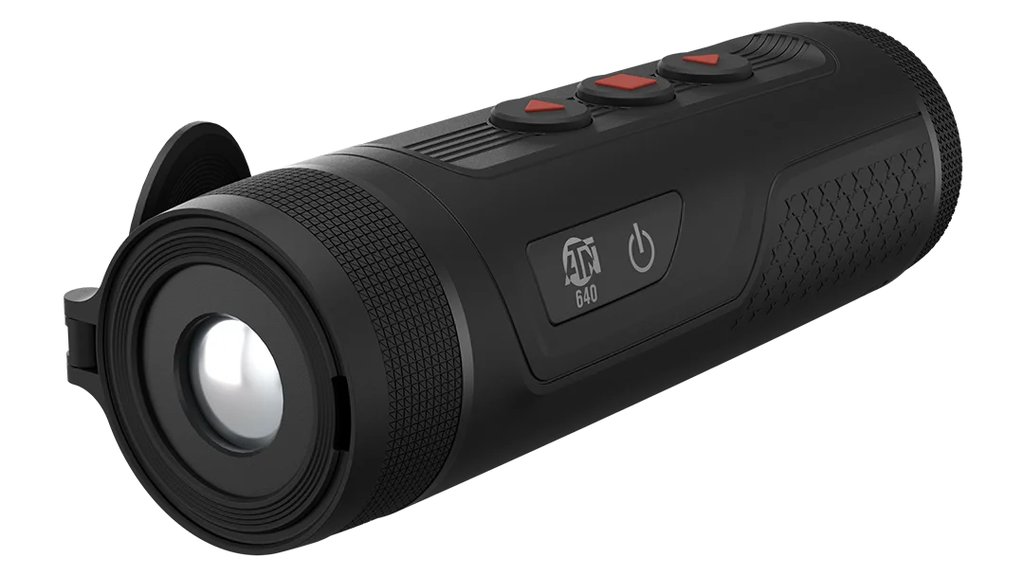
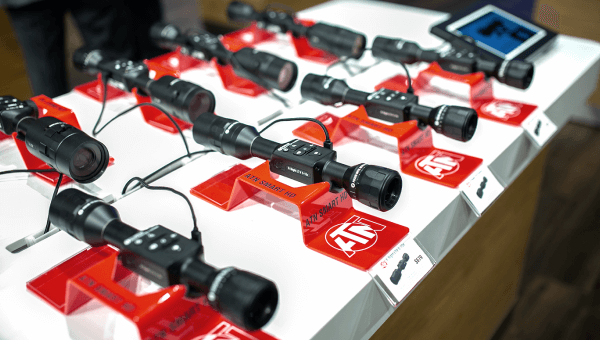
The ATN BlazeTrek 6 640x512 | 1.5-12x is the one that lives in my jacket. It runs a 640×512, 12µm VOx uncooled array at 50 Hz with ≤18mK NETD behind a 19 mm germanium objective at F/1.0, giving 22.8° × 18.3° of field of view, 1.5-12x magnification and digital zoom at 1×, 2×, 4× and 8×. ATN publishes 1000 m of detection range for it. Manual focus from 1 m to infinity, 800×600 OLED, 32 GB of storage, SharpIR processing on the live picture, internal rechargeable battery at about 6.5 hours, USB Type-C, Wi-Fi, IP67, 320 g / 0.7 lb. It lists at $1,865 with a published promotional price of $1,299. More on choosing a handheld in our guide to the best thermal monocular under $1,000.
Is thermal worth it for deer recovery?
If you hunt enough evenings that a marginal hit is a question of when rather than if, yes. One recovered animal is worth more than the device, and not only in meat — a deer you never find is the part of hunting that stays with you. What thermal buys is time: fewer hours grid-walking, fewer mornings going back out at first light, fewer close calls walking up on an animal that was not finished. It does not buy a better shot, and it does not replace waiting.
Finding deer at night: common questions
Can a thermal monocular see a blood trail?
No. Blood on the ground loses its temperature difference within minutes and reads like the dirt it fell on. Thermal finds the animal; a white light finds the blood.
How long should I wait before tracking a deer at night?
That is a judgement call made with your light, not your thermal. Common practice is around thirty minutes for a clear lung hit, several hours for a liver hit, and most of the night for a gut hit. When unsure, wait longer.
Can you still see a dead deer on thermal hours later?
Sometimes, but it gets harder. A carcass cools toward the temperature of the ground, so the contrast that makes it visible keeps shrinking. Cold, wet or windy conditions shorten that window further, which is the argument for looking sooner.
How far away can a thermal monocular pick up a deer?
Further than you can identify one. ATN publishes 1000 m of detection range for the BlazeTrek 6 640x512 | 1.5-12x, and detection means a heat signature on screen, not a deer you can tell from a hog.
Is a monocular or a thermal scope better for recovery?
A monocular, every time. It works in one hand, leaves the other free, and keeps you from sweeping the woods with a muzzle while you search. The scope's job starts and ends with the shot.
Does thermal work through brush and tall grass?
It sees through gaps, not through material. A body behind leaves shows as broken patches of heat where the gaps are — usually enough to make you move ten yards sideways and look again. Solid cover blocks it completely.
The short version
Mark the shot, wait the right amount of time, trail the blood with a light until it stops, then let the thermal search the places the trail pointed at. Confirm what you are looking at before you walk up on it, and remember the animal gets dimmer every hour. For the same thinking applied to a very different night — pressure on a property rather than one animal — read our landowner's guide to night hog work, or look through the current ATN thermal monoculars.
Quick spec reference
- Featured optic: ATN BlazeTrek 6 640x512 | 1.5-12x, SKU TIMNBLT619G6 — $1,865 list / $1,299 promotional
- Sensor and optics: 640×512, 12µm VOx uncooled, 50 Hz, ≤18mK NETD; 19 mm (Ge) F/1.0; 22.8° × 18.3°; 1000 m detection range
- Viewing: 1.5-12x, zoom 1×/2×/4×/8×, 800×600 OLED, focus 1 m to infinity, six palettes, Hot Point Tracking, SharpIR
- Power and build: internal rechargeable battery ~6.5 hrs, USB Type-C external power, IP67, −30°C to 55°C, 320 g / 0.7 lb