A thermal monocular is a small, single-eyepiece device that lets you see heat instead of light. Point it at a field on a dark night and a warm animal shows up as a bright shape against the cool background, even though your eyes see nothing. It reads the infrared energy that everything gives off, so it works in total darkness, light fog, and thin cover with no flashlight needed. It is the one-hand, grab-and-go member of the thermal family. This guide explains what a thermal monocular is, how it works, and what to look for, using the compact ATN BlazeSeeker 6 as a real, beginner-friendly example.
A thermal monocular is a handheld, single-eyepiece optic that sees heat instead of light. A germanium lens focuses infrared energy onto a sensor, a processor turns it into a live image, and warm animals glow against a cool background in full darkness. It is light, one-handed, and ideal for scanning and finding game. The ATN BlazeSeeker 6 is a compact, affordable example.
What is a thermal monocular, exactly?
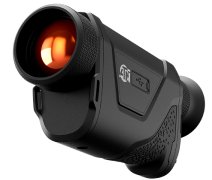
A thermal monocular is a handheld optic with a single eyepiece that builds its picture from heat rather than visible light. Instead of the glass lenses in normal optics, it uses a germanium lens that lets infrared energy through, a heat sensor, and a small screen you look at with one eye. Warmer objects appear bright and cooler ones dark, so a living animal stands out clearly no matter how black the night. Because it senses heat, it needs no ambient light at all. The ATN BlazeSeeker 6 is a good picture of the category: pocket-sized, light, simple to use, and built around the same heat-imaging idea as far bigger units.
How does a thermal monocular work?
- Heat leaves the target. A warm animal radiates more infrared energy than the cool ground and air around it.
- The germanium objective lens gathers and focuses that heat. Ordinary glass blocks infrared, so thermal optics use germanium.
- The heat lands on the thermal sensor, a grid of tiny detectors. On the BlazeSeeker 6 that grid is 256x192, and each point measures the heat that hits it.
- The processor turns each detector reading into a brightness value and builds a live picture at a 50 Hz refresh rate, so movement stays smooth.
- You choose a color palette. White Hot shows heat as white, Black Hot flips it, and Iron Red paints the hottest spots in warm colors for easy reading.
- The image appears on the internal display, and you scan the scene with one eye, zooming in to confirm a warm shape.
What can you use a thermal monocular for?
- Finding game in the dark — a warm coyote or hog glows against the cool ground with no light at all.
- Scanning wide and fast — the wide field of view sweeps a lot of ground quickly to catch movement.
- Scouting a property — see how many animals are out and where they move without spooking them.
- Confirming a target — zoom in to identify what you are looking at before you decide anything.
- Predator and hog control — both are most active after dark, exactly when a thermal shines.
- Property and camp security — spot people or animals moving in the dark around a site.
Thermal monocular vs night vision
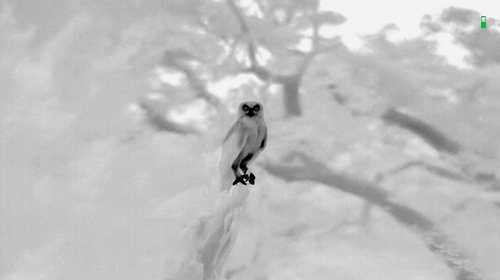
They sound similar but work in opposite ways. Night vision amplifies faint existing light like starlight, so it needs at least a little light to work and shows a green-tinted image with normal detail. A thermal monocular reads heat and needs no light at all, so it works in pitch black and cuts through light fog and brush, but it shows heat shapes rather than fine texture. For finding a warm animal against cool ground, thermal wins easily. For reading detail in a dimly lit scene, night vision has its place. Many hunters lean on thermal for detection because heat is so much harder for game to hide.
Key features to understand
- Sensor resolution (256x192) — the number of dots in the picture; more dots let you zoom further before it turns blocky.
- NETD (sensitivity) — a low number like 20mK or under means a cleaner picture in humid or foggy air.
- Magnification (1.2-9.6x) — a low base gives a wide view for scanning, and zoom reaches out to confirm a target.
- Field of view — a wide view, like the BlazeSeeker's 24 by 18 degrees, makes scanning and tracking easier.
- Refresh rate (50 Hz) — keeps a moving animal smooth instead of smeared.
- Palettes — White Hot, Black Hot, and Iron Red let you draw heat the way your eye reads fastest.
What to look for before buying your first thermal monocular
- Enough resolution for your ranges — for close scanning a 256 sensor is plenty; longer work wants more dots.
- A wide field of view — makes finding and following animals far easier for a beginner.
- Simple, friendly controls — you want to scan, not fight menus, in the dark.
- Battery that lasts your outing — look for a full evening of runtime.
- Weatherproofing — an IP67 rating handles dew and rain.
- Handy extras — recording and a phone app let you share and review what you saw.
Common beginner mistakes
- Expecting X-ray vision — thermal reads surface heat and cannot see through walls, trunks, or hills.
- Confusing it with night vision — thermal senses heat and needs no light; night vision amplifies light.
- Over-buying resolution — for close scanning a compact 256 sensor does the job well and saves money.
- Expecting daytime detail — thermal shows heat shapes, not fine color and texture.
- Ignoring field of view — a narrow view makes scanning slow and frustrating for a new user.
- Forgetting to charge it — plan your runtime and top it off before you head out.
Example: the ATN BlazeSeeker 6
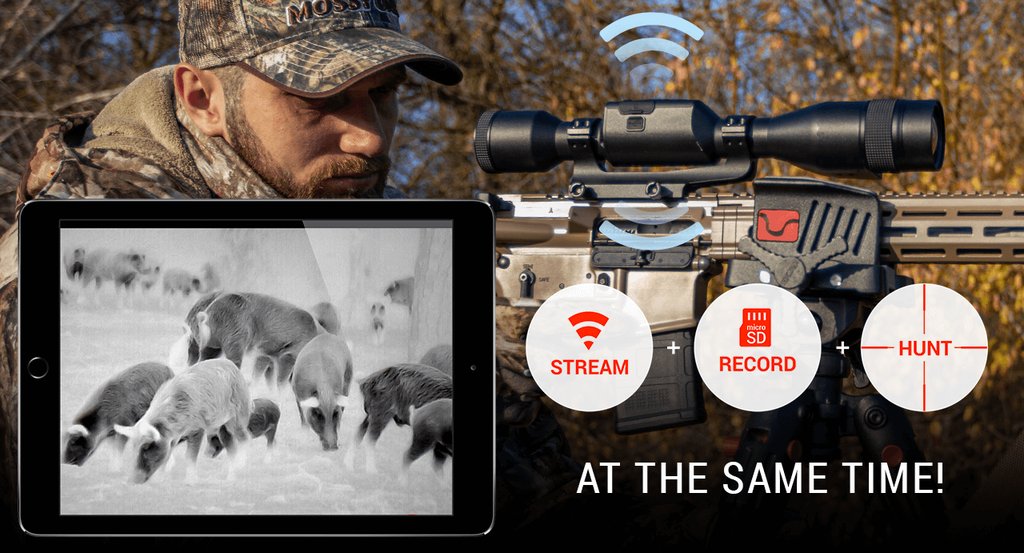
The ATN BlazeSeeker 6 256x192 is an easy first thermal monocular because it keeps things simple without cutting the good stuff. Its 256x192 sensor with 20mK or lower NETD gives a clean picture for close-range scanning, and the low 1.2x base opens a wide 24 by 18 degree field of view that makes finding and following animals easy, zooming up to 9.6x to confirm. At about 270 grams it is genuinely pocketable, and its 345 m detection range covers typical backyard-to-field ranges. The 50 Hz refresh keeps runners smooth, it carries six color palettes and SharpIR image enhancement, records to 32 GB, streams over Wi-Fi through the ATN Connect 6 app with an AI assistant, and is IP67 waterproof. It sits in the budget tier, so it is a low-risk way to get into thermal.
Is a thermal monocular worth it for a beginner?
For most new users, yes. A thermal monocular is the simplest, most affordable way to start seeing heat, and it instantly changes how much you notice on a dark property. You find animals you never knew were there, you scout without spooking game, and you learn how thermal reads a scene before spending more on a scope or binocular. A compact budget-tier unit like the BlazeSeeker 6 keeps the risk low while giving you a real ATN feature set, so it is an easy first step. If you want the lightest, cheapest door into thermal, this is it. Browse the full range of thermal monoculars to see how the sensors and views scale up from here.
How this guide was put together
This guide is built on ATN's published 6th-generation specifications and real field use, not marketing copy. Every spec is explained in plain terms with its practical meaning for what is a thermal monocular, and the honest limits are flagged as clearly as the strengths. The example device is ATN's own current-line model, shown to make the numbers concrete — treat it as an in-house reference, and compare the specs against your own needs before buying.
Frequently Asked Questions
What is a thermal monocular used for?
It is used to find and identify warm objects in the dark, most often animals while scouting or hunting. It also works for property and camp security. Because it reads heat, it works in total darkness and cuts through light fog and thin cover.
How is a thermal monocular different from binoculars?
A monocular has one eyepiece, so it is smaller, lighter, and faster to grab and pocket. Thermal binoculars have two eyepieces for more comfortable, steady viewing over long sessions. Both sense heat the same way.
Does a thermal monocular need light to work?
No. It reads the infrared heat that objects give off, not visible light, so it works in complete darkness at midnight just as well as at dusk. That is the key difference from night vision, which needs at least faint light.
Can a thermal monocular see through walls?
No. It detects the surface heat facing you and cannot see through solid objects like walls, tree trunks, or hills. It can pick up heat leaking through gaps in light brush, which is why animals in thin cover often still appear.
Is a 256x192 sensor good enough for a beginner?
Yes, for close and mid-range scanning it is plenty. A 256 sensor like the one in the BlazeSeeker 6 gives a clean picture at typical property and field ranges while keeping the unit small and affordable. You can always step up in resolution later.
Why is the ATN BlazeSeeker 6 a good first thermal monocular?
It is compact, light, and sits in the budget tier while still including SharpIR enhancement, six palettes, recording, a phone app, and IP67 waterproofing. That combination makes it a low-risk, easy-to-use entry into thermal for a new user.
Quick reference specsQuick reference — ATN BlazeSeeker 6 256x192 1.2-9.6x: 256x192 sensor; <=20mK NETD; 1.2-9.6x (up to 8x digital zoom); 345m detection; ~8 hours battery. Best for compact, wide-view close-range scanning.
Curious what is really moving out there after dark? The ATN BlazeSeeker 6 is a light, pocketable, budget-tier way to start seeing heat, with a wide scanning view, six palettes, recording, and a friendly phone app. Point it at a dark field and watch warm shapes appear where your eyes saw nothing. When you are ready to compare sensors, reach, and features, explore the full thermal monoculars lineup and pick the one that fits how you scout and hunt. Seeing heat for the first time changes everything.
Created: July 7, 2026 · 08:31:01 UTC