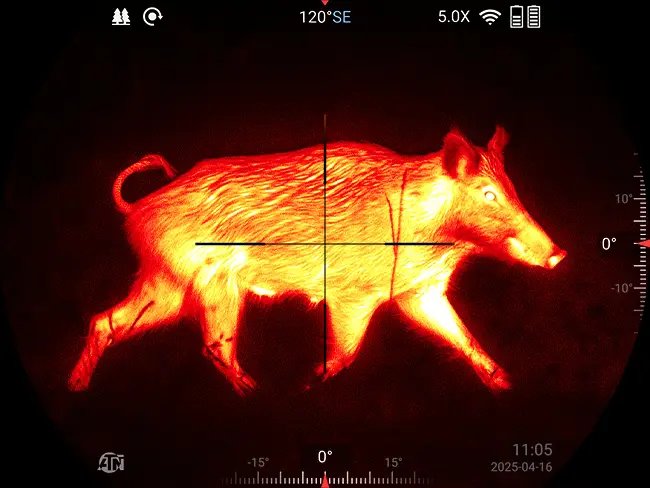
A hog at 180 yards in White Hot is a bright shape with legs. It is not an anatomy diagram, and the brightest part of it is almost never where you want the bullet to go. Thermal shot placement is a different skill from daylight shot placement, not because the animal changed but because the picture did: you are reading surface temperature, and surface temperature tells you very little about what is underneath. Here is how I read the image, and where I decide not to shoot.
A thermal image shows skin temperature, not organs, so the brightest area is usually the head, ears or worked muscle rather than the vitals. On a hog the vitals sit lower and further forward than most hunters aim — tight behind the ear, in the lower third of the body. On a coyote they sit just behind the front leg, mid-body. Angle decides everything, and if you cannot name the angle out loud, you do not have a shot.
What a Thermal Image Actually Shows You
A thermal image shows the temperature of the outside of the animal, and nothing about what lies beneath it. That single fact explains most bad shots taken at night. The sensor is reading hide, hair, mud and moisture, so the picture you are aiming at is a map of the surface rather than a cutaway of the chest.
Three practical consequences. The head and ears usually read brightest, because they are thinly covered and well supplied with blood — aiming at the brightest point puts you high and forward of the vitals. A hog that has been running reads hot across the shoulders and back from worked muscle, which looks like a glowing target and is not one. And a wet or freshly wallowed hog reads cooler and patchier, which can hide the body line you use to judge angle.
Where the Vitals Sit on a Hog
On a hog the heart and lungs sit lower and further forward than on a deer, and that mismatch is the most common placement error I see. The usable window is tight behind the ear and in the lower third of the body depth — not the mid-body "behind the shoulder" hold that works on whitetail.
Two more things matter. A mature boar carries a shield of dense cartilage over the shoulders that can turn a marginal bullet, which is an argument for the ear-and-forward hold rather than a shoulder hold. And a hog's body is deep relative to its height, so being high by a hand's width puts you over the lungs and into the back, with a long night to follow. When in doubt on a hog, go lower than instinct suggests and further forward.
Where the Vitals Sit on a Coyote
A coyote's vitals sit just behind the front leg at roughly mid-body, and the target is far smaller than its heat signature suggests. The animal looks bigger in thermal than it is: a coyote is mostly coat, and a winter coat glows across a volume well beyond the body inside it.
That inflation is the trap. Centre-holding the bright shape on a coyote in February puts you high, in hair rather than lungs. Read the leg line instead — the front leg is the landmark that tells you where the chest ends — and hold behind it, level with the midpoint of the body depth rather than the midpoint of the glow.
Reading the Angle
Angle decides whether a hold is a shot or a wound, and it is the thing thermal hides best. Four cases cover almost everything.
- Broadside. The highest-percentage presentation and the one to wait for. Both lungs are available, the window is widest, and the aiming landmarks — ear, shoulder crease, leg line — are all visible.
- Quartering away. Acceptable with an adjusted hold: aim further back and angle the bullet forward through the chest toward the opposite shoulder. This is the presentation that forgives small errors, because the bullet travels through more of the animal.
- Quartering to. A hard shot with a small window, blocked on a boar by the shield. I pass this one unless the animal is close, stationary and I have a solid rest.
- Head-on or straight away. Not a shot. The target is small, bone-protected, and the margin for error is nothing. Wait for the animal to turn or let it go.
Say the angle out loud before you break the shot. If the word does not come easily, the picture is not clear enough to shoot from.
Why Angle Is Harder to Read at Night
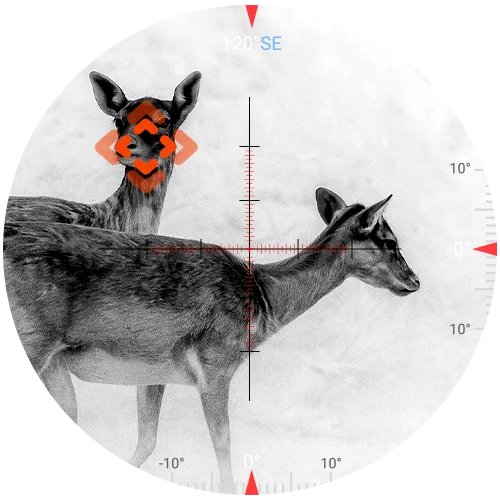
Thermal flattens an animal into a silhouette, and silhouettes hide the depth cues you normally use to judge angle. In daylight you read the shoulder's curve, the taper of the ribs and the shading down the flank. At night you get a bright shape, and a hog quartering to you at 200 yards and a hog standing broadside can look remarkably similar at low magnification.
Resolution is what buys that detail back. A 640×512 sensor holds the leg line and the shoulder crease at distances where a 384×288 sensor has merged them into one glowing mass — and no amount of zoom recovers detail the sensor never captured, which is the point the piece on digital zoom makes with the numbers. The honest rule is that your maximum shooting distance is the distance at which you can still read the angle, which is always shorter than the distance at which you can see the animal.
What the Optic Helps With, and What It Does Not
- Sensor resolution buys body detail. 640×512 against 384×288 is the difference between seeing a leg line and guessing at one. For shot placement this matters more than magnification.
- Sensitivity separates the animal from the background. ≤15mK on the full-size ThOR 6 bodies is what keeps a hog's outline crisp against sun-warmed ground on a humid evening.
- A rangefinder removes the guess under the hold. The ThOR 6 LRF models range to 1,000 m at ±1 m and feed that figure to the ballistic calculator, so your holdover is based on a measurement rather than an estimate.
- Recoil Activated Video lets you review what happened. Watching your own shot afterwards is the fastest way to learn where you actually held, as opposed to where you remember holding.
- None of it decides placement for you. The optic shows heat and distance. Reading anatomy and angle is the hunter's job, every time.
When Not to Shoot
- When you cannot name the species out loud. Heat is not identification, and a warm shape is not a target. This rule has no exceptions.
- When you cannot name the angle. If you are unsure whether the animal is quartering to or standing broadside, you are unsure where the vitals are.
- When you do not know what is behind it. Thermal shows heat, not fences, buildings, livestock or rising ground. Backstops are judged in daylight, before you hunt the place.
- When the animal is moving. A walking hog is a moving window. Wait for the stop, or let it go.
- When you have not confirmed the range. At 300 yards, an estimate that is off by 40 is a gut shot rather than a miss.
- When you are not steady. A rest you are fighting is a shot you should not take, regardless of how good the picture looks.
The Setup I Use for This
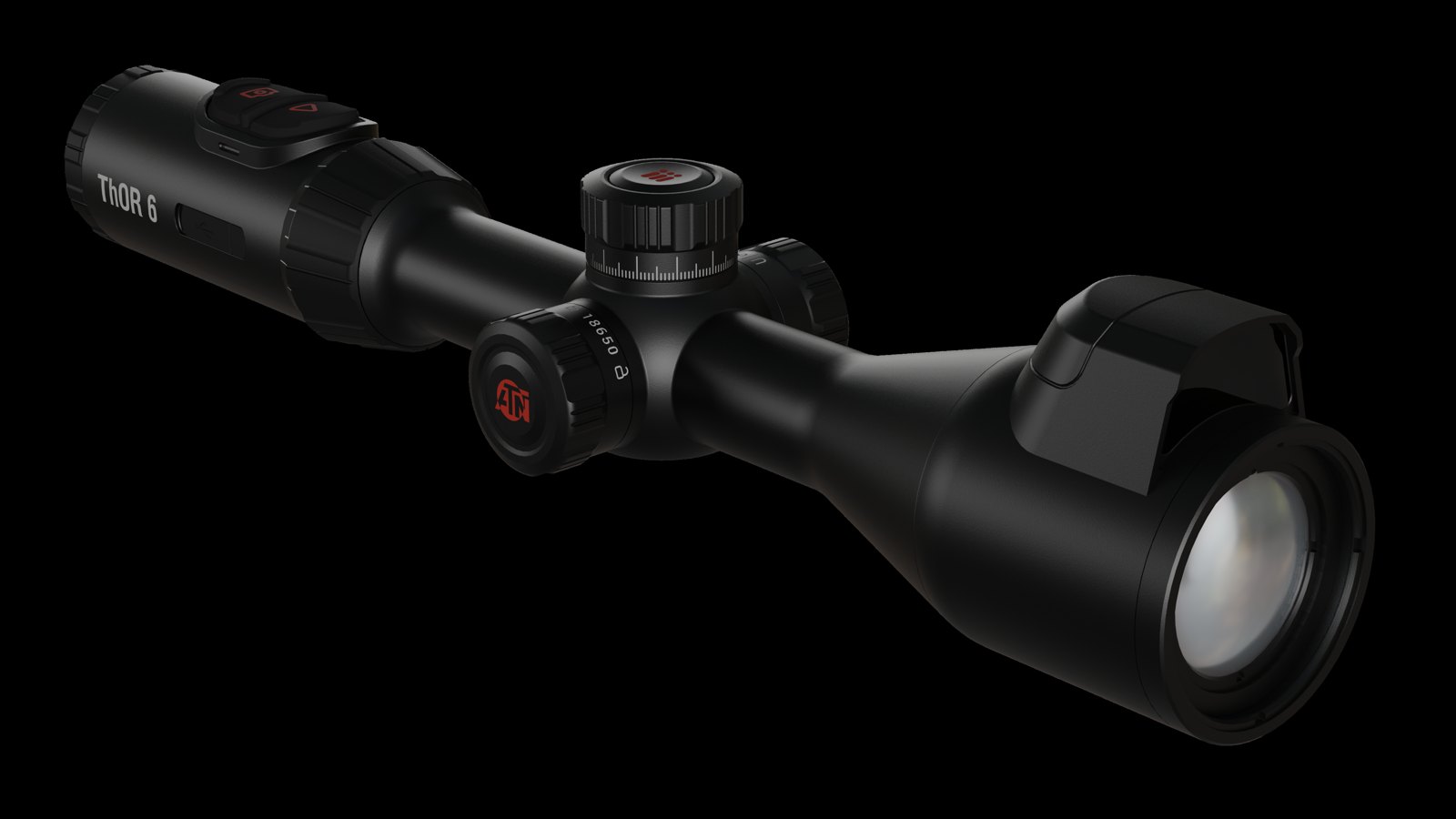
I run an ATN ThOR 6 LRF 640 2-16x at $2,595 for exactly this problem: enough sensor to read the angle, and a rangefinder so the holdover is measured. The specifics: 640×512 at ≤15mK on a 12μm core, 2-16x through a 35 mm germanium objective, 3,100 m detection range, a 905 nm Class 1 rangefinder good to 1,000 m at ±1 m feeding the ballistic calculator, six palettes, Recoil Activated Video, about nine hours on two 18650 cells, 855 g.
If the budget does not reach, the ThOR 6 384 2.5-20x at $1,595 carries the same ≤15mK sensitivity and will show you the animal clearly. What it will not do is hold the body detail as far out, so your honest shooting distance comes in — which is a correct outcome rather than a compromise.
Frequently Asked Questions
Where do you aim on a hog with a thermal scope?
Low and forward: tight behind the ear, in the lower third of the body depth. A hog's heart and lungs sit further forward and lower than a deer's, and a mature boar's shoulder shield is another reason to favour the ear-and-forward hold over a mid-shoulder one.
Where do you aim on a coyote at night?
Just behind the front leg at mid-body depth. A winter coat makes a coyote look considerably larger in thermal than it is, so holding the centre of the bright shape puts the bullet high in hair. Use the front leg as your landmark rather than the outline of the glow.
Why is the brightest part of the animal not the vitals?
Because a thermal sensor reads surface temperature. Heads and ears are thinly covered and well supplied with blood, so they read hottest; worked muscle along the back and shoulders reads hot after an animal has moved. The chest cavity is insulated by hide, fat and hair, and often reads cooler than the parts you should not shoot at.
Can you take a quartering shot at night?
Quartering away, yes, with the hold moved back so the bullet angles forward through the chest. Quartering to is a small window and I pass it unless the animal is close, still and I am solidly rested. Head-on and straight away are not shots.
What magnification should you use for the shot?
Enough to read the angle and no more. Zoom narrows your field and does not add detail the sensor did not capture, so winding up to maximum before a shot usually costs you situational awareness without improving placement.
Does a bigger sensor improve shot placement?
Yes, by holding body detail further out. A 640×512 sensor keeps the leg line and shoulder crease readable at distances where a 384×288 sensor has blended them together. Placement depends on reading landmarks, and landmarks are resolution.
What I Would Practise This Season
Learn the two landmarks — the ear on a hog, the front leg on a coyote — until you find them without thinking, and get into the habit of saying the angle out loud before the shot. Then review your own footage. Recoil Activated Video will tell you honestly where you held, and a season of that feedback is worth more than any amount of reading. If you are still building the setup, the lineup breakdown covers which sensor fits which distance, the hog hunting guide covers getting into position in the first place, and the full range is on the ATN thermal scopes page.
Quick Spec Reference
- ATN ThOR 6 LRF 640x512 | 2-16x: $2,595 · 640×512, 12μm · ≤15mK · 35 mm germanium, F/1.0 · detection 3,100 m · LRF 1,000 m, ±1 m · ballistic calculator · ~9 hrs · 855 g / 1.89 lbs · 64 GB · IP67
- ATN ThOR 6 384x288 | 2.5-20x: $1,595 · 384×288, 12μm · ≤15mK · 25 mm germanium · detection 2,300 m · ~9 hrs · 790 g / 1.74 lbs · 64 GB · IP67