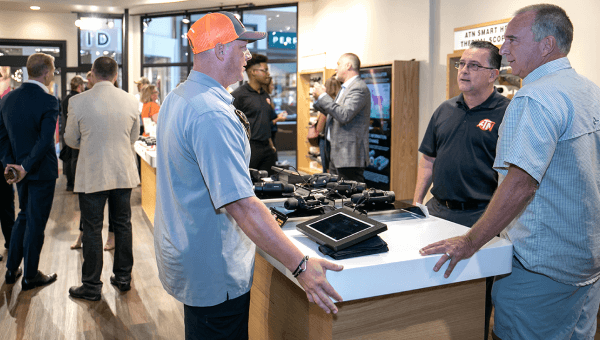
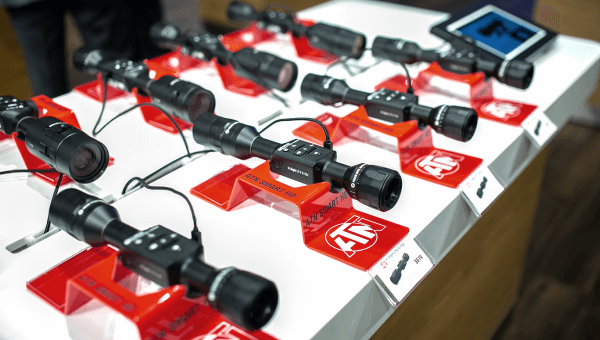
Put your eye to a good thermal optic and the first thing that hits you is how far you can read. A hog 250 yards out on cold grass glows like a lamp, and you can tell it is a hog before your finger goes near the trigger. That is what a sharp thermal scope view buys you. A soft, grainy picture leaves you guessing at a warm blob; a clean one hands you a shape you can identify at a glance. This roundup ranks three ATN ThOR 6 640x512 scopes by the job in front of you, so the picture matches the work: reading detail far out, pulling shapes out of thick cover, or grabbing a target fast.
The sharpest thermal scope view in ATN's 6th-gen line comes from the ThOR 6 640x512 3-24x. Its 640x512 sensor and sub-15 mK sensitivity give you the finest detail and the farthest heat pickup, which matters most for identifying game at distance. Drop magnification or resolution to trade a little reach for a wider, faster view.
Quick answer: top picks by the jobBest overall view (long-range ID): ATN ThOR 6 640x512 3-24x — sharpest picture, longest reach, reads detail far out.
Best for thick cover / fast pickup: ATN ThOR 6 640x512 2-16x — same high-res sensor, wider low-end so you catch movement in the brush.
Best value view: ATN ThOR 6 384x288 2.5-20x — a clean, adjustable image with six palettes at a friendlier tier for shorter work.
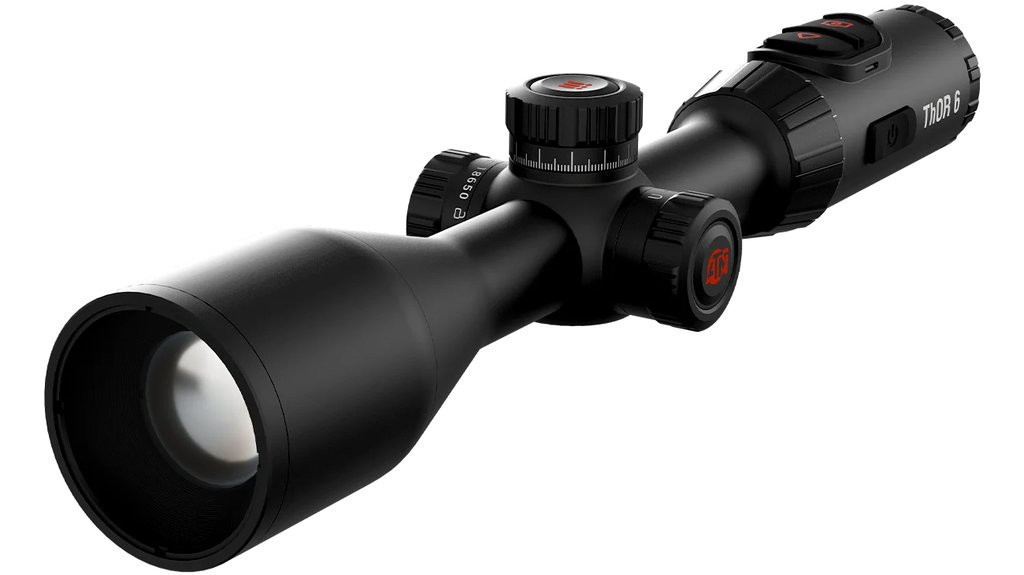
Why ATN's 6th-gen ThOR 6 view stands out
Every scope here runs the same 6th-gen platform: a Full-HD OLED display, sub-15 mK thermal sensitivity, and a smooth 50Hz-class refresh. NETD is the smallest temperature difference the sensor can tell apart, so a sub-15 mK number means faint heat, like a bedded deer under a cold moon, still separates cleanly from the ground. Resolution works like megapixels on a camera: more pixels means finer detail, so a 640x512 sensor paints a shape you can identify instead of a warm smear. The 50Hz refresh keeps the picture fluid when you pan or track a mover, so it never smears or lags behind your rifle.
ATN ThOR 6 640x512 3-24x: the sharpest view for long-range ID
This is the flagship, and it earns it on picture. The ATN ThOR 6 640x512 3-24x pairs the high-res 640x512 sensor with a 50 mm F/1.0 lens and detection out to 3650 m. When the job is identifying game as far as the dark lets you, this is the picture to beat.
Detail you can read at distance
The 640x512 sensor is the difference between guessing and knowing. At 250 yards you can read body posture and tell a coyote's low slink from a deer's tall frame. That is the extra pixels at work, packing more dots into the same shape so the edges stay crisp as you push in. SharpIR AI sharpens the image on the fly, so it holds together even in damp air that usually softens thermal.
Reach that keeps the shape whole
Stack 8x digital zoom on the 24x optical range and you can step in on a heat source far out and still keep an identifiable shape in the frame instead of a fat, blocky lump. Hot Point Tracking and PiP let you hold a wide picture and a zoomed aiming view at once, so long-range ID does not cost you the scene around the target.
Who it's for / not for
For you if the job is spotting and identifying game out on open ground at the edge of what you can see. Not for you if most shots are close and quick in heavy brush, where the tight 3x low end is more reach than the picture needs.
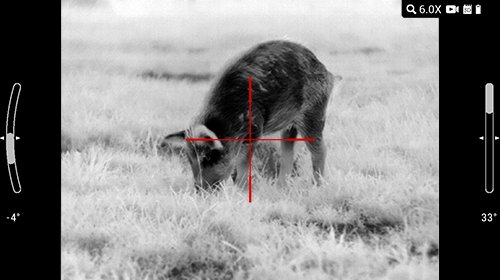
ATN ThOR 6 640x512 2-16x: best view for thick cover and fast pickup
Same high-res 640x512 sensor, same clean sub-15 mK picture, but the ATN ThOR 6 640x512 2-16x starts at 2x instead of 3x. That wider low end changes how the view feels when the job is close and quick in tight ground.
A wider field to grab movement
At 2x you see more of the woods at once, so a hog slipping between trees lands in your picture instead of blowing past the edge of a zoomed-in frame. The 35 mm lens and 3100 m detection are plenty for the ranges you actually shoot inside cover, and the full 640 detail means the shape is still sharp when you settle on it.
Swap a cell, keep the picture lit
It runs on replaceable 18650 batteries, so a long sit is a pocketful of spares from staying lit. When a fast pickup counts, you do not want the display dropping out mid-scan; drop in a fresh cell and the view comes right back.
Who it's for / not for
For you if you hunt woods and brush and want a fast, wide picture to catch and settle on close targets. Not for you if you need to identify game way out on open fields, where the flagship's longer reach pulls ahead.
ATN ThOR 6 384x288 2.5-20x: the best value view
The ATN ThOR 6 384x288 2.5-20x steps down to a 384x288 sensor, so the picture is not quite as finely detailed as the 640 models. Think SD next to HD. It is still a clean, honest view, just with fewer dots in the shape, and it is the pick when the job is short-to-mid work at a friendlier tier.
Six palettes to read the scene
It adds six color palettes, so you can flip from White Hot to Black Hot to Iron and pick whatever makes the animal pop against that night's background. Same sub-15 mK sensitivity keeps faint heat visible; you just lose a little edge sharpness at the far end of the zoom.
Lighter to carry, shorter to reach
At 790 g it is the lightest here, with 2300 m detection that covers most real hunting distances. The lighter, cheaper build is the trade for the coarser picture at long range. For the tier, it is a lot of usable view for the money you save.
Who it's for / not for
For you if you want a solid thermal scope view at a friendlier tier and your shots are short to mid range. Not for you if you routinely ID small game at long distance, where a 640 sensor's extra detail is worth the step up in price.
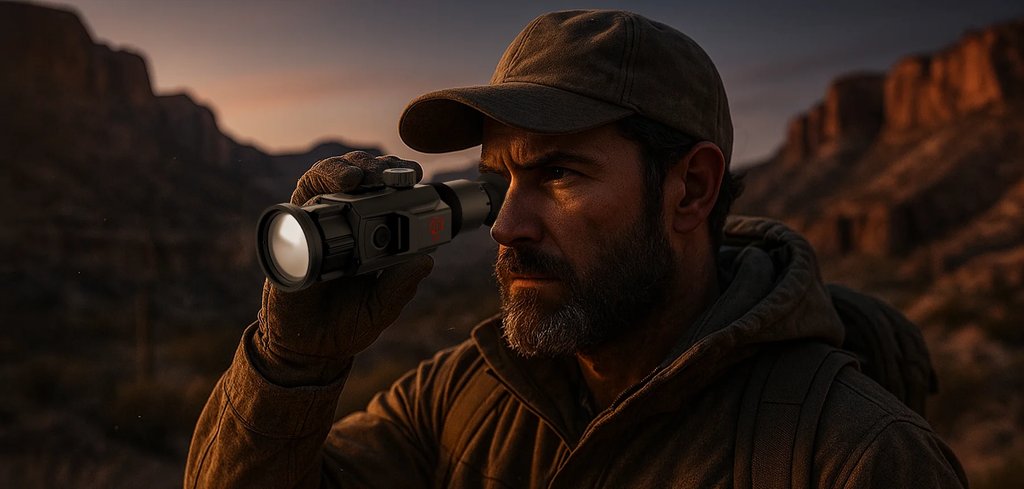
How to choose the right thermal scope view for your hunt
Match the picture to the job. The farther and smaller the targets, the more you want a 640x512 sensor and long detection. The tighter your cover, the more a wide low-end zoom matters over raw reach. Walk through these before you decide:
- Long-range open ground — go 640x512 3-24x for the most detail and the farthest heat pickup.
- Thick woods and brush — go 640x512 2-16x so a wider field grabs fast, close targets.
- Budget-minded, shorter shots — go 384x288 2.5-20x for a clean picture at a friendlier tier.
- Reading detail — resolution and NETD together decide how sharp the shape looks and how faint the heat can be.
- Tracking movers — the 50Hz-class refresh keeps a running animal smooth instead of smeared.
You can line all three up on the ATN ThOR thermal scope category page, which lists the full 6th-gen range and the view-related specs side by side.
How we picked these ATN thermal scopes
This is an in-house comparison of ATN's own current range, not an independent lab review. We looked only at the 6th-gen ThOR 6 line and judged each scope on the things that actually decide what you see through the glass, against real hunting use.
- Resolution — how finely the sensor paints a shape you can identify.
- NETD (thermal sensitivity) — how faint a heat difference the scope can still show cleanly.
- Detection range — the farthest you can pick up warm bodies against a cold background.
- Refresh rate — how smooth the view stays when you pan or track a mover.
- Weight — how it carries and handles on a long stalk.
- Battery — how long the picture stays lit on a real sit.
Honest trade-offs: the flagship's tight 3x low end is more reach than you want in close brush, and the 384 model's coarser picture shows at the far end of its zoom. None of these is the right pick for someone who only shoots close, cheap, and rarely at night. Check the specs against your own distances and terrain before you buy.
Frequently Asked Questions
What makes one thermal scope view clearer than another?
Mostly resolution and NETD. A higher-resolution sensor packs more pixels into the shape, so edges stay sharp and you can identify game. A lower NETD number means the scope tells apart tiny temperature differences, so faint heat still separates cleanly from the background.
Which ATN ThOR 6 has the best thermal scope view?
The ATN ThOR 6 640x512 3-24x gives the clearest picture in the lineup. Its 640x512 sensor and sub-15 mK sensitivity deliver the finest detail, and its 3650 m detection range means you can read shapes at the greatest distance. It is the pick when long-range identification is the job.
Does color palette change what I see?
Yes. White Hot, Black Hot, and Iron each render heat differently, and one usually pops more against a given night's background. The 384x288 model offers six palettes, so you can flip until the animal stands out from the scene in front of you.
Is a 384x288 view good enough for hunting?
For short-to-mid range, yes. The picture is a step below the 640 sensors, like SD next to HD, but it is still clean and usable with the same sub-15 mK sensitivity. It just loses some edge sharpness when you push the zoom out far.
Why does refresh rate matter for the view?
A 50Hz-class refresh redraws the picture fast enough that a running animal stays smooth instead of blurring or lagging. When you pan across a field or follow a mover, the view keeps up so you do not lose the target during a fast pickup.
Does magnification hurt the picture quality?
Optical magnification keeps detail as you zoom because it uses the full sensor. Digital zoom stretches the image further, so the picture softens the more you push past the optical range. On the 640 models the higher resolution keeps that stretched view usable longer.
Which view suits fast, close targets in cover?
The ATN ThOR 6 640x512 2-16x. Its 2x low end opens a wider field so movement lands in your picture instead of blowing past a zoomed frame, and the full 640 sensor keeps the shape sharp when you settle on it.
Ready to see the difference a clean thermal scope view makes for your kind of hunting? If the job is identifying game far out on open ground, start with the ATN ThOR 6 640x512 3-24x and its sharp, long-reaching 640 picture. If you work tighter cover or want to save a step, the 2-16x and 384 models share the same 6th-gen platform. Compare the whole current lineup on the ATN ThOR thermal scope collection, match the picture to your ranges and terrain, and pick the ThOR 6 that shows you what you need to see.
Created: August 5, 2026 · 19:53:47 UTC