A hog looks like a completely different animal through your scope in January than it does in July. In the cold, it's a bright white torch against frozen ground. In the summer heat, the whole field is warm and that same hog barely lifts off the background. If you've hunted long enough, you already know this: your thermal scope targets change with the calendar. This roundup walks the current ATN ThOR 6 line through the seasons and shows which one keeps game readable when the weather stops cooperating.
Best for long-range winter targets: ATN ThOR 6 640x512 3-24x — extra reach for high-contrast cold nights across big ground.
Best value: ATN ThOR 6 384x288 2.5-20x — strongest in cold, high-contrast months, with palettes that help in the shoulder seasons.
Why ATN's 6th-gen ThOR 6 line reads targets in every season
Thermal doesn't see color or light. It sees heat difference. In winter that difference is enormous, so any decent scope makes a target glow. The real test is summer, when the ground, the brush, and the animal are all close in temperature and the picture goes flat. That's where a low-NETD, high-resolution ThOR 6 earns its place, because it can still separate a body-warm animal from a sun-warm field. Every model here runs a Full-HD OLED display and a smooth 50Hz-class refresh; the table shows how each holds up as the seasons swing.
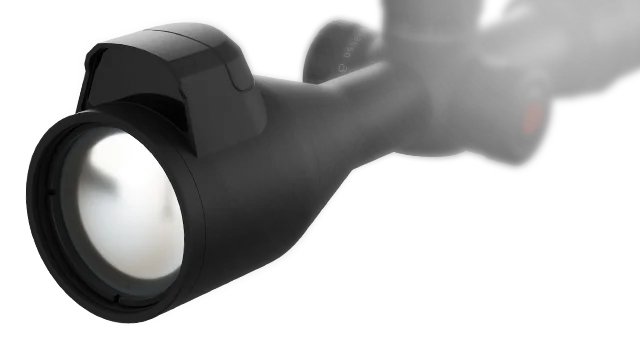
ATN ThOR 6 640x512 2-16x — best overall for every season
The ATN ThOR 6 640x512 2-16x is the one I'd point most hunters to if they only own one scope for the whole year. The 640 sensor and the low NETD are exactly what carry you through the hard season, and the wide 2x low end helps you find targets when they finally move.
Low NETD is what saves your summer hunts
NETD is the smallest temperature difference the sensor can resolve, measured in millikelvin, and lower is cleaner. At 15 mK or better, this core can tease a warm hog out of a field that's soaking heat all afternoon. In July, when a weaker sensor shows one uniform gray blur, the low NETD is the difference between a confirmed target and a shrug.
640 resolution holds detail when contrast is thin
Resolution works like the dots in a picture: more dots, more detail. The 640x512 sensor lays plenty of pixels on the target, so even in flat summer light the shape of an animal reads clearly enough to call the species. In winter that same detail is almost overkill, but come the warm months you'll be glad it's there.
Wide field and swappable batteries for long sits
The 2x base opens a wide field of view for scanning, and replaceable 18650 cells mean a cold winter night or a long summer sit won't leave you stranded on battery. SharpIR AI, Hot Point Tracking, and picture-in-picture round it out for holding a moving target.
Who it's for / not for
- For you if — you hunt across the whole calendar and need one scope that survives the flat-contrast summer months.
- Not for you if — you almost only hunt long-range winter targets, where the extra reach of the 3-24x pays off more.
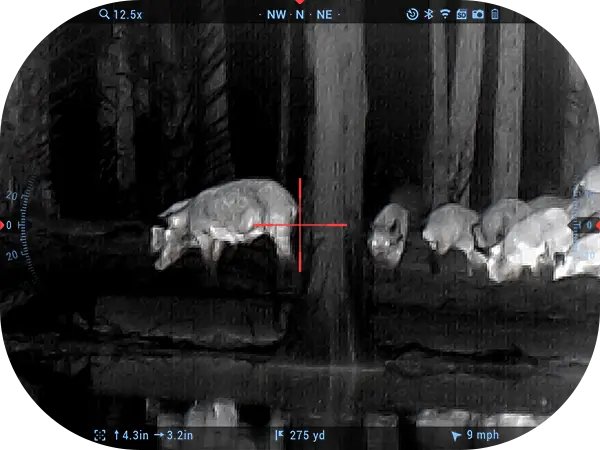
ATN ThOR 6 640x512 3-24x — the long-range winter specialist
When the ground freezes and every warm body becomes a beacon, distance is your only limit. The ATN ThOR 6 640x512 3-24x stretches that limit with a 3650 m detection range and the highest magnification in the group, so you can reach out across a big frozen field.
Cold-night contrast plus real reach
In winter the target-to-background gap does the heavy lifting for you, so a target lights up early and clean. Pair that easy contrast with the 3-24x range and the extra detection distance, and you're spotting and IDing game far out before it ever knows you're there.
High magnification for careful ID
The 3-24x optical base plus up to 8x digital zoom lets you settle on a distant winter target and study it long enough to be certain. On open ground in the cold, that reach turns a far white smudge into a clearly identified animal.
Who it's for / not for
- For you if — your best hunting is cold-season, long-range work on open ground.
- Not for you if — you need the widest possible field for close, fast summer targets; the 2-16x scans better up close.
ATN ThOR 6 384x288 2.5-20x — the cold-season value pick
The ATN ThOR 6 384x288 2.5-20x is the value entry into the 6th-gen line, and it's at its best exactly when thermal is easiest: the cold, high-contrast months. When targets glow against frozen ground, a 384 sensor has all the detail you need to confirm and shoot.
Plenty of sensor for high-contrast months
A 384x288 core lays fewer pixels than a 640, the way SD sits below HD, but in winter the huge temperature gap makes targets obvious anyway. At the practical ranges most cold-weather shots happen, this sensor reads game cleanly.
Extra palettes for the shoulder seasons
It carries six color palettes, and those matter most in fall and spring when contrast is neither easy nor terrible. Switching to a palette that lifts a warm animal off a mild background helps you keep targets readable as the weather turns.
Who it's for / not for
- For you if — your season is mostly cold and you want into the 6th-gen line at the value tier.
- Not for you if — you hunt hard through the hot months, where a 640 sensor's low-contrast performance is worth the step up.
How to choose the right ThOR 6 for your season
Match the scope to the hardest conditions you actually hunt in, not the easiest. Winter forgives a lot; summer forgives nothing. Work through these.
- When do you hunt most? — Mostly cold months means high contrast, and the value 384 holds up; a full-calendar hunter wants the 640 2-16x for summer.
- How flat is your summer ground? — Hot, uniform fields demand low NETD and high resolution to lift a warm target off a warm background.
- How far are your targets? — Long, open winter shots favor the 3-24x reach; mixed and closer work suits the 2-16x.
- Do you hunt the shoulder seasons? — Fall and spring reward the extra palettes on the 384 and the SharpIR processing across the whole line.
How we picked these ATN thermal scopes
This is an in-house comparison of ATN's own current lineup, not an independent lab review. We limited it to the 6th-gen ThOR 6 family and judged each model on one thing: does it keep targets readable as the seasons change, from easy winter contrast to flat summer heat? Check the numbers against the conditions you hunt before deciding.
- NETD (thermal sensitivity) — the smallest temperature gap the sensor can show; all sit at 15 mK or better, which is what rescues low-contrast summer targets.
- Sensor resolution — more pixels means clearer detail when contrast is thin; the 640 holds up in flat conditions, the 384 leans on high winter contrast.
- Detection range — how far you can pick up heat, 3650 m down to 2300 m; it matters most on open winter ground.
- Refresh rate — the 50Hz-class refresh keeps a moving target smooth in any season instead of stuttering.
- Weight and battery — all three are close in carry weight and near 9 hours on two 18650 cells, so runtime isn't the season decider.
- Honest trade-off — the value 384 shines in the cold but struggles in flat summer heat, so it is not the pick for someone who hunts hardest through the hottest months. That hunter should step up to a 640.
Frequently Asked Questions
Why do targets look different in summer than in winter?
Thermal sees heat difference, not light. In winter the gap between a warm animal and cold ground is huge, so targets glow. In summer the whole field holds heat, so the gap shrinks and animals blend in unless your sensor is sensitive enough to resolve small differences.
Which ATN ThOR 6 is best for hot-weather hunting?
The 640x512 2-16x is the strongest year-round choice because its low NETD and high resolution can still lift a warm target off a warm summer field. A lower-resolution sensor tends to show a flat gray blur when contrast disappears.
Is a 384 sensor enough for cold-season targets?
Yes. In cold, high-contrast months the temperature gap does most of the work, so the 384x288 2.5-20x reads game cleanly at practical ranges. Its six palettes also help through the fall and spring shoulder seasons.
What does NETD mean for reading targets?
NETD is the smallest temperature difference the sensor can resolve, in millikelvin, and lower is better. A low NETD like 15 mK or better is what pulls a warm animal out of a similar-temperature background, which is exactly the summer problem.
Do color palettes help spot targets?
They can, especially in the shoulder seasons. Switching palettes changes how the scope maps heat to the display, which can make a warm target stand off a mild background that would otherwise swallow it. The 384 model offers six to choose from.
Which model reaches the farthest for winter targets?
The 640x512 3-24x, with a 3650 m detection range and the highest magnification here. On open, frozen ground where contrast is easy, that reach lets you spot and identify game far out.
Can one scope handle the whole hunting year?
Yes, and the 640x512 2-16x is built for it. It survives the hard flat-contrast summer months with its low NETD and 640 sensor, and the wide 2x low end keeps scanning fast when targets finally show.
The season decides how hard your targets are to read, so buy for your toughest months, not your easiest. For a scope that carries you from frozen winter fields to flat summer heat, start with the ATN ThOR 6 640x512 2-16x. If your best hunting is long-range cold-weather work, weigh the extra reach of the 3-24x instead. See how sensitivity, resolution, and detection range stack up across the family on the ATN thermal scope collection, then pick the one that fits the seasons you actually hunt.
Created: August 5, 2026 · 19:53:47 UTC