You know the moment. A warm blob shows up at the far treeline and your gut says hog, but you're not sure. Is it a pig rooting the field edge, a coyote slinking the fence line, or just a sun-warmed rock still bleeding heat? Picking real thermal scope targets out of that mess is the whole game, and it comes down to the features your scope actually gives you. This roundup organizes the current ATN ThOR 6 lineup around the exact things that let you find a heat signature, hold it, and confirm it's what you think it is before you commit to a shot.
Best balance: ATN ThOR 6 640x512 2-16x — same crisp 640 sensor, a wider low-end field for closer, faster work.
Best value: ATN ThOR 6 384x288 2.5-20x — the entry into the 6th-gen family, still plenty to pick up and confirm game at practical range.
Why ATN's 6th-gen ThOR 6 line makes targets easier to read
Spotting a heat source is easy. Confirming it is a legal target and not brush, a stump, or the wrong species is the hard part, and that's where the sensor does the work. Every ThOR 6 here runs a low-NETD thermal core, a Full-HD OLED display, and a smooth 50Hz-class refresh, so a running coyote doesn't smear into a ghost. The differences between them come down to how many pixels land on the target and how far out you can still make sense of the picture. Read the table, then jump to the model that fits how far and how fast your targets tend to appear.
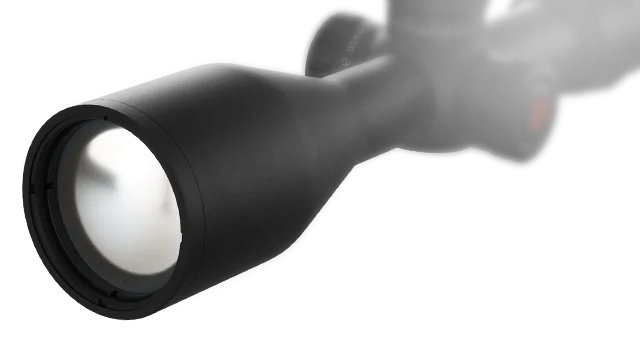
ATN ThOR 6 640x512 3-24x — best overall for finding and IDing targets
If your targets show up far out and you need to know exactly what you're looking at, the ATN ThOR 6 640x512 3-24x is the one. Its 640x512 sensor is the highest-pixel-count core in this group, and the 3650 m detection range is the longest. Together they mean you catch heat sooner and hold more usable detail on it when you do.
The 640 sensor sees the difference clutter hides
Think of resolution like the megapixels on a phone camera. A 640x512 sensor lays roughly 40 percent more dots across the frame than a 384. Those extra dots are what let you tell an ear from a branch, a leg from a fence post, and one hog from three stacked behind it. When two warm shapes overlap at 200 yards, the 640 is what pulls them apart into individual animals instead of one confusing smear.
High magnification pulls the target close without noise
The 3-24x range gives you real optical base magnification, then clean digital zoom on top, up to 8x. Optical mag keeps the picture honest; you're spreading a big, detailed image, not just blowing up mush. That's what lets you sit on a distant target and study the body shape and gait long enough to be sure of the species before the trigger.
Hot Point Tracking keeps the target marked
SharpIR AI cleans the image on the fly, and Hot Point Tracking drops a marker on the warmest moving object so a coyote crossing a field stays flagged even when it dips behind grass. Add RAV, Zeroing Freeze, and picture-in-picture, and you can watch the wider scene while a zoomed window rides the target.
Who it's for / not for
- For you if — your targets appear at distance across open ground and correct ID matters more than a wide close-in field.
- Not for you if — you hunt tight timber where shots are short; the wider low end of the 2-16x suits that better.
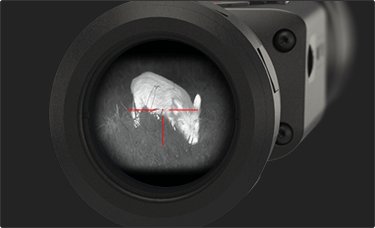
ATN ThOR 6 640x512 2-16x — the balanced spotter
The ATN ThOR 6 640x512 2-16x carries the same crisp 640 sensor as the flagship but starts at 2x, which widens your field of view at the low end. When a target could pop up anywhere along a field edge, a wider view means you find it faster.
Same 640 detail, wider search window
You get the identical high-resolution image quality, so target ID doesn't suffer. The trade is a little less top-end reach (3100 m versus 3650 m) for a broader picture down low. For most hunters, most nights, that's the sweeter deal because you spend more time scanning than sniping.
Replaceable cells for long sits
It takes replaceable 18650 batteries, so a spare pair in your pocket resets your runtime instead of ending the hunt. On a slow night when the targets don't show until late, that matters.
Who it's for / not for
- For you if — you want top-tier target clarity but do a lot of scanning and some closer work.
- Not for you if — you specifically need the extra magnification and detection reach of the 3-24x for very long shots.
ATN ThOR 6 384x288 2.5-20x — the value pick
The ATN ThOR 6 384x288 2.5-20x is the entry into the 6th-gen family. A 384x288 core lays fewer dots on the target than a 640, so distant ID isn't as crisp, but at practical range it still picks game out cleanly and confirms it well.
Enough resolution for real-world range
Picture the jump from standard definition to HD. The 640 is HD; the 384 is a clean SD that's perfectly readable at the ranges most hunters actually shoot. Out to a couple hundred yards, a hog reads as a hog and a coyote as a coyote.
Six color palettes for tricky backgrounds
It adds extra color palettes, which help when the background is close to the target's temperature. Switching palettes can lift a warm animal off a warm field so the target stops blending in.
Who it's for / not for
- For you if — you want into the current 6th-gen line at the value tier and shoot at practical ranges.
- Not for you if — you routinely ID targets past a few hundred yards; step up to a 640.
How to choose the right ThOR 6 for your targets
Start with how your targets usually show up, not with the spec sheet. Answer these and the model picks itself.
- How far out? — Distant, open-ground targets want the 640 3-24x for reach and detail; closer field edges are fine on the 2-16x or the 384.
- How much scanning? — If you scan a lot before you find anything, a wider low end (2-16x) finds targets faster.
- How critical is ID? — Where getting the species right at distance is everything, more resolution (640) is worth the step up.
- What's your background? — Warm, cluttered scenes reward the extra palettes on the 384 and the SharpIR processing across the line.
How we picked these ATN thermal scopes
This is an in-house comparison of ATN's own current range, not an independent lab test. We only looked at the 6th-gen ThOR 6 line, and we judged each one against a single question: how well does it help you find a target and confirm what it is before you shoot? Check the specs against your own ranges before you buy.
- Sensor resolution — more pixels means finer detail and confident ID farther out; the 640 leads, the 384 trades some distance clarity for a lower entry tier.
- NETD (thermal sensitivity) — all sit at 15 mK or better, so small temperature differences still show and a target lifts off a similar-temp background.
- Detection range — how far you can pick up heat at all; 3650 m on the flagship, down to 2300 m on the value pick.
- Refresh rate — a 50Hz-class refresh keeps moving targets smooth instead of stuttering, which matters for tracking runners.
- Weight and battery — all three are close in carry weight and land near 9 hours on two 18650 cells, so runtime isn't the deciding factor here.
- Honest trade-off — the flagship costs you a wider close-in field for its reach; the value pick costs you distant ID for its tier. None of these is the pick for someone who only ever takes short timber shots and wants the widest possible field.
Frequently Asked Questions
What makes a target easy to spot with a thermal scope?
Contrast between the target and its background. A warm animal against cool ground jumps right out. When the background is close in temperature, higher sensor resolution and switching color palettes help lift the target off the scene.
How far can the ATN ThOR 6 detect targets?
Detection range runs up to 3650 m on the 640x512 3-24x flagship, 3100 m on the 640 2-16x, and 2300 m on the 384. Detection means picking up heat; clear identification happens closer, and higher resolution extends how far you can confidently ID.
Does higher resolution really help identify targets?
Yes. A 640x512 sensor lays roughly 40 percent more pixels across the frame than a 384, like the jump from SD to HD. Those extra pixels are what separate an ear from a branch or one hog from several stacked behind it.
What is Hot Point Tracking and why does it matter?
It drops a marker on the warmest moving object in the frame, so a coyote crossing a field stays flagged even when it dips behind grass. Paired with SharpIR image processing, it helps you keep a moving target held on screen.
Can I use one thermal scope for both hogs and coyotes?
Yes. All three ThOR 6 models here handle both. If your coyotes and hogs tend to appear far out on open ground, lean to the 640 3-24x; for mixed close-and-far work the 640 2-16x is the balanced choice.
Do I need the flagship, or is the value model enough?
If you routinely ID targets past a few hundred yards, the 640 resolution is worth it. If your shots stay at practical range, the 384x288 2.5-20x confirms game cleanly and gets you into the 6th-gen line at the value tier.
How long does the battery last while scanning for targets?
All three run about 9 hours on two 18650 cells. The 640 2-16x takes replaceable 18650s, so carrying a spare pair effectively resets your runtime on a long, slow night.
Targets don't wait around, so the scope that spots and confirms them fastest earns its keep every night out. If distant ID is your priority, start with the ATN ThOR 6 640x512 3-24x for its reach and detail. Want the same crisp sensor with a wider search window, or a value entry into the line? Compare the full lineup side by side on the ATN thermal scope collection and match the resolution, magnification, and detection range to how far out your targets tend to show up. Pick the one that fits your ground, then go read some heat signatures.
Created: August 5, 2026 · 19:53:47 UTC