The kind of thermal scope target you engage decides which scope fits your rifle. A stationary hog rooting at 80 yards, a coyote loping to a call, and a deer across a cut field are three different problems, and the scope that solves one best is not always the one for another. This roundup sorts the current ATN ThOR 6 line by the job you do - hog control, predator calling, mixed hunting - rather than a single leaderboard. The pick that fits the widest range of jobs is the ATN ThOR 6 640x512 2-16x.
Best for long-range targets: ATN ThOR 6 640x512 3-24x - reach for distant field crossings.
Best value job scope: ATN ThOR 6 384x288 2.5-20x - dependable target work at the value tier.
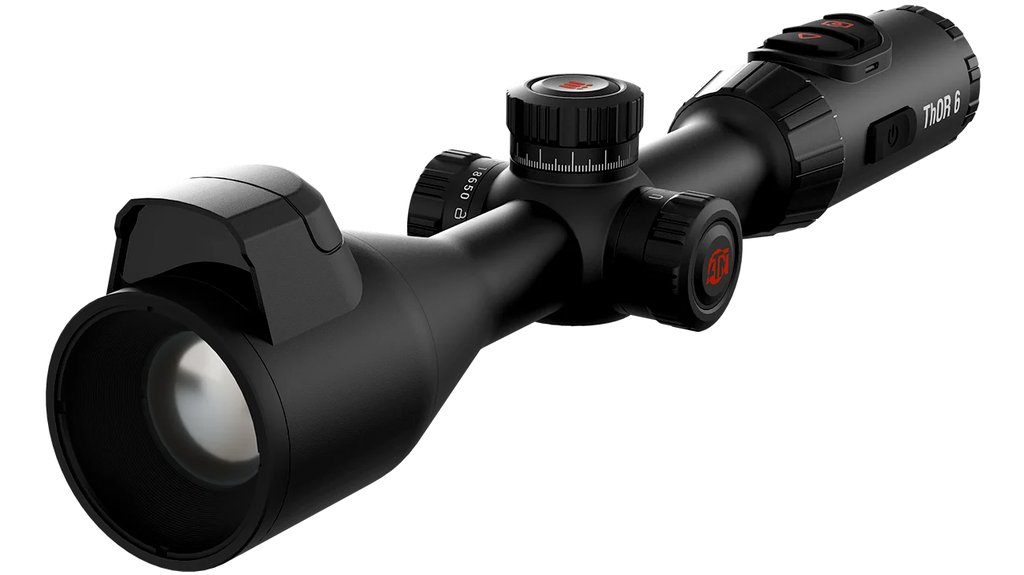
Why the 6th-gen ThOR 6 line suits every target job
No matter the job, the ATN ThOR 6 line gives you the same reliable core: a sub-15 mK sensor with SharpIR AI enhancement, Hot Point Tracking and a Full-HD OLED display. That means a hog job and a predator job draw on the same clean image and the same tracking aid - you are choosing sensor size and magnification to fit the target, not settling for a weaker scope on one job. Every model below shares that base.
The all-job scope: ATN ThOR 6 640x512 2-16x
For a hunter who does a bit of everything, the ATN ThOR 6 640x512 2-16x puts the most target types on the reticle. The 2x base opens a wide view to catch a called coyote coming in, then climbs to 16x for a hog holding still across a field.
One sensor, many targets
Resolution is the detector's pixel count, and the 640x512 grid keeps every target sharp - hog, predator or deer - out to the distances each job presents. More pixels means the target is identifiable, not a guess. Who it's for: the hunter who switches between jobs on the same property. Who it's not for: someone whose only job is long field shots, better served by the 3-24x.
The long-range job: ATN ThOR 6 640x512 3-24x
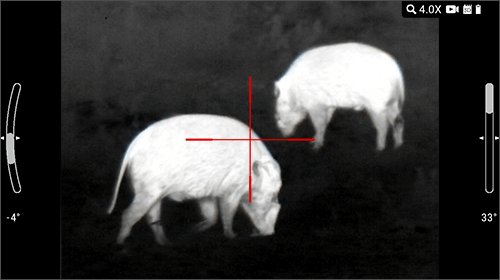
When the job is targets far across open ground - a deer stepping into a cut field at 300 yards - the ATN ThOR 6 640x512 3-24x is the fit. The 50 mm lens and 3-24x zoom reach near 3,650 meters, with 8x digital zoom for a precise long hold.
The job trade-off
That reach costs close-in width, so it is slower on a coyote that appears right off the muzzle. Who it's not for: a caller working targets in tight, where the wider 2-16x wins.
When the job really is long
For a hunter whose main job is targets across bare ground, the 3-24x is not extravagance - it is the tool that makes the shot responsible. A deer or hog at 300 yards is a faint, small signature, and the higher optical top end plus 8x digital zoom is what turns that speck into an animal you can positively identify and place a shot on. The 50 mm lens gathers more of the heat that far target gives off, and SharpIR keeps the zoomed image clean rather than grainy. Skimp on reach for a genuinely long-range job and you are left guessing at distance, which is exactly the situation an ethical hunter avoids. Matched to the right job, the flagship's reach is the point of buying it.
The value job: ATN ThOR 6 384x288 2.5-20x
If your target work stays inside a couple hundred yards, the ATN ThOR 6 384x288 2.5-20x does the job at the value tier. It keeps SharpIR, Hot Point Tracking and the full feature set; the 384x288 sensor gives up distant detail you would not use on close hog and predator jobs anyway.
Who it fits
Who it's for: the close-to-mid-range hunter who wants dependable target work without overspending. Who it's not for: someone whose job regularly includes long field targets.
Right-sizing the scope to the job
There is a quiet discipline in buying exactly the scope your job needs and no more. A close-range hog or predator job never asks the optic to identify a target at 300 yards, so the distant detail of a 640 sensor sits unused while you pay for it. The 384 right-sizes the purchase: it delivers confident target identification at the ranges those jobs actually happen, keeps the same tracking and recording tools, and puts the savings back in your pocket. That is not settling for less - it is matching the tool to the task, which is the whole premise of sorting these scopes by job in the first place. For the hunter who works close, the value model is the correct answer, not a consolation prize.
How to match the scope to your target job
Choose by the job you do most, and let the distances that job presents settle the sensor and magnification:
- Mix of hogs, predators and deer? - The 640 2-16x covers the most jobs.
- Long open-field targets? - The 640 3-24x reaches farthest.
- Close-range work on a budget? - The 384 2.5-20x delivers value target work.
- Long night jobs? - All three run about nine hours on replaceable 18650 cells.
- Fast-moving targets? - Hot Point Tracking and a wide base view get you on them sooner.
The temptation is always to buy the biggest scope and assume it covers every job, but a target optic is about fit, not raw numbers. Reach you cannot use on close jobs is wasted, and width you never need on long ones costs you detail. Be honest about the job you do most nights - close calling, mixed hunting, or long field work - and let that pick the variant. Do that and every target you take on is one the scope was built to confirm, which is the surest path to a clean, ethical shot.
The bottom line on matching scope to job
A target scope is a tool, and tools are chosen by the job, not by the biggest number on the box. The mix hunter who calls predators one night and sits a field the next is best served by the versatile 640 2-16x. The hunter whose work is long shots across open crops needs the reach of the 640 3-24x to identify and place a shot responsibly. The close-range hog and predator hunter gets everything the job asks from the value 384 without paying for distance the terrain will not allow. Each variant carries the same tracking and recording toolkit, so the decision is purely about the distances your job presents. Pick honestly for the work you do most, and every target you take on is one the scope was built to confirm. That match between tool and task is what separates a confident, ethical shot from a hopeful one, and it is the entire reason we sorted these scopes by job rather than by a single leaderboard ranking.
How we picked these ATN thermal scopes
We grouped the current 6th-gen ThOR 6 line by the target job each does best, judging magnification and field of view against how close or far each job's targets appear, and sensor resolution, NETD, detection range, battery and weight against real distances. Only current-generation models qualified. The honest trade-off is that no single scope is ideal for every job - the all-round 2-16x is not the longest reaching, and the value 384 confirms targets closer in. This is our own comparison of ATN's range, not an independent lab test, so pick for the job you do most.
Frequently Asked Questions
Which ATN ThOR 6 handles the most target jobs?
The ATN ThOR 6 640x512 2-16x is the best all-job choice because its wide base catches close targets like called coyotes while the 640 sensor still identifies game across a field. It fits hunters who switch between jobs.
Do I need more magnification for predator calling?
Usually not. Called predators often come in close, so a wide field of view like the 2-16x's 2x base helps you get on target fast. High magnification matters more for distant field targets, where the 3-24x fits.
Is the 384 model good enough for hog control?
Yes. Most hog work happens inside a couple hundred yards, and the ATN ThOR 6 384x288 2.5-20x identifies targets reliably at those distances while keeping the full feature set at the value tier.
What helps me get on a moving target quickly?
A wider field of view and Hot Point Tracking, which flags the warmest signature in the frame, both speed acquisition. The ATN ThOR 6 640x512 2-16x pairs a wide base with that tracking aid for fast target pickup.
Can one scope really cover hog, predator and deer jobs?
For most hunters, yes. The ATN ThOR 6 640x512 2-16x spans wide-to-tight zoom on a high-resolution sensor, so it puts different target types on the reticle without swapping optics. Only a single dedicated long-range job argues for the 3-24x.
Do these work for daytime target jobs too?
Yes. Thermal reads heat rather than visible light, so target work runs day or night. The ThOR 6 is as useful for daytime hog control as for after-dark predator jobs.
How do I decide between the 2-16x and the 3-24x for target work?
Let your typical target distance decide. If your jobs are a mix that includes close and mid-range targets, the 2-16x's wider base gets you on them faster. If your work is consistently long across open ground, the 3-24x's reach lets you confirm distant targets before the shot.
Match the scope to the target job and every shot gets easier. Our all-job pick is the ATN ThOR 6 640x512 2-16x, with the 3-24x for long field targets and the 384 2.5-20x for value target work. Browse the full current range on the ATN thermal scope collection page and pick the scope built for the job you do most.
Created: August 5, 2026 · 19:53:47 UTC