Thermal scope specs explained without the jargon: that is what this guide is for. Sensor resolution, NETD, refresh rate, detection range — the spec sheet reads like a foreign language, and it is easy to buy the wrong scope because one big number looked impressive. Here you will learn what each spec actually means for what you see in the field, which ones matter most, and how they come together in the ATN ThOR 6 640x512. By the end you will be able to read any thermal spec sheet and know exactly what it is telling you.
What are thermal scope specs?
Thermal scope specs are the numbers that describe how the optic detects heat and turns it into an image you can hunt with. Unlike a day scope, a thermal does not use light — it reads temperature differences, so its specs measure things like how fine a heat difference it can see and how many dots it uses to draw the picture. The four that decide your real-world experience are sensor resolution, NETD (thermal sensitivity), refresh rate, and detection range. Everything else — display, storage, battery, waterproofing — supports those. Learn to read the core four together and the rest falls into place.
How do you read a thermal spec sheet?
- Start with sensor resolution. A 640x512 sensor has far more dots than a 384x288 one, so it draws a sharper picture and lets you zoom further before it turns blocky. Think of it like SD versus HD.
- Read NETD next. Measured in millikelvin (mK), it tells you the smallest temperature difference the scope can show. Lower is better — a <=15mK unit stays clear in humid, foggy or rainy air where a noisier sensor washes out.
- Check the refresh rate. A 50Hz or 60Hz refresh redraws the image dozens of times a second, so a running animal stays smooth instead of smearing. Slower refresh lags on motion.
- Look at detection range. This is how far heat first shows up. Treat it as a ceiling — your real identification distance is much shorter.
- Then read magnification, lens size, display, battery and storage as the supporting cast that shapes comfort and endurance, not core image quality.
What does each spec do for you in the field?
- Resolution — decides how much detail you get; higher resolution means a distant animal still looks like an animal, not a smear.
- NETD — decides how well you see in bad air; a low figure keeps faint, cool or far targets separated from the background.
- Refresh rate — decides motion smoothness; a fast refresh keeps a moving hog or coyote crisp as you track it.
- Detection range — decides how far you can pick up heat at all, setting the outer limit of where you start working a target.
- Magnification — decides your field of view and how tight you can inspect; higher zoom reaches farther but narrows the view.
How the 640 and the 384 read on the spec sheet
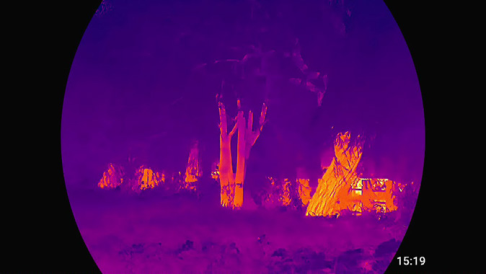
Comparing two ATN 6th-gen scopes shows how specs trade off. The ThOR 6 640x512 leads on resolution and detection range; the ThOR 6 384x288 gives up some detail for a lighter body and higher top-end zoom. Both share the same 15mK sensitivity and 50Hz refresh, so both draw a clean, smooth picture — the difference is purely in how much detail and reach you get.
Key specs to understand in detail
- Sensor resolution — 640x512 versus 384x288 is like HD versus SD: more dots means finer detail and more room to zoom before the picture breaks up.
- NETD (thermal sensitivity) — measured in mK; <=15mK means the scope reads tiny temperature gaps, so it stays sharp in fog, humidity and light rain.
- Refresh rate — 50Hz redraws the picture 50 times a second, keeping fast-moving animals smooth rather than streaked.
- Detection range — the farthest heat is visible; the 640x512 reaches 3100m, but plan on identifying game much closer.
- Magnification — base zoom sets your view; 2-16x on the 640 balances a usable field of view with reach.
- Display — a Full-HD 1920x1080 OLED shows all that sensor detail crisply rather than bottlenecking it.
- Battery — roughly 9 hours on replaceable dual 18650 cells means a full night without a mains charge.
What to look for before buying
- Do not buy on one number — a huge detection figure means little if the resolution or refresh is weak. Read the core four together.
- Match resolution to distance — long open-country shots reward a 640x512; close timber work is fine on a 384x288.
- Weight NETD for your climate — humid or coastal ground makes low NETD more valuable than a slightly longer range.
- Check the display and storage — a Full-HD screen shows the detail your sensor captures, and onboard storage records the hunt.
Common mistakes reading specs
- Chasing magnification — high zoom does not add detail; it only enlarges the pixels the sensor already has.
- Ignoring NETD — a low NETD often matters more than raw range for real image quality in tough air.
- Treating detection range as shooting range — the two are very different; identification happens far closer.
- Overlooking refresh rate — a slow refresh smears moving animals no matter how good the sensor is.
Example: the ATN ThOR 6 640x512
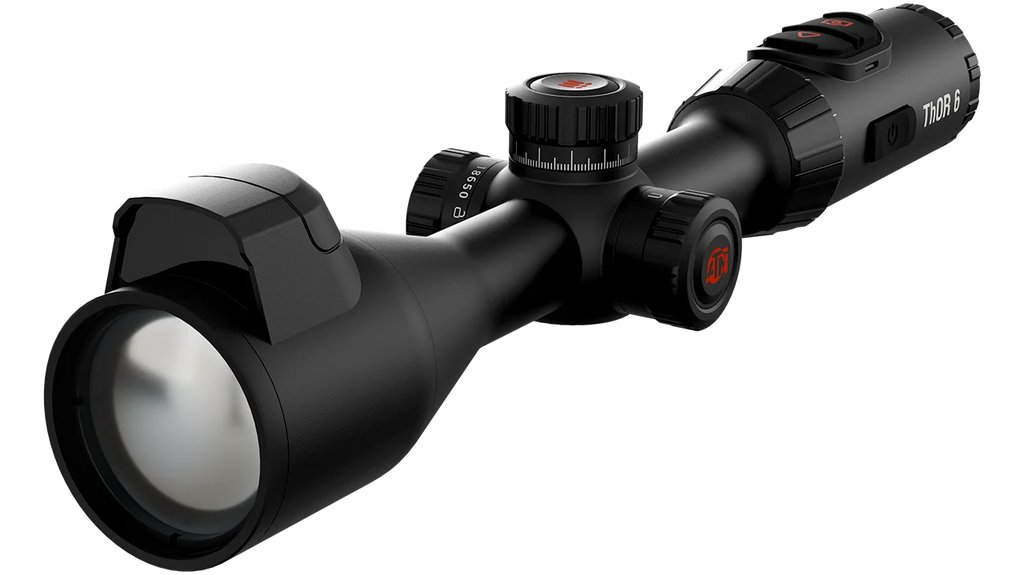
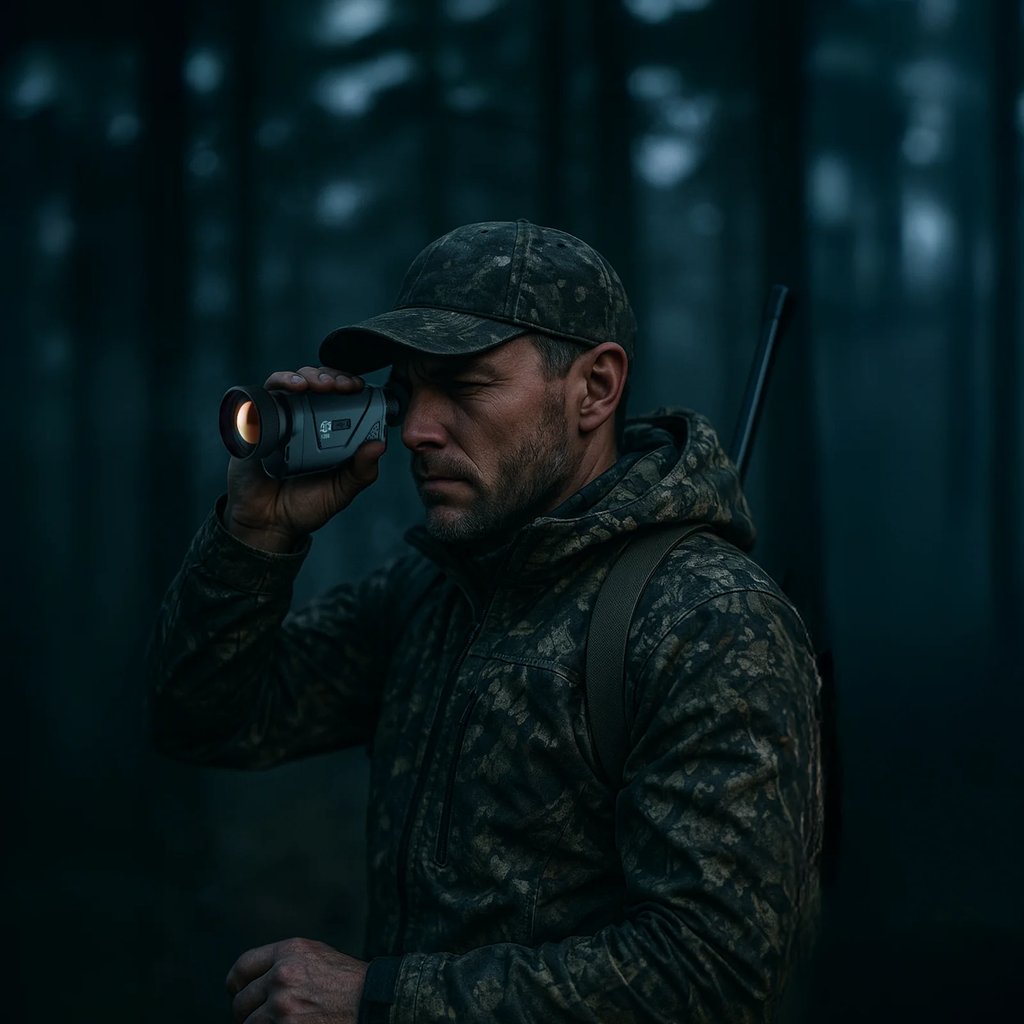
The ATN ThOR 6 640x512 is a tidy way to see every spec doing its job. The 640x512 sensor draws HD-grade detail; the <=15mK NETD keeps faint heat clear in humidity; the 50Hz refresh holds a running hog smooth; and detection reaches 3100m through a 35mm F/1.0 lens. A Full-HD 1920x1080 OLED display shows all of it crisply, SharpIR AI cleans the edges, and roughly 9 hours on dual replaceable 18650 batteries covers a full night. Read the sheet top to bottom and every number ties back to something you actually notice at the trigger. It belongs to ATN's current line of thermal scopes.
Is it worth learning the specs?
Absolutely — understanding specs is the cheapest upgrade you can make, because it stops you overpaying for a number you will never use or missing the one that matters. Once you know that resolution drives detail, NETD drives bad-air clarity, refresh drives motion, and detection range is only a ceiling, you can pick the right scope in minutes. For long open shots, lean toward the 640x512. For lighter, closer work, the 384x288 covers it. Either way, buying with your eyes open beats buying by the biggest headline figure every time.
Frequently Asked Questions
What are the most important thermal scope specs?
Sensor resolution, NETD, refresh rate and detection range. Resolution sets detail, NETD sets clarity in bad air, refresh sets motion smoothness, and detection range is how far heat shows up. Read them together rather than fixating on one.
What does NETD mean on a thermal scope?
NETD is thermal sensitivity, measured in millikelvin. It tells you the smallest temperature difference the scope can display. A lower number like <=15mK means a cleaner picture in humid, foggy or rainy conditions.
Is a 640x512 sensor better than 384x288?
For detail and reach, yes. A 640x512 sensor packs more dots into the picture, so it looks sharper and lets you zoom further before it turns blocky. The 384x288 gives up some detail for lighter weight and higher top-end zoom.
What does refresh rate do?
Refresh rate is how many times per second the image is redrawn. A 50Hz or 60Hz refresh keeps a moving animal smooth instead of smearing it. A slow refresh lags on motion no matter how good the sensor is.
Does a higher detection range mean I can shoot farther?
No. Detection range is how far heat first becomes visible, not how far you can identify and ethically shoot. Your real shooting distance is much shorter, so treat the detection number as a ceiling.
Which spec should I prioritise?
It depends on your hunting. For long open-country shots, prioritise resolution and detection range. For humid climates or bad weather, weight NETD more heavily. For fast-moving predators, make sure the refresh rate is 50Hz or higher.
Resolution: 640x512 (HD-grade detail)
NETD: <=15mK (clear in bad air)
Refresh: 50Hz (smooth motion)
Detection range: up to 3100m
Magnification: 2-16x, 35mm F/1.0 lens
Display: Full-HD 1920x1080 OLED, ~9hr battery
How this guide was put together
This is an in-house explainer from ATN, not an independent lab test. We built it to translate the spec sheet into field terms — what resolution, NETD, refresh and detection range each actually change in what you see — using only the published figures for ATN's current 6th-gen line, the ThOR 6 640x512 and 384x288. We judged each spec against real use rather than bench numbers. Honest trade-off: the 640x512 wins on detail and range but weighs a touch more and costs more than the 384x288, which trades detail for lighter carry and higher zoom. This guide is not for someone hunting a single "best" number — the right scope is a balance. Check these specs against your own terrain and climate.
Now that the spec sheet reads like plain English, put it to work. The ATN ThOR 6 640x512 shows every spec pulling its weight — HD-grade resolution, low NETD, a fast 50Hz refresh and long detection range in one package. Compare it against the rest of ATN's current thermal scopes and pick by the numbers that matter for your hunting, not the biggest headline figure. Reading a spec sheet with confidence is the difference between buying smart and buying by hype.
Created: July 7, 2026 · 19:23:12 UTC