Thermal scope range is the distance at which your optic can pick up an animal's heat and let you tell what it is. It gets talked about as one big number, but it is really three different distances stacked together. This guide breaks down what range actually means, why the figure on the box is not the whole story, and how the ATN ThOR 6 640x512 earns its numbers. If you have ever wondered why a scope rated for thousands of meters still felt short in the field, this clears it up.
What is thermal scope range?
Thermal scope range is how far away the optic can still make useful sense of a heat signature. There is no single "range" — there are three, and they shrink in order. Detection range is the farthest: you see that something warm is out there. Recognition range is closer: you can tell it is a four-legged animal, not a fence post. Identification range is closest: you can tell a coyote from a hog and place a shot. The big number a scope advertises is almost always the detection figure, so treat it as the ceiling, not the working distance.
How does thermal range actually work?
- The lens gathers infrared energy — the heat radiating off an animal. A bigger objective lens collects more of it, so warm objects stay separated from the cool background at longer distances.
- The sensor turns that heat into a grid of pixels. A 640x512 sensor has more dots than a 384x288 one, so a distant animal lands on more pixels and holds its shape farther out.
- Thermal sensitivity (NETD) decides how small a temperature difference the scope can show. A lower NETD means faint, far, or cool targets still stand out from the background.
- Magnification lets you zoom into that heat once you have found it — but zoom only enlarges the pixels you already have. It does not add detail beyond what the sensor captured.
- Air conditions cut into all of it. Humidity, fog and heavy rain absorb infrared, so real-world range on a wet night is shorter than the clear-air spec.
What can you use thermal range for in the field?
- Scanning fields — detection range lets you sweep a wide pasture and catch a warm shape long before you could ever identify it.
- Confirming targets — identification range is what keeps you legal and ethical: you close the gap until you can be sure what you are aiming at.
- Planning a stalk — knowing your recognition distance tells you how close you need to get before the animal reads clearly.
- Matching a rifle — there is no point running a rig that shoots farther than your scope can identify game, so range sets a sensible ceiling on the shot.
How the 640 and the 384 compare on range
Inside ATN's 6th-gen line, resolution and lens size drive range. The ThOR 6 640x512 with its 35mm lens is rated to 3100m detection, while the ThOR 6 384x288 with a 25mm lens is rated to 2300m. Both share the same 15mK-class sensitivity, so both give a clean picture — the 640 simply keeps a distant animal readable farther out because it lands on more pixels.
Key range terms to understand
- Detection range — the farthest you can tell something warm exists. On the 640x512 that is up to 3100m in good air, meaning heat shows up long before shape does.
- Recognition range — where the blob becomes an animal shape. Always well inside the detection figure.
- Identification range — where you can name the species and take an ethical shot. This is your real working distance.
- Sensor resolution — 640x512 is more dots in the picture, so a far animal holds its shape and you can zoom before it turns blocky.
- NETD — <=15mK sensitivity means the scope reads small heat differences, so faint, distant targets still separate from the background.
- Lens diameter — the 35mm objective gathers more infrared than the 25mm, extending every stage of range.
What to look for before buying for range
- Read the detection number as a ceiling — your usable identification distance is a fraction of it, so do not buy on the headline figure alone.
- Prioritise resolution for far work — a 640x512 sensor keeps distant game readable where a smaller sensor turns it to mush.
- Check the lens size — a larger objective directly lengthens range; the 35mm on the 640x512 is built for reaching out.
- Weigh sensitivity for tough air — a low NETD holds range in humidity and light rain where a noisier sensor fades.
Common mistakes about thermal range
- Treating the box number as your shooting distance — the advertised range is detection, not identification. Confusing the two leads to shots you should not take.
- Thinking magnification adds range — zoom enlarges existing pixels; it never adds detail the sensor did not record.
- Ignoring the weather — clear-air specs shrink in fog and rain, so plan for shorter reach on wet nights.
- Buying more range than the rifle can use — match the scope's identification distance to your realistic shot, not to a spec sheet.
Example: the ATN ThOR 6 640x512
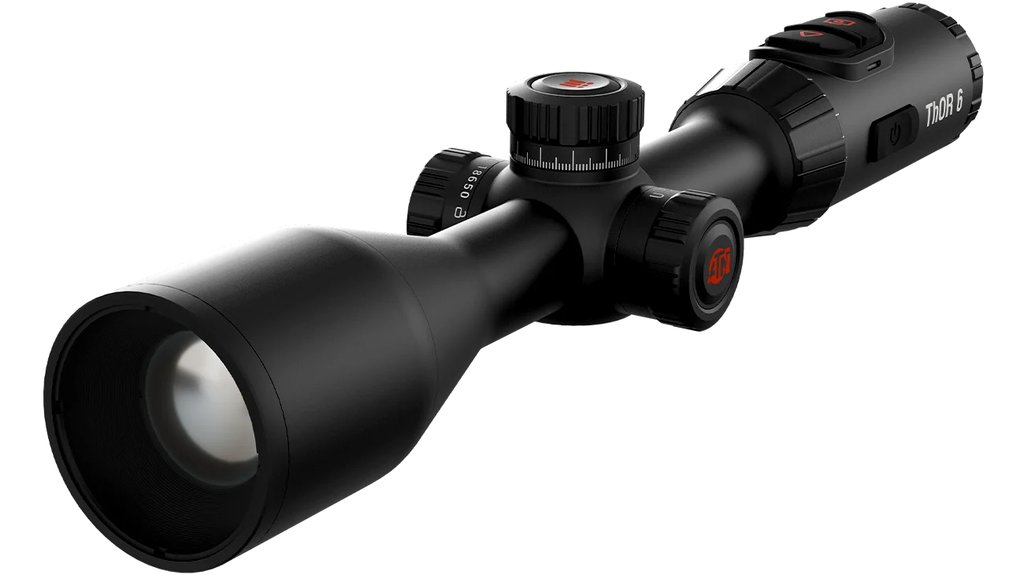
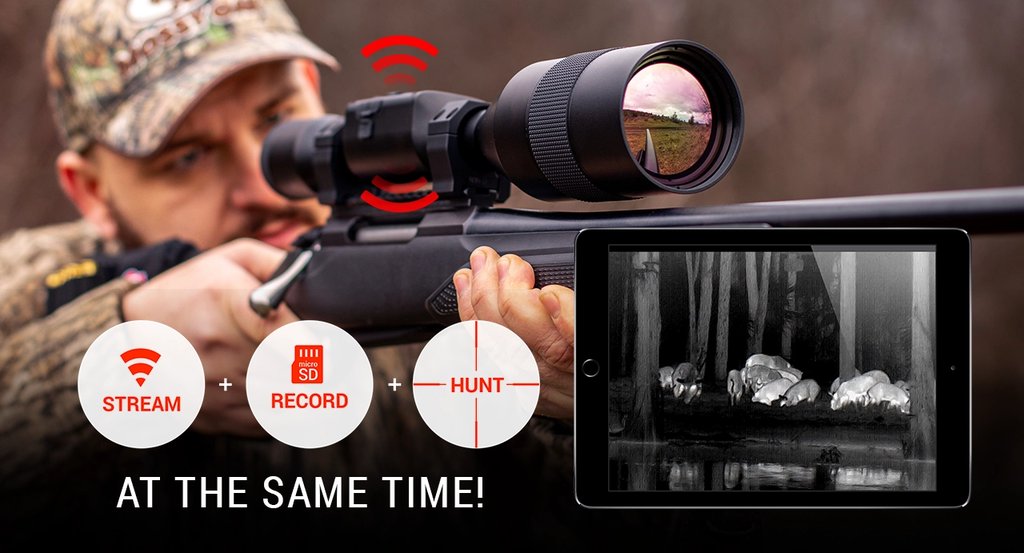
The ATN ThOR 6 640x512 is a clean way to see range at work. Its 640x512 sensor and 35mm F/1.0 lens push detection to 3100m — more dots plus a wider lens means a distant animal stays readable farther out. Sensitivity of 15mK keeps faint heat separated from the background, and 2-16x magnification lets you zoom into whatever you have detected. SharpIR AI image enhancement cleans up the edges so a far shape reads as an animal sooner, and a 50Hz refresh keeps a moving target smooth rather than smeared. It is part of ATN's current line of thermal scopes.
Is chasing maximum range worth it?
For most hunters, more usable range is worth it only up to the distance you will actually shoot. A big detection number helps you find game across a wide field, but the figure that matters is how far you can positively identify a target. If you hunt open country, the higher-resolution 640x512 earns its keep by holding detail far out. If your shots are inside a couple hundred yards in timber, the 384x288 gives you all the reach you need in a lighter, more affordable package. Buy for the distance you hunt, not the number on the box.
Frequently Asked Questions
What does thermal scope range actually mean?
It is the distance at which the scope can detect, recognise, then identify a heat source. Detection is farthest, identification is closest. The advertised number is usually the detection figure, so your real shooting distance is shorter.
Why is the advertised range longer than what I can shoot?
The box number is detection range — how far you can tell something warm exists. Identifying the animal well enough for an ethical shot happens much closer. Always treat the headline figure as a ceiling, not a working distance.
Does higher resolution give more range?
Yes, in the sense that matters. A 640x512 sensor puts a distant animal on more pixels, so it holds its shape and stays identifiable farther out than a 384x288 sensor. That is why the ATN ThOR 6 640x512 reaches farther than the 384 version.
Does magnification increase range?
No. Zoom only enlarges the pixels the sensor already captured. It helps you inspect a target you have found, but it cannot add detail beyond what the sensor recorded, so it does not extend true range.
How does rain or fog affect range?
Moisture in the air absorbs infrared, so detection, recognition and identification all shrink on a wet or foggy night. A low-NETD sensor like the 15mK unit in the ThOR 6 holds up better, but expect shorter reach than the clear-air spec.
How far can the ATN ThOR 6 640x512 detect game?
It is rated to 3100m detection thanks to its 640x512 sensor and 35mm lens. That is the distance at which heat becomes visible; positive identification for a shot happens considerably closer.
Sensor: 640x512, <=15mK NETD
Detection range: up to 3100m
Magnification: 2-16x (up to 8x digital zoom)
Lens: 35mm F/1.0 objective
Display: Full-HD 1920x1080 OLED, 50Hz refresh
SharpIR AI enhancement, IP67 waterproof
How this guide was put together
This is an in-house look at ATN's own 6th-gen thermal line, not an independent lab review. We judged range the way it matters to a hunter — detection versus real identification distance — using each scope's published sensor resolution, thermal sensitivity, lens size and detection figures. We only considered current models: the ThOR 6 640x512 and 384x288. Honest trade-off: the 640 reaches and resolves farther but costs more and gives up a little top-end zoom; the 384 is lighter and more affordable but identifies game closer. This guide is not for someone who wants a single magic "range" number — range is always three distances, and the right pick depends on how far you truly shoot. Check the specs against your own terrain.
Ready to see how far a modern thermal optic really reaches? The ATN ThOR 6 640x512 pairs a high-resolution sensor with a 35mm lens for detection out to 3100m and clean identification well inside that. Compare it against the rest of ATN's current thermal scopes and match the range to the country you hunt. Whether you sweep open pasture or work close timber, picking the sensor and lens that fit your real shooting distance is what turns a spec sheet into confident, ethical shots after dark.
Created: July 7, 2026 · 19:23:12 UTC