Talk to any hunter shopping for a thermal and the first question is always the same: why do thermal scope prices jump around so much when the units look nearly identical on a shelf? The honest answer is that you are not paying for the shell. You are paying for what is behind the lens. This roundup walks the ATN ThOR 6 line one feature at a time, so you can see exactly which upgrades move you up a tier and decide which of them actually matter for the way you hunt. The ATN ThOR 6 640x512 2-16x is the featured pick.
Best for long range — ATN ThOR 6 640x512 3-24x: the flagship, biggest lens and the highest magnification for far ag-field work.
Best value — ATN ThOR 6 384x288 2.5-20x: the most accessible option, a capable mid-range sensor and six color palettes for hunters who do not need to reach out to the far edge.
Why ATN's 6th-gen ThOR 6 line sets the tiers
Every model in this roundup is from ATN's current 6th-generation ThOR thermal scope line, so you are comparing apples to apples inside one family. That matters when you study prices, because the differences you see across the tiers are real hardware differences, not marketing. All three share the same clean processing, SharpIR AI image sharpening, Recoil Activated Video, Zeroing Freeze and Wi-Fi with ATN Connect 6. Where they separate is the sensor, the glass and the zoom range — and that is exactly where the price separates too.
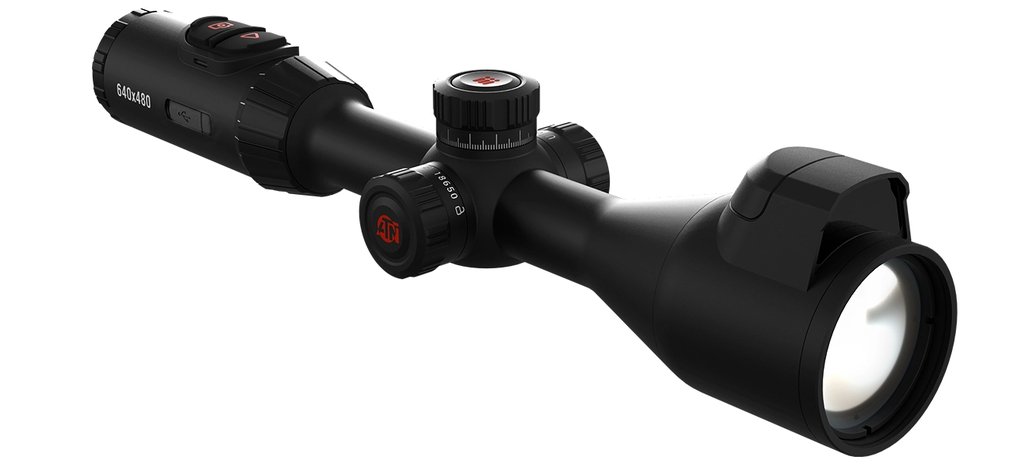
So instead of asking "what does it cost," ask "what am I buying with the step up." Once you frame it that way, the tiers stop looking like random numbers and start looking like a menu. You pick the features you need and skip the ones you do not.
ATN ThOR 6 640 2-16x — the mid-tier that earns the money
This is the model I point most hunters to first, and it is the best overall pick in this roundup. It carries the full 640x512 sensor — think of it as the HD panel next to the 384's SD panel, roughly four times the pixels — but it pairs that with a 35mm lens and a 2-16x range instead of chasing maximum magnification. The result is a scope that shows you a clean, detailed picture out to a real 3100 meters of detection without pushing you into the top tier on price.
The 640 sensor is the feature you actually feel
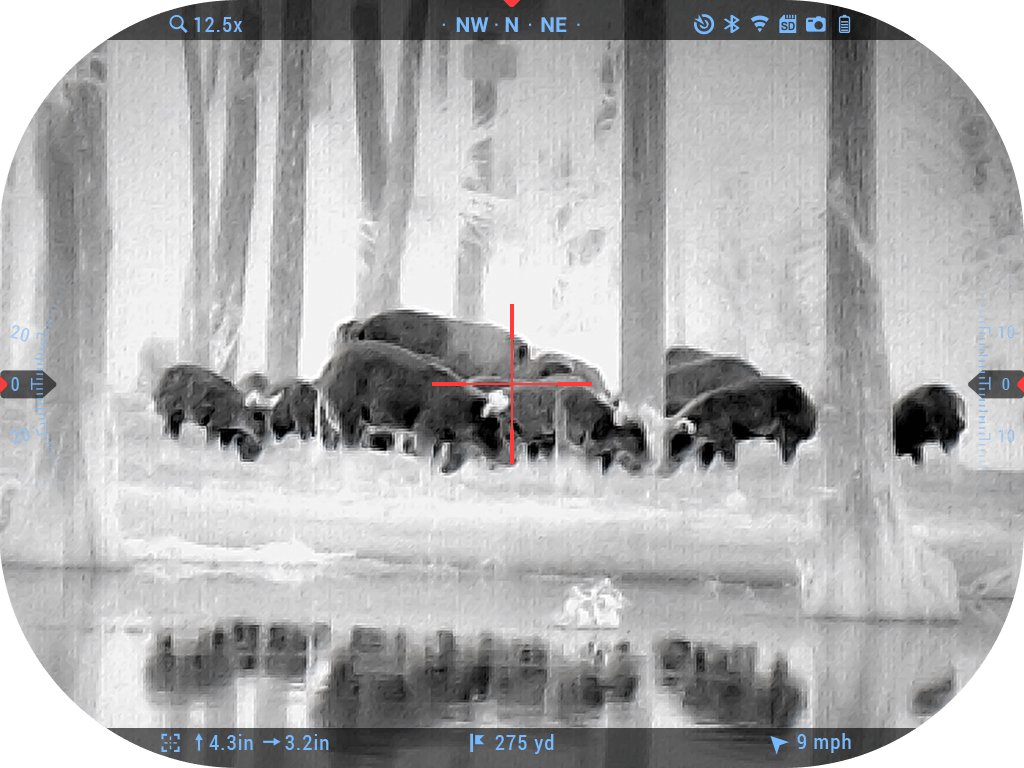
If there is one upgrade worth paying for, it is the resolution jump from 384 to 640. More dots on the sensor means you can tell a hog from a stump before you commit, and you can hold a cleaner image as you push the digital zoom. With a ≤15 mK NETD the sensor is sensitive enough to pull faint heat out of a cool, damp field, so the extra pixels are showing you real detail, not mush.
Replaceable battery system
The 640 2-16x uses the replaceable 18650 battery setup, so a fresh pair drops in during a break in the action instead of tethering you to a power bank. Around nine hours per charge covers a full night, and carrying spares turns a weekend into a non-issue.
Who it's for: the hunter who wants 640 clarity and long detection for general hog and predator work. Who it's not for: someone taking regular shots at the far edge of a big ag field — that hunter should look at the flagship.
ATN ThOR 6 640 3-24x — the flagship you step up to for reach
When you climb to the top tier, the money buys reach. The ATN ThOR 6 640 3-24x keeps the same 640x512 sensor as the mid model but adds a bigger 50mm lens, a longer 3650-meter detection range and a taller 3-24x magnification band with 8x digital zoom on top. That combination is what a long-range shooter pays up for.
Bigger lens, longer detection
The 50mm objective gathers more heat energy, which is why detection stretches out past the mid model. On a wide field where warm bodies show up as small dots on the horizon, that extra reach is the difference between spotting them and never knowing they were there. This is a clear case where the step up in price maps to a hard capability, not a nice-to-have.
8x digital zoom and high magnification
With a 3-24x optical-to-digital range and 8x zoom, you can settle on a distant target and confirm before the shot. The 640 sensor keeps that magnified image usable rather than falling apart, which is the whole point of pairing high zoom with high resolution.
Who it's for: long-range coyote and hog hunters on open ground. Who it's not for: close-cover woods hunters who rarely stretch past a couple hundred yards — they are paying for reach they will not use.
ATN ThOR 6 384 2.5-20x — the value tier done right
The most accessible option here is no toy. The 384x288 sensor carries the same ≤15 mK sensitivity as its bigger siblings, so it pulls faint heat just as willingly — it simply paints the scene with fewer dots. Think SD next to the 640's HD: perfectly good detail at moderate range, lighter in the hand at 1.74 lbs, and a 2300-meter detection range that covers the vast majority of real shots.
Six color palettes
This tier adds six selectable color palettes, so you can switch between the look that gives you the cleanest contrast for the night's conditions. On a heat-washed summer evening a different palette can make an animal pop off the background.
Lighter and simpler
At the lowest weight in the lineup, the 384 is an easy carry on a walk-and-stalk. For a hunter who works cover and mid-range fields rather than reaching to the horizon, it delivers the ThOR 6 experience without paying for the 640 sensor and the big lens.
Who it's for: value-minded hunters at mid range who want current-gen features without the top spend. Who it's not for: anyone who needs to identify small targets at long distance — that is a 640 job.
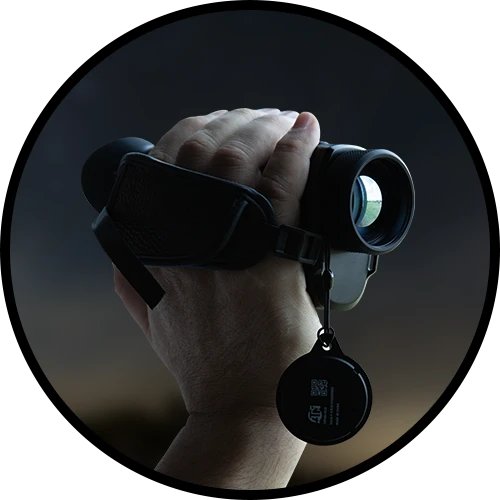
How to choose your ThOR 6 tier by feature
Forget the sticker for a moment and work the features. Match your hunt to the upgrade that actually changes your night, and you will land on the right tier without overpaying.
- Resolution (384 → 640) — the single upgrade most hunters feel; buy 640 if you need to identify targets before the shot or hold detail under heavy zoom.
- Lens and detection range — the bigger 50mm flagship lens buys distance on open ground; skip it if your shots live inside cover.
- Magnification headroom (up to 3-24x + 8x zoom) — pay up only if you regularly reach to the far edge of a field.
- Replaceable battery system — matters most for long, all-night sits where swapping cells beats recharging.
- Weight — the value 384 is the lightest, a real factor for walk-and-stalk hunters.
- NETD sensitivity — identical ≤15 mK across the line, so image cleanliness is not what separates the tiers.
How we picked these ATN thermal scopes
We built this feature-by-feature comparison against one job: helping you understand what drives thermal scope prices inside a single current-gen family. We weighed sensor resolution, NETD thermal sensitivity, detection range, refresh rate, weight and battery life against everyday hog and predator hunting, and we kept the field to ATN's 6th-generation ThOR 6 line only — no older or discontinued models. The honest trade-offs: the 640 flagship is heavier in the wallet and asks for open ground to justify its reach, while the value 384 gives up pixel count that long-range identification depends on. This is an in-house comparison of ATN's own range, not an independent lab test, so treat it as a guide to which features earn a step up — then check the specs against the way you actually hunt. It is NOT for shooters who want a single cheapest box regardless of capability; here you pay for the features you use.
Frequently Asked Questions
Why do thermal scope prices vary so much across the ThOR 6 line?
Because you are paying for hardware, not the shell. Sensor resolution, lens size and detection range, and magnification headroom are the features that move price up a tier. Shared processing and sensitivity stay the same across the line.
Which feature is worth paying up for first?
The jump from a 384 to a 640 sensor. Roughly four times the pixels means cleaner target identification and detail that holds under zoom, which most hunters notice on the very first night.
Is the value 384 model worth it, or should I stretch to a 640?
The 384 2.5-20x is a genuine current-gen scope with the same ≤15 mK sensitivity and covers mid-range shots well. Stretch to a 640 only if you need to identify small targets at long distance.
Does a higher tier give a cleaner picture?
Not through sensitivity — all three share a ≤15 mK NETD. The 640 models look cleaner because of extra resolution, and the flagship reaches farther because of its bigger lens, not because it detects heat better.
Do all three tiers get the same core features?
Yes. SharpIR AI, Recoil Activated Video, Zeroing Freeze, Wi-Fi and ATN Connect 6 are shared. The tiers differ in sensor, lens, magnification and, on the mid model, the replaceable battery system.
Which tier is best for long-range shots?
The 640 3-24x flagship, thanks to its 50mm lens, 3650-meter detection and 3-24x range with 8x digital zoom. It is the one to step up to when the far edge of an ag field is in play.
Ready to match a tier to your hunt? Start with the feature that changes your night the most — the 640 sensor if you need to identify at range, the big-lens flagship if you shoot far, or the value 384 if mid-range cover is your world. Compare all three side by side on the ATN ThOR thermal scope page, read the full specs, and pick the ThOR 6 that earns its keep on your rifle. Whichever tier you land on, you are buying into ATN's current 6th-generation line — real hardware, honest capability, and features you will actually use in the field this season.
Created: August 5, 2026 · 19:53:46 UTC