Ask any night hunter what sold them on a thermal scope and most of them will point to the pictures. Not the spec sheet, not the brochure claims, but the actual image on the display and the clips they pulled off the card the next morning. The trouble is that thermal scope pictures do not look the same in January as they do in July. A coyote crossing a frozen field lights up like a lantern, while that same coyote in humid August heat can look soft and washed out. If you judge a scope by the images it produces, you have to judge it across the whole calendar. That is exactly how this roundup frames the ATN ThOR 6 line.
Thermal scope pictures depend on the sensor, the season, and the processing behind the image. The ATN ThOR 6 640 3-24x delivers the sharpest all-season pictures with a 640x512 sensor, sub-15 mK sensitivity, and SharpIR image enhancement, so cold high-contrast nights and washed-out humid evenings both come through clear and recordable.
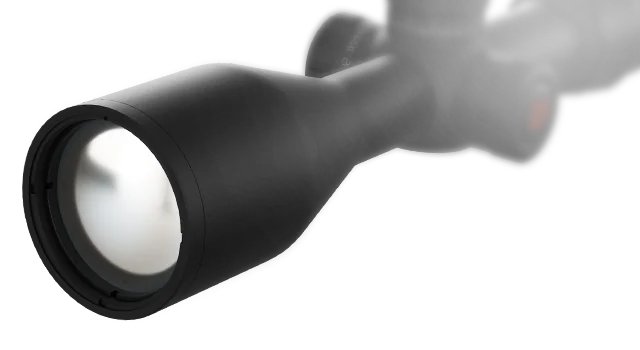
Quick answerBest overall: ATN ThOR 6 640 3-24x — the 640x512 sensor and SharpIR processing give you the cleanest, most detailed pictures in every season, cold or humid.
Best all-rounder: ATN ThOR 6 640 2-16x — the same 640 sensor in a wider, lighter package that captures great images without the long-range reach.
Best value: ATN ThOR 6 384 2.5-20x — a lighter, more affordable pick whose 384x288 sensor still produces solid mid-range pictures and adds six color palettes to play with.
Why ATN's 6th-gen thermal scopes capture better pictures
The picture a thermal scope shows you is only as good as the heat data it collects and how well it cleans that data up. The 6th-gen ThOR line leans on two things here. First, the sensors are sensitive, rated at a NETD of 15 mK or better. NETD measures how small a temperature difference the sensor can see, and a lower number means it picks up fainter heat, like a bedded coyote in cold grass or a hog half-buried in mud. Second, SharpIR AI enhancement sharpens edges and reduces the mush you get in tough conditions, so a washed-out summer scene keeps more definition. Add Recoil Activated Video, which starts recording the moment you fire so you never miss the shot on the card, and you have a system built around the pictures, not just the reticle. You can see the full family on ATN's thermal scope lineup.
ATN ThOR 6 640 3-24x — the sharpest pictures in any weather
A 640 sensor holds detail when the season fights you
The ATN ThOR 6 640 3-24x runs a 640x512 sensor, which carries roughly four times the pixels of a 384 chip. Think SD versus HD. In deep winter, when a warm animal against frozen ground already gives you a strong high-contrast image, those extra pixels turn a bright blob into a shape you can read. In muggy summer, when the ground itself is warm and the whole scene tends to gray out, the pixel count is what keeps antler tips, ear edges, and legs from smearing into one another. That is the difference between a picture you can identify from and one you only think you can.
SharpIR and RAV mean the footage is worth keeping
SharpIR runs in the background sharpening edges frame by frame, so the recorded clip looks as clean as what your eye saw live. Recoil Activated Video buffers and rolls the instant the rifle goes off, which matters because the best thermal scope pictures are usually the ones you did not plan. Zeroing Freeze locks the image while you dial, and Picture-in-Picture drops a magnified aiming window into a corner so you keep the wide scene and the precise shot in one frame. At 50Hz refresh, running animals stay smooth instead of stuttering across the screen.
Who it's for: the hunter who wants the best picture the line can produce, out to long range, in any season. Not for: someone hunting tight timber who never shoots past a couple hundred yards and would rather save weight and money.
ATN ThOR 6 640 2-16x — the same sensor, a wider all-season view
Same 640 quality, more of the scene
The ThOR 6 640 2-16x shares the exact 640x512 sensor and sub-15 mK sensitivity of the flagship, so the raw picture quality is the same. What changes is the glass and the field of view. Starting at 2x with a 35mm lens, it shows you a wider slice of the field, which is a real advantage in fall when animals are moving fast and you are trying to catch them entering a picture rather than centering one already there. Detection sits at 3100 m, plenty for most seasons and terrain.
Lighter on the glass, easy on the hands
It carries the full ThOR 6 feature suite including SharpIR, RAV, Hot Point Tracking, Wi-Fi with ATN Connect 6, and the replaceable 18650 battery system, so a spare cell in your pocket keeps the pictures rolling all night. Who it's for: a year-round hunter who wants top image quality with a wider view and does not need the longest reach. Not for: the open-country shooter who lives at maximum magnification.
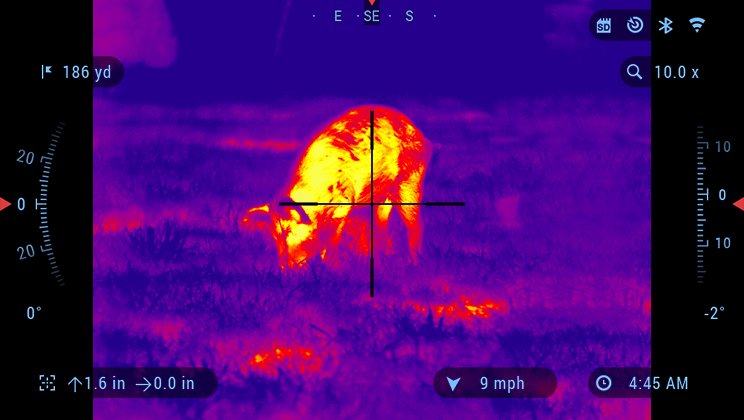
ATN ThOR 6 384 2.5-20x — value pictures with color palette options
A capable 384 chip for mid-range work
The ThOR 6 384 2.5-20x runs a 384x288 sensor. Fewer pixels than the 640 models, yes, but still a genuinely capable chip at mid range, and it keeps the same 15 mK sensitivity so faint heat still shows. Detection lands at 2300 m. For the hunter who works fields and edges inside a few hundred yards, the picture is more than good enough across the seasons, and at 1.74 lbs it is the lightest of the three.
Six palettes to match the season
This model adds six color palettes, which is more useful than it sounds. White Hot gives you a natural, high-contrast image that shines on cold winter nights. Black Hot can be easier on the eyes over a long humid summer sit, and the color modes help pull a warm animal out of a warm background when the heat washes the scene. Who it's for: the value-minded hunter who wants solid all-season pictures without paying the flagship tier. Not for: anyone who needs to identify game at the far edges of detection range.
How to choose a thermal scope by the pictures it makes
Match the scope to the seasons and distances you actually hunt, not the brochure photos. A few guides:
- Sensor resolution — 640x512 for identifying game at distance and in tough humid conditions; 384x288 is the lighter, value pick for mid-range fields.
- NETD sensitivity — all three sit at 15 mK or better, so faint cold-weather heat and washed summer scenes both stay readable.
- Magnification and lens — higher max zoom and a bigger lens reach farther in open winter country; a wider base view suits fast fall movement.
- Recording features — SharpIR and Recoil Activated Video decide whether the picture you keep looks as good as the one you saw.
- Weight and battery — a lighter body and a replaceable cell keep you in the field across a long season without fatigue or a dead screen.
How we picked these ATN thermal scopes
We built this list around one honest question: which scope gives you the best picture across a full hunting year, not just on a clear cold demo night? We weighed sensor resolution and NETD sensitivity because those set the raw image, the refresh rate because smooth motion keeps a running animal readable, and the recording tools because thermal scope pictures only matter if you can capture and review them. Weight and battery life mattered too, since a season is long and a heavy scope with a short runtime gets left at home. We considered only the current 6th-gen ThOR line. The honest trade-off is straightforward: the 640 models cost more and the 384 saves money and weight while giving up some far-edge detail. This is an in-house comparison of ATN's own range, not an independent lab test, so check these specs against the seasons and ranges you personally hunt. Who it is not for: if you never shoot past a hundred yards in open cover, the flagship's reach is more than you need.
Frequently Asked Questions
Why do thermal scope pictures look different in summer versus winter?
In cold weather a warm animal stands out sharply against frozen ground, giving you high-contrast pictures. In humid summer heat the whole scene warms up and contrast drops, so images can look softer. A more sensitive sensor and SharpIR processing help keep the summer picture readable.
Does a 640 sensor really make a visible difference in the pictures?
Yes. A 640x512 sensor carries about four times the pixels of a 384 chip, like the jump from SD to HD. In tough humid conditions or at longer range, those extra pixels are what let you actually identify what you are looking at instead of guessing.
Can I record video and still photos through the ThOR 6?
You can. All three ThOR 6 models capture photos and video, and Recoil Activated Video starts the recording the moment you fire, so the shot ends up on the card without you having to hit a button in the heat of the moment.
Which ThOR 6 gives the sharpest pictures for the money?
The ThOR 6 384 2.5-20x is the value pick and still produces solid mid-range pictures with the same 15 mK sensitivity. If you want the sharpest possible image at distance, the 640 3-24x is the flagship choice.
Do the color palettes change the picture quality?
The palettes change how the heat is displayed, not the underlying data. White Hot suits cold high-contrast nights, Black Hot can be easier over a long sit, and the color modes help separate a warm animal from a warm background on humid evenings.
Will the picture stay smooth on a running animal?
The ThOR 6 line refreshes at 50Hz, which keeps fast motion smooth instead of stuttering across the screen. That matters most in fall when animals are moving quickly through your field of view.
The right thermal scope earns its keep on the nights the season fights you, when the picture still comes through clear and you get the clip on the card. If you want the sharpest all-season images, start with the flagship ATN ThOR 6 640 3-24x, or browse the full ATN thermal scope lineup to match a model to the seasons and ranges you hunt. Look at the sensor, the sensitivity, and the recording features, then pick the one whose pictures fit your year.
Created: August 5, 2026 · 19:53:46 UTC