Using a thermal scope in rain is one of the most common night-hunting questions, and the answer is not a simple yes or no. Thermal still sees in rain — that is a real advantage over night vision — but rain does cut into range and contrast, and a downpour is harder than a drizzle. This guide explains exactly how rain affects thermal imaging, what you can still expect to see, and how the ATN ThOR 6 640x512 holds up when the weather turns. If you have skipped wet nights out of doubt, this will change that.
A thermal scope works in rain because it reads heat, not light, so it sees through darkness and light precipitation better than night vision. But rain shortens detection range and softens contrast: water in the air absorbs infrared and wets surfaces to a common temperature. Light rain is manageable; heavy downpours cut performance most.
Does a thermal scope work in the rain?
Yes, a thermal scope works in the rain — it detects heat rather than visible light, so darkness and light precipitation do not blind it the way they blind a day optic. What rain does is reduce performance rather than stop it. Water droplets in the air absorb and scatter infrared energy, so your detection range shortens. Rain also wets everything to a similar temperature, which flattens the contrast between an animal and its background. In a light rain you will still spot and identify game at useful distances; in a heavy, sustained downpour, expect noticeably shorter range and a softer picture. It keeps working — it just works harder.
How does rain affect thermal imaging?
- Airborne water absorbs infrared. Every droplet between you and the animal soaks up some of the heat energy the scope needs, so distant targets fade first — detection range shrinks.
- Surfaces wet down to a common temperature. Rain cools grass, dirt and an animal's coat toward the same reading, flattening the contrast that makes a shape pop.
- Heavy rain adds visual clutter. A hard downpour puts more water in the beam and can speckle the picture, making it harder to hold a clean image.
- A wet animal reads cooler. Soaked fur insulates and evaporates heat, so the signature is dimmer than the same animal on a dry night.
- Sensitivity fights back. A low-NETD sensor still separates small heat differences, so a sensitive scope keeps more usable contrast in the wet than a noisier one.
What can you still do with thermal in the rain?
- Spot game at shorter range — you will still detect warm animals, just closer than on a dry night; adjust your expectations, not your gear.
- Hunt hogs and predators through light rain — drizzle and steady light rain rarely stop a capable thermal from doing real work.
- Rely on sensitivity over range — a low-NETD scope holds contrast when rain flattens the scene, keeping animals readable.
- Keep the optic weatherproof — an IP67-rated body shrugs off rain on the housing, so the weather outside stays outside the scope.
How the 640 and the 384 handle wet weather
Within ATN's 6th-gen line, the spec that matters most in rain is thermal sensitivity, and both the ThOR 6 640x512 and the 384x288 share the same <=15mK figure, so both hold contrast well when the air turns damp. The 640x512 keeps more usable range because its larger sensor and 35mm lens gather more of the weakened signal, while the lighter 384x288 trades some of that reach for easier carry. Both are IP67 waterproof, so the housing is not the concern — the air between you and the animal is.
Key features that help in rain
- Low NETD (<=15mK) — the single most useful spec in the wet; it reads small heat gaps, so animals still separate from a rain-cooled background.
- IP67 waterproof body — the scope keeps working with rain running over it; no fumbling with covers mid-hunt.
- SharpIR AI enhancement — cleans up a softened, rain-degraded image so edges stay readable at range.
- Multiple palettes — switching between White Hot, Black Hot and Iron Red can pull a wet animal out of a flat scene better than one fixed palette.
- 50Hz refresh — keeps a moving animal smooth even when contrast is low, so you can track it through the rain.
What to look for in a rain-capable thermal
- Prioritise NETD — sensitivity beats raw range in the wet, so a low-NETD sensor is the first thing to check.
- Confirm the waterproof rating — an IP67 body handles rain on the housing without worry.
- Value resolution for faded targets — a higher-resolution sensor keeps a dim, rain-softened animal identifiable.
- Look for image enhancement — AI cleanup like SharpIR helps recover a picture that rain has flattened.
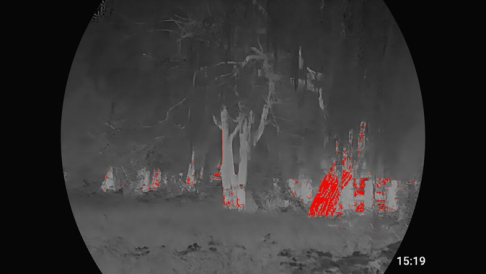
Common mistakes hunting thermal in rain
- Expecting dry-night range — rain shortens detection, so plan for closer work rather than assuming the clear-air spec holds.
- Blaming the scope for a wet animal — a soaked coat simply reads cooler; the optic is fine, the signature is dimmer.
- Sticking to one palette — in a flat, rainy scene, switching palettes often reveals an animal you would otherwise miss.
- Worrying about water on the housing — an IP67 scope is built for it; the real limit is the air between you and the target, not the body.
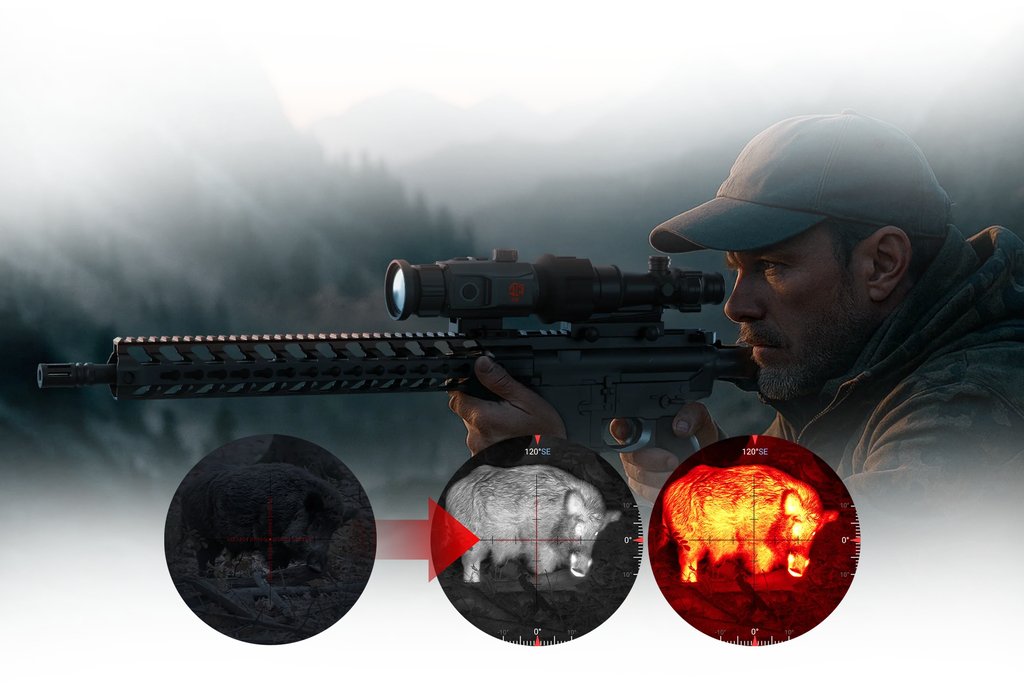
Example: the ATN ThOR 6 640x512
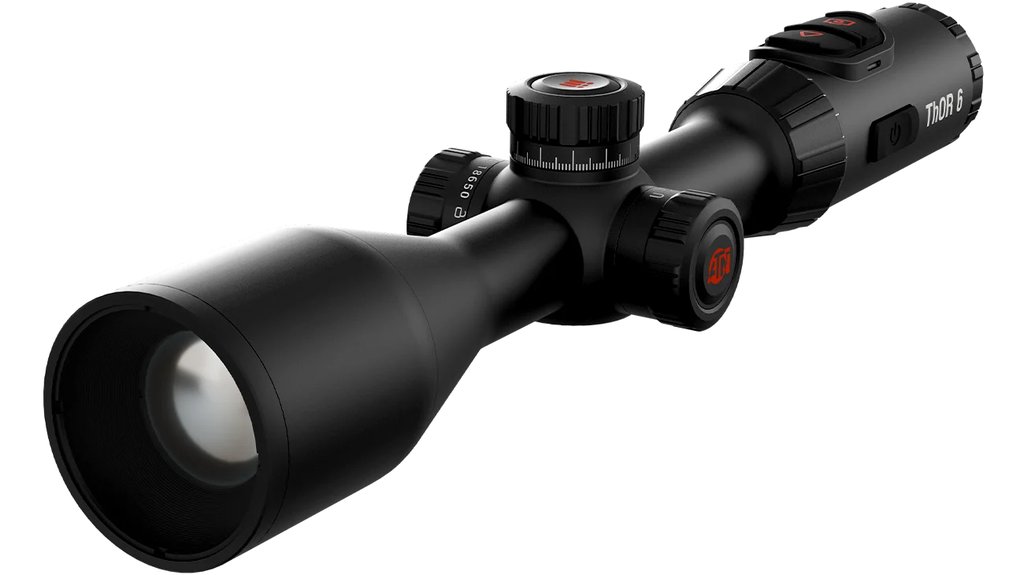
The ATN ThOR 6 640x512 is well set up for wet nights. Its <=15mK sensor keeps small heat differences visible when rain cools the scene toward one flat temperature, and the 640x512 resolution holds detail on a dimmed, distant animal. The 35mm F/1.0 lens gathers more of the rain-weakened signal, SharpIR AI cleans the softened edges, and six palettes let you pull a wet target out of a low-contrast background. The IP67 waterproof housing means the rain running over the scope is a non-issue. It is part of ATN's current line of thermal scopes built to hunt in real conditions.
Is thermal worth it if you hunt in the rain?
For wet-climate hunters, thermal is very much worth it — it keeps seeing when a wet, dark night would defeat other optics, and light rain barely slows a sensitive scope. The honest expectation is shorter range and a softer picture, not a blackout. If you hunt humid or rainy country often, lean toward the higher-resolution 640x512 so faded targets stay identifiable. If most of your rain is light drizzle at close range, the 384x288 handles it in a lighter package. Either way, a capable thermal turns a written-off wet night back into a hunting night.
Frequently Asked Questions
Does a thermal scope work in the rain?
Yes. Because it reads heat rather than light, a thermal scope keeps seeing in rain and darkness. Rain shortens detection range and softens contrast, but a capable scope stays usable, especially in light to moderate rain.
How much does rain reduce thermal range?
It varies with intensity. Light rain trims range modestly, while a heavy downpour can cut it significantly because airborne water absorbs infrared. Plan on identifying game closer than the clear-air spec suggests when it is raining hard.
Why do animals look dimmer in the rain?
A wet coat insulates and cools an animal's surface, so its heat signature reads dimmer than on a dry night. Rain also cools the surrounding ground toward the same temperature, flattening contrast. A low-NETD sensor helps recover that detail.
Can I damage my thermal scope in the rain?
Not if it is properly weather-rated. The ATN ThOR 6 640x512 is IP67 waterproof, so rain on the housing is not a problem. The limit in rain is the image, not the hardware.
What spec matters most for rain?
Thermal sensitivity, or NETD. A low figure like <=15mK lets the scope separate small heat differences when rain flattens the scene, so it matters more in the wet than raw detection range.
Should I change palettes when it rains?
Often yes. Rain creates a low-contrast, flat scene, and switching between White Hot, Black Hot and Iron Red can make a wet animal stand out that a single fixed palette would hide. It costs nothing to try.
Quick reference specsATN ThOR 6 640x512
NETD: <=15mK (holds contrast in rain)
Resolution: 640x512 (detail on faded targets)
Waterproof: IP67 (rain-ready housing)
Detection range: up to 3100m (clear air)
Lens: 35mm F/1.0, SharpIR AI, 6 palettes
Refresh: 50Hz, ~9hr battery
How this guide was put together
This is an in-house guide from ATN, not an independent lab review. We focused on how rain physically affects thermal imaging — infrared absorption, flattened contrast, dimmer wet animals — and judged ATN's current 6th-gen scopes on the specs that count in the wet: thermal sensitivity, resolution, lens size and the waterproof rating. Only the ThOR 6 640x512 and 384x288 were considered. Honest trade-off: neither scope escapes physics — rain shortens range for both — and the 640x512 that holds more detail costs more and weighs a little more than the 384x288. This is not a claim that thermal is unaffected by weather; it plainly is affected. Check these specs against how wet your own hunting really gets.
Do not write off a rainy night. The ATN ThOR 6 640x512 pairs a low-NETD sensor with HD-grade resolution and an IP67 waterproof body, so it keeps hunting when the weather turns. Rain shortens the reach, but a sensitive, high-resolution scope keeps game readable through it. Browse ATN's full range of thermal scopes and pick the model that matches how wet your country gets. A proper thermal turns a soggy, written-off night back into a hunt.
Created: July 7, 2026 · 19:23:12 UTC