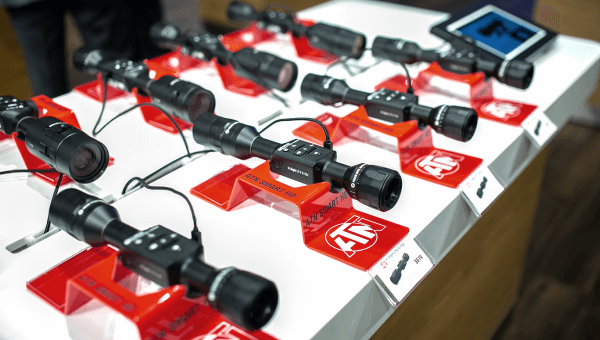
A .17 HMR is a features rifle as much as a range rifle. The recoil is so mild you can watch your own hit, the shots come fast on small varmints, and the light frame punishes any optic that fights it. So the smart way to pick a thermal scope for 17 HMR isn't to chase raw numbers — it's to ask which features actually change your night behind a rimfire. Line up the capability that matters, and the ATN ThOR 6 640x512 2-16x lands as the sweet spot: light enough for the rifle, quick enough for scurrying targets, and loaded with the tools that make rimfire work easy.
Best when you want more detail and reach: ATN ThOR 6 640x512 3-24x — extra magnification and the longest picture.
Best value and lightest: ATN ThOR 6 384x288 2.5-20x — the lightest body and a friendlier tier with the full 6th-gen toolset.
Why ATN's 6th-gen features fit a 17 HMR
The features that matter on a .17 HMR are the ones that make fast, small-target work repeatable, and ATN's 6th-gen ThOR line stacks them up. Recoil Activated Video means the mild rimfire recoil is enough to trigger a hands-free recording of every hit. Zeroing Freeze makes confirming a tight rimfire zero painless. A 50Hz-class refresh keeps a bolting varmint smooth in the frame. And under all of it, a NETD rated at 15 mK or lower — the smallest temperature difference the sensor can detect — keeps a small, faint animal readable, while SharpIR AI sharpens its edges. It's a toolset built for exactly the kind of shooting a .17 HMR does.
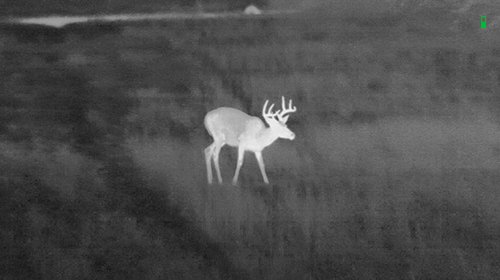
ATN ThOR 6 640x512 2-16x — best feature match for a 17 HMR
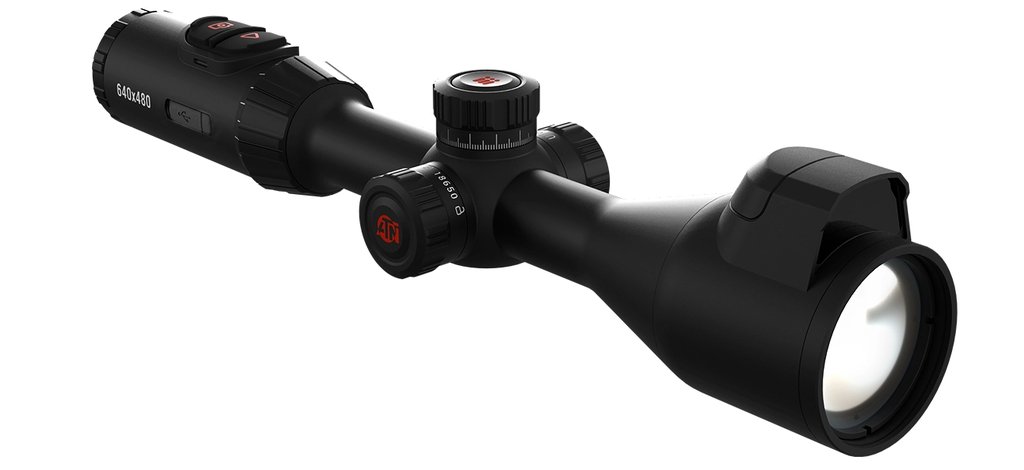
The ATN ThOR 6 640x512 2-16x hits the feature sweet spot for a rimfire. Its 2x base magnification and 35mm lens keep the picture wide and quick — right for varmints that appear close and move — while the full 640x512 sensor keeps the detail high. More pixels is like a denser weave of thread: the picture holds together the closer you look, so a small target stays sharp when you settle on it.
Recoil Activated Video on a light-kicking rifle
The .17 HMR barely nudges your shoulder, and RAV is tuned to catch even that. The moment the rifle fires, it records the hit hands-free — no fumbling for a button as a varmint scurries. Over a night of fast shooting that means every result is on file to review, which is genuinely useful when you're dialing in a new rimfire load or a new stand.
Zeroing Freeze and a quick refresh for fast varmints
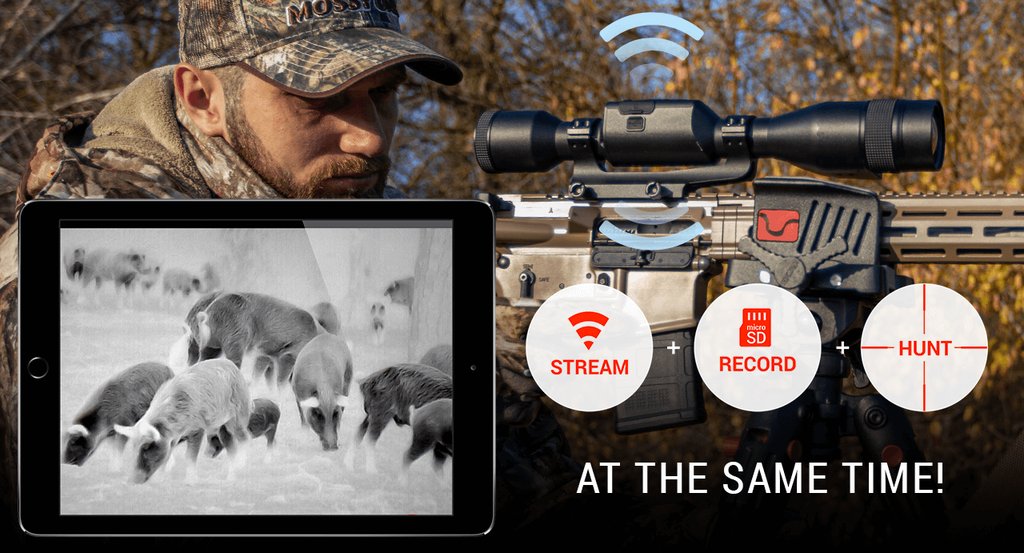
Zeroing Freeze lets you lock the sight picture after a shot and walk the reticle onto the point of impact, so getting a tight rimfire zero doesn't take a box of ammo. Then the 50Hz-class refresh earns its keep: a ground squirrel breaking for its hole is a fast, small mover, and a smooth refresh keeps it from smearing across the frame during the split second you have to shoot. Hot Point Tracking flags the warmest object so your eye finds it first.
Who it's for / not for
It's for the .17 HMR shooter who wants the feature set that makes fast, small-target nights easy — recording, quick zero, smooth motion — without over-scoping a light rifle. It's not for someone who mostly wants maximum magnification to pick tiny targets at the round's far edge; the 3-24x below serves that better.
ATN ThOR 6 640x512 3-24x — when you want more detail and reach
The ATN ThOR 6 640x512 3-24x carries the same 6th-gen feature set but adds a 50mm lens, 3-24x optical zoom and 8x digital zoom for the shooter who wants to squeeze every yard out of the round. Its 3650 m detection range is well past a .17 HMR's reach, but the extra magnification helps you read a small target clearly right up to 200 yards.
Where the extra magnification pays
At the outer edge of rimfire range, more optical zoom means you resolve a small varmint without leaning on digital zoom that softens the image. Paired with the 640 sensor and SharpIR AI, it keeps a distant target crisp. You still get RAV, Zeroing Freeze and the rest — this is the same toolbox with more reach on top.
Who it's for / not for
For the rimfire shooter who works the round's outer edge and wants maximum small-target detail. Not for someone who values a light, fast, wide setup for close work — the 2-16x lead is the better everyday feature match.
ATN ThOR 6 384x288 2.5-20x — lightest value thermal scope for a 17 HMR
The ATN ThOR 6 384x288 2.5-20x keeps the same 6th-gen features but trims to a 384x288 sensor to reach a friendlier tier, and at 790 g it's the lightest here — the easiest match for a slim rimfire you carry all day. Fewer pixels than the 640 means slightly less detail at the round's far edge, but the feature set that makes rimfire work easy stays intact.
The full toolset at a lighter weight
You still get RAV to record the mild-recoil hits, Zeroing Freeze for a painless zero, the smooth refresh for fast movers, SharpIR AI, the low NETD, and six color palettes to suit the ground. The lighter body just keeps the rifle balanced and quick, and a 2300 m detection range dwarfs anything a .17 HMR asks of it.
Who it's for / not for
For the shooter who wants the full 6th-gen feature set on the lightest, friendliest-tier body for a slim rimfire, working mostly inside 150 yards. Not for the shooter chasing the finest detail at the far edge — the 640 models lead there.
How to choose a thermal scope for a 17 HMR by feature
Decide which features actually change your night behind a rimfire, then match the scope to them — the .17 HMR's short range means detail, weight and shooting tools matter more than raw reach.
- Recoil Activated Video — tuned to catch even a rimfire's mild recoil and record every hit hands-free; all three include it.
- Zeroing Freeze — locks the sight picture so a tight rimfire zero takes less ammo and less fuss.
- Refresh rate — a 50Hz-class refresh keeps a fast, small varmint smooth in the split second you have to shoot.
- Weight — the lighter the body, the better a slim .17 HMR handles; the 384 is lightest, the 2-16x a close balance.
- Sensor and NETD — the 640 resolves more detail on small targets, while the ≤15 mK NETD keeps a faint animal visible on any of them.
How we picked these ATN thermal scopes
This is an in-house comparison of ATN's own current lineup, not an independent lab test. We considered only the 6th-gen ThOR line and judged each scope by the features that actually matter behind a .17 HMR — recording, zeroing, motion handling and weight — not by reach the round can't use.
- Shooting features — RAV and Zeroing Freeze because they change how easily you record and zero a fast rimfire rig.
- Refresh rate — a 50Hz-class refresh for smooth tracking of quick, small varmints.
- Sensor resolution and NETD — the 640 for finer small-target detail; ≤15 mK NETD across all three to keep faint heat visible.
- Weight — measured against a slim rimfire's balance, favoring the lighter bodies.
- Battery — ~9 hrs on swappable 18650 cells for a full outing.
Honest trade-offs: the 2-16x is the best all-round feature match but yields top-end reach to the 3-24x, which adds magnification a .17 HMR mostly won't need. The 384 is the lightest and best value but gives up some far-edge detail. None of these suits a shooter who only wants a plain daytime day scope. Weigh the features against how you actually shoot your rimfire before you buy.
Frequently Asked Questions
Which features matter most in a thermal scope for a 17 HMR?
The ones that suit fast, small-target rimfire work: Recoil Activated Video to record hands-free, Zeroing Freeze to make a tight zero easy, a quick refresh to keep fast varmints smooth, and light weight so the slim rifle stays balanced. All three ATN ThOR 6 scopes here carry the shooting features; they differ mainly in sensor detail and weight.
Will Recoil Activated Video trigger on a 17 HMR's light recoil?
Yes. RAV is designed to start recording from the shot's recoil impulse, and the ThOR 6's system catches even a rimfire's mild kick. That gives you a hands-free record of every hit, which is handy for reviewing results and dialing in a new load or stand.
Why does refresh rate matter on a rimfire varmint rig?
Small varmints move fast and often bolt the instant they sense you, so your shot window is brief. A 50Hz-class refresh keeps that quick motion smooth in the frame instead of smearing it, so you can track and shoot cleanly. All three ThOR 6 scopes run that class of refresh.
Is the ThOR 6 640 2-16x too much scope for a 17 HMR?
No — it balances well on a rimfire. Its 2x base view is wide and quick for close targets, its weight is reasonable, and its features suit fast small-varmint work. It gives you the sharp 640 picture without the extra magnification of the 3-24x that a .17 HMR rarely needs.
Does the value 384 model lose any important features?
No key shooting features. The ThOR 6 384x288 keeps RAV, Zeroing Freeze, the quick refresh, SharpIR AI, the low NETD and six palettes; it just uses a 384 sensor instead of a 640, so fine detail at the round's far edge is where you'd notice a difference. It's the lightest option, which suits a slim rimfire.
How does Zeroing Freeze make sighting in easier?
It freezes the sight image after a shot so you can move the reticle onto your actual point of impact without the target staying put. On a .17 HMR, where small-target hits demand a precise zero, that turns sighting in into a quick, low-ammo job instead of a frustrating one.
How long do these scopes last on a rimfire hunt?
About 9 hours each on two 18650 cells, and you can swap in fresh cells in the dark. That covers a long day-into-night varmint session on a .17 HMR without the scope quitting mid-hunt.
If you want a thermal scope for 17 HMR chosen around the features that actually change a rimfire night — hands-free recording, an easy zero, smooth motion and a light body — the ATN ThOR 6 640x512 2-16x is the balanced pick. Want more magnification at the round's edge? The 640 3-24x adds it. Want the lightest value build? The 384 delivers the same toolset. Compare the full 6th-gen range, feature by feature, on the ATN thermal scope collection and match the tools to how you shoot your .17 HMR.
Created: August 5, 2026 · 19:53:45 UTC