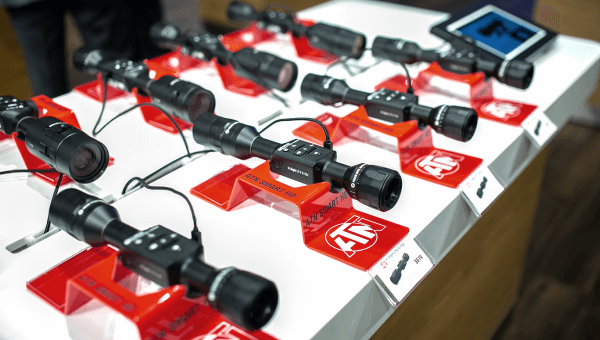
The .17 HMR is a specialist: a flat-shooting rimfire that stays honest on varmints out to roughly 200 yards before the wind starts eating it alive. That range ceiling is the whole story when you're choosing glass for it, because a thermal scope for 17 HMR only needs to see and confirm well inside where the round can reach. The terrain decides the rest — a scope set up for a wide-open prairie dog town behaves very differently in a tangle of brushy draws. The lead I trust on a rimfire rig is the ATN ThOR 6 640x512 3-24x, and here's how it reads different ground within a .17 HMR's window.
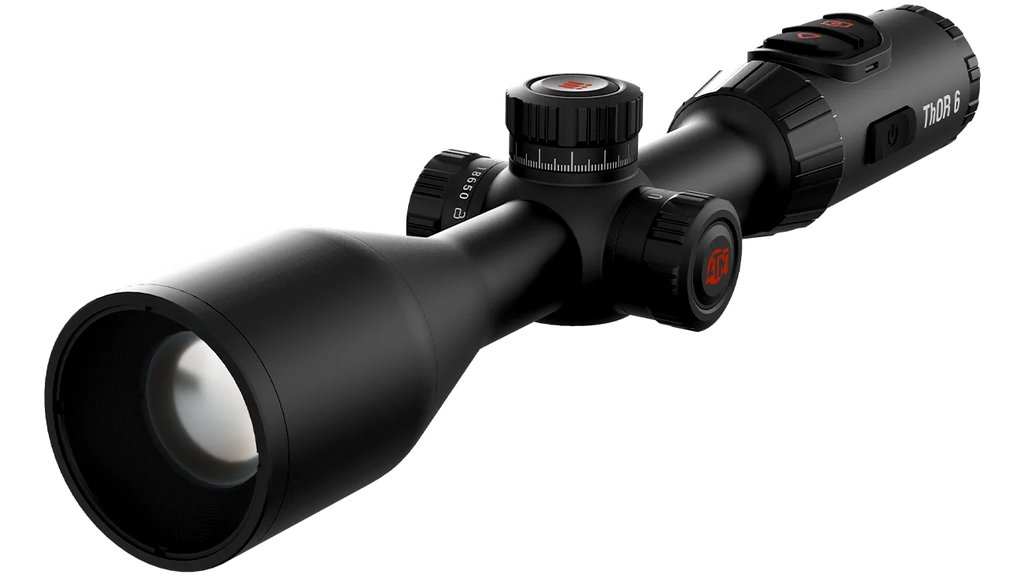
Best for brushy draws: ATN ThOR 6 640x512 2-16x — a wider base view for close, cluttered ground.
Best value on a light rig: ATN ThOR 6 384x288 2.5-20x — the lightest here, easy on a rimfire, with the full 6th-gen feature set.
Why ATN's 6th-gen thermal scopes suit a 17 HMR
A .17 HMR rewards a scope that resolves small, cool-ish targets cleanly and sits light on a slim rifle. ATN's 6th-gen ThOR line does both. Every scope here runs a NETD rated at 15 mK or lower — NETD is the smallest temperature difference the sensor can pick out, and on a small varmint that faint heat signature is exactly what a low NETD keeps visible against the ground. SharpIR AI sharpens those small edges so a ground squirrel doesn't dissolve into the dirt, and a 50Hz-class refresh keeps a scurrying target smooth. None of these scopes weighs enough to unbalance a light rimfire, either.
ATN ThOR 6 640x512 3-24x — best thermal scope for a 17 HMR
The ATN ThOR 6 640x512 3-24x gives a .17 HMR more capability than the round can spend, and that's a good thing — it means the glass never limits the shot inside 200 yards. Its full 640x512 sensor and 50mm F/1.0 lens resolve small targets with room to spare. Resolution here works like a finer print: a 640x512 sensor lays down far more detail than a 384, so a small varmint at the round's outer edge stays identifiable instead of turning into a warm speck you can't call.
Open ground within rimfire range
On an open pasture or a flat dog town, the .17 HMR wants clear confirmation of a small target before you commit. The 3-24x optical zoom plus 8x digital zoom lets you magnify a distant varmint and still read it thanks to the 640 sensor's detail. You'll rarely need the full 3650 m detection range on a rimfire, but the surplus means the near-range picture inside 200 yards is effortless and sharp.
Working brushy draws
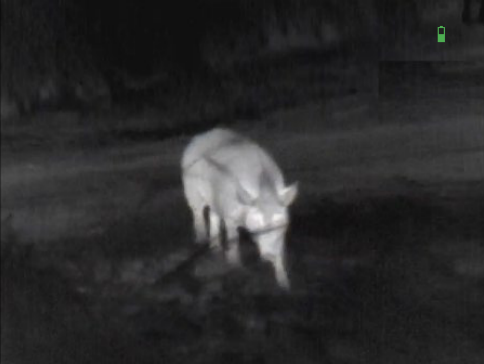
Draws and creek edges throw warm banks and cool shadow at the sensor at once. The 640's low NETD keeps a small animal separated from that patchy background, and Hot Point Tracking flags the hottest object so your eye finds the target in the clutter. Zeroing Freeze makes it painless to confirm and hold your rimfire zero, and Picture-in-Picture drops in an aiming window without losing the draw's wider view.
Who it's for / not for
It's for the .17 HMR shooter who wants the cleanest possible small-target picture and never wants to blame the glass for a missed varmint. It's not for someone who wants the lightest, cheapest rig they can hang on a plinking rimfire — the 384 value pick below serves that shooter better.
ATN ThOR 6 640x512 2-16x — best for close brushy draws
The ATN ThOR 6 640x512 2-16x keeps the full 640 sensor but opens a wider base view off its 35mm lens, which is what you want when a .17 HMR is working close cover. Most rimfire draw work happens well inside 150 yards, and a 2x starting magnification keeps the whole draw and any movement in it inside the frame.
Why the wider view fits rimfire draw work
In a brushy draw, targets pop up close and off to the side, and a tight, high-magnification view misses them. The wide base view sweeps the cover fast, and the 640 sensor still resolves the small target when you settle on it. A 3100 m detection range is far past anything a .17 HMR will ever reach, so the sensor is never the limit — the round is.
Who it's for / not for
For the rimfire shooter who mostly works close, cluttered ground and wants a fast, wide picture. Not for the shooter picking off distant varmints across an open flat — the 3-24x lead confirms small targets better at the round's outer edge.
ATN ThOR 6 384x288 2.5-20x — best value thermal scope for a 17 HMR
The ATN ThOR 6 384x288 2.5-20x is the natural match for a light .17 HMR that you carry all day. At 790 g it's the lightest of the three and sits easily on a slim rimfire, and its 384x288 sensor lands it at a value tier. Fewer pixels than the 640 means a touch less fine detail at the far end of the round's range, but for the honest 150-yard varmint work a .17 HMR does most, the picture is clean.
Why light weight matters on a rimfire
A .17 HMR is a slim, light rifle, and hanging a heavy optic on it ruins the balance you bought the rifle for. The 384's lighter body keeps the rig quick to swing on a scurrying varmint. You still get SharpIR AI, the low NETD, the smooth refresh and six color palettes to suit the ground, and a 2300 m detection range that dwarfs the round's actual reach.
Who it's for / not for
For the rimfire shooter who wants a real 6th-gen thermal picture, light carry and a friendlier tier, doing most work inside 150 yards. Not for the shooter chasing the finest detail at the round's absolute edge — the 640 leads there.
How to choose a thermal scope for your 17 HMR by terrain
Start with where your varmints live, then remember the round tops out around 200 yards — you're matching thermal detail and view to rimfire range, not chasing reach you can't use.
- Open flats and dog towns — favor resolution and magnification to confirm small targets to the round's limit; the 640 3-24x leads.
- Brushy draws and creek edges — a wider base view sweeps close cover faster; the 640 2-16x fits.
- Light-rig priority — the 384 2.5-20x is the lightest and keeps a slim .17 HMR balanced.
- Small, faint targets — lean on the low NETD and SharpIR AI to keep a ground squirrel from blending into the dirt.
- Long outings — all three run ~9 hours on 2x swappable 18650 cells for a full day-into-night session.
How we picked these ATN thermal scopes
This is an in-house comparison of ATN's own current lineup, not an independent lab test. We looked only at the 6th-gen ThOR line and judged each scope for one job: pairing a .17 HMR's ~200-yard rimfire range with a thermal picture clean enough to confirm small varmints across the terrain you hunt.
- Sensor resolution — more pixels resolve a small varmint at the round's edge, so the 640 models lead for confident target ID.
- NETD (thermal sensitivity) — all rated ≤15 mK, the smallest temperature difference the sensor sees, which keeps a small, faint heat signature visible.
- Detection range — all three reach far past a .17 HMR's limit, so the sensor never caps the shot; the round does.
- Weight — a light optic keeps a slim rimfire balanced and quick to swing.
- Battery — ~9 hrs on swappable 18650 cells for a real outing without going dark.
Honest trade-offs: the 640 3-24x offers more reach than a .17 HMR can ever use, which is surplus you pay for at the flagship tier — worth it for the small-target detail, not for the range. The 384 gives up some far-edge detail but is the lightest and friendliest tier. None of these is the pick for a shooter who wants a plain daytime day scope. Match the picture and weight to your rifle and ground before you buy.
Frequently Asked Questions
Do I need a long-range thermal scope for a 17 HMR?
No. The .17 HMR is honest to roughly 200 yards before wind takes over, so any of these ThOR 6 scopes has far more detection range than the round can use. What matters more is a sharp picture that confirms small varmints inside that window, which is where the 640 sensor helps most.
Which ATN ThOR 6 is best for a 17 HMR?
The ATN ThOR 6 640x512 3-24x. Its full 640 sensor and strong magnification resolve small, faint varmints cleanly across the whole rimfire range, and features like Zeroing Freeze and Hot Point Tracking make confirming and holding your zero on a small target easy.
Is the 384 sensor enough for rimfire varmint work?
For the 150-yard varmint work a .17 HMR does most, yes. The ThOR 6 384x288 keeps the same 6th-gen processing, low NETD and palettes, and it's the lightest option here — a good match for a slim rimfire. The 640's extra detail only shows at the far edge of the round's range.
Why does NETD matter for small varmints?
Small animals give off a faint heat signature that a less sensitive sensor can lose against warm ground. NETD is the smallest temperature difference the sensor can detect, so a low figure like the ≤15 mK on these ThOR 6 scopes keeps a ground squirrel or rabbit visible instead of blending into the dirt.
Will these scopes throw off my rimfire's balance?
None of the three is heavy enough to ruin a .17 HMR's handling, but weight still matters on a slim rifle. The 384 2.5-20x is the lightest at 790 g and keeps the rig quick to swing, while the two 640 models add a little more up top in exchange for detail.
How does Zeroing Freeze help on a 17 HMR?
Zeroing Freeze lets you lock the aiming image after a shot so you can adjust the reticle onto the point of impact without the target having to stay put. On a rimfire that's an easy, repeatable way to confirm your zero, which matters because small-target hits leave no room for a sloppy zero.
How long do these scopes run on a hunt?
All three run roughly 9 hours on two 18650 cells you can swap in the dark. That covers a long day-into-night varmint session on a .17 HMR without leaving you without a picture at the wrong time.
If you want a thermal scope for 17 HMR that confirms small varmints cleanly across open flats and brushy draws alike, start with the ATN ThOR 6 640x512 3-24x — the sharpest small-target picture here. Mostly working close cover? The wider 640 2-16x sweeps draws faster. Want the lightest rig on a slim rimfire? The 384 value pick fits. Compare the full 6th-gen line, spec by spec, on the ATN thermal scope collection and match the picture and weight to your .17 HMR before you commit.
Created: August 5, 2026 · 19:53:45 UTC