Thermal scope financing gets easy once you stop shopping by wish and start shopping by dirt. The ground you actually walk decides how much optic you need: a boar stepping out of cedar at forty steps asks nothing of a scope that a coyote skylined across a half-mile of picked beans demands everything from. Put the wrong tier on the rifle and you either drag around top-end reach that never leaves the safe or squint at a blob you should have been able to name. This roundup sorts the ATN ThOR 6 line by the three kinds of ground most of us hunt — thick timber, mixed country, and wide-open fields — so the tier your terrain calls for is the one that ends up on payments.
Sorted by terrain, the ATN ThOR 6 640x512 2-16x is the tier most hunters should put on payments: the 640 sensor names game cleanly and the 2x low end keeps a brush-buster on close cover. Step up to the 3-24x flagship if your ground opens into cut fields and long fencelines, or drop to the value 384 for tight timber and the lightest monthly outlay.
Quick answerBest overall / mixed country: ATN ThOR 6 640x512 2-16x — 640 detail with a brush-ready 2x base, the terrain-flexible tier for ground that changes on you.
Best for open fields: ATN ThOR 6 640x512 3-24x — the flagship's long glass and top-end zoom, earned on cut ground and long fencelines.
Best for thick timber: ATN ThOR 6 384x288 2.5-20x — the lightest body, fastest to swing in cover, full 6th-gen feature set, and the gentlest tier on the wallet.
Why ATN's 6th-gen thermal scopes lead this list
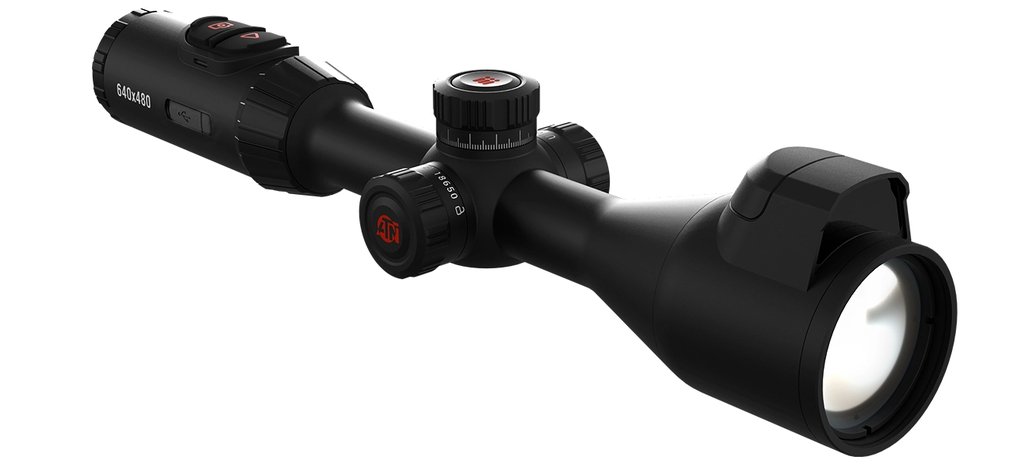
Every ThOR 6 shares one modern chassis, which is exactly why terrain — not a spec-sheet gap — gets to pick the tier you put on payments. Each of the three carries a low-noise thermal sensor rated 15 mK or better, SharpIR AI image processing, and a full-HD OLED screen that renders a clean picture instead of a mushy one. A 15 mK NETD figure just means the sensor reads tiny heat differences, and that shows up on glass as bite: a warm hog cuts hard off cool leaf litter rather than bleeding into it. Layer on the tools you touch every night out — Recoil Activated Video that rolls on the shot, Zeroing Freeze to lock the reticle while you dial, Hot Point Tracking, Picture-in-Picture, 8x digital zoom, and Wi-Fi over ATN Connect 6 — and those are the same on all three. Three things move between them: how many pixels the sensor packs, how wide the zoom band runs, and how far each one reaches. Those three map almost one-to-one onto timber, mixed country, and open ground. Since payment plans live right on the checkout page, you can bolt on the tier your dirt genuinely needs and split the outlay over months instead of shorting yourself to land a smaller number.
ATN ThOR 6 640x512 2-16x - best for mixed country
The ATN ThOR 6 640x512 2-16x is the tier most hunters land on, because mixed ground is what most of us actually walk and this scope will not commit to a single lane. It holds the flagship's 640 sensor but swaps some top-end zoom for a wider throw of view, and that 2x floor is the whole story when the cover changes stand to stand. Glass a food plot at one setup, back onto a brushy draw at the next, and the wide base keeps a boar in frame when he busts out of the treeline at fifty steps — while the 16x top still lets you name a shape standing off across the opening.
One rifle, timber edge to fencerow
You keep every bit of the flagship's 640x512 detail, so an animal reads sharp whichever side of the property you swing to. Think of resolution the way a phone camera adds megapixels: more of them, and a coyote at moderate range holds its true shape instead of smearing into a warm smudge. What shifts down here is the 35mm objective and a 3100-meter detection figure — both a notch off the flagship, and at the ranges mixed-country shooters truly fire, that notch never shows itself. The trade buys you a zoom band that lives where you actually shoot from, so the scope comes up fast as the ground swings from cover to open. It sits squarely between the flagship and the value model and covers the widest spread of terrain of the three.
A body that runs through the season
This one takes the replaceable 18650 cell, a low-key perk that pays off on nights you keep relocating and cannot get near a charger. Roughly nine hours handles most sits, but if a cell fades you drop in a fresh one and stay in the game instead of calling it a night. Recoil Activated Video rolls on its own with the shot, so a quick jump in a draw ends up saved without you groping for a button in the dark — the sort of quiet dependability that makes a season on payments feel earned no matter what ground you draw.
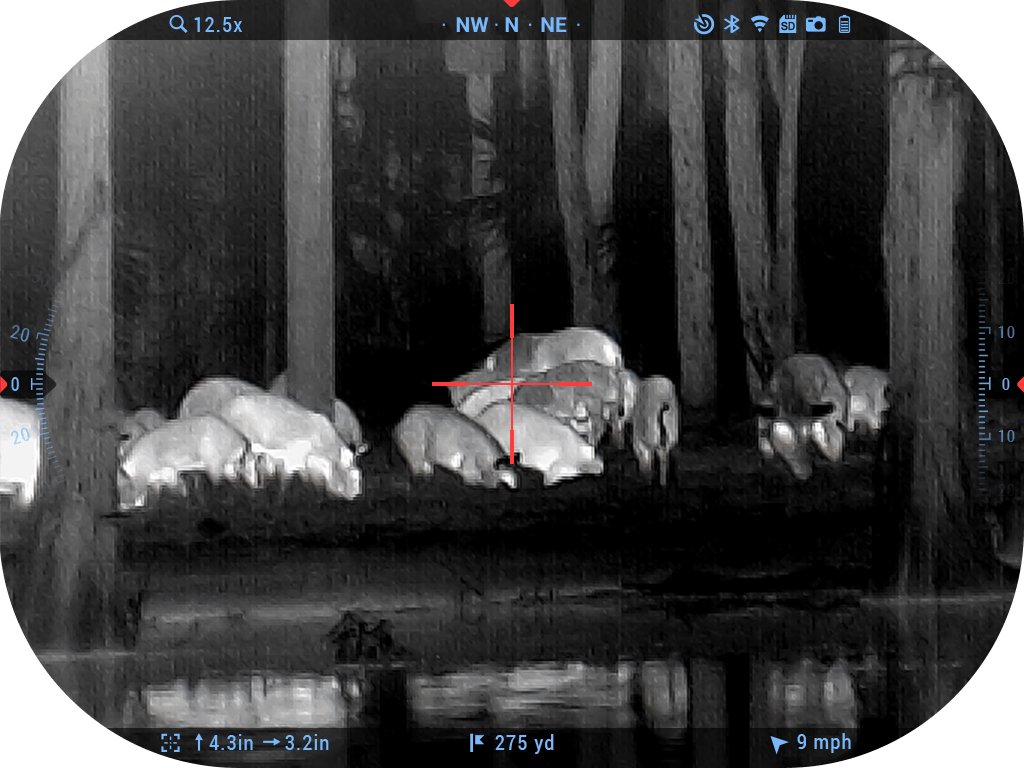
A night that changes ground under you
Set it on real dirt. You ease into a bottom at last light where a green plot butts against a thick creek edge. Early on you are tucked at 2x reading the tangle up close, and a boar shoulders out of the brush at forty steps — the wide base already has him before he clears the timber. An hour on you slide up to the field corner and roll to the top of the band to sort a brace of coyotes worrying the far fencerow. One rifle, one scope, two wildly different pieces of ground inside a single sit. That elastic range is precisely why varied-ground hunters put this tier on payments: it fits the dirt you hunt instead of the dirt you daydream about.
Who it suits: the hunter whose property is a little of everything — timber edges, plots, calling country, hogs strung across a whole farm — who wants one optic that never feels out of place. Who it does not: the die-hard open-country shooter chasing the last yard of reach (put the 3-24x flagship on the rifle instead), or the tight-timber hunter who would rather keep the outlay as small as it goes. Set one up from the ATN ThOR 6 640 2-16x product page, where payment plans show at checkout.
ATN ThOR 6 640x512 3-24x - best for open fields
The ATN ThOR 6 640x512 3-24x is the flagship tier that earns its keep when the ground opens up, because it reaches and it names an animal at the same time. Out on picked beans and long fencelines you often get one clean read on something three hundred yards off, and the 640 sensor is what turns that read into a decision. Where the mixed-country model gives back zoom for a broader base, the flagship refuses to trade the reach away — and wide dirt is the one arena where that top-end genuinely returns your money, which is what makes the higher tier make sense here and not in the brush.
Glass that stretches across cut ground
Reach is where this body owns the open-field slot. A 3650-meter detection figure married to the 3-24x band lets you swing a wide field at 3x, snag a heat bloom against the far treeline, then wind up the zoom to sort out exactly what it is. That detection number is only how far off you can catch a heat source, never how far you ought to shoot — but the upshot is that nothing crosses that pasture unseen. The 50mm F/1.0 objective pulls in enough thermal energy to keep a far image crisp instead of washed thin. If your ground truly runs open, this is the tier where the reach on the invoice is reach you spend every night out.
The picture a long poke demands
Out wide, the 640 sensor paired with SharpIR AI is what keeps a distant shot honest. Lines stay crisp, a bedded animal holds its form, and the frame does not fall apart when a hot body slides across cooler stubble. The 8x digital zoom rides on top of the optical range for that final nudge, and Picture-in-Picture parks a magnified aiming box in a corner while the full field stays under your eye. Who it suits: the field hunter on farm ground, cut corn, and pivots where the shot stretches out. Who it does not: the timber hunter who rarely sees past eighty steps — the reach and top-end simply idle, and a lighter tier lands on a friendlier plan.
ATN ThOR 6 384x288 2.5-20x - best for thick timber and value financing
The ATN ThOR 6 384x288 2.5-20x is the tier to put on payments for close cover, and it hands you the whole 6th-gen feature set at the gentlest monthly outlay of the three. The 384x288 sensor packs fewer pixels than the 640 bodies, so picture a lower-resolution camera: the image is still genuinely good and plenty to identify game inside a few hundred yards — which is nearly every shot you will ever get in the woods — it only starts giving up fine detail way out at the ragged rim of its range, and in the brush that rim never comes into play. For value financing, this is where a modest line item still bolts a fully current optic to the rifle.
Light on the carry, quick on the swing
In tight timber the wins are heft and handling, and at 1.74 lbs this is the lightest of the trio. Slung on a rifle through cedar and blowdown, the ounces you shrug off at a bench pile up over a long still-hunt, and the leaner body swings onto a boar quicker when he crashes out at spitting distance. The 2.5-20x range on a 25mm objective sits right for close-to-mid work, and 2300 meters of detection is far more room than any timber lane will ever ask for. This tier keeps the outlay low while still hanging current-generation glass on the rifle — no dusty discontinued optic just to land an easy plan.
Nothing that matters gets left off
The value here is not about gutting the feature list. It holds SharpIR, Zeroing Freeze, Hot Point Tracking, Wi-Fi, RAV, and even throws in six color palettes so you can dial the look that carves cleanest through a cluttered timber background for your own eyes. The 15 mK sensitivity sits in the same class as its bigger siblings, so contrast stays sharp and clean despite the thinner pixel count. Who it suits: the timber and close-cover hunter, plus anyone stepping into thermal whose shots stay inside a few hundred yards and who wants the smallest sensible outlay. Who it does not: the field shooter stretching across big open dirt for small game — out there the 640 sensor pays for itself, and the flagship or the mid tier is the one to put on a plan.
How to choose which tier to finance by terrain
Pick the tier the way you read the ground under your boots. Run your usual setups through your head: how long is the average poke, how thick is the stuff you shoot through, and how much do you shuffle between stands in a night? Answer that honestly and the tier all but names itself. Payment plans are there to split the outlay of the right optic over time, so peg the tier to your terrain rather than to the smallest monthly figure. Here is the short version, ranked the way ground actually forces the call:
- Mixed / varied country - a wide 2x floor keeps you on close animals while the 640 sensor names far ones; the 2-16x fits most of us and is the sensible tier to plan on.
- Open fields and cut ground - reach and resolution rule out wide; the 640 3-24x flagship earns its top slot there, so a plan on it pays off.
- Thick timber and close cover - light weight and a fast swing beat reach; the 384 lands on the gentlest plan and its close image is all a brush lane ever needs.
- Resolution - 640x512 for naming game far off on open dirt; 384x288 when ranges stay moderate and a leaner outlay matters more.
- Detection range - a bigger figure is more spotting room, but it is a detection number, not a shot distance; a timber lane never leans on it.
- Payment plans at checkout - ATN carries plans at checkout so the outlay splits over time; plan on the tier your terrain truly needs, not the one that just clears the smallest figure.
One straight word: most of us buy for the pasture we picture, not the cover we actually push through. If nine sits out of ten your game shows inside 120 yards in the tangle, the light 384 or the do-it-all 2-16x will feel right far more often than a flagship whose reach you never once unlock. Plan on the terrain you cover most, and the invoice stays a pleasure to sign every month.
How we picked these ATN thermal scopes
We framed this roundup around terrain, then graded each scope on the specs that actually settle a shot on that ground: sensor resolution, thermal sensitivity (NETD), detection range, video smoothness, heft, and battery life. Because the axis was terrain, resolution, zoom band, and weight carried the most grading weight — those three settle whether a scope belongs in tight cover, out on open distance, or across the mix, which in turn settles how much optic your ground justifies putting on a plan. Only the current 6th-gen ThOR 6 trio was eligible; older ATN bodies stayed on the bench. We stated the trade-offs plainly above: the flagship concedes nothing on image quality yet is more scope than timber ever uses, and the featherweight 384 handles best in the brush but surrenders fine detail on far, open pokes. This is an in-house look at ATN's own scopes, not an independent lab teardown, so treat it as a starting line and check the specs — and the tier you plan on — against your own terrain before you sign.
Frequently Asked Questions
Can I finance an ATN thermal scope?
Yes. ATN carries payment plans at checkout, so the outlay on a serious thermal scope splits over time instead of landing all at once. The wise move is to pick a tier that fits both your wallet and the terrain you truly hunt, then plan on that scope rather than shorting yourself to land a smaller figure.
Which ATN ThOR 6 tier should I finance for mixed terrain?
The ATN ThOR 6 640x512 2-16x is the strongest fit for varied ground. Its 640 sensor names game cleanly while the wide 2x floor keeps you on close cover, so one scope handles timber edges and field corners alike, which makes it the sensible mid tier to put on a plan for country that changes on you.
Is the 3-24x flagship worth financing for open fields?
For genuinely open dirt, yes. Its 3650-meter detection and 3-24x band let you catch and name game across long distance where a wrong call is costly, so a field hunter draws full return from every payment. Back in the timber that reach idles, and a lighter tier lands on a friendlier plan.
What does NETD 15 mK mean on these scopes?
NETD gauges how small a temperature gap the sensor can register, and 15 mK or better is very sensitive. Afield it shows up as bite: a warm animal's outline cuts hard against cooler ground instead of bleeding into it, which counts most against a cluttered or brushy backdrop.
Which tier is cheapest to finance for timber hunting?
The value ATN ThOR 6 384x288 2.5-20x carries the gentlest outlay. It is the lightest of the three, swings fast in cover, and keeps the full 6th-gen feature set, while its close-range image is all a timber lane ever needs, so it lands on the lowest sensible plan.
How far can these thermal scopes detect an animal?
Detection runs from 2300 meters on the 384 up to 3650 meters on the 640 3-24x flagship. That figure is how far off you can catch a heat signature, not how far you ought to shoot; ethical identification and shot ranges sit far closer, and a timber lane never leans on the limit.
Can I mount any of these on a hard-recoiling rifle?
Yes. Every ThOR 6 here is built to ride a rifle and packs Recoil Activated Video, which the shot itself triggers to save the moment. Pair that with Zeroing Freeze for a steady, repeatable zero and the whole line handles gun mounting the same way.
Ready to match a financed thermal scope to the ground you actually push through? The ATN ThOR 6 lineup runs from a long-glass flagship for open fields to a featherweight, gentle-plan option for thick timber, all riding the same 6th-gen sensor and SharpIR image processing. Begin with the terrain-flexible best-overall ATN ThOR 6 640 2-16x, where payment plans show at checkout, or walk the full range on the ATN thermal scope collection page to line up resolution, zoom, and reach by terrain. Read the dirt first, and the plan sorts itself out.
Created: August 5, 2026 · 19:53:45 UTC