The right thermal scope. changes a little with the calendar, because heat contrast shifts through the year: crisp in a cold winter field, flatter under summer sun. A scope that scans wide, holds contrast, and keeps power through a long cold sit will serve you in every season. That is why the ATN ThOR 6 640x512 2-16x leads this roundup, with the long-reaching 3-24x for high-contrast winter distance and the value 384 model for shorter seasonal ranges.
Heat contrast shifts by season, so the best year-round thermal scope scans wide, stays sensitive, and holds power in the cold. The ATN ThOR 6 640x512 2-16x leads with a wide view and hot-swap batteries, the 3-24x suits high-contrast winter distance, and the 384 model is the value pick. Contrast is best in cold, hardest in summer heat.
Quick answerBest overall: ATN ThOR 6 640x512 2-16x — wide scanning and hot-swap power make it the year-round choice.
Best for winter distance: ATN ThOR 6 640x512 3-24x — the longest reach shines when cold-weather contrast is high.
Best value: ATN ThOR 6 384x288 2.5-20x — the full feature set at the entry price for shorter seasonal ranges.
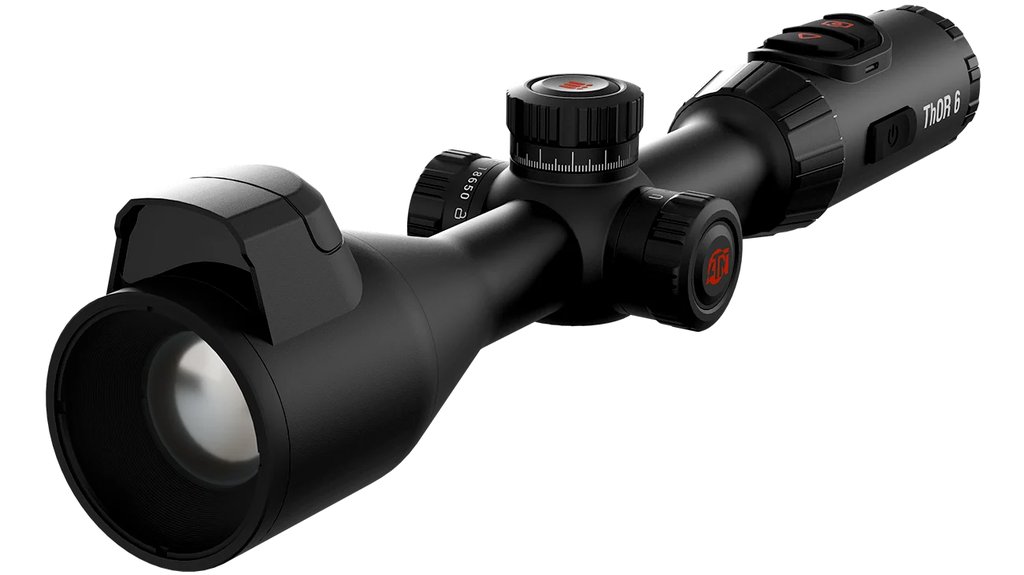
Why ATN's 6th-gen ThOR 6 works in every season
The ThOR 6 line works year-round because its sensitivity stays high when the weather works against it. NETD is the smallest temperature difference the sensor can separate, and a low ≤15 mK reading means the scope still pulls a warm animal out of warm summer grass, where a duller sensor would go flat. In winter that same sensitivity turns already-high contrast into a razor-sharp image, so one scope handles both ends of the calendar. Spring and fall sit in between: dewy dawns and cooling evenings give the sensor plenty of contrast to work with, while a warm afternoon in either shoulder season narrows the gap between animal and ground the way summer does. Because a single ThOR 6 rides through all four of those states without needing a second scope, you learn its behavior once and trust it every month of the year.
ATN ThOR 6 640x512 2-16x — best overall
Wide scanning for every season's terrain
The 2x base view gives the widest field of view in the line, and that helps whatever the season throws at the ground, bare winter fields, leafed-out summer edges, or muddy spring cover. A wider view means fewer passes to sweep an area, so you find heat sooner in any conditions. In winter that width lets you sweep a whole stubble field in a couple of arcs, catching a bedded coyote against the cold ground before it moves. Come summer, when heat is scattered across warm brush and the contrast is soft, the same wide frame keeps more of the treeline in view so a faint hog shape does not slip past the edge of a narrow scan. The result is a scope that spends less time hunting for the target and more time letting you read it.
Power that survives the cold
Cold weather is brutal on batteries, and the replaceable 18650 system is the answer: swap a warm spare in seconds and a frigid late-season sit keeps going. That single feature is why this model leads for all-year use. On a January stand at well below freezing, a sealed internal pack can shed a chunk of its rated runtime, but a spare cell kept warm in an inner pocket goes in and picks up where the drained one left off, no cooldown and no missed window. In warmer months the same cells simply run their full stretch, so the swap discipline you build for winter costs you nothing the rest of the year. See the runtime details on the ATN ThOR 6 640x512 2-16x page.
One-shot zeroing that holds through the seasons
A scope that shifts point of impact as the weather turns is a scope you cannot trust across the calendar. The ThOR 6's one-shot zero and profile memory let you confirm a hold quickly at the start of a season and store it, and the recoil-activated recording means you can review a shot later to check that everything landed where the reticle said it would. Because the zero is saved in a profile rather than dialed in by feel, moving from a warm early-fall outing to a hard winter hunt does not mean relearning the gun; you pull up the same profile and go. That consistency is what turns a capable sensor into a scope you actually lean on all year.
Who it is for: the hunter who works all four seasons and values wide scanning and dependable cold-weather power. Who it is not for: someone who only chases maximum reach, where the 3-24x leads.
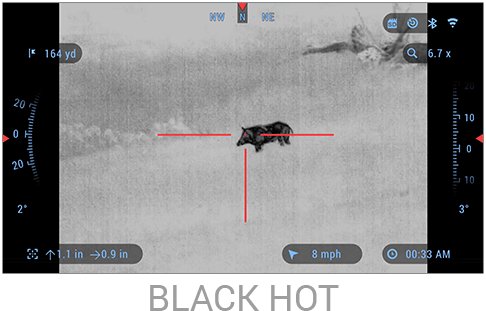
ATN ThOR 6 640x512 3-24x — best for winter distance
Reach when the cold sharpens the picture
Winter is thermal's easiest season, because cold ground throws warm targets into stark relief, and the 3-24x turns that advantage into distance with a 3650 m detection range. Detection range is how far a heat source first shows as a target, and in crisp cold air this model reaches the farthest in the line. The colder and clearer the night, the more of that headroom you actually use: a deer or coyote crossing a frozen field lights up against the dark ground at a range where a shorter-legged scope would still show empty terrain. That extra reach is a seasonal bonus rather than an everyday need, which is exactly why this variant earns its place as the winter specialist rather than the all-round pick.
Zoom to confirm across the snow
The 24x top end and Picture-in-Picture let you hold a wide scan while confirming a distant shape, so a far dot on a snowy field becomes a target you can read with confidence. Picture-in-Picture floats a magnified window over your main view, so you keep the wide field for scanning and lean on the zoomed inset only to identify what you have found, no fumbling between magnifications while the animal is on the move. Against fresh snow, where a warm body glows hard against a cold white sheet, that confirmation happens fast and clean.
Refresh rate that keeps up with cold-air movement
Long-range winter shots often come on animals that are already moving across open ground, and a laggy image makes a moving target hard to track. The ThOR 6's high refresh rate keeps the picture fluid as you pan the scope, so a coyote trotting across a distant snowfield stays sharp instead of smearing into a blur. Smooth motion also makes the far-reaching 24x usable in the field: high zoom exaggerates every twitch of the rifle, and a crisp, quick-updating frame is what lets you settle the reticle and read the shape without the image swimming. Reach only counts if you can hold steady on what it shows you.
Who it is for: late-season and open-country hunters who need reach. Who it is not for: close-cover scanners who prefer the wider 2x base view.
ATN ThOR 6 384x288 2.5-20x — best value
Full features for shorter ranges
The 384x288 model carries every ThOR 6 tool on a smaller sensor. For the shorter ranges most seasonal setups actually cover, its 2300 m detection range is plenty, and the price is the friendliest in the line. Most real hunting happens well inside that figure, and across the seasons a 384 sensor holds a clean picture at the distances a food plot, timber edge, or field corner typically calls for. You give up some of the far-target detail a 640 delivers, but for a hunter whose shots come at close to mid range through the year, that resolution is spent where it is never needed.
Palettes for shifting light
Six palettes let you match the display to the season, White Hot for clean winter contrast, Black Hot or color when summer heat muddies the scene, so a smaller sensor still reads well all year. Palette choice is not just cosmetic: on a hard winter night White Hot makes a warm body pop off dark ground, while in flat summer conditions an Iron or color mode can tease apart temperatures that all read as a similar grey. Switching palettes as the seasons change is the cheapest way to squeeze more usable contrast out of any sensor, and the 384 gives you the full set to work with.
Light enough to carry every season
At 1.74 lbs the 384 model is the lightest ThOR 6, and that matters more than it sounds across a full year of hunting. A lighter scope is easier to hold steady on a long summer stalk and less punishing on a rifle you carry through deep snow or thick spring cover. It also shares the same replaceable 18650 power system as its bigger siblings, so the value pick does not give up the cold-weather hot-swap trick that makes the line work in winter. You get a lighter, cheaper package without surrendering the season-spanning basics.
Who it is for: value hunters at short to mid ranges. Who it is not for: those needing fine detail on far targets.
How to choose a thermal scope for every season
Match the scope to the seasons and ranges you actually hunt:
- Year-round use — the 2-16x wide view and hot-swap power cover every season.
- Winter distance — the 3-24x reach shines when cold-weather contrast is highest.
- Summer heat — any 640 sensor plus ≤15 mK sensitivity keeps warm targets readable.
- Cold-weather runtime — replaceable 18650 cells beat sealed packs in the cold.
- Shorter ranges on a budget — the 384 model gives the full feature set for less.
- Fast-moving targets — a high refresh rate keeps panning smooth on animals crossing open winter ground.
- Weight for long carries — the lighter 384 is easier on summer stalks and deep-snow hikes alike.
How we picked these ATN thermal scopes
We assessed only the current 6th-generation ThOR 6 line the way the seasons test a thermal: NETD sensitivity for summer's low contrast, field of view for changing terrain, battery behavior in the cold, plus resolution, magnification, detection range, refresh rate, and weight. The honest trade-off is that summer heat flattens contrast for every thermal, and no feature fully cures it, so we say so instead of overpromising. This is an in-house comparison of ATN's own range, not an independent lab review. Weigh these specs against the seasons and ranges you really hunt before deciding.
Frequently Asked Questions
Does a thermal scope work in every season?
Yes, though performance shifts with the weather. Cold winter ground gives the sharpest contrast because the gap between a warm animal and the frozen background is at its widest, while summer heat narrows that gap and flattens the image. A sensitive ≤15 mK sensor like the ATN ThOR 6's keeps warm targets readable year-round, so you still make the shot in July. Just expect the crispest, easiest-to-read images to come on cold nights.
Which ThOR 6 is best for year-round hunting?
The ATN ThOR 6 640x512 2-16x is the all-season pick. Its wide 2x base view speeds scanning across any season's terrain, from bare winter stubble to leafed-out summer edges, so you sweep more ground per pass. The hot-swap 18650 batteries keep it running through long, cold sits when sealed internal packs would fade. That combination of wide scanning and dependable power is why it leads the roundup for hunters who work all four seasons.
Why is thermal harder in summer?
In hot weather the ground and vegetation warm up toward the temperature of your target, shrinking the contrast a thermal relies on to draw an animal out of the background. A low-NETD sensor still separates the two because it can resolve very small temperature differences, but the overall image looks flatter than the stark, high-contrast picture you get on a cold winter night. Switching to a palette like Iron or a color mode can help tease apart those close temperatures. The animal is still there; it just does not glow off the background the way it does in the cold.
Which model is best for winter long-range work?
The ATN ThOR 6 640x512 3-24x is the winter distance specialist, with a 3650 m detection range and 24x zoom. Cold, clear air sharpens contrast so much that targets show up at ranges where other scopes still read empty ground, and this model has the reach to use that advantage. Picture-in-Picture lets you keep a wide scan while confirming a distant shape in a magnified inset. It is the pick for late-season, open-country hunters who need to spot and confirm targets far across frozen fields.
How does the hot-swap battery help in cold weather?
Cold drains batteries faster and can cut into a sealed pack's rated runtime just when a long sit demands the most. The 640 2-16x sidesteps that by using replaceable 18650 cells, so you carry warm spares in an inner pocket and swap one in seconds. That keeps a late-season sit going long past the point where a fixed internal pack would quit, with no cooldown and no missed window. In warmer months the same cells simply run their full stretch, so the habit costs you nothing the rest of the year.
Is the 384 model enough for seasonal hunting?
For most short to mid-range seasonal setups, yes, it is plenty. It runs the full ThOR 6 feature set, including the six palettes and the hot-swap 18650 power system, with a 2300 m detection range that comfortably covers the distances a food plot, timber edge, or field corner usually calls for. It is also the lightest scope in the line, which helps on long summer stalks and deep-snow hikes. Step up to a 640 sensor only if you regularly need fine detail on distant targets year-round.
Does refresh rate matter for hunting?
It does, especially on moving targets and at high zoom. A high refresh rate keeps the image fluid as you pan the scope, so a coyote trotting across a distant snowfield stays sharp instead of smearing into a blur. It also makes the far-reaching 24x usable, because high magnification exaggerates every small movement and a quick-updating frame is what lets you settle the reticle without the picture swimming. The ThOR 6 line keeps a smooth image so reach and motion tracking stay usable in the field.
Seasons shift the contrast, but a scope that scans wide and holds power in the cold works all year. The ATN ThOR 6 640x512 2-16x does both, with a wide view and hot-swap batteries built for winter sits. Want more reach for the cold months or a lower price for shorter ranges? Compare the full lineup on the ATN thermal scope page and match sensor, magnification, and battery to the seasons you hunt.
Created: August 5, 2026 · 19:53:45 UTC