Treat this like a thermal scope academy: a plain-language walk through what a thermal optic does, which specs actually decide performance, and which ATN ThOR 6 model fits which student. If you are new to thermal, the jargon can bury you, so we teach it in order and let the gear illustrate each lesson. The ATN ThOR 6 640x512 3-24x leads the class because it demonstrates every capability at its fullest, with two more models showing where you can trade down and still learn plenty.
Best for learning to scan: ATN ThOR 6 640x512 2-16x — a wider view and hot-swap batteries teach field craft.
Best first scope: ATN ThOR 6 384x288 2.5-20x — the full feature set at the entry point, made for beginners.
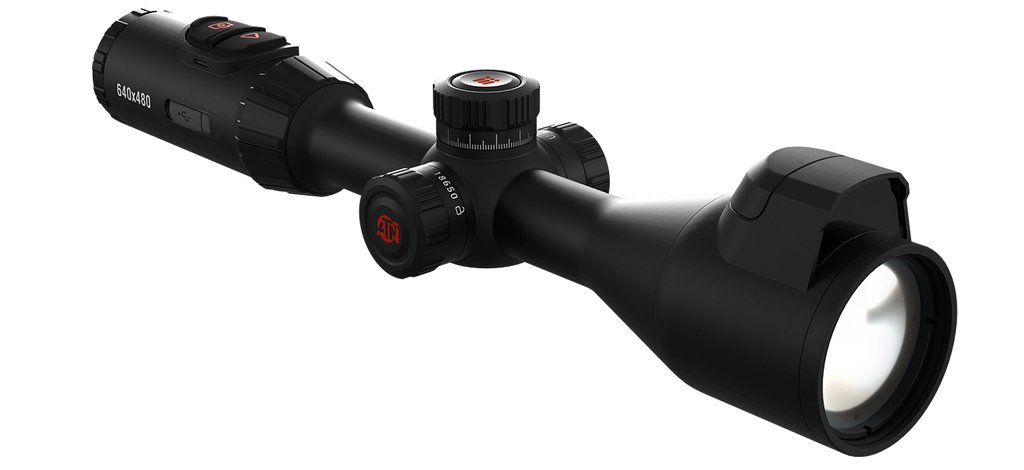
Why ATN's 6th-gen ThOR 6 is the best teacher
The ThOR 6 line teaches well because every model shares the same core lessons, so what you learn on one carries to all. That consistency matters more than it sounds: a beginner who picks up scanning technique, palette selection, and zeroing on one ThOR 6 can move to any other body in the family and feel at home on day one, because the menu, the controls, and the on-screen display behave identically. Start with the two specs that decide image quality. Resolution is the pixel count of the sensor, and more pixels means finer detail, the same jump you see going from standard definition to HD. NETD is sensitivity, measured in millikelvin, and a low ≤15 mK reading means the scope can separate two surfaces that differ by less than a hundredth of a degree; in practice that is the difference between seeing a vague warm blob and reading the shape of an animal against cooler brush. Learn those two specs and you understand most of what a thermal scope is, and the whole ThOR 6 line uses them as a common vocabulary so your knowledge compounds instead of resetting each time you upgrade.
ATN ThOR 6 640x512 3-24x — top of the class
Lesson one: what resolution buys you
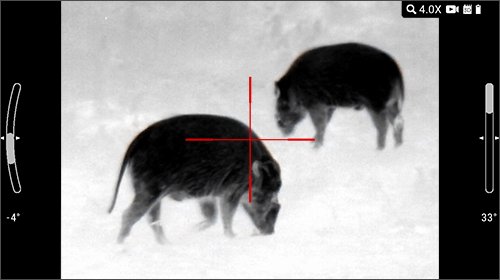
The 640x512 sensor is the clearest way to see what resolution does. A warm shape that looks like a smudge on a coarse sensor becomes an identifiable animal here, because there are simply more dots to draw it with. Think of each pixel as one tile in a mosaic: with 640 by 512 tiles the picture holds together as you push the magnification up, so the edges of an ear, a tail, or a raised head stay legible instead of dissolving into a soft glow. SharpIR AI enhancement then cleans up those edges as you zoom, sharpening the contrast between the warm subject and the cooler background so the lesson holds even at high magnification. For a student, the takeaway is that resolution is the one spec you cannot add later with settings or firmware; it is baked into the sensor, so it deserves the most thought before you buy.
Lesson two: reach and detection range
With 3-24x zoom and 3650 m detection range, this model shows how far thermal can see. Detection range is the distance a heat signature first registers as a target, not the distance you can identify it, and this sensor keeps those two distances close together. That gap between detection and identification is where many beginners get confused, so it is worth learning here: on a weaker optic you might detect something warm far out but never resolve enough detail to say what it is, while the 640 sensor gives you enough pixels on target to make that call sooner and with more confidence.
Lesson three: reading the refresh rate
A spec new buyers overlook is refresh rate, the number of times per second the image redraws. A higher refresh rate keeps a moving animal smooth instead of stuttering, and it keeps the picture steady as you pan the rifle across a field. On the top ThOR 6 this is where fast targets stay trackable: when a hog breaks and runs, a smooth feed lets your eye follow it rather than losing it between frames. It is a quieter lesson than resolution, but once you have watched a jerky low-rate image next to a smooth one, you never forget why it matters.
Who it is for: the student who wants to experience thermal at full capability. Who it is not for: a first-timer on a tight budget, who should start on the 384. Study the full spec sheet on the ATN ThOR 6 640x512 3-24x page.
ATN ThOR 6 640x512 2-16x — best for learning to scan
Lesson four: field of view
Starting at 2x, this model teaches field of view, how much ground you see at once. A wider base view makes scanning faster and is the easier way to learn to find heat before you zoom, so beginners spot targets sooner. The habit to build is scanning wide first and only zooming to confirm: a low starting magnification shows you the whole treeline or field edge in one sweep, and once a warm signature appears you dial up to identify it. New users who start too zoomed in tend to sweep past targets entirely because their window on the world is too narrow, so learning to work wide-then-tight on this body is a skill that pays off on every optic you ever use.
Lesson five: managing power
The replaceable 18650 battery teaches field craft: carry spares, swap in seconds, and never cut a session short. It is a small habit that separates a frustrated new user from a confident one. Build the routine early — keep two charged cells in a pocket, note roughly how long a session runs, and change the battery on your schedule rather than the scope's, so a swap happens between opportunities instead of in the middle of one. Learning to manage power on your own terms is one of the least glamorous but most useful lessons a new thermal shooter can pick up.
Lesson six: choosing a palette
This body is also a good place to learn palettes, the color schemes that translate heat into an image. White Hot shows warm as bright and is the easiest to read while you are still learning; Black Hot flips that and many hunters prefer it in open country; the color palettes like Iron can make a warm target pop against a busy background. Cycling through them in the field, on the same scene, teaches your eye what each one is good for, and there is no single right answer — the point is to know your options so you can match the palette to the terrain and the light in front of you.
Who it is for: the learner who wants to master scanning and field power. Who it is not for: the student focused only on maximum range.
ATN ThOR 6 384x288 2.5-20x — best first scope
Lesson seven: full features, gentle price
The 384x288 model proves you do not need the flagship to learn. It runs the same SharpIR, Zeroing Freeze, Hot Point Tracking, and six palettes as its siblings, so every lesson applies, just on a smaller sensor. That is the real argument for starting here: a beginner gets the entire ThOR 6 curriculum — the menus, the recording tools, the ballistic aids — without paying the top-tier price, and none of the learning is wasted because the software is identical to the pricier bodies. When the day comes to step up to a 640 sensor, nothing you learned is thrown away; only the resolution and reach change.
Lesson eight: where a beginner will actually shoot
A 2300 m detection range covers the ranges a new hunter really works. You give up fine long-distance detail, a fair trade while you build skill. Most first-year thermal shooting happens well inside that envelope — field edges, food plots, and the near tree line — where the 384 sensor has more than enough reach and where the real skill being built is spotting, ranging, and making a clean shot, not stretching for maximum distance. Buying more reach than you will use in your first seasons is a common beginner mistake, and this model is the honest cure for it.
Lesson nine: using the on-board tools to learn faster
One quiet advantage of starting on the 384 is that its recording and photo tools double as a practice log. Save a clip of a scan or a shot and review it later, and you can see exactly what your eye missed in the moment, which palette read best, and how steady your hold really was. Zeroing Freeze also makes the first zero far less intimidating for a beginner, letting you lock the reticle on the point of impact without wrestling the rifle between shots. Using these tools deliberately turns every outing into a lesson rather than just an attempt.
Who it is for: first-time thermal buyers. Who it is not for: someone who already knows they need long-range detail.
How to choose your first thermal scope
Graduate from the academy with these takeaways:
- Resolution — 640x512 identifies targets; 384x288 spots them well at closer range.
- NETD — ≤15 mK across the line means a clean, high-contrast image on every model.
- Field of view — a wider 2x base view is easier to learn to scan with.
- Detection range — 3650 m on the 3-24x is the longest reach for study or hunting.
- Refresh rate — a smooth, high refresh feed keeps moving targets trackable and panning steady.
- Battery and field craft — replaceable 18650 cells let you carry spares and never end a session early.
- Budget — the 384 model gives you the whole curriculum for the least money.
How we picked these ATN thermal scopes
We built this class around only the current 6th-generation ThOR 6 line and graded each model on the specs a beginner most needs to understand: sensor resolution, NETD sensitivity, magnification and field of view, detection range, refresh rate, weight, and battery. The honest trade-off is that a smaller sensor gives up long-range detail, and no amount of features fixes that, so we say where each model stops. This is an in-house comparison of ATN's own range, not an independent lab review. Use these lessons to match a scope to your real learning goals and ranges before you buy your first thermal.
Frequently Asked Questions
What should a beginner learn first about thermal scopes?
Start with two specs: resolution and NETD. Resolution is the sensor's pixel count and sets how much detail the image holds, while NETD is sensitivity and sets how much contrast you get between a warm subject and its background. Understand those and you grasp most of why one thermal scope outperforms another, because nearly every other feature builds on top of them. The ATN ThOR 6 line makes both easy to see, since all three models share the same ≤15 mK sensitivity and differ mainly in resolution.
Which ThOR 6 is the best first thermal scope?
The ATN ThOR 6 384x288 2.5-20x is the best starter. It carries the full ThOR 6 feature set at the lowest price, so a beginner learns every function without paying for flagship reach they may not use yet. Because the menus and tools match the pricier 640 bodies, nothing you learn is wasted if you upgrade later. For most first-year shooting inside a few hundred yards, its sensor is more than enough.
Does a higher-resolution sensor really matter for learning?
It matters most at distance. The 640x512 models turn a far heat smudge into an identifiable shape, while the 384x288 sensor is plenty at closer ranges where beginners spend the bulk of their time. A new shooter can learn everything about scanning, palettes, and zeroing on the 384 and step up to a 640 later without relearning the controls. Resolution is also the one thing you cannot add through settings, so it is the spec worth thinking hardest about before you buy.
What is detection range in plain terms?
Detection range is how far away a heat signature first shows up as a target on screen. It is not the distance at which you can identify what it is; identification needs more resolution and zoom, which is why the 640 models close that gap better. A beginner should read a quoted detection range as the outer edge of where the scope notices heat, not where it confirms a clean shot. Confusing the two is one of the most common early mistakes, so learn the difference before you compare numbers.
Why is a wider field of view easier for beginners?
A wider view, like the 2x base on the 640 2-16x, shows more ground at once, so a new user finds heat sources faster before zooming in. Learning to scan wide first, then zoom to confirm, is a core thermal skill that carries to every optic you will ever use. Starting too zoomed in causes beginners to sweep past targets because their window on the world is too narrow. Building the wide-then-tight habit early makes every hunt more productive.
How does the hot-swap battery help a new user?
It teaches good field habits. With replaceable 18650 cells, you carry spares and swap one in seconds, so a learning session never ends early because the power ran out. The routine to build is keeping two charged cells in a pocket and changing on your own schedule, between opportunities rather than during one. It is a small habit, but managing power on your terms is one of the differences between a frustrated new user and a confident one.
Do all three ThOR 6 models use the same software and menus?
Yes. The 640 3-24x, 640 2-16x, and 384 2.5-20x share the same interface, the same SharpIR enhancement, Zeroing Freeze, Hot Point Tracking, and the same set of palettes. That means a lesson learned on one body transfers directly to the others, which is a real advantage for a beginner planning to upgrade. The only meaningful differences are sensor resolution, magnification, and detection range, so your skills carry forward intact.
Class dismissed, but the shopping starts now. If you want to see thermal at full capability, the ATN ThOR 6 640x512 3-24x demonstrates every lesson at its best, from resolution to reach. Ready to pick the model that fits your budget and goals? Walk the full ATN thermal scope lineup and compare sensor, magnification, and battery side by side so your first thermal is the right one.
Created: August 5, 2026 · 19:53:45 UTC