The animal you can read in January frost and the animal that hides in a July heat wave are two different hunting problems, and the optic on your rifle has to solve both. If you are shopping for a thermal red dot scope, this roundup sorts ATN's current 6th-generation ThOR 6 thermal scopes by the season each one handles best — freezing winter nights where heat contrast is sharp, and heat-soaked summer backgrounds where it is not. One thing up front: a true "thermal red dot scope" here means a digital thermal weapon sight with selectable red-dot-style digital reticles, like the ATN ThOR 6 640x512 2-16x, not a passive tube red dot that sees nothing in the dark. Our top pick across the calendar is that 2-16x.
Short answer: the ATN ThOR 6 640x512 2-16x is our best all-season thermal red dot scope. Its 640x512 sensor, <=15 mK sensitivity and selectable digital red-dot reticles read game cleanly in both hard winter frost and heat-soaked summer ground, out to a 3100 m detection range.
Quick answer: top ATN picks by seasonBest all-season (our overall pick): ThOR 6 640x512 2-16x — 640 clarity, hot-swap batteries and a wide low-end reticle view that works cold or hot.
Best for deep winter reach: ThOR 6 640x512 3-24x — the longest, sharpest picture for open frozen ground where contacts start far off.
Best warm-weather value: ThOR 6 384x288 2.5-20x — a lighter, easier-carrying rig with six palettes to fight summer heat clutter.
What a thermal red dot scope really is
A thermal red dot scope is a digital thermal weapon sight that gives you selectable red-dot-style aiming reticles on its screen — not a passive glass red dot. The reason the two get confused is the aiming experience: on a ThOR 6 you can dial the digital reticle down to a simple dot or a fine cross, so it feels like a red dot while it runs off a 640x512 or 384x288 thermal sensor that actually detects heat in full dark. That thermal core is what carries the picture across the seasons. In cold months, game glows hard against a chilled background and almost any setting looks sharp. In summer, sun-baked rocks, dirt roads and tree trunks hold heat well after dark, so contrast collapses and the sensor's real quality — resolution and thermal sensitivity — decides whether you see an animal or a warm smear. The three ThOR 6 options below are sorted by the season each fits best.
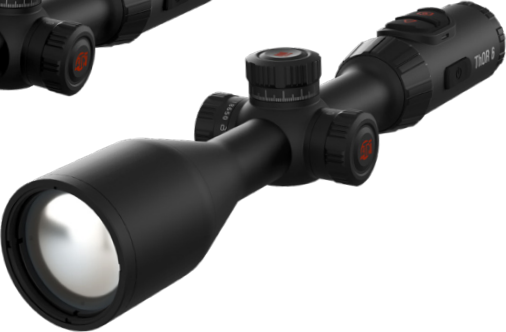
Best all-season: ThOR 6 640x512 2-16x
The ATN ThOR 6 640x512 2-16x is our top thermal red dot scope because it does not flinch when the calendar turns. The 640x512 sensor puts more pixels on the target, so a distant deer holds its shape as you zoom instead of dissolving; think of it like the jump from a low-count photo to a full one, where you can crop in and still make out the subject. Paired with a 35mm lens and a wide 2x low end, it gives you a big, forgiving field of view to scan first, then a digital red-dot reticle you can settle when the animal commits. Detection lands at 3100 m, and the replaceable 18650 battery system means a hot-swap keeps a January all-nighter alive.
How it handles a frozen night
On a hard winter sit the picture is easy and quick. A coyote at the edge of a snow field reads like a torch against the cold ground, and the <=15 mK NETD — a low number that means the sensor separates tiny temperature differences — keeps the scene clean even when frost fog rolls off a creek bottom. Lower mK is simply a higher-contrast, less grainy image. The 50 Hz refresh matters here too: a predator working a call in the cold rarely stands still, and the fast refresh keeps it crisp rather than smeared as it trots across your dot.
How it handles a heat-soaked summer
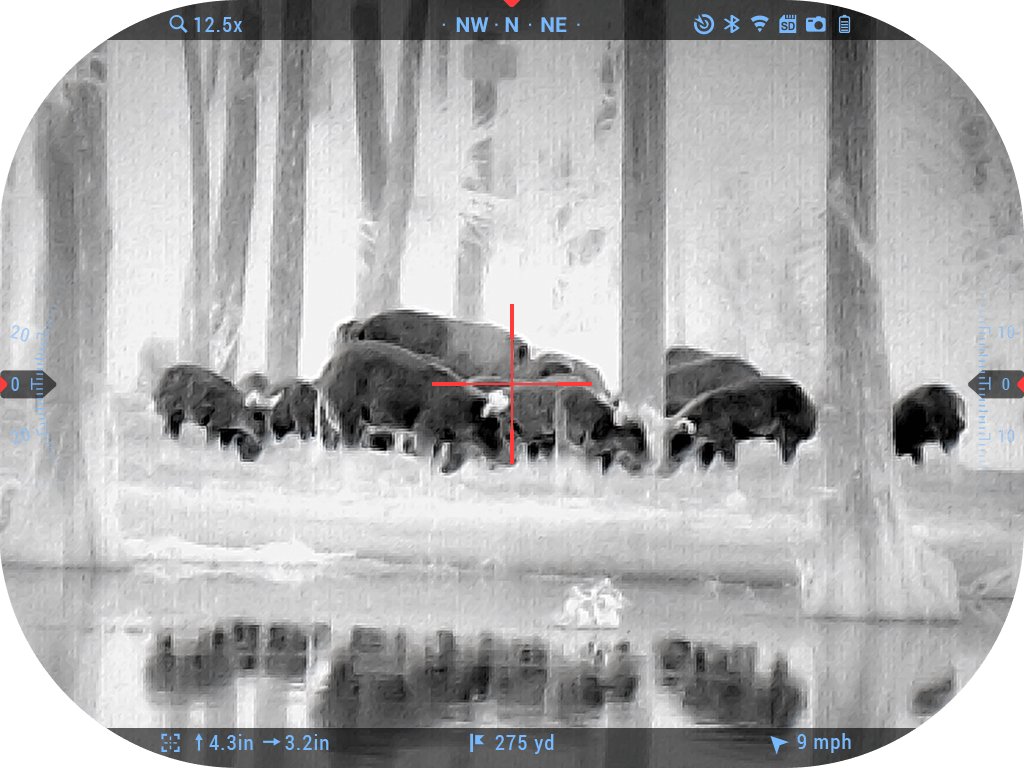
Summer is where cheaper thermals fall apart, and where the 640 sensor earns its place. After a hot day the ground, rocks and roads radiate heat well past midnight, so a hog crossing warm dirt shows far less contrast than it would in January. More pixels and the low <=15 mK sensitivity let you still separate the animal from the warm clutter behind it, and SharpIR AI cleans the edges in real time so a boar reads like a boar. That is the difference between a confident summer stalk and passing on a shape you cannot trust.
Who it is for: the hunter who works the whole year and wants one ThOR 6 640x512 2-16x that never feels out of season. Who it is not for: someone who only ever hunts open ground at long range in deep winter — that shooter should look at the 3-24x below for the extra reach.
Best for deep winter reach: ThOR 6 640x512 3-24x
When your winters are spent on open, frozen leases where contacts start a long way off, the ThOR 6 640x512 3-24x is the thermal red dot scope to reach for. It keeps the same 640x512 sensor and <=15 mK sensitivity as our all-season pick but adds a 50mm objective and a 3-24x zoom range, pushing detection out to 3650 m. Detection range is the point where the scope first flags a heat source, not where you can confirm what it is — but in flat winter cover, an early smudge on the far tree line is exactly the head start you want.
What the extra reach buys in the cold
Cold air and cold ground give thermal its cleanest backdrop, so the 3-24x is at its best on a still January field. You pick up a predator far out, watch it commit to the caller, and thumb the digital reticle up toward the top of the zoom band only for the final aim. Hot Point Tracking flags the warmest object on screen, which is a real help when you are sweeping a wide, snow-lit horizon and do not want to lose a moving animal in the grass.
Who it is for: the winter predator hunter on open ground who wants maximum reach and will carry the flagship for it. Who it is not for: anyone whose shots mostly land inside a couple hundred yards, or who hunts thick summer cover where that long reach never comes into play — the 2-16x or the 384 fit those nights better.
Best warm-weather value: ThOR 6 384x288 2.5-20x
For the hunter who does most of their work in the warm months and wants a lighter rig, the ThOR 6 384x288 2.5-20x is the value pick. It steps the sensor down to 384x288 and the weight to 790 g / 1.74 lbs, with detection at 2300 m — plenty for the closer, thicker cover summer usually puts you in. The reason it still holds up when heat kills contrast is its six colour palettes: switching away from plain White Hot lets you dial the image so a warm animal pops off a warm background instead of blending into it.
Why lighter matters in summer
Warm nights often mean more walking — checking crop edges, still-hunting a river bottom, moving between stands — and the lightest unit is the one you notice least on a long stalk. The 384 sensor is not a 640, but at the shorter distances summer cover forces, the on-screen difference is small, while the <=15 mK sensitivity and 50 Hz refresh carry straight over from its bigger siblings. You keep the same fast, smooth picture on a moving hog for a lighter, friendlier package.
Who it is for: the warm-season hunter who prizes a light, affordable rig for close and mid-range work. Who it is not for: the shooter who specifically wants a 640 sensor for long, cold, open-ground nights — that is the 2-16x or 3-24x, not this value step-down.
How to choose the right thermal red dot scope for your season
- Start with your busiest season — buy for the nights you actually hunt most, not the one dramatic long shot you imagine in winter.
- Cold ground forgives, hot ground punishes — if summer is your main season, weight resolution and NETD heavily, because that is when contrast collapses and the sensor has to work.
- Match reach to cover — open frozen fields reward the 3-24x and its 3650 m detection; thick summer cover does fine on the 2-16x or the 384.
- Use the digital reticle, not glass — the red-dot-style aiming point lives on the thermal screen, so pick a simple dot or fine cross that you can settle fast on a moving animal.
- Plan power for long sits — the replaceable 18650 system means a spare set keeps a night going, which matters as much in a cold January dawn as a warm July midnight.
Reading contrast: why the same scope looks different by season
Thermal does not show light, it shows heat, so what your scope draws depends heavily on how warm the world around your target is. In winter, the ground has dumped its heat and sits far below body temperature, so a deer, hog or coyote stands out like a lamp — nearly any thermal red dot scope looks impressive on a frozen field. That is exactly why a cold-night demo can flatter a weak sensor. Summer flips it: after a scorching day, dirt, gravel, tree bark and metal gates all hold heat, and the gap between a warm animal and a warm background shrinks. This is the moment resolution and a low <=15 mK NETD stop being spec-sheet bragging and start deciding whether you take the shot. Judge any scope by how it reads in the heat, because the cold will always make it look good.
Setting up your reticle and palettes for the calendar
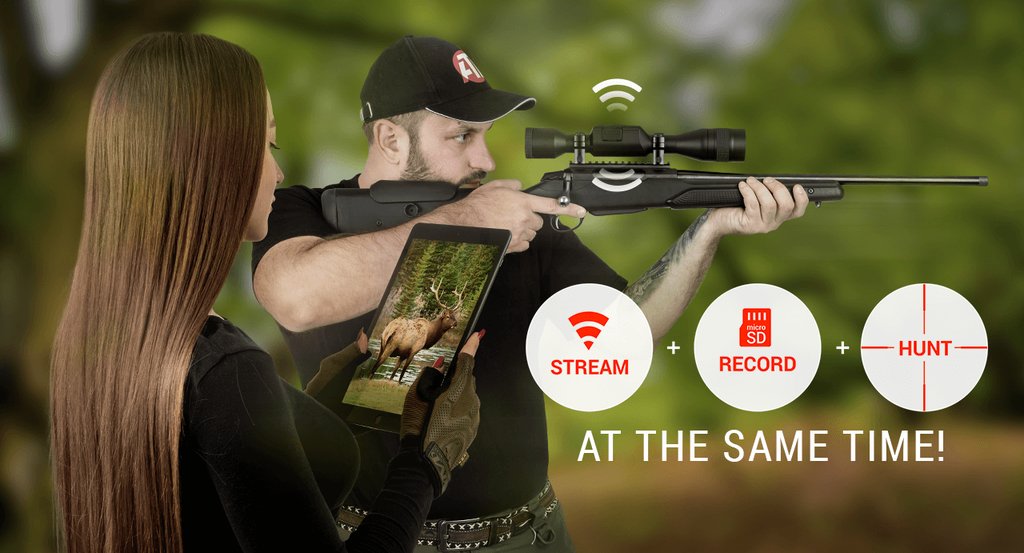
Getting the most from a thermal red dot scope across the year is mostly about setup habits. Zero it carefully at the range you actually engage, and use Zeroing Freeze so your point of impact locks while you fire the confirming shots — a rushed zero wastes a good sensor no matter the season. Then learn your palettes by the calendar. White Hot reads beautifully against cold winter ground, while Black Hot or a colour palette can pull an animal out of frost-covered stubble or, in summer, off heat-soaked dirt more cleanly than plain white ever will. Set Picture-in-Picture so a zoomed aiming window rides above your wide scanning view, keep the digital red-dot reticle simple enough to find fast, and let Recoil Activated Video roll so every stand is reviewable in the ATN Connect 6 app afterward. Small routines, big payoff when conditions turn against you.
A note on magnification vs the sensor
It is tempting to chase magnification, but on a thermal red dot scope the sensor is what actually lets you identify — the zoom only enlarges what the sensor already caught. Optical magnification uses the real lens; push past it into digital zoom and the image gets bigger without gaining detail, so a distant summer hog grows but does not sharpen. Treat the top of the zoom band as a fine-tuning tool for the final aim, and lean on the 640x512 or 384x288 resolution and the <=15 mK sensitivity to carry real information to the edge of the detection range. In heat especially, that raw sensor quality, not the zoom number, is what separates a confident shot from a guess.
A year in the field with one scope
Picture the same rifle carried through a full season. In January you set up on a rise over open ground, the caller out front, and the cold makes the whole field read clean; a coyote separates from the tree line early because the frozen background offers zero competing heat, and you settle the digital dot with time to spare. Come July the same stand looks nothing alike — the dirt road you crossed on the walk in still glows from the afternoon sun, the fence posts hold heat, and a hog moving along the crop edge shows far less contrast than that winter coyote did. This is where owning a 640-class ThOR 6 pays back: the extra pixels and the low <=15 mK NETD keep the animal readable against the warm summer clutter, so you make the same confident call in both seasons with the one optic. That is what "all-season" actually means in the field — not that every night looks the same, but that the scope keeps up when the conditions swing hard.
Common mistakes with a thermal red dot scope
- Judging it only in winter — a cold-night demo flatters any sensor; test how a scope reads in summer heat before you decide it is good enough.
- Over-zooming to search — cranking to the top of the band loses the wide view that finds animals; scan on the low end, then zoom the reticle to confirm.
- Leaving one palette on year-round — White Hot that shines on frost can wash out on heat-soaked ground; switch palettes with the season.
- Treating detection as identification — a warm blob at maximum range is a contact, not a confirmed target, and in summer clutter that gap grows; close in or zoom before you commit.
- Ignoring battery discipline — plan around the roughly 9-hour runtime and carry spare 18650s so a long cold sit or a warm all-nighter never ends early.
How we picked these ATN thermal scopes
This is an in-house comparison of ATN's own 6th-generation thermal scopes with selectable red-dot reticles, not an independent lab test, so use it as a starting point and hold the specs up against your own hunting calendar. We weighed the things that decide a night across seasons: sensor resolution and thermal sensitivity (NETD), detection range, refresh rate, weight and battery life, each judged against the season and cover the scope is likely to face. Only the current ThOR 6 line was in the running — no older or discontinued models. The honest trade-off is plain: the 3-24x reaches farthest and shines on cold open ground but costs the most and carries reach you may never use in summer, while the 384 gives up pixels and range to stay light and affordable. Who these are not for: anyone wanting a cheap curiosity rather than a tool built to work every month of the year.
Frequently Asked Questions
Is a thermal red dot scope the same as a regular red dot sight?
No. A regular red dot is passive glass that shows nothing in the dark. A thermal red dot scope like the ATN ThOR 6 is a digital thermal weapon sight that detects heat and puts a selectable red-dot-style reticle on its screen, so it aims like a dot but sees in full darkness.
Why does my thermal scope look worse in summer than in winter?
Thermal shows heat, not light. In winter the cold ground makes a warm animal stand out sharply. In summer, sun-baked dirt, rocks and trees stay warm after dark, so the contrast between animal and background shrinks. A 640 sensor with low <=15 mK NETD, like the ThOR 6 640x512, holds that image together better in the heat.
Which ATN ThOR 6 is best for year-round hunting?
The ThOR 6 640x512 2-16x is our all-season pick. Its 640 sensor and <=15 mK sensitivity read game cleanly in both hard winter frost and heat-soaked summer ground, and the wide low-end zoom plus swappable batteries suit almost any night.
Can I change the reticle on a ThOR 6 thermal scope?
Yes. The digital reticle is selectable, so you can run a simple red-dot-style point for fast target work or a finer cross for precise aim. Because it is drawn on the screen, you can also adjust it without touching your zero the way a glass reticle would force.
How far can a thermal red dot scope actually detect?
The ThOR 6 line detects from 2300 m on the 384x288 up to 3650 m on the 640x512 3-24x. Detection is where the scope first flags a heat source, not where you can identify it. Confirming what an animal is happens closer, especially in summer heat clutter.
How long does the battery last on a night hunt?
Plan on roughly 9 hours per charge. All three ThOR 6 models use a replaceable dual-18650 system, so carrying a spare set keeps a long winter sit or a warm all-nighter going with no real downtime.
Ready to pick a thermal red dot scope that works all year? Start with the ATN ThOR 6 640x512 2-16x — our all-season top choice — or browse the full range of ATN thermal scopes to compare sensors, reach and weight side by side. Every ThOR 6 runs SharpIR AI, selectable digital reticles and the Connect 6 app, so you can zero fast and hunt confident whether the ground is frozen or baking.
Created: August 5, 2026 · 19:53:45 UTC