When most hunters type "thermal red dot scope" into a search bar, what they really want is fast, point-and-shoot aiming after dark — a simple reticle that gets on target quickly, not a fiddly menu dive. Here is the honest version: a thermal red dot scope in this sense is a thermal weapon sight that lets you pick a clean, red-dot-style digital reticle, not a passive tube dot bolted to a heat camera. ATN's current 6th-generation ATN thermal scopes do exactly that: the ATN ThOR 6 640x512 3-24x gives you selectable reticle patterns and colors, so you can run a tight dot for speed or a full crosshair when you need to hold. This roundup ranks the ThOR 6 line by the features that matter to someone chasing that quick-aim experience.
Short answer: for a thermal red dot scope, the ATN ThOR 6 640x512 3-24x is our top pick. It is a digital thermal sight with selectable red-dot-style reticles and colors, a fast one-shot zero, and a 640x512 sensor that keeps the dot floating on a crisp, high-contrast target.
Quick answer: top ATN picksBest overall (reticle choice + reach): ATN ThOR 6 640x512 3-24x — the sharpest sensor with full digital reticle and color options for point-and-shoot aiming at range.
Best for fast acquisition up close: ATN ThOR 6 640x512 2-16x — a wider low end so the dot lands on target quicker, plus swappable batteries.
Best simple, lighter setup: ATN ThOR 6 384x288 2.5-20x — the same reticle system in a lighter body with six palettes to sharpen the picture behind the dot.
What a "thermal red dot scope" really means
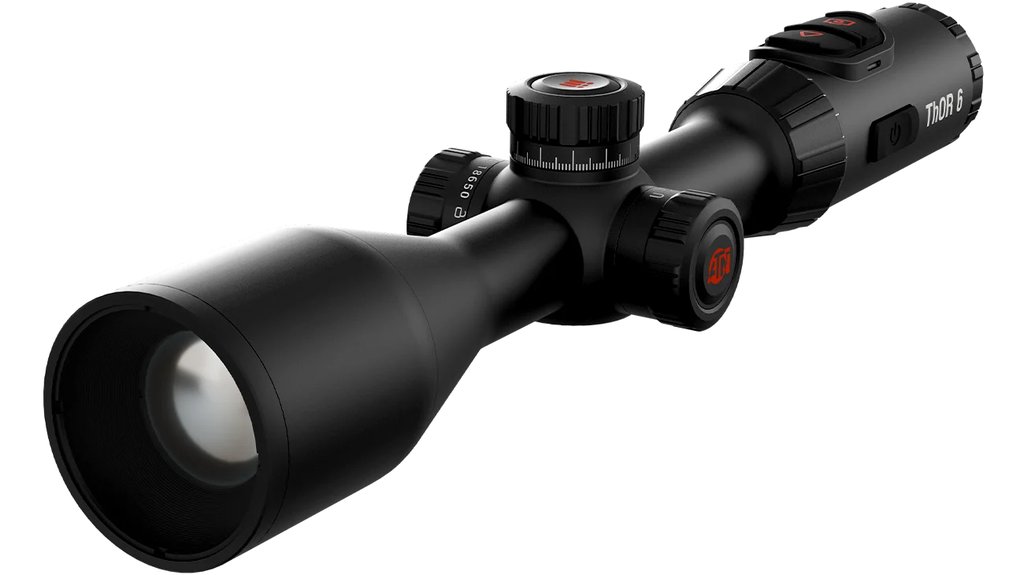
A thermal red dot scope is a digital thermal weapon sight that draws a red-dot-style aiming reticle on its display — not a glass tube with a projected dot. That distinction matters, so let us be clear about it. A traditional red dot works on visible light and cannot see a heat signature in the dark. A thermal sight builds its whole image from heat, then overlays an electronic reticle you can shape and color to taste. On the ThOR 6 you scroll through several reticle patterns — a fine dot, a chevron, a full crosshair — and choose the color that stands out best against your palette. The upside is huge: you get the fast, uncluttered aiming feel people love about a red dot, plus the ability to see and identify game in total darkness. The trade-off is honest too — it runs on batteries and a display, not on a passive lens, so you plan power the way you would with any digital optic.
Best overall: ATN ThOR 6 640x512 3-24x
The ATN ThOR 6 640x512 3-24x is our top thermal red dot scope because it puts the cleanest reticle over the clearest target. The reticle is only as useful as the picture behind it, and the 640x512 sensor — that is the pixel count, and more pixels means finer detail, the jump from a fuzzy standard-definition picture to a sharp high-definition one — keeps the dot sitting on a target you can actually identify. Pair that with a 3650 m detection range, which is the distance the scope first picks up a heat signature, and you have a sight that gets you aiming early and confidently.
Reticle options and one-shot zero
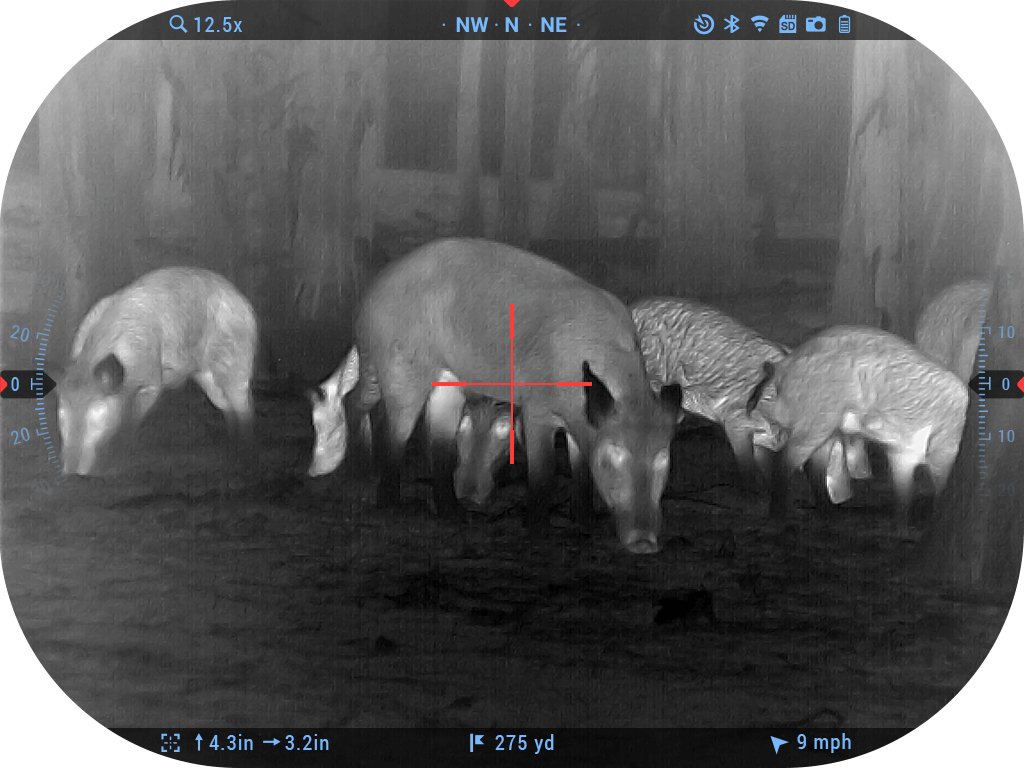
This is where the ThOR 6 earns the "red dot" search. You scroll through multiple reticle shapes and colors, so you can run a small floating dot for the quick point-and-shoot feel, then switch to a crosshair when you want a precise hold for a longer poke. Zeroing is genuinely simple: line up, fire one shot, and use Zeroing Freeze to lock the last frame while you drag the reticle onto the impact — a true one-shot zero that saves ammo and daylight.
Why the image behind the dot matters
A red dot on a bad picture is a guess. The <=15 mK NETD — NETD is the smallest temperature difference the sensor can tell apart, and a lower number gives you a cleaner, higher-contrast image — means a hog stands out from cool brush even in damp night air. SharpIR AI sharpens edges in real time so the shape under your dot reads like the animal it is, and the 50 Hz refresh keeps a moving target smooth so the reticle tracks a walking coyote instead of stuttering behind it.
Who it is for — and who it is not
The ATN ThOR 6 640x512 3-24x is for the hunter who wants the fast red-dot feel but refuses to give up reach or reticle choice, and who works open ground where a target may show up far out. It is not the pick if every shot you take is inside close cover — you would be paying flagship money for reach you never use, and the shorter 640 or the 384 would serve you better.
Best for fast target acquisition: ATN ThOR 6 640x512 2-16x
The ATN ThOR 6 640x512 2-16x keeps the full 640x512 sensor but starts at a wider 2x, and that wide low end is exactly what makes a red-dot-style optic fast. When your reticle sits in a broader field of view, your eye finds the animal and drops the dot on it in one motion, with no hunting around a narrow zoomed window. It reaches a 3100 m detection range, so you are not giving up much sight distance for that speed.
Wide view means the dot lands quicker
Speed on target is mostly about seeing the whole scene at once. At the 2x base setting the ThOR 6 shows you a generous field, so a sounder of hogs crossing a lane appears all at once and your reticle is already close. You zoom up only to confirm and settle the shot. That order — see wide, place the dot, then magnify — is the fastest way to shoot a moving animal and it is what this variant is built around.
Swappable power for long, active nights
This model uses a replaceable 18650 battery system, and for a fast-shooting night that is a real feature, not a footnote. Runtime lands around 9 hours per set, and when it dips you hot-swap a fresh pair in the field and keep hunting. No cable, no tether, no cutting a good night short because a digital optic ran low.
Who it is for — and who it is not
It is for the hunter who prizes quick point-and-shoot aiming across close and mid ranges — running hogs, called predators that commit fast — and wants to swap batteries rather than chase the absolute longest reach. It is not the pick if your priority is confirming targets at the far edge of open country, where the 3-24x and its longer reach earn their keep.
Best simple, lighter setup: ATN ThOR 6 384x288 2.5-20x
If you want the same red-dot-style reticle system in the lightest, most straightforward package, the ATN ThOR 6 384x288 2.5-20x steps the sensor down to 384x288 and the weight to 790 g / 1.74 lbs. Detection lands at 2300 m — plenty for the ranges most point-and-shoot shooting happens at — and it adds six color palettes so you can tune the background until your reticle pops.
Palettes that make the reticle stand out
The dot only helps if you can see it against the scene, and palettes are the quiet feature that fixes that. Six color modes let you flip from White Hot on cold, dark ground to Black Hot when the ground is warm and cluttered, or an Iron mode when you want extra separation. With the right palette the animal reads sharply and your chosen reticle color sits cleanly on top of it — no straining to find your aim point.
Light enough to swing fast
A lighter optic is a faster optic when a hog breaks cover. At 790 g the 384 rides better on a lighter carbine and comes onto target with less effort, which is the whole point of a red-dot-style setup. The 384 sensor is not a 640, but at the realistic ranges this scope is meant for, the picture is clean, the <=15 mK sensitivity carries straight over, and the 50 Hz refresh keeps moving targets smooth under the reticle.
Who it is for — and who it is not
It is for the hunter who wants a light, no-fuss thermal red dot rig for close-to-mid work and values palette control and easy handling over maximum resolution. It is not the pick if you specifically need the 640 sensor to identify game at longer distances — that is exactly where the two 640 models above pull ahead.
How to choose the right thermal red dot scope for you
- Start with the reticle you want — all three ThOR 6 models offer selectable dot, chevron and crosshair reticles in multiple colors, so pick the one you will actually shoot fastest with and confirm your rifle can run that hold.
- Match the base magnification to your speed needs — a wider low end (the 2-16x at 2x) drops the dot on target quicker; a higher base (the 3-24x) trades a little speed for reach.
- Be honest about resolution — the 640 sensor keeps the picture behind the dot crisp when you zoom to identify at distance; if your shots stay close, the 384 saves weight.
- Plan your power — the replaceable 18650 system on the 2-16x removes the only real limit on an all-night, fast-shooting sit.
- Use the palettes — more color options let you sharpen the background so your reticle stays visible across changing ground.

Point-and-shoot on a real night
Picture a warm summer night on a cropland edge where hogs have been rooting. You are set up with the ATN ThOR 6 640x512 2-16x at its wide 2x, a small floating dot glowing on the display in a color you can read against Black Hot. A sounder slips out of the tree line and moves across the open ground. Because the view is wide, your dot is already near them — you pick the lead boar, thumb the zoom up a touch to settle, and the 50 Hz refresh keeps him smooth as he walks. SharpIR sharpens the outline so you are certain of the shape, the <=15 mK NETD keeps him bright against the cooler dirt, and the one-shot zero you set earlier means the dot is exactly where the round goes. That is the whole promise of a thermal red dot scope: see it, aim it, take it — without a fight through menus.
Getting the most from your reticle and zero
The red-dot feel only works if you set the sight up for it. First, pick one reticle and one color and stick with them long enough to build muscle memory — flipping shapes every hunt slows you down more than any spec ever will. Zero carefully with Zeroing Freeze at the range you actually engage, then confirm with a couple of shots so you trust the dot under pressure. Turn on Picture-in-Picture so a small magnified aiming window rides above your wide scanning view; you keep the fast wide picture for finding animals and gain a zoomed check for the shot. Let Recoil Activated Video roll so every shot is captured automatically, then review the clips in the ATN Connect 6 app over Wi-Fi to see if your dot was truly on the animal or you rushed it. Small habits, faster shots.
Digital reticle vs a passive tube dot
It is worth being blunt about the difference, because it changes how you use the optic. A passive tube red dot is instant and battery-light but sees only visible light — useless on a heat signature in the dark. A digital thermal reticle like the ThOR 6's sees purely by heat, so it aims in total darkness, through light haze, and picks a warm animal out of cold cover. The cost is that it runs on a display and batteries, so you manage power. For night hunting, that trade is the entire reason you are here: a dot that can actually see the animal beats a dot that cannot, every time.
Matching the feature to the way you hunt
The best thermal red dot scope for you comes down to which feature does the heavy lifting on your hunts. If you live for quick shots on animals that appear and move fast — hogs breaking a lane, a predator that commits hard to the call — lead with fast target acquisition and let the wide-base ATN ThOR 6 640x512 2-16x put the dot on target in one motion. If your ground is open and contacts happen far out, the reticle is only as good as the image carrying it to distance, so the 3-24x with its 640 sensor and 3650 m detection range is the honest pick. And if you want the simplest, lightest handling with strong palette control to keep the dot visible, the 384x288 2.5-20x does that without the bulk. Decide which of those three features you would miss most, and the variant tends to choose itself.
Building a routine around your recordings
One habit sharpens your shooting faster than any hardware tweak: leave Recoil Activated Video running and review it. Because it captures the moments around each shot automatically, you build an honest record of where your dot actually was when the trigger broke. Over a few weeks the footage tells you the truth — a shot where you crowded the zoom, a stand where the palette washed out your reticle, a range where the picture got marginal. Pull the clips into the ATN Connect 6 app, watch them the next morning, and let them decide which reticle, palette and base magnification you run next time out. That feedback loop is how a good setup becomes a fast one.
Common mistakes with a thermal red dot scope
- Zooming in to search — a narrow zoomed view is the enemy of fast aiming; scan wide so the dot is already near the animal, then magnify to confirm.
- Switching reticles too often — flipping shapes and colors every hunt kills the muscle memory a red-dot setup depends on; pick one and learn it.
- Skipping a careful zero — a dot that shoots off zero looks fast but misses; use Zeroing Freeze and confirm at your real engagement range.
- Ignoring the palette — leaving one color mode on in every condition can hide your reticle against warm or cluttered ground; flip palettes to keep the dot readable.
- Treating detection as identification — a warm blob at maximum range is a contact, not a confirmed target; close the gap or zoom in before you place the dot and shoot.
How we picked these ATN thermal scopes
This is an in-house comparison of ATN's own 6th-generation thermal scopes, not an independent lab test, so read it as a starting point and hold each spec up against your own hunting before you buy. For a thermal red dot scope the deciding features are the reticle system and how fast it gets you on target, so we weighed base magnification and field of view alongside sensor resolution, thermal sensitivity (NETD), detection range, refresh rate, weight and battery life — each judged against real point-and-shoot night hunting. Only the current ThOR 6 line was in the running. The honest trade-off: the 3-24x reads cleanest and reaches farthest but sits at the flagship tier, the 2-16x steps toward speed and swappable power in the mid tier, and the 384 gives up resolution to stay light and land in the value tier. Who it is not for: anyone expecting a passive glass red dot — these are digital thermal sights, and if you never hunt in the dark you do not need one.
Frequently Asked Questions
Is a thermal red dot scope the same as a regular red dot sight?
No. A regular red dot works on visible light and cannot see a heat signature in the dark. A thermal red dot scope like the ATN ThOR 6 builds its picture from heat and draws a selectable red-dot-style digital reticle over it, so you get quick point-and-shoot aiming while still seeing game in total darkness.
Can I choose a simple dot reticle on the ATN ThOR 6?
Yes. The ThOR 6 lets you scroll through several reticle patterns — including a small dot, a chevron and a full crosshair — and pick the color that stands out best against your palette. Run the fine dot for fast aiming, or switch to a crosshair when you want a precise hold.
How does zeroing work on a thermal red dot scope?
The ThOR 6 uses a one-shot zero with Zeroing Freeze. You fire a single shot, the scope freezes the last frame, and you drag the reticle onto the point of impact. That locks your dot to your rifle without burning through ammunition.
Which ATN ThOR 6 gets me on target the fastest?
The ATN ThOR 6 640x512 2-16x, because its wider 2x base setting shows more of the scene at once, so your reticle is already near the animal. See wide, drop the dot, then zoom up to confirm the shot.
Does the reticle work in fog or light rain?
Yes, with range shortened. Moisture scatters heat, but the ThOR 6's <=15 mK NETD keeps the image usable when the air turns damp, so your reticle still sits on a target you can read. That low NETD number is exactly what earns its keep in poor conditions.
Can I record my shots through the scope?
Yes. Every ThOR 6 records on-board and includes Recoil Activated Video, which captures the moments around each shot automatically. Built-in Wi-Fi and the ATN Connect 6 app let you stream and pull the footage off the unit to review later.
Ready to run a real thermal red dot scope? Start with the ATN ThOR 6 640x512 3-24x — our top pick for selectable red-dot-style reticles and a crisp target behind the dot — or browse the full range of ATN thermal scopes to compare sensors, magnifications and weights side by side. Every ThOR 6 runs SharpIR AI, a one-shot zero and the Connect 6 app, so you can set your dot, learn it fast, and hunt hard from the first night out.
Created: August 5, 2026 · 19:53:45 UTC