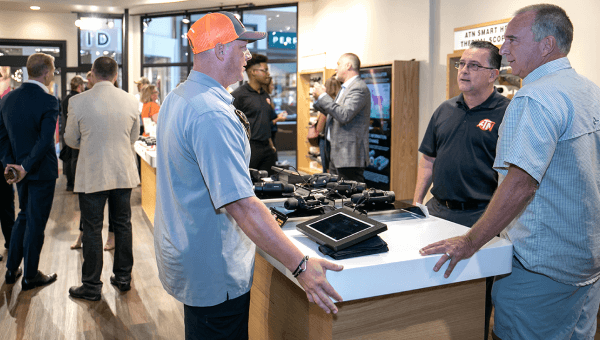
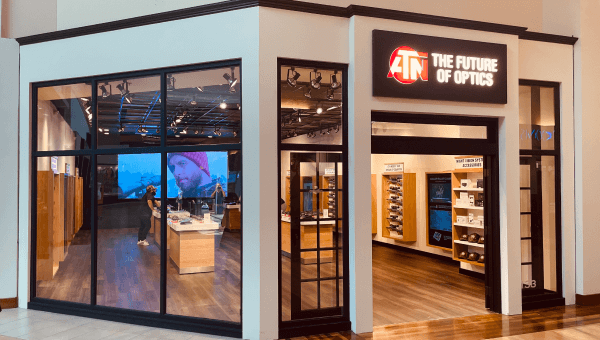
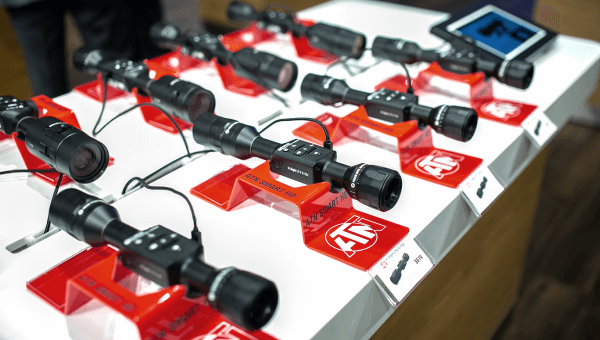
The right thermal optic scope is the one that fits the job you actually do after dark — sitting a predator stand is a different problem than working a hog sounder or slipping through timber on foot. This roundup sorts ATN's current 6th-generation ThOR 6 thermal scopes by the task in front of you, so you can match reach and weight to your nights instead of guessing from a spec sheet. Our best-overall pick is the ATN ThOR 6 640x512 2-16x, and every option here is an ATN model judged on what it does in the field.
Best for long reach: ATN ThOR 6 640x512 3-24x — same 640 clarity with a 50mm lens and the farthest detection in the line for open-ground predator work.
Best light carry: ATN ThOR 6 384x288 2.5-20x — the lightest ThOR 6, built for walk-and-stalk and mid-range pest control where every gram counts.
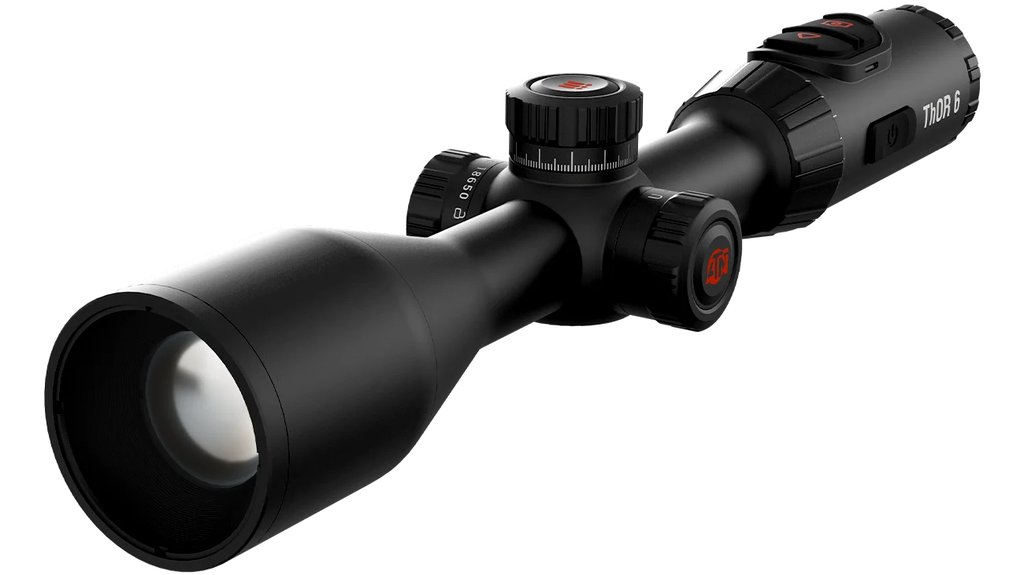
Why ATN's 6th-gen ThOR 6 line fits so many jobs
The ThOR 6 range earns its place across these use cases because the core tech carries through every variant, and only the size and reach change. Each model reads heat down to an <=15mK NETD, which is the number that decides whether damp, hazy air stays readable or turns to mush — the lower the figure, the cleaner the contrast between an animal and the ground it stands on. Sitting under that raw sensor is SharpIR, ATN's on-board AI enhancement, which tidies edges in real time so a warm shape resolves into a hog or a coyote you can actually name. A 50 Hz refresh keeps a moving animal smooth rather than smeared, and user-replaceable batteries good for roughly 9 hours mean a whole night is on the table, not just the first couple of hours. Pick your variant by the job, and the shared brains come along for the ride. Below, the three options are sorted by the work each one does best.
Best for all-round hog and predator work: ATN ThOR 6 640x512 2-16x
The ATN ThOR 6 640x512 2-16x is our best overall thermal optic scope because it refuses to be a one-trick tool. It keeps the full 640x512 sensor but runs a 35mm lens and a 2-16x zoom band, so the wide low end lets you take in a whole field or feed area at a glance, then zoom to confirm a target when one steps out. Detection lands at 3100m, which is more than enough head-start for the ranges most mixed-cover hunts actually happen at.
Why the swappable battery changes your night
The standout feature here is the replaceable 18650 battery system. When one set fades, you drop in a fresh pair from your pocket and the night simply carries on — no cutting a productive sit short because the scope died on you. Paired with the roughly 9-hour runtime per set, this is the variant built for hunters who stay out until the ground goes quiet.
What the 640 sensor buys you up close and far
The 640x512 grid puts more heat-reading points on the target than a smaller sensor, so the picture holds together when you push the zoom instead of dissolving into blocks. Think of it like the jump from a low-count photo to a sharp one: the extra points mean a hog reads as a hog with a visible outline, not a floating blob. Add SharpIR AI cleaning the edges and the <=15mK NETD holding contrast in damp air, and you can confirm what you are looking at before you settle the reticle.
Who it is for: the hunter who runs different jobs week to week — hogs in the brush one night, coyotes on a field edge the next — and wants swap-and-go power. Who it is not for: the pure long-range specialist who only ever shoots across open ground, where the 3-24x reaches farther. If that is you, jump to the next pick; otherwise the ThOR 6 640x512 2-16x is the one to beat.
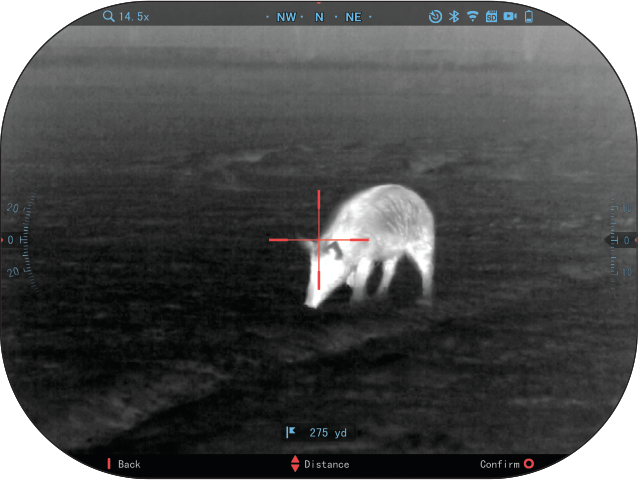
Best for long-range predator calling: ATN ThOR 6 640x512 3-24x
When your nights are spent calling predators across open ground, the ATN ThOR 6 640x512 3-24x is the variant built for the job. Its 50mm objective gathers more heat energy than the shorter lens, pushing detection out to 3650m — the farthest in the ThOR 6 line — while the 3-24x zoom band gives you the optical base to study an animal you spotted a long way off. The same 640x512 sensor and <=15mK NETD from our top pick carry over, so the picture quality is a match; you are simply trading the wide low end and battery swaps for maximum reach.
Detection range is a head-start, not a shot
It helps to be honest about what a 3650m detection range means: it is the distance at which the scope first picks up heat, not the distance at which you can name and shoot the animal. On a predator stand that early pickup is the whole point — it buys you the seconds to watch a coyote separate from the tree line, read its line, and decide before it commits. Then you thumb the zoom up to study it and Hot Point Tracking keeps the warmest object flagged while you scan the rest of the field.
Who it is for: the open-country predator hunter who wants the longest reach and identification in the line and will pay the flagship tier for it. Who it is not for: anyone whose shots are mostly inside a couple of hundred yards, where the extra reach adds weight and outlay you will not use — the 2-16x or the 384 serves better there.
Best for light walk-and-stalk and pest control: ATN ThOR 6 384x288 2.5-20x
For the hunter who covers ground on foot or thins pests at moderate range, the ATN ThOR 6 384x288 2.5-20x is the smart pick. It steps the sensor down to 384x288 and the weight to 790 g / 1.74 lbs — the lightest ThOR 6 — which is the difference you feel on a long walk in or a slow stalk. Detection lands at 2300m, plenty for the mid-range distances this kind of hunting happens at, and you gain six colour palettes to dial contrast to your ground.
Why lighter wins on a stalk
The scope you carry farthest is the one you notice least, and weight matters more on foot than a spec sheet lets on. A 384 sensor is not a 640, but at the realistic ranges of pest control and walk-and-stalk the on-screen difference is small, while the saved grams pay off every step. The <=15mK sensitivity and 50 Hz refresh carry straight over from the bigger models, so you keep smooth tracking and usable contrast in poor air.
Reading contrast with six palettes
The six colour palettes are more useful than they sound for varied pest work. White Hot reads well against cold open ground, Black Hot can lift an animal out of frosted stubble, and the colour modes help when heat-soaked ground would otherwise wash a target into its surroundings. Switching palette to suit the conditions is a free way to sharpen identification without touching the zoom.
Who it is for: the mobile hunter and the pest controller who prize a light, affordable rig for closer, moving work. Who it is not for: anyone who specifically came for a 640 sensor and long-range identification — this is the value step-down for hunters who genuinely do not need that reach, not a cut-price flagship.
How to choose the right thermal optic scope for your job
Start with the job, not the biggest number. The variant that fits your dominant use case will almost always outperform the one with the flashiest spec, because a scope built for reach you never use is just weight you carry. Run through these before you buy:
- Name your main job first — open predator stands reward the 3-24x and its 3650m detection; mixed hog-and-coyote nights sit best on the 2-16x; foot-mobile pest work leans to the light 384.
- Weigh the power system — if all-night sits are your norm, the swappable 18650 build on the 2-16x removes the only real limit; a spare pair keeps the night going.
- Be honest about resolution — a 640 earns its keep when you zoom to identify at distance; if your shots are close, the 384 saves weight and outlay with little on-screen cost.
- Match lens to reach — the 50mm objective gathers more heat for long detection, but a bigger lens adds size, so only pay for it if your ground is genuinely open.
- Plan how you review hunts — Recoil Activated Video and the ATN Connect 6 app turn every stand into footage you can learn from the next morning.
What each pick looks like on a real night
Picture three different nights, one per pick. On the first you sit a hog sounder on a friend's cropland: you settle behind the ThOR 6 640x512 2-16x at its wide 2x, take in the whole feed area, and watch a group of pigs filter out of the brush. Because the low end is wide you read the whole sounder, pick the boar at the back, then zoom to confirm and settle — and when a battery fades three hours in, you swap a fresh pair without leaving the blind. On the second night you call predators on an open lease with the 3-24x: the 3650m detection flags a warm smudge on the far tree line early, you watch it work the caller, and you only push the zoom up as it commits. On the third you walk a fence line thinning pests with the light 384x288 2.5-20x, glassing on the move because the scope is easy to carry and quick to shoulder. Same family, three different jobs — that is the point of sorting by use case.
Getting the most from your thermal optic scope
A great scope still needs a good setup to earn its keep. Mount it with enough eye relief for the positions you actually shoot from — sitting, kneeling, off a bipod — then zero carefully at the range you engage most, using Zeroing Freeze so your point of impact locks while you fire the confirming shots. Spend a few sits learning the palettes rather than leaving one on out of habit; the right mode for the night's conditions can turn a marginal identification into an easy one. Set Picture-in-Picture so a zoomed aiming window rides above your wide scanning view, which keeps you from over-magnifying while you search. And let Recoil Activated Video roll on every sit so each stand ends up in the ATN Connect 6 app, ready to review. Small habits, but they add up across a season.
A note on magnification versus resolution
It is tempting to chase the top of the zoom band, but resolution is what actually lets you identify at distance, not raw magnification. Pushing past the optical zoom into the 8x digital range enlarges the image without adding detail, so a far coyote gets bigger but no clearer. The sensor — 640x512 on the top two picks, 384x288 on the light one — is what carries real information to the edge of the detection range. Treat the top of the zoom as a fine-tuning tool for your final aim, not the thing that finds your target for you.
Matching the variant to the animal you are after
Use case is partly about distance and partly about what walks in. Coyotes and other predators arrive fast, quarter the wind, and rarely hold still, so open-ground calling rewards the reach of the 3-24x and its 50 Hz refresh keeping a moving animal sharp. Hogs tend to show up as a group and mill in one spot, which favours the wide low end of the 2-16x for reading the whole sounder before you pick one — and its swappable battery for the long sits pigs demand. If your nights are mixed pest control or observation on foot at moderate range, the light 384x288 2.5-20x carries the same SharpIR AI and <=15mK NETD without the bulk. Decide which animal fills most of your calendar and the right variant tends to choose itself.
If you can own only one — or step up to two
When one scope has to do everything, buy for your dominant job rather than the exciting outlier. A hunter who splits time between hogs and the occasional predator night is best served by the ThOR 6 640x512 2-16x: it handles the mixed ranges and the long sits without asking you to give anything up, and its full 640 sensor still reaches far enough for most open-ground work. If the budget stretches to two, pair the long-reach 3-24x for open predator stands with the light 384 for mobile pest work and leave each scope doing what it does best. Whichever route you take, log a few weeks of real hunts, note the range at which you actually identified and shot, and buy for that reality instead of the longest shot you can imagine.
Common mistakes with a thermal optic scope
- Buying reach you never use — a long-range flagship on close hog nights is weight and outlay wasted; match the variant to your real distances first.
- Over-zooming to search — cranking straight to the top of the band loses the wide view that finds animals; scan low, then zoom to confirm.
- Skipping a careful zero — a sharp sensor shooting to a rough zero wastes its clarity; use Zeroing Freeze and confirm at your true engagement range.
- Leaving one palette on — sticking to a single mode in every condition throws away the contrast the other palettes give on frost or heat-soaked ground.
- Treating detection as identification — a warm shape at maximum range is a contact, not a confirmed target; close the gap or zoom in before you commit.
How we picked these ATN thermal scopes
These picks come from an in-house comparison of ATN's own ThOR 6 thermal scopes, not an independent lab test, so use them as a starting point and check the specs against the way you actually hunt. We weighed the things that decide a night — sensor resolution, thermal sensitivity (NETD), detection range, refresh rate, weight and battery life — against the specific job each scope suits, from long predator stands to mobile pest control. Only the current 6th-generation ThOR 6 line was in the running; older models were left out on purpose. The honest trade-off runs down the line: the 3-24x reaches farthest but is the heaviest to carry for the wrong job, the 2-16x is the flexible middle with swappable power, and the 384 gives up range and pixels to stay light. Who these are not for: anyone after a cheap novelty rather than a tool to work all season.
Frequently Asked Questions
What is a thermal optic scope and how is it different from night vision?
A thermal optic scope reads the heat every animal gives off and turns it into a visible image, so it works in total darkness, light fog and through cover that hides a target from the eye. Night vision amplifies existing light and needs at least some ambient glow. That heat-based picture is why a thermal scope like the ATN ThOR 6 spots a warm animal against cold ground even when you cannot see it at all.
Which ATN ThOR 6 thermal optic scope should I buy first?
Match it to your main job. For mixed hog-and-predator nights the 640x512 2-16x is the flexible all-rounder with swappable batteries. For open-ground predator calling the 640x512 3-24x reaches farthest, and for light, foot-mobile pest work the 384x288 2.5-20x is the easiest to carry. Buy for the job you do most, not the longest shot you can picture.
Does resolution really matter on a thermal optic scope?
Yes, when you need to identify at distance. A 640x512 sensor puts more heat-reading points on the target than a 384x288, so the image holds detail as you zoom instead of breaking into blocks. If your shots are close, though, the 384 gives up little on screen and saves real weight and outlay.
How long does the battery last on the ATN ThOR 6?
Plan on roughly 9 hours per charge across the line. The 640x512 2-16x uses a replaceable 18650 system, so carrying a spare pair lets you swap on the spot and keep an all-night sit going with no downtime. That makes it the pick for hunters who stay out late.
Will a thermal optic scope work in fog or light rain?
It does, with the range shortened, because water in the air scatters heat. The ThOR 6's <=15mK NETD is exactly what keeps the picture usable when conditions turn damp — the lower that number, the more contrast the scope holds between an animal and its surroundings in poor air.
Can I record what I see through the scope?
Yes. Every ThOR 6 records on-board and includes Recoil Activated Video, which captures the moments around each shot automatically. The ATN Connect 6 app lets you stream the view and pull footage off the unit so you can review each stand afterward and learn from it.
Ready to match a thermal optic scope to your nights? Start with the ATN ThOR 6 640x512 2-16x — our best-overall pick for mixed hog and predator work — or browse the full range of ATN thermal scopes to compare sensors, lenses and reach side by side. Every ThOR 6 runs the same 640-class brains, SharpIR AI and the Connect 6 app, so whichever variant fits your job, you are set to learn fast and hunt hard from the first night out.
Created: August 5, 2026 · 19:53:45 UTC