You don't have to hunt anything to want a thermal optic. For quiet, no-flashlight night watching, the thermal monocular wildlife observation thermal monocular most naturalists and land-watchers land on is the ATN BlazeTrek 6 384x288. Heat gives an animal away in total darkness without a light in its eyes, so you can watch deer feed, catch a fox working a hedgerow, or count what's really moving through your woods after dark — all without disturbing a thing. This roundup is built around observation, not the hunt, and it lives in ATN's thermal monoculars range.
Best light-and-wide companion: ATN BlazeSeeker 6 256x192 1.2-9.6x — a pocketable wide-view spotter for close range and casual walks.
Bottom line: the BlazeTrek 6 is the observer's tool; keep the BlazeSeeker 6 as the grab-and-go for the porch or a short stroll.
Why ATN's 6th-gen line suits wildlife watching
Wildlife observation asks something different from a thermal optic than hunting does: you want a calm, detailed picture you can study for a long time without disturbing the animal or your own night vision. The 6th-gen BlazeTrek 6 delivers that. The 384x288 sensor is a solid grid of dots — more picture than a budget 256 core — so an animal reads as an animal, not a blob, and you can push the digital zoom to study behavior. SharpIR AI enhancement smooths the image, six palettes let you pick whatever separates warm fur from cool background, and a 50 Hz refresh keeps a moving deer natural rather than jerky. Because there's no visible light involved, the animal never knows you're there, which is the entire point when you're watching rather than pursuing. Detection out to about 1000m and an 8-hour battery let you set up and stay put. That non-invasive, study-it-quietly nature is why it leads this list.
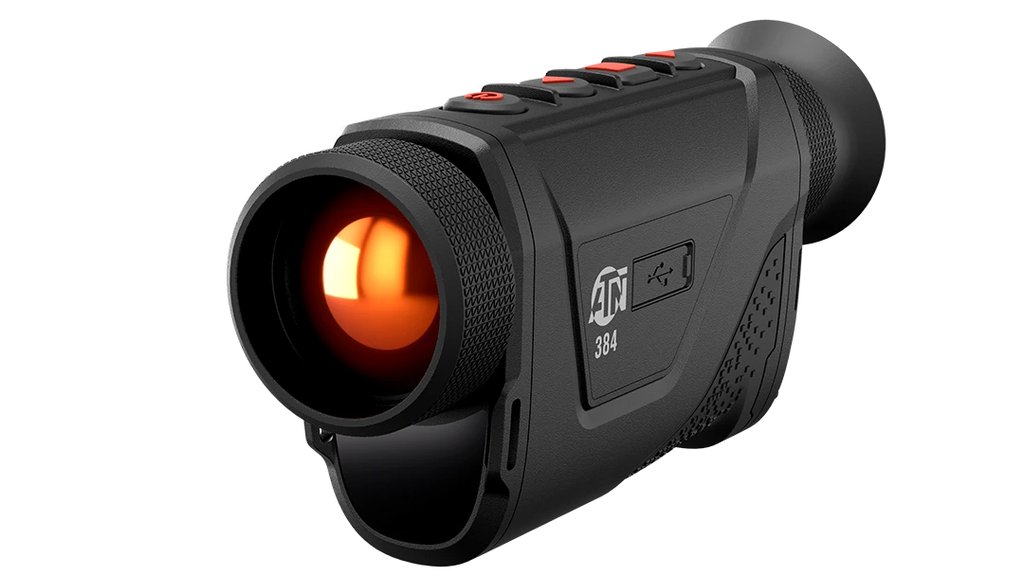
Best for observation: ATN BlazeTrek 6 384x288 2.25-18x
The ATN BlazeTrek 6 384x288 2.25-18x is the observer's pick because it balances a clear, detailed image with the reach to watch from a respectful distance. The 2.25x base gives you a natural view of a feeding animal, and the 18x top zoom lets you study antlers, a mother-and-fawn pair, or a predator's behavior without creeping closer and blowing the scene.
Watch without being noticed
Thermal is the least intrusive way to observe after dark — no beam, no red-eye, no crunching toward the animal for a better look. You sit, the animal behaves normally, and you record what you see to 32 GB of internal storage. For anyone who wants to understand what actually uses their land at night, that honesty is the whole appeal.
Who it's for and who it's not
It's for naturalists, landowners, and patient night watchers who want detail and long watch time. It's not for someone who only wants a quick pocket peek on a short walk — that job goes to the lighter, wider BlazeSeeker below.
Best light companion: ATN BlazeSeeker 6 256x192 1.2-9.6x
The ATN BlazeSeeker 6 256x192 1.2-9.6x is the grab-and-go half of an observation kit. At about 0.6 lb with a very wide 24-by-18-degree view, it's the one you keep by the door for a spur-of-the-moment check of the yard, the feeder, or a short walk when you don't want to carry the full observer's tool.
Wide and casual
Its short 7mm lens throws the widest view in this pair, which is perfect for close, casual watching — seeing everything warm in the yard at a glance. The 256 sensor keeps things budget-friendly, and detection out to about 345m covers the distances a porch-side spotter cares about.
Who it's for and who it's not
It's for the casual, close-range watcher who values weight and width over reach and detail. It's not the tool for studying an animal's behavior at distance — the BlazeTrek's resolution and zoom own that.
Why two optics make sense for watchers
Plenty of observers end up carrying both, and there's a clean logic to it. The BlazeSeeker lives by the back door for the impulse check — headlights in the yard, a noise at the feeder, a quick loop of the property before bed — where grabbing something light in one second beats fetching the good tool in thirty. The BlazeTrek comes out for the planned sit, when you've picked a spot and want the detail and stay-time to make an hour worthwhile. They don't compete so much as cover the two halves of how watching actually happens: the casual glance and the committed watch. If you only buy one, the BlazeTrek is the observer's tool; if you add a second, the wide little BlazeSeeker is the one that never gets left behind.
What you'll actually see on an observation night
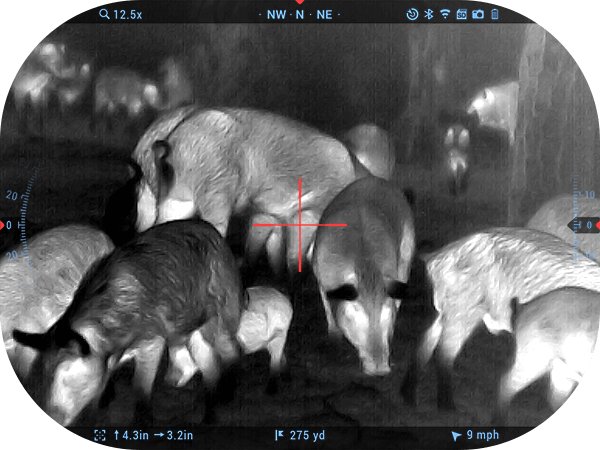
The joy of thermal observation is that the night stops being empty. Where your eyes see a black field, the BlazeTrek shows a deer bedded in the far corner, a fox threading a hedgerow, a raccoon working a creek bank, an owl warm against a cold branch. Warm bodies glow; cool ground, water, and rock stay dark, so animals read as bright shapes against a quiet background. Because you're watching heat, screening cover that would hide an animal from your eyes — tall grass, thin brush — often can't hide it from the sensor. You start to learn the real rhythm of your land: which trails get used after midnight, where the does bed, how many different animals actually cross a single gap. That's information a spotlight would scatter the moment you switched it on, and it's why patient watchers get quietly hooked.
Reading behavior, not just presence
With the 384 sensor and 18x zoom you can go past 'something's there' to 'here's what it's doing.' You can watch a doe test the wind before stepping into the open, see a coyote's head-down hunting trot versus a relaxed amble, tell an alert animal from a settled one by how it holds its ears and tail. That behavioral read is the difference between counting animals and understanding them, and it's the reason serious observers want detail and reach rather than just a wide, coarse view. The six palettes help here too — switching from White Hot to Black Hot can sharpen the outline of an animal against a cluttered treeline so posture is easier to read.
How to choose a thermal monocular for wildlife observation
Observation rewards a different set of priorities than hunting. You're not timing a shot; you're settling in to watch, so favor clarity, comfort, and stay time.
- Resolution for behavior — a 384 grid of dots lets you read what an animal is actually doing; a 256 core is fine for spotting but coarser for study.
- Zoom range to keep your distance — a higher top magnification lets you watch closely without physically approaching and spooking the scene.
- Battery for a long sit — ~8 hours means you can set up and stay through the prime dusk-to-dawn window.
- Weight for comfort — you'll hold this a long time; lighter is genuinely better for observation.
- Palettes and recording — six palettes help fur separate from background, and on-board recording lets you review and share what crossed.
How we picked these ATN thermal monoculars
For observation we cared most about image clarity, comfortable stay time, and being non-invasive, so we weighed resolution, NETD, zoom range, refresh rate, battery, and weight against real night watching rather than a spec sheet. Only ATN's current 6th-gen line was considered. Honest trade-offs: neither of these is a photography-grade recorder — the internal storage and app are for reviewing and sharing, not producing gallery stills — and a 384 sensor, while great for behavior at moderate range, won't resolve a distant animal the way a flagship 640 or higher would. This is also not the kit for someone who mainly wants to identify targets far out on open ground; that leans hunting, not watching. This is an in-house comparison of ATN's own range, not an independent lab test, so match the resolution and reach to how far and how patiently you plan to watch.
Frequently Asked Questions
Can I watch wildlife with a thermal monocular without disturbing the animals?
Yes, and that's its biggest advantage over a spotlight. Thermal reads body heat with no visible light, so the animal never sees a beam and behaves naturally. The ATN BlazeTrek 6 lets you watch deer, foxes, and other wildlife in full darkness without spooking them.
Do I need a hunting license to use one for observation?
No — a thermal monocular is just an optic, and using it to watch wildlife isn't hunting. It's a popular, non-invasive way for naturalists and landowners to see what moves through their property at night. Always follow local rules for where and when you observe.
How much detail can I see for studying behavior?
The ATN BlazeTrek 6 384x288 shows enough detail to read behavior — feeding, alertness, group movement — and its 18x top zoom lets you study from a distance. It's a solid grid of dots, clearer than a budget 256 sensor, though not as fine as a flagship 640.
How long can I watch on one charge?
About 8 hours on the BlazeTrek 6's internal battery, which comfortably covers the dusk-to-dawn window most observation happens in. Charge over USB-C and keep a power bank along for multi-night trips.
Does it work through light fog or brush?
Thermal sees heat, so it cuts through darkness and light fog far better than your eyes and can reveal an animal partly screened by thin brush. Dense vegetation and heavy fog still block heat, so no thermal optic sees through a solid wall of leaves.
Should I get the BlazeTrek 6 or the BlazeSeeker 6?
Choose the BlazeTrek 6 384x288 for serious observation — more detail, more reach, longer watch time. Keep the lighter, wider BlazeSeeker 6 as a casual grab-and-go for the porch or a short walk. Many watchers own both for different nights.
There's something quietly addictive about seeing your land come alive at night without a single animal knowing you're there. The ATN BlazeTrek 6 384x288 is built for that patient, non-invasive kind of watching, with the detail and stay time to make it rewarding. If you're deciding between it and the lighter BlazeSeeker, or want to see how the whole family compares, browse ATN's thermal monoculars and match the sensor to how closely you like to watch. Set up at dusk once and you'll wonder what you missed all those years.
Created: July 7, 2026 · 11:11:27 UTC