Nothing ends a night hunt faster than a dead battery. You're finally settled in, the animals are moving, and the screen goes dark. That's why the thermal monocular best battery life question is worth taking seriously — runtime is the difference between staying out until the action starts and packing up early. The ATN BlazeTrek 6 640x512 1.5-12x is built to run a real session on a charge, and when you want to hunt effectively all night, the swappable-battery BlazeHunter XD stretches things even further. This guide covers which ATN thermal monocular keeps you in the field longest.
Best for the longest, extendable runtime: ATN BlazeHunter XD LRF 1280x1024 2-16x — 10+ hours total on two swappable 18650 cells, so you never run out.
The short version: the BlazeTrek 6 gives you long single-charge runtime in a light package; the BlazeHunter XD gives you removable batteries you can swap in the dark for effectively unlimited nights.
Why ATN's 6th-gen monoculars run long
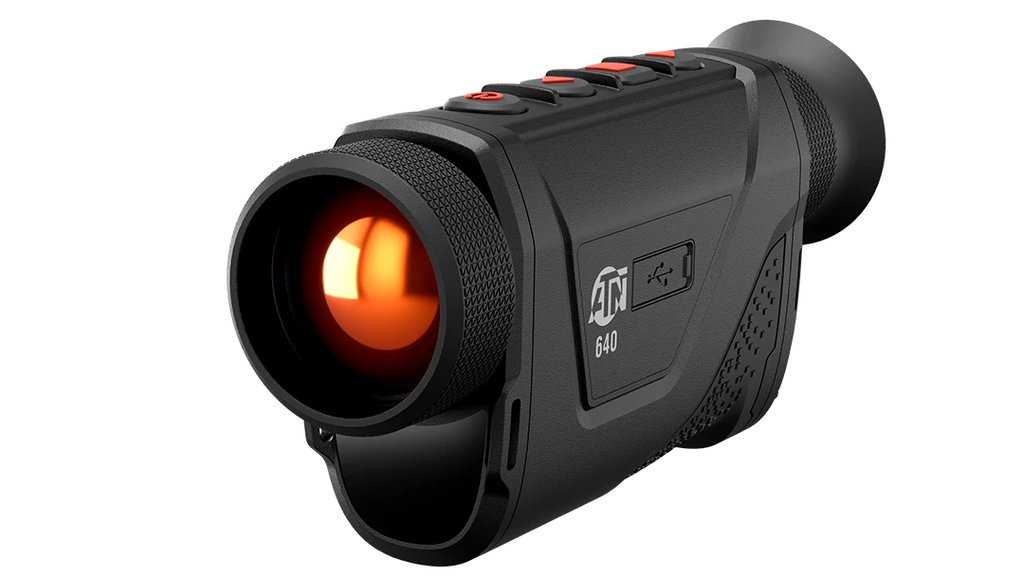
Battery life on a thermal monocular is about two things: how long a charge lasts, and whether you can add more power without going home. ATN's 6th-gen line handles both. The BlazeTrek 6 gets roughly 6.5 hours from its internal rechargeable battery, which covers most night sits from setup to the small hours, and it does that while staying light at 320 g — so it never becomes a burden on your hand or in your pack. The BlazeHunter XD takes the other approach: it runs on two removable 18650 batteries for 10+ hours total, roughly 5 hours per cell, and because the cells pop out you can carry a charged spare and swap it in the field in seconds. That's the trick to a genuinely all-night rig — you're never limited by a single sealed battery. Both charge over USB-C, so you can top them from a power bank between sits, and both keep the smart features running the whole time: SharpIR AI sharpening, Hot Point Tracking, six palettes, and recording. Everything here is current 6th-gen hardware, and both are IP67 waterproof so a damp night won't stop you.
Best overall for battery life: ATN BlazeTrek 6 640x512 1.5-12x
The ATN BlazeTrek 6 640x512 1.5-12x is the pick when you want long runtime in a light, easy-to-carry monocular. Its roughly 6.5-hour charge covers a typical night of scanning without a top-up, and at just 320 g it's the kind of tool you can hold to your eye for a long sweep without your arm tiring.
A full night in a light package
Because it's built around an internal rechargeable battery and USB-C charging, you can leave it charging in the truck or off a power bank right up to the moment you head out, then get a full session before you need power again. The wide 22.8 x 18.3 degree field of view means you cover ground fast, which is part of why the battery lasts — less time hunting for targets, more time watching.
A sharp picture that lasts the night
The 640x512 sensor puts plenty of dots into the picture, so you can push the zoom before it turns blocky, and the <=18mK sensitivity keeps the image clean in damp air. Hot Point Tracking and recording run the whole session without you babying the battery.
Who it's for: hunters and scouts who want a light monocular that lasts a normal night on one charge. Who it's not for: someone doing back-to-back all-night sits who needs to swap batteries in the field — that's the BlazeHunter XD's job.
Best for the longest runtime: ATN BlazeHunter XD LRF 1280x1024 2-16x
The ATN BlazeHunter XD LRF 1280x1024 2-16x is the answer when the night has no fixed end. It runs 10+ hours total on two 18650 batteries — around 5 hours each — and because those cells are removable, you drop in a fresh one in the dark and keep going. That makes it effectively unlimited as long as you carry charged spares.
Swap and keep hunting
Where a sealed battery forces you to quit or head back, the BlazeHunter XD lets you carry a pocket of charged 18650s and hot-swap them. For an all-night hog rig or a long tracking effort, that's the difference between calling it early and staying until the job's done. It also brings extreme-definition 1280x1024 resolution — over a million more pixels than a 640 — and a built-in laser rangefinder, so it's a serious detection tool as well as a long-runner.
Who it's for: hunters who need all-night runtime and want the highest detail and longest reach. Who it's not for: someone who wants the lightest possible handheld for shorter sits, where the BlazeTrek 6 is easier to carry.
Sealed battery vs. swappable cells: which fits you
The real fork in this decision isn't the raw hours — it's how you refuel. A sealed internal battery, like the BlazeTrek 6's, keeps the unit lighter and simpler and charges from any USB-C source, which suits the hunter who does one long sit a night and can recharge before the next outing. Removable cells, like the BlazeHunter XD's dual 18650s, weigh a little more but hand you a different kind of freedom: when one dies you drop in a charged spare in the dark and keep hunting, so your night is limited only by how many cells you're willing to carry. If you've ever had to choose between quitting early and driving home for a charge, that swap capability is worth its weight. Neither approach is wrong — they answer different questions about how your nights actually run.
How to choose for battery life
Both monoculars run long, but they get there differently. Match the tool to the length and style of your nights:
- How long is your typical night? — The BlazeTrek 6's ~6.5 hours covers most single sits; the BlazeHunter XD's 10+ hours covers dusk-to-dawn.
- Can you swap batteries in the field? — The BlazeHunter XD's removable 18650s let you carry spares and keep going indefinitely; the BlazeTrek 6 recharges via USB-C instead.
- Light or long? — Choose the BlazeTrek 6 at 320 g for a light handheld; choose the BlazeHunter XD when runtime and reach matter more than weight.
- Will you top up from a power bank? — Both charge over USB-C, so a power bank between sits extends either one.
- Need maximum detail and distance? — The BlazeHunter XD's 1280x1024 sensor and 3400m detection outreach the BlazeTrek 6, which trades some of that for lighter weight and a wider view.
- Hunting in the wet? — Both are IP67 waterproof, so a damp night won't cut your session short.
For most hunters the BlazeTrek 6 is the easy, long-lasting everyday pick; the BlazeHunter XD is for those who refuse to let a battery decide when the night ends. Compare both on the thermal monoculars page.
How we picked these ATN thermal monoculars
For a battery-life comparison we put runtime and how you extend it first: hours per charge, whether the batteries are removable, and how the charging works. We then weighed weight, sensor resolution, NETD, detection range, and refresh rate so the long-running pick is still a genuinely useful thermal tool and not just a battery in a tube. Only ATN's current 6th-gen line was considered; older models were excluded. Honest trade-offs: the BlazeTrek 6's internal battery is lighter but can't be swapped mid-night, while the BlazeHunter XD's removable cells add weight in exchange for effectively unlimited runtime and far more resolution. Who these aren't for: someone who only glasses for an hour at a time and doesn't care about extended runtime at all. This is an in-house comparison of ATN's own range, not an independent lab test, so check the runtime numbers against the length of nights you actually hunt.
Frequently Asked Questions
Which ATN thermal monocular has the best battery life?
For a light single-charge handheld, the BlazeTrek 6 runs about 6.5 hours, enough for most night sits. For the longest total runtime, the BlazeHunter XD LRF goes past 10 hours on two removable 18650 batteries, and because the cells swap out, you can carry spares for effectively unlimited nights.
Can I swap batteries in the field?
On the BlazeHunter XD, yes — it uses two removable 18650 cells, so you can carry charged spares and swap one in the dark in seconds. The BlazeTrek 6 uses an internal rechargeable battery instead, which you top up over USB-C between outings.
How do I extend runtime on the BlazeTrek 6?
Because it charges over USB-C, you can top it up from a portable power bank between sits or during a break. Charging it fully right before you head out and keeping a power bank in your pack is the simplest way to stretch a long night.
Does using the rangefinder or recording drain the battery faster?
Power-hungry features like continuous recording and frequent ranging do use more energy, so heavy use shortens the quoted runtime somewhat. The stated figures reflect normal mixed use, and carrying a power bank or spare cells covers you on demanding nights.
Is a longer battery life worth extra weight?
It depends on your nights. The BlazeHunter XD weighs more but runs longer and swaps batteries, which is worth it for all-night hunts, while the lighter BlazeTrek 6 is easier to hold for hours and lasts a normal session. Match the choice to how long you stay out.
Will cold weather reduce battery life?
Cold does reduce the runtime of any battery somewhat. The BlazeHunter XD's removable cells are an advantage here because you can keep spares warm in an inner pocket and swap in a fresh one when the cold saps the first.
Can I charge these from a power bank?
Yes. Both the BlazeTrek 6 and the BlazeHunter XD charge over USB-C, so any standard power bank can top them up in the truck or the field, which is the easiest way to extend a long night for either one.
If a dead battery has ever cut your night short, the fix is a monocular built to outlast the hunt. The light, wide-view ATN BlazeTrek 6 runs a full session on one charge, while the BlazeHunter XD lets you swap cells in the dark for all-night runtime and far more detail and reach. Line them up on the thermal monoculars page, think about how long your nights really run, and pick the one that keeps you watching until the animals show.
Created: July 7, 2026 · 19:23:12 UTC