One thing almost every set of thermal imaging scope reviews leaves out is the weather. A scope that looks razor-sharp in a cold winter review can wash out on a humid summer night, because thermal performance depends on the heat difference between an animal and its surroundings — and that gap changes with the seasons. This guide walks through the year and shows how conditions shift what you see, using ATN's 6th-gen ThOR 6 and its 640x512 2-16x model as the reference.
What is a thermal imaging scope review missing about weather?
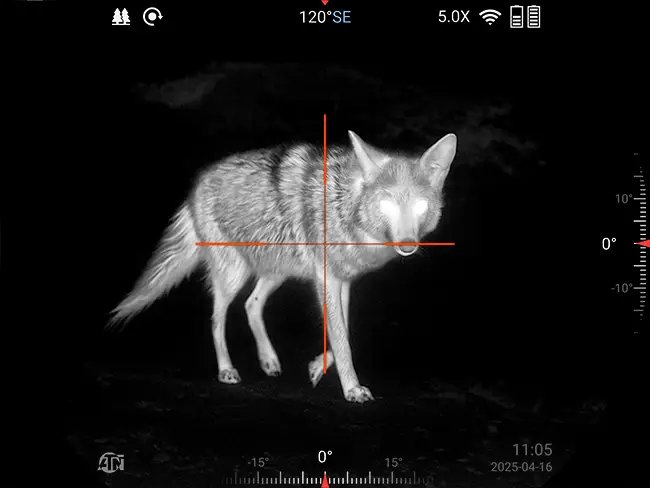
A thermal imaging scope review is missing context when it doesn't say what conditions it was shot in, because a thermal scope reads temperature differences, and those differences swell and shrink with the weather. On a frosty night a warm hog blazes against frozen ground; on a muggy summer evening the ground is nearly as warm as the animal, so contrast drops. The scope hasn't changed — the scene has. Knowing this lets you translate any review to your own season and climate.
How does weather change what the scope sees?
- The sensor measures the temperature difference between the target and its background — that gap is what creates contrast.
- In cold, dry conditions the background is far cooler than a warm animal, so the target pops with strong contrast.
- In summer heat the ground and vegetation hold warmth, shrinking the gap and softening the image.
- High humidity, fog and rain put water in the air, which absorbs infrared and cuts effective detection range.
- A sensitive sensor (low NETD like the ThOR 6's ≤15 mK) and SharpIR AI enhancement claw back contrast when the gap is small.
What can you use it for across the seasons?
- Winter — peak thermal contrast; predators and hogs stand out sharply against cold ground for long-range work.
- Spring — variable; cool damp nights are good, but warming days and rain can cut range, so a sensitive sensor helps.
- Summer — the hardest season; warm ground shrinks contrast, so low NETD and image processing matter most.
- Fall — often the sweet spot; cooling nights restore contrast while animals are active for hunting season.
Key features to understand for year-round use
- NETD (sensitivity) — the smallest temperature difference the sensor can detect, in millikelvin. Low NETD like the ThOR 6's ≤15 mK is what preserves contrast on warm summer nights when the gap is small.
- Sensor resolution — the pixel count. A 640x512 sensor holds detail even when contrast is soft, like the difference between HD and standard definition.
- SharpIR AI enhancement — real-time processing that sharpens a low-contrast image, most valuable in humid or hot conditions.
- Detection range — the farthest a heat signature is picked up; expect this to shrink in rain, fog and humidity.
- Refresh rate — how often the picture updates; a higher rate keeps a moving animal crisp in any season.
What to look for before buying for your climate
- If you hunt humid or hot country — prioritize low NETD and strong image processing over raw magnification.
- If you hunt cold, open ground — resolution and detection range pay off because contrast is already strong.
- Weather sealing — confirm the scope is built to handle rain and dew across seasons.
- Battery in the cold — cold saps runtime, so the ThOR 6's swappable 18650 pack and spares matter in winter.
- A wide base view — the 2-16x's low 2x base helps scan when contrast is soft and targets are subtle.
Common mistakes when judging seasonal performance
- Trusting a winter review for a summer purchase — the same scope shows far less contrast in the heat.
- Expecting full detection range in fog or rain — moisture in the air always cuts effective reach.
- Blaming the scope for a low-contrast scene — sometimes the weather, not the optic, is the limit.
- Ignoring NETD for hot climates — sensitivity, not megapixels, is what saves a summer hunt.
Example: the ATN ThOR 6 640x512 2-16x across the year
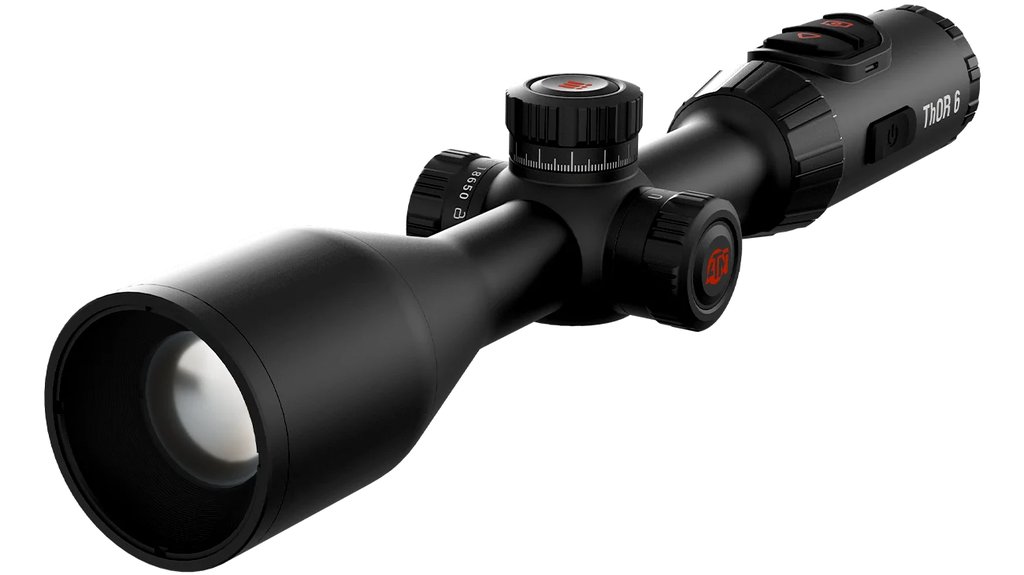
The ATN ThOR 6 640x512 2-16x is a good year-round example because its strengths line up with what shifting seasons demand. Its ≤15 mK sensitivity holds contrast on warm, humid nights when a lesser sensor would wash out; its 640 sensor keeps detail sharp when the scene is soft; and its low 2x base gives a wide view for picking up subtle heat signatures. SharpIR AI enhancement does its heaviest lifting in summer and rain, and the swappable ~9 hr battery covers long cold-weather sits where runtime drops.
Is a thermal imaging scope worth it year-round?
A thermal imaging scope is worth it year-round if you understand that its performance rises and falls with the weather and you buy a sensitive enough sensor to handle your worst season. In cold country almost any 6th-gen ThOR 6 will impress; in hot, humid country the low NETD of a 640-class model is what keeps it usable through summer. Judge a review by the season it was shot in, then match the scope to your own climate.
How this guide was put together
This guide was assembled around a factor reviews usually skip — the season and climate you hunt in — and how it changes thermal performance. We leaned on the specs that govern weather behavior: NETD for contrast in the heat, resolution for detail when scenes go soft, detection range for how moisture cuts reach, and refresh rate for motion. Only ATN's current 6th-gen ThOR 6 line was used as the example, and this is an in-house explanation from the maker, not an independent lab test across a controlled year. Check the numbers against your climate. The honest trade-off: no scope beats physics — summer humidity will always soften the picture. Who this guide is NOT for: someone who only cares about a single-night spec sheet with no thought to when they hunt.
Frequently Asked Questions
Why do thermal scopes work better in winter?
Because thermal imaging depends on the temperature difference between an animal and its background. On cold nights a warm animal contrasts sharply against frozen ground, so it stands out clearly. In summer the ground is warmer, shrinking that gap and softening the image.
Does humidity affect thermal imaging scope reviews?
Yes, though reviews rarely mention it. Water vapor in the air absorbs infrared energy, which reduces effective detection range and contrast. A review shot on a dry night will show better numbers than the same scope on a humid one.
What spec matters most for hot, humid climates?
NETD, the sensor's sensitivity. A low NETD like the ATN ThOR 6's ≤15 mK detects tiny temperature differences, so it holds contrast on warm nights when the gap between animal and background is small. That matters more than magnification in the heat.
Will a thermal scope still work in rain or fog?
It will work, but with reduced range and contrast. Moisture in the air absorbs infrared, so both detection distance and image clarity drop. You'll still detect close, warm targets, just not at the ranges a clear-night review might claim.
Which ATN ThOR 6 is best for year-round hunting?
The 640x512 models handle the seasons best because their sensitive ≤15 mK sensor and high resolution preserve contrast even in tough summer conditions. The 2-16x adds a wide base view that helps when heat signatures are subtle.
Does cold weather affect battery life?
Yes. Cold reduces battery runtime, so a winter sit drains faster than the rated ~9 hours. The ThOR 6 uses swappable 18650 cells, so carrying warm spares in an inside pocket keeps you hunting through the cold.
Buying for the season you actually hunt beats buying for a review shot in perfect conditions. See how the ATN ThOR 6 640x512 2-16x balances sensitivity and a wide view for year-round use, then compare the rest of the ATN thermal scope lineup. Match the sensor to your toughest season — usually a humid summer — and every other night of the year takes care of itself.
Created: August 10, 2026 · 09:39:32 UTC