Terrain decides more about a thermal imaging scope than any spec sheet ever will. The same optic that shines glassing a wide-open pasture can feel clumsy in tight timber, and a scope that's a joy in the brush can leave you squinting across a river bottom. So this roundup sorts the ATN ThOR 6 line by the ground you cover: close cover, wide fields, and mixed rough country. Figure out where you spend your nights, and the right scope more or less picks itself.
Best for open ground: ATN ThOR 6 640x512 3-24x — the flagship, with the longest reach and highest magnification for big fields and long river bottoms.
Best light-and-value build: ATN ThOR 6 384x288 2.5-20x — the lightest option with every feature intact, ideal for hunters covering rough, close-to-mid country on foot.
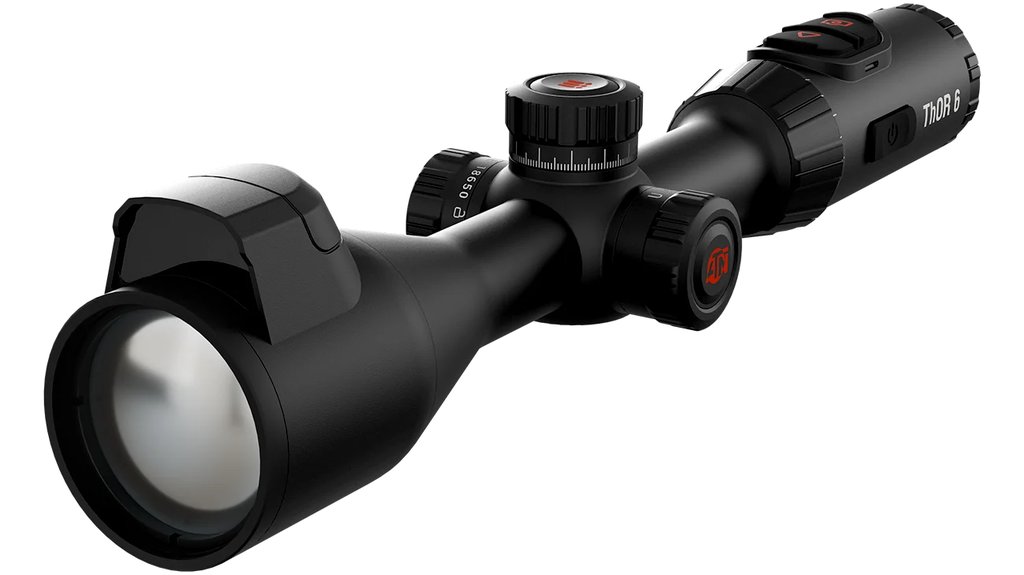
Why ATN's 6th-gen thermal scopes handle any terrain
ATN's 6th-gen ThOR scopes handle any terrain because they share a sensor and processing stack built to stay clean in messy real-world conditions. Cover, dew, cold air, and warm ground all fight a thermal image, and the fix is a sensitive sensor plus smart processing. Every scope here runs a 15 mK-or-better sensor, which reacts to very small heat differences — the practical result is an animal's outline that stays crisp against a cluttered background instead of washing out. SharpIR AI cleans the image further, and the full-HD OLED display shows it without adding mush of its own. Beyond that they all carry the field tools that matter across terrain: Zeroing Freeze, Hot Point Tracking, Recoil Activated Video, Picture-in-Picture, 8x digital zoom, and Wi-Fi with ATN Connect 6. Where they part ways is sensor resolution, magnification band, and how far they detect — and each of those maps neatly onto a type of ground.
ATN ThOR 6 640x512 2-16x — best overall for mixed terrain
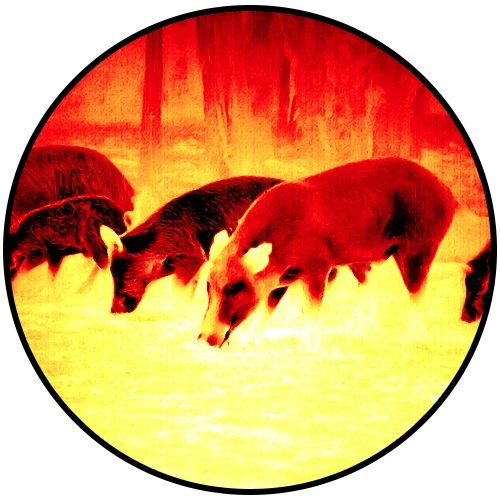
The ATN ThOR 6 640x512 2-16x is the best overall for mixed terrain because it reads brush and fields equally well. Most hunters don't stay on one kind of ground all night — you slip through a timbered edge, glass across a cut field, then work a fence line. This scope's 2x low end gives you a wide, forgiving view when cover is close and animals move fast, and the 640 sensor keeps that view detailed no matter where you point it. Picture the resolution jump like going from a grainy old photo to a sharp digital one: the difference is obvious the moment a hog steps into a gap.
Wide when the cover closes in
That 2x base is the whole argument in tight terrain. A wide field of view means when a sounder busts out of a treeline at 50 yards you keep the whole group in the picture instead of chasing them through a narrow tunnel. When something shows further out, you dial up to 16x and the 640 sensor holds enough detail to confirm what you're looking at. The 35mm lens and 3100-meter detection cover realistic distances for this kind of hunting with room to spare.
Runs all night, swaps in seconds
This model's replaceable 18650 battery system is a genuine terrain feature, not just a spec. When you're a mile from the truck working a river bottom, you don't want a dead scope. Roughly nine hours covers most nights, and when it doesn't, a spare cell gets you going again in seconds. Recoil Activated Video captures every shot on its own, so you can review a tricky encounter later without ever taking your hand off the rifle in the moment.
A night that changes ground under you
Terrain rarely holds still on a real hunt, and this is where the 2-16x proves its worth. Say you start in a creek bottom choked with willows, ease out along a fence line, then break into a cut cornfield — three kinds of ground in one walk. In the willows you're at 2x with a wide view, and the moment a hog grunts and moves you keep it framed instead of hunting for it through a narrow keyhole. Along the fence line, sightlines open to maybe 120 yards, so you nudge up to 6x or 8x and the 640 sensor sharpens the picture enough to sort a coyote slinking the edge from a stray dog. Out in the corn, you dial to 16x, and even though this isn't the long-reach flagship, the 3100-meter detection and 640 detail are plenty to identify game across that field. One scope carried you through all three without ever feeling like the wrong tool — that adaptability is the entire point of the 2x-to-16x band paired with a high-resolution sensor.
Who it's for: hunters who move across changing ground in a single night and want one scope that never feels like the wrong tool. Who it's not for: the pure long-range field shooter who wants maximum top-end magnification — the 3-24x flagship serves that better. See it at the ATN ThOR 6 640 2-16x product page.
ATN ThOR 6 640x512 3-24x — best for wide open country
The ATN ThOR 6 640x512 3-24x is the best scope for wide open country because reach and top-end magnification are exactly what big ground demands. On a huge cut field or a long, flat river bottom, animals show up as distant heat signatures, and you need to both spot them and confirm what they are before deciding anything. This flagship's 3650-meter detection range and 24x top end are built for that job.
See far, then confirm
The 50mm F/1.0 lens is the piece that makes distance work. A larger lens gathers more thermal energy, which keeps a far-off image bright and usable where a smaller lens would go soft. Pair that with the 640 sensor and you can pick a warm shape out of a pasture at extreme range, then zoom in to tell a hog from a deer from a stray dog. Detection range is a spotting number, not a shooting number, but on open ground having that spotting room changes how you hunt — you plan a stalk instead of getting surprised.
Detail that holds at the top end
Cranking to high magnification is where cheaper thermal falls apart, and where the 640 sensor plus SharpIR earns its keep. At 24x the image stays defined instead of turning into warm blobs, and the 8x digital zoom is there for the rare moment you want one more step. Picture-in-Picture keeps a magnified aiming window up while you hold your wider view, which is a real help when you're tracking movement across a big opening.
Who it's for: the hunter whose ground is big, flat, and open, where shots and identification stretch out. Who it's not for: someone hunting mostly close cover, where the tall magnification band sits unused and a wider 2x base would serve better.
ATN ThOR 6 384x288 2.5-20x — best light build for rough country
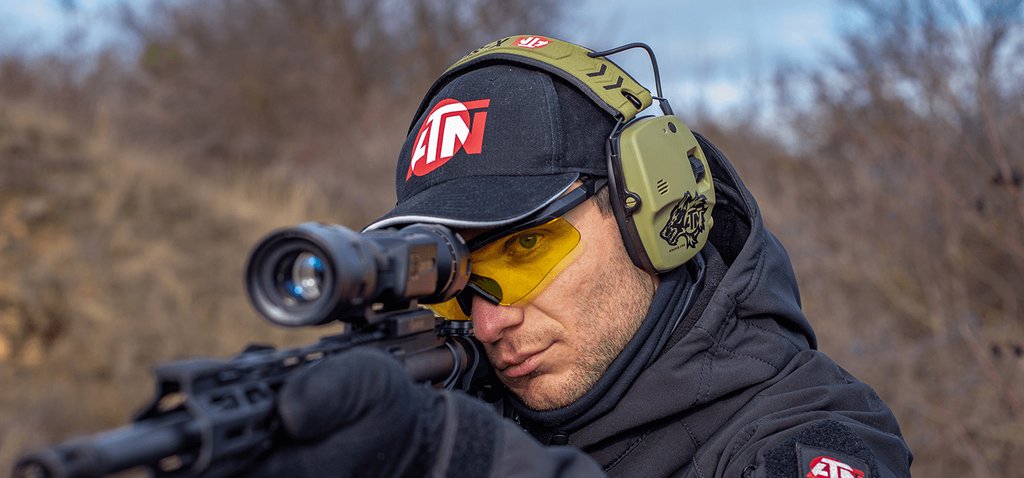
The ATN ThOR 6 384x288 2.5-20x is the best light build for rough country because it's the easiest of the three to carry all night without giving up features. When your terrain means climbing, walking miles, and covering broken ground on foot, every ounce counts. At 1.74 lbs this is the lightest ThOR 6 here, and the full 6th-gen feature set comes along for the ride.
Fewer pixels, still a clean picture
The 384x288 sensor has fewer pixels than the 640 models, so think of it the way you'd think about a lower-resolution camera: the picture is still clear and easy to read at close to moderate range, it just won't hold as much fine detail way out at the edge. For rough-country hunting where shots tend to be closer and the ground breaks up long sightlines anyway, that's a sensible trade. The 15 mK sensitivity is the same class as its siblings, so contrast stays strong.
Every feature, plus more palettes
Value doesn't mean stripped down here. You keep SharpIR, Zeroing Freeze, Hot Point Tracking, RAV, Wi-Fi, and this model adds six color palettes so you can dial in whatever reads best against snow, leaf litter, or bare ground — a genuinely useful thing in varied rough country. Detection out to 2300 meters is far past any realistic shot for this terrain. Who it's for: the on-foot hunter covering broken, close-to-mid ground who wants light weight and value. Who it's not for: the long-range field shooter who needs to identify small animals at the far end of open ground — the 640 sensors are the answer there.
How to choose by terrain
Choosing by terrain means matching the scope's field of view and reach to the ground you cover most. First, be honest about your sightlines: tight cover rewards a wide low-end magnification, open ground rewards reach and a big lens. Then weigh how far you carry the rifle, since weight adds up on foot. Use this checklist:
- Close cover / timber — favor a wide 2x base and 640 detail so you keep fast, near animals in view; the 640 2-16x fits best.
- Wide open fields — favor a big lens, long detection, and high top-end magnification; the 640 3-24x flagship owns this.
- Rough country on foot — favor light weight and value; the 384 2.5-20x carries easiest and keeps every feature.
- Detection range — a spotting figure, not a shot distance; more range just gives you more room to plan on open ground.
- Battery for long walks — all three run about nine hours; the 640 2-16x adds a swappable cell for nights far from the truck.
- Mixed ground in one night — if you cross cover, edges, and open field on a single walk, a wide 2x base plus 640 detail flexes across all of it; the 2-16x is the safe default.
A useful gut check: walk your ground in daylight and note where your eyes naturally stop. If a wall of brush cuts your view to 60 or 80 yards for most of the walk, reach is meaningless and a wide base is everything. If you keep finding yourself glassing across a quarter mile of open cut, the big lens and tall magnification of the flagship stop being luxury and start being the thing that makes the hunt work. Terrain isn't an abstraction on a spec sheet — it's the shape of the ground you already know, so let that shape pick the scope.
How we picked these ATN thermal scopes
For this terrain-based roundup we didn't just chase the highest numbers — we asked which scope suits which ground. The criteria that drove the picks were field of view and magnification band (how a scope behaves in cover versus open country), sensor resolution and NETD (how well it identifies game in cluttered conditions), detection range, weight for hunters on foot, and battery life for long nights out. Because terrain was the frame, we leaned hardest on magnification range and weight, since those decide how a scope actually feels on your ground. Only the current 6th-gen ThOR 6 line was considered here. The trade-offs are laid out honestly in each section: the flagship's reach is dead weight in the brush, and the value 384 gives up fine detail at long range. This is ATN comparing its own scopes, not a neutral lab review, so use it as a guide and check the specs against your own terrain and distances before buying.
Frequently Asked Questions
Which ATN ThOR 6 is best for hunting in thick cover or timber?
The ATN ThOR 6 640x512 2-16x is the best choice for close cover. Its wide 2x low-end magnification keeps a large, forgiving field of view so fast, nearby animals stay in the picture, while the 640 sensor holds detail when you zoom in to confirm a shot.
What thermal scope should I get for wide-open fields?
For open country the ATN ThOR 6 640x512 3-24x flagship is the pick. Its 50mm lens, 24x top-end magnification, and 3650-meter detection range let you spot distant heat signatures and identify game across big, flat ground.
Is a lighter thermal scope worth it for hunting on foot?
If you cover rough, broken country on foot, weight matters. The ATN ThOR 6 384x288 2.5-20x is the lightest here at 1.74 lbs and keeps every 6th-gen feature, making it the easiest to carry all night without giving up capability.
Does terrain affect how far a thermal scope can see?
Yes. Broken, brushy ground shortens your real sightlines regardless of the scope's rated detection range, so a wide field of view matters more there. Open, flat terrain lets a scope's full detection range and magnification pay off, which is why big-lens models suit fields.
What does the 640 sensor do for image quality across terrain?
The 640x512 sensor packs more pixels than a 384, so it holds finer detail and keeps animal outlines crisp against cluttered backgrounds like brush and leaf litter. That extra clarity helps most in mixed and open terrain where identification distances stretch out.
Can I swap the battery in the field on these scopes?
The ATN ThOR 6 640x512 2-16x uses a replaceable 18650 battery system, so on long nights far from the truck you can drop in a fresh cell in seconds. All three scopes run roughly nine hours on their internal power to start.
Do all three scopes record video and connect to a phone?
Yes. Every ThOR 6 in this roundup includes Recoil Activated Video that starts on the shot, plus Wi-Fi and ATN Connect 6 so you can stream the feed to your phone and download footage after the hunt regardless of terrain.
The best thermal imaging scope is the one built for your ground. Slip through tight timber, glass wide-open fields, or cover rough country on foot, and the ATN ThOR 6 line has a match — all on the same 6th-gen sensor and SharpIR image processing. Start with the versatile ATN ThOR 6 640 2-16x, or compare every model on the ATN thermal scope collection page to weigh field of view, reach, and weight against the terrain you hunt most.
Created: August 5, 2026 · 19:53:44 UTC