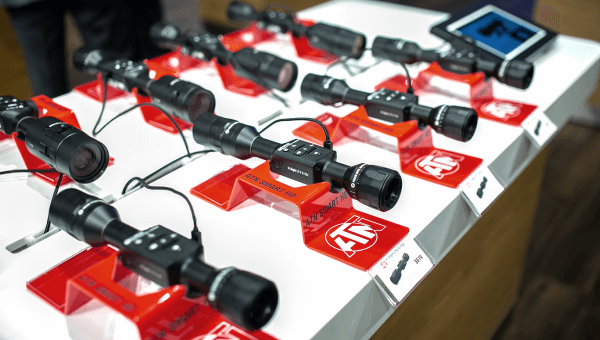
The right thermal imaging scope depends far less on the brochure and far more on what you actually do after dark. A guy walking bean fields for hogs at 300 yards needs something very different from someone punching through brush at close range or glassing a ridgeline at first light. So instead of ranking these by a single number, this roundup sorts the ATN ThOR 6 line by the job in front of you. Match the scope to the use case and the rest falls into place.
Best all-around: ATN ThOR 6 640x512 2-16x — same 640 sensor, a wider low end, and a lighter magnification range that feels natural at typical hunting distances.
Best value: ATN ThOR 6 384x288 2.5-20x — every 6th-gen feature at the friendliest tier, with a 384 sensor that still does the job inside a few hundred yards.
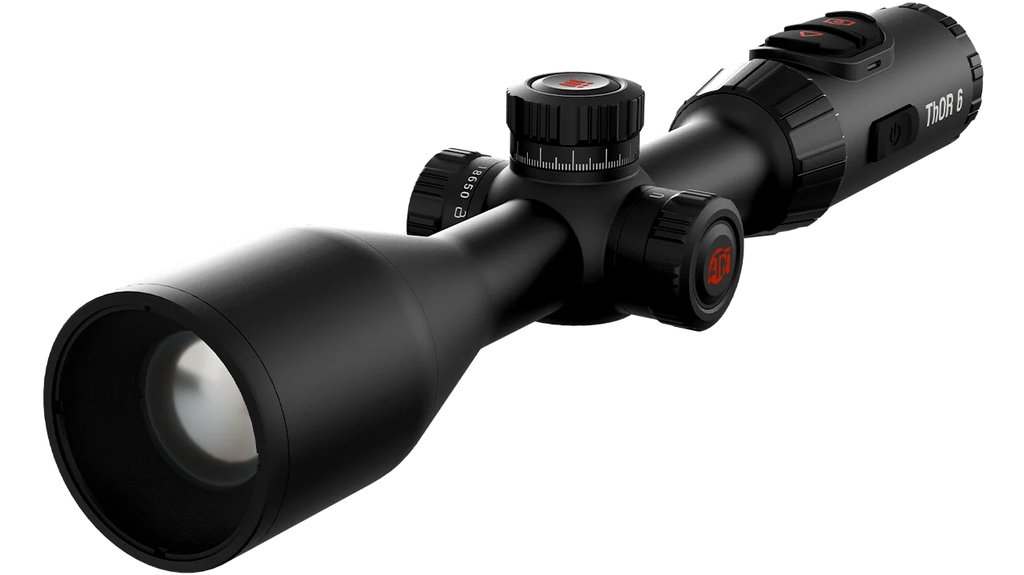
Why ATN's 6th-gen thermal scopes lead this list
ATN's 6th-generation ThOR line leads this list because it pairs modern sensors with image processing that finally makes those sensors easy to use in the field. All three scopes here share the same core: a low-noise thermal sensor rated at 15 mK or better, SharpIR AI to clean up the picture, and a full-HD OLED display so what you see is crisp instead of muddy. A NETD figure of 15 mK just means the sensor reacts to very small heat differences, which shows up as a high-contrast image where a hog's outline pops off cool ground instead of blurring into it. On top of that you get the practical stuff hunters actually use: Recoil Activated Video, Zeroing Freeze so you can hold the reticle steady while you dial, Hot Point Tracking, Picture-in-Picture, and Wi-Fi with ATN Connect 6 for streaming and firmware. The differences between the three come down to sensor resolution, magnification range, and detection distance, so the smart move is to start from your use case and work down.
ATN ThOR 6 640x512 3-24x — best overall
The ATN ThOR 6 640x512 3-24x is the best overall thermal imaging scope here because it does the most jobs well without forcing a compromise. The 640x512 sensor is the key. Think of it like the jump from standard definition to HD: more pixels means a hog at 250 yards reads as a hog, not a warm smudge you have to guess at. That extra detail is what lets you make a clean identification before you ever touch the safety.
Reach for open country
Reach is where this scope earns its spot as best overall. With a detection range out to 3650 meters and a 3-24x magnification band, it lets you spot a heat signature across a wide bean field and then zoom in to confirm what it is. Detection range is simply how far off you can pick up a heat source, and the high end of that number is a spotting figure, not a shooting figure. But the point stands: this scope sees far, and the 50mm F/1.0 lens pulls in enough thermal energy to keep that distant image usable.
The image quality you feel
The 640 sensor combined with SharpIR AI is the difference you feel every time you raise the rifle. Edges are defined, small animals hold their shape, and the picture stays clean when a warm animal crosses cool ground. The 8x digital zoom stacks on top of the optical range for those moments when you need one more push, and Picture-in-Picture keeps a magnified aiming window while you hold your field of view.
A real depredation night
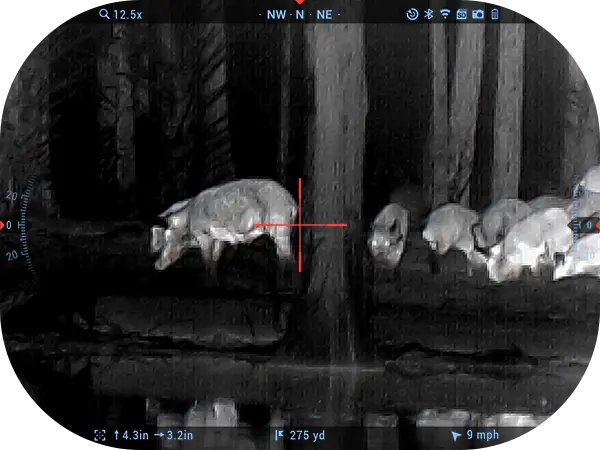
Put the specs to work on a common job: a farmer calls about hogs tearing up a soybean field that runs 400 yards out to a treeline. You set up on a rise at dark and start glassing at 3x, which gives you a wide enough view to sweep the whole field edge without panning constantly. A cluster of heat signatures shows near the far corner. Because the 640 sensor resolves real shape at that distance, you can tell it's a sounder and not a lone deer bedded in the beans, so you plan the approach instead of guessing. You close to a shooting lane, zoom to 12x to count the group and pick the lead sow, and the SharpIR image holds her outline steady against the cooler ground while you settle the reticle. That whole sequence — spot wide, identify at distance, confirm on the zoom — is exactly what the 640 sensor and the 3-24x band were built to do, and it's why open-country hunters keep this one on the rifle.
Who it's for: hunters working open ground, agricultural land, or anywhere shots can stretch out and identification matters at distance. Who it's not for: someone who only hunts thick timber at 75 yards and wants the lightest, cheapest option — the extra magnification and reach are wasted there. Grab it at the ATN ThOR 6 640 3-24x product page.
ATN ThOR 6 640x512 2-16x — best all-around
The ATN ThOR 6 640x512 2-16x is the best all-around pick because it keeps the flagship's 640 sensor but trades top-end magnification for a wider, more natural view. That 2x low end matters more than most people expect. When a group of hogs busts loose at 60 yards, a wide field of view keeps you from losing them, and you can still crank up to 16x to confirm an animal further out.
The same clean image, a friendlier range
You get the same 640x512 detail here as in the flagship, so identification stays sharp. What changes is the 35mm lens and 3100-meter detection figure, both a small step down from the 50mm flagship. For the vast majority of real hunting distances that difference never shows up. What you gain is a magnification band that spends more time in the range you actually shoot from, which makes the scope feel quicker and less fussy to run.
Built to keep going
This model carries the replaceable 18650 battery system, which is a quiet feature that saves nights afield. Roughly nine hours of runtime covers most sits, but when it does run low you swap a cell and keep hunting instead of packing up. Recoil Activated Video means every shot records itself, so you have the footage without fumbling for a button in the dark.
Who it's for: the hunter who does a bit of everything — timber edges, fields, calling coyotes, chasing hogs — and wants one scope that never feels wrong. Who it's not for: the specialist who only takes long pokes across huge fields and wants every last bit of reach; that's the 3-24x flagship's job.
ATN ThOR 6 384x288 2.5-20x — best value
The ATN ThOR 6 384x288 2.5-20x is the best value because it delivers the entire 6th-gen feature set at the most approachable tier. The 384x288 sensor has fewer pixels than the 640 models, so think of it as a lower-megapixel camera: the picture is still genuinely good and plenty for identifying game inside a few hundred yards, it just won't hold as much fine detail way out at the edge of its range.
Nothing important left out
The value here isn't about stripping features. This scope keeps SharpIR, Zeroing Freeze, Hot Point Tracking, Wi-Fi, RAV, and even adds six color palettes so you can pick the look that reads best for your eyes and conditions. The 15 mK sensitivity is the same class as its bigger siblings, so the image stays high-contrast and clean even though the pixel count is lower.
Light and easy to live with
At 1.74 lbs this is the lightest of the three, and the 2.5-20x range plus 25mm lens suit mid-range work well. Detection out to 2300 meters is more than enough to spot game long before you'd ever consider a shot. Who it's for: the hunter getting into thermal, or anyone whose shots stay inside a few hundred yards and who'd rather put the savings toward more nights out. Who it's not for: the long-range shooter who needs to identify small animals at the far end of a big field — the 640 sensor pays off there.
How to choose your thermal imaging scope
Choosing your thermal imaging scope comes down to matching the sensor and magnification to how far and where you hunt. Start with distance: if you regularly identify and shoot past 200 yards, the 640 sensor is worth it. If your shots stay closer, the 384 saves money without hurting you in the field. Then think about your terrain and shot count. Here's the short version:
- Resolution — 640x512 for detail and long-range ID; 384x288 when your distances are moderate and value matters more.
- Magnification range — a low 2x base helps in brush and on running animals; a high 20-24x top end helps confirm distant game.
- Detection range — a bigger number means more spotting room, but remember it's a detection figure, not a shooting distance.
- Refresh and processing — all three run smooth video and SharpIR, so moving targets stay clean across the lineup.
- Battery and weight — around nine hours and under two pounds on all three; the replaceable-cell 2-16x is the easiest to keep running on long sits.
- Shot count per outing — if you expect several shots on a busy hog night, Recoil Activated Video and the swappable cell on the 2-16x mean you can review every encounter and never run dry mid-sit.
One more thing worth weighing: be honest about how often you actually shoot at your longest distances versus how often you tell yourself you might. Most hunters overbuy magnification and underbuy field of view. If nine nights out of ten your animals show inside 150 yards and only the tenth stretches past 250, the all-around 2-16x will feel right far more often than the flagship's tall top end. Buy for your typical night, not your rare one, and the scope stays a pleasure to run.
How we picked these ATN thermal scopes
We sorted this list by use case, then judged each scope on the things that actually decide a hunt: sensor resolution, thermal sensitivity (NETD), detection range, video smoothness, weight, and battery life. Because the goal was matching a scope to a job, we weighted resolution and magnification band most heavily — those decide if you can identify an animal at your typical distance. We only considered the current 6th-gen ThOR 6 line; older ATN models weren't in the running. Honest trade-offs are baked into every pick above: the flagship costs you nothing in image quality but is overkill in thick timber, and the value 384 saves money but gives up detail at long range. This is an in-house comparison of ATN's own scopes, not an independent lab test, so treat it as a starting point and check the specs against your own hunting before you commit.
Frequently Asked Questions
What is the best all-around thermal imaging scope in the ATN ThOR 6 line?
For most hunters the ATN ThOR 6 640x512 2-16x is the best all-around choice. It uses the same 640 sensor as the flagship but with a wider low-end magnification, so it stays quick and natural at typical hunting distances while still zooming in to confirm distant game.
Do I need a 640 sensor or is 384 enough?
If you regularly identify and shoot past about 200 yards, the 640x512 sensor is worth it for the added detail. If your shots stay inside a few hundred yards, the 384x288 model gives you the same features and a clean image at a friendlier tier.
What does NETD 15 mK mean for image quality?
NETD measures how small a temperature difference the sensor can detect. A rating of 15 mK or better means the scope reacts to tiny heat differences, which produces a high-contrast picture where an animal's outline stands out sharply against cooler ground.
How far can these thermal scopes see?
Detection ranges run from 2300 meters on the 384 model up to 3650 meters on the 640 3-24x flagship. That figure is how far you can spot a heat signature, not how far you should shoot — identification and ethical shot distances are much closer.
How long does the battery last on the ATN ThOR 6?
All three scopes run roughly nine hours on their internal cells. The 640 2-16x adds a replaceable 18650 battery system, so on long sits you can swap in a fresh cell and keep hunting instead of stopping to recharge.
Can I record my hunts with these scopes?
Yes. Every ThOR 6 here includes Recoil Activated Video, which starts recording on the shot automatically, plus Wi-Fi and ATN Connect 6 so you can stream to your phone and pull footage off the scope later.
Which ATN ThOR 6 is best for long-range hunting?
The ATN ThOR 6 640x512 3-24x is the best long-range pick. Its 640 sensor, 3-24x magnification, 50mm lens, and 3650-meter detection range give you the reach and detail to spot and identify game across open country.
Ready to match a thermal imaging scope to the way you actually hunt? The ATN ThOR 6 lineup covers everything from long-range open country to lighter, value-focused mid-range work, all built on the same 6th-gen sensor and SharpIR image processing. Start with the best-overall ATN ThOR 6 640 3-24x, or browse the full range on the ATN thermal scope collection page to compare sensors, magnification, and detection ranges side by side. Pick by use case first, and the rest of the decision gets easy.
Created: August 5, 2026 · 19:53:44 UTC