The right thermal imager scope depends less on a spec sheet than on the ground under your boots. Open country rewards reach; thick timber punishes it, because you never see far enough to use the magnification you paid for. So this roundup sorts the current ATN ThOR 6 line by terrain - open, mixed, and close cover - and picks the imager that fits each. For the mixed ground most hunters actually walk, the answer is the ATN ThOR 6 640x512 2-16x.
Best for open country: ATN ThOR 6 640x512 3-24x - reach and top-end zoom for wide, treeless ground.
Best for close cover on a budget: ATN ThOR 6 384x288 2.5-20x - value-tier imager for short lanes and thick timber.
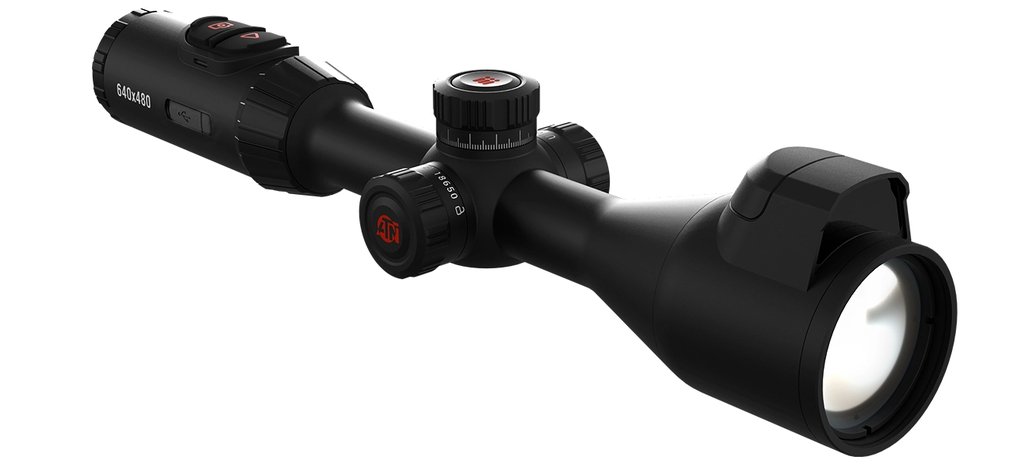
Why the 6th-gen ThOR 6 platform suits every terrain
Whatever ground you hunt, the ATN ThOR 6 line gives you the same imaging engine: a sub-15 mK sensor cleaned up by SharpIR, on a Full-HD OLED display. The reason to buy current is that the picture quality does not change with the terrain choice - only the magnification and sensor size shift to match how far you see. That means no terrain forces you onto an older, weaker imager to get the right field of view.
Mixed terrain: ATN ThOR 6 640x512 2-16x
Most hunting ground is neither pure prairie nor solid timber, and the ATN ThOR 6 640x512 2-16x is built for that in-between. The 2x base zoom opens a wide field of view for a timber lane, then climbs to 16x when a hog steps into a clearing across the field.
The detector that survives the transition
Resolution is the detector's pixel count, and the 640x512 grid keeps the image detailed whether you are framing something at 50 yards in cover or 200 in the open. More pixels means the picture does not fall apart when the terrain forces you to zoom. Who it's for: hunters whose ground changes from stand to stand. Who it's not for: a pure long-range shooter who never uses the wide end - the 3-24x reaches further.
Why the transition matters more than a single number
The trap on mixed ground is buying for one extreme and regretting it at the other. A scope set up purely for long open shots leaves you fumbling when a hog steps out of the brush at 40 yards, and a scope built only for cover feels blind when the herd feeds out into the middle of a field. The 2-16x avoids both traps because a single twist of the zoom takes you from a wide cover view to a tight field hold, and the 640 sensor keeps the picture honest at every stop in between. For a hunter who cannot predict which terrain the night will hand them, that adaptability is worth more than a bigger reach number that only helps in one place.
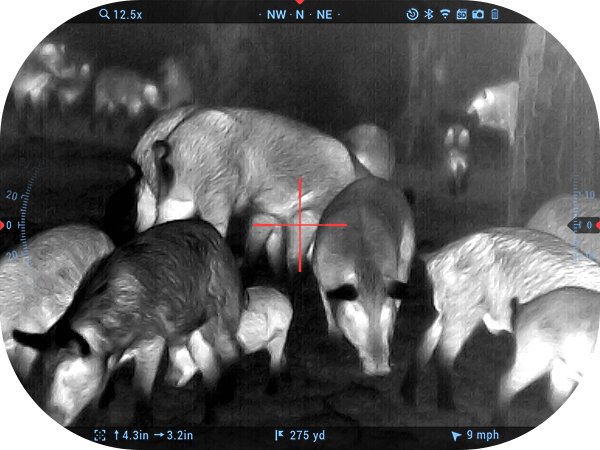
Open country: ATN ThOR 6 640x512 3-24x
On wide, treeless ground - cut fields, pasture, open desert - you see game far off and you need to reach it. The ATN ThOR 6 640x512 3-24x has the 50 mm lens and 3-24x zoom for exactly that, with detection near 3,650 meters and 8x digital zoom on top.
The terrain trade-off
That reach costs you close-in width; the 3x base is narrower than the 2x, so it is slower to pick up an animal that appears at your feet. Who it's not for: a timber or river-bottom hunter who rarely sees past 100 yards.
How the lens gathers the far image
The 50 mm objective on this variant does more than magnify - it gathers infrared energy, and a larger lens pulls in more of the faint heat a distant animal gives off. On open ground where a coyote might be a small, cool signature at 300 yards, that light-gathering is what lets the sensor build a usable image instead of a faint speck. Combined with SharpIR cleaning the picture at high zoom, it is the reason the 3-24x holds identifiable detail out where the other variants start to lose it. If your terrain is genuinely wide and treeless, the bigger lens is not a luxury; it is the working part of the scope.
Close cover on a budget: ATN ThOR 6 384x288 2.5-20x
In thick timber and short shooting lanes, you rarely need long identification range, which makes the ATN ThOR 6 384x288 2.5-20x a smart terrain fit. It keeps the full ThOR 6 feature set and a clean, processed image; the 384x288 sensor gives up distant detail you would not use in cover anyway.
Who it fits
Who it's for: the close-cover hunter who wants a real current imager at the value tier. Who it's not for: someone who also hunts open ground and would feel the shorter reach.
Matching the scope to short shooting lanes
There is no penalty for a shorter-reaching sensor when the terrain itself limits your shots. A river bottom or a cutover with 80-yard lanes never lets you see far enough to use a 640's extra distant detail, so paying for it would be spending on capability the ground will not let you cash in. The 384 puts your money where the close-cover hunter actually uses it: a clean, well-processed image at the ranges the terrain allows, plus the same recording, palettes and tracking as the pricier models. It is the honest terrain fit, not a stripped-down compromise, for anyone whose hunting stays inside the trees.
How to choose by your terrain
Let the ground decide, not the spec that looks biggest:
- Mixed ground? - The 640 2-16x flexes from cover to field.
- Wide open? - The 640 3-24x gives the reach the terrain demands.
- Thick cover, tight budget? - The 384 2.5-20x fits short lanes at the value tier.
- Long night sits regardless of terrain? - All three run about nine hours on replaceable 18650 cells.
- Ground that changes with the season? - Green cover in spring, bare fields in fall - the 2-16x adapts to both.
The mistake to avoid is buying the scope with the biggest headline number and assuming it covers every situation. Reach you cannot use in timber is wasted, and width you never need in open country is a compromise on detail. Walk your ground honestly, picture where animals actually appear and how far your shots really stretch, and match the variant to that reality. The ThOR 6 line gives you a fitting choice for every terrain, so the only real error is buying for a landscape you do not hunt.
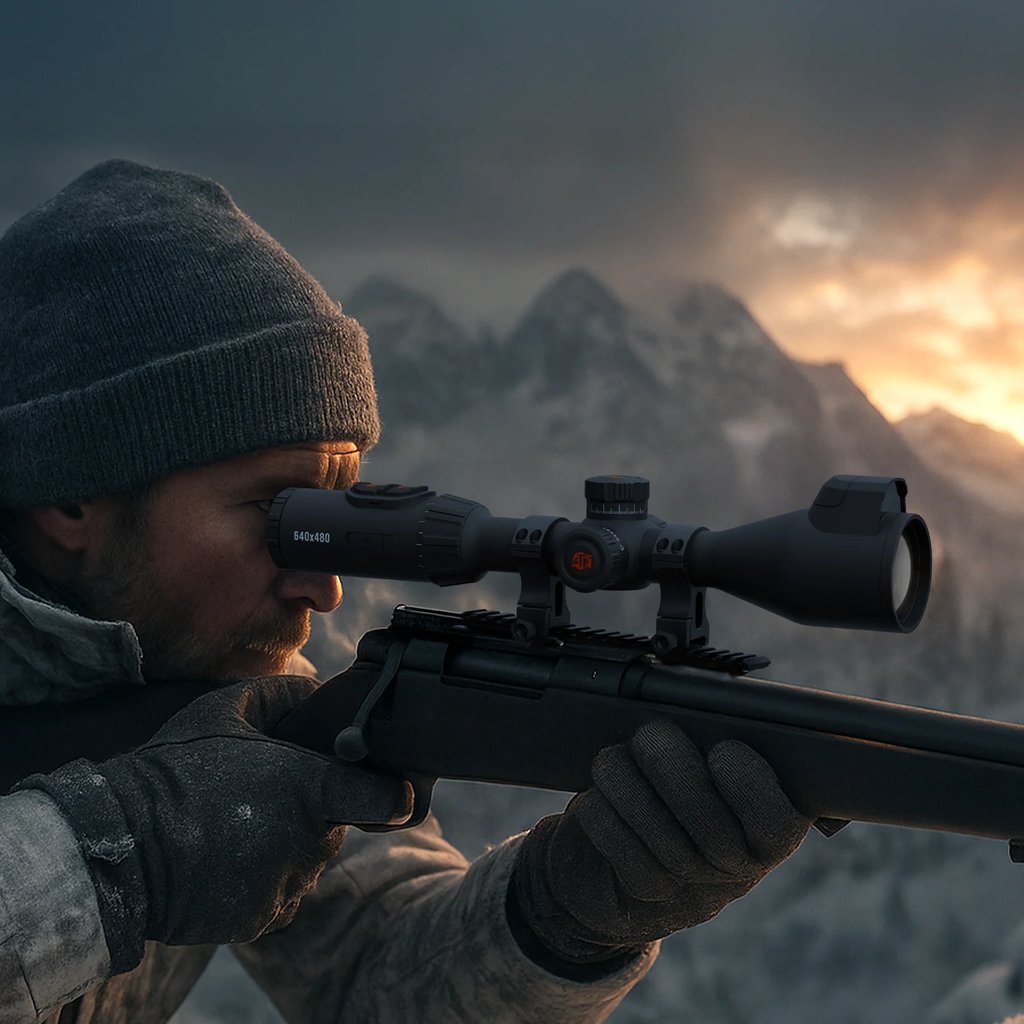
The bottom line on choosing by terrain
Terrain is the most honest guide to which imager belongs on your rifle, because it dictates how far you will ever need to see. Mixed ground that shifts from cover to field rewards the flexible 640 2-16x; wide open country rewards the reaching 640 3-24x; close timber and short lanes are well served by the value 384. None of these is a better scope in the abstract - each is the better scope for a particular kind of ground. Walk your property, note where animals actually appear and how far your shots really carry, and buy the variant that matches that reality. Do that and the imager never fights your terrain; it simply shows you what is out there, framed the way your ground demands.
How we picked these ATN thermal imager scopes
We matched the current 6th-gen ThOR 6 line to terrain rather than a leaderboard, weighing magnification spread and field of view against detection range, and sensor resolution and NETD against the distances each terrain actually presents - plus battery and weight. Only current-generation models were considered. The honest trade-off is that no single scope is ideal for every ground: the open-country 3-24x is narrow up close, and the value 384 gives up reach. This is our own comparison of ATN's range, not an independent lab test, so pick for the ground you hunt most.
Frequently Asked Questions
Which thermal imager scope suits mixed terrain?
The ATN ThOR 6 640x512 2-16x is the best mixed-terrain fit because its 2x base gives a wide view in cover while the 640 detector keeps the image sharp out in the field. It flexes across both without swapping optics.
Do I need high magnification for open country?
In open country you often see game far off, so the reach and top-end zoom of the ATN ThOR 6 640x512 3-24x help. In cover, high magnification is wasted because the terrain limits how far you can see anyway.
Is a lower-resolution imager fine for thick timber?
Yes. In close cover you rarely identify game past a couple hundred yards, so the ATN ThOR 6 384x288 2.5-20x has more than enough detail there and saves money over the 640 models.
Does terrain change how well thermal detects heat?
Cover and vegetation can block a heat signature the way they block visible light, so dense timber shortens effective range. All three ThOR 6 imagers share sub-15 mK sensitivity, which helps them separate faint heat from the background.
Can one scope cover several different properties?
For most hunters the ATN ThOR 6 640x512 2-16x is the best single choice across varied ground because of its wide-to-tight zoom and high-resolution detector. Only if you hunt almost entirely open or almost entirely close would a specialist fit better.
How heavy are these on the rifle for walking terrain?
The 640 models weigh about 1.83 lbs and the 384 about 1.74 lbs. That is manageable for a night of walking varied ground, and rifle balance usually matters more than the exact figure.
Choose a thermal imager scope for the ground you actually hunt. Our mixed-terrain pick is the ATN ThOR 6 640x512 2-16x, with the 3-24x for open country and the 384 2.5-20x for close cover on a budget. Compare the full current range on the ATN thermal scope collection page and let your terrain make the call.
Created: August 5, 2026 · 19:53:44 UTC