A thermal imager scope lives or dies on the picture it paints from heat. Two scopes can list the same magnification and still show wildly different images once a hog steps out at 200 yards - the difference is in the sensor and the processing behind it. That is the lens this roundup uses: we rank the current ATN ThOR 6 line by image quality first, magnification second. The sharpest imager of the three is the ATN ThOR 6 640x512 3-24x.
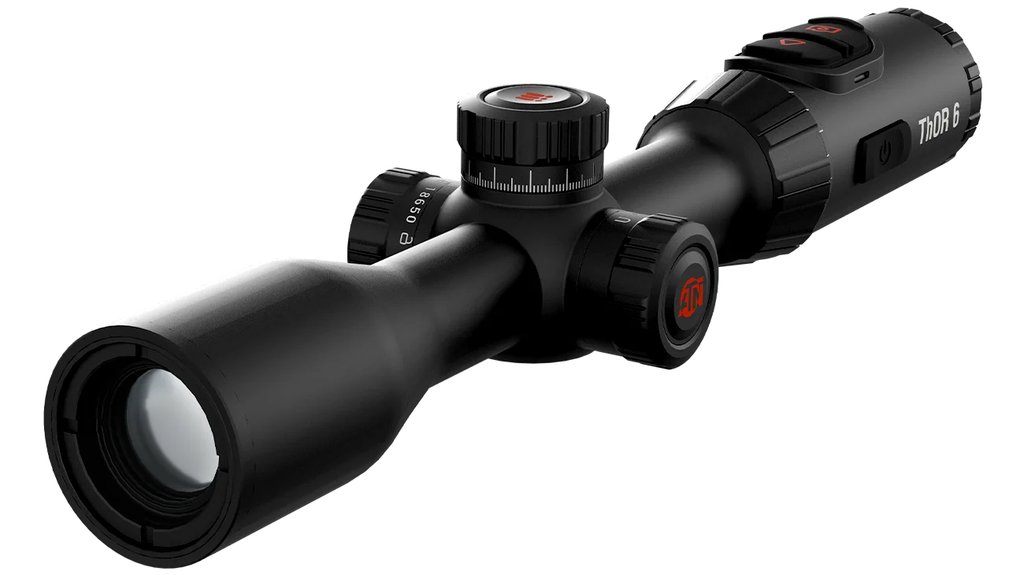
Best balanced image: ATN ThOR 6 640x512 2-16x - same 640 detector with a wider view for scanning.
Best value image: ATN ThOR 6 384x288 2.5-20x - a clean, full-featured picture at the value tier for closer work.
Why ATN's 6th-gen imaging is the reason to buy current
The ATN ThOR 6 line runs a sub-15 mK sensor through SharpIR AI image enhancement, which cleans noise and sharpens edges in real time. That is what separates a modern imager from an older thermal that shows a fuzzy white ghost. NETD - the smallest temperature difference the sensor can detect - is what lets faint heat like a bedded animal separate from cool ground; a lower millikelvin number means a more sensitive, higher-contrast picture. Every model below shares that sensitivity floor.
ATN ThOR 6 640x512 3-24x - the sharpest imager
The ATN ThOR 6 640x512 3-24x produces the most detailed heat image in the range. The 640x512 detector packs the most pixels, and the 50 mm lens gathers more of the scene's infrared energy, so the picture stays readable as you zoom.
Pixels are the picture
Resolution is the detector's pixel count, and it maps almost directly to image quality - more dots, more detail. The gap from 384 to 640 is like moving from standard definition to HD: the same coyote resolves into legs, ears and posture instead of a blob. That extra information is what lets you make an ethical identification before you commit to a shot.
Processing that holds detail on zoom
SharpIR runs on top of the raw sensor feed, and it matters most at high magnification where noise usually creeps in. Push toward 24x plus the 8x digital zoom and the image degrades far less than an unprocessed thermal would. Who it's for: hunters who need to identify game at real distance. Who it's not for: a close-cover hunter who never uses the top end - the wider 2-16x gives a better close image.
ATN ThOR 6 640x512 2-16x - the wide, clean scanner
The ATN ThOR 6 640x512 2-16x shares the same 640 detector, so the picture quality per pixel is identical - it simply frames wider at the bottom of its zoom. That wide, clean image is ideal for sweeping a field edge and picking up the first sign of movement.
Where the wider image wins
Field of view is how much you see at once, and a 2x base shows more ground than a 3x base. For scanning and situational awareness, that is a real imaging advantage. Who it's not for: the shooter who mainly wants maximum detail on a far target - the 3-24x reaches further with the same detector.
Palettes that change how the image reads
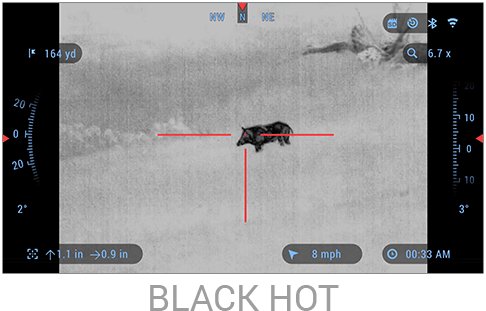
Because this variant is a scanner first, the way it renders heat matters. White Hot shows warm targets bright against a dark background and is the everyday default; Black Hot inverts that and many hunters find it easier for picking out a distant animal against sky or open ground; the color palettes push a hot signature forward when the scene is busy. Being able to flip the picture to suit the conditions is part of what makes a good imager, and it costs you nothing to try each one mid-hunt. On a wide-scanning scope, that flexibility turns a marginal signature into a confident spot.
ATN ThOR 6 384x288 2.5-20x - clean image, value tier
The ATN ThOR 6 384x288 2.5-20x still runs SharpIR on a sub-15 mK sensor, so the image is clean and well-processed - just built on fewer pixels. Inside a couple hundred yards, the picture is more than good enough to identify and shoot; the difference shows only when you push far out.
Who it fits
Who it's for: the buyer who wants a genuinely good imager at the value tier for mid-range work. Who it's not for: someone who needs to pick apart detail at 300 yards, where the 640 detectors pull ahead.
The image on the display, not just the sensor
It is easy to fixate on the sensor and forget that you never see the raw sensor - you see the display. All three ThOR 6 models, the 384 included, push the processed image to a Full-HD OLED display, so the clean picture the sensor and SharpIR produce is actually shown to your eye at full fidelity. A coarse display can waste a good sensor; a sharp one lets even the 384's image look crisp and well-defined. That pairing is why the value model still delivers a satisfying imager experience rather than a compromised one, and it is a big reason a first-time buyer is not disappointed by the picture.
How to choose a thermal imager scope
Judge an imager on the picture it delivers at your distances, in this order:
- Resolution first - it sets the ceiling on detail; 640 for long identification, 384 for closer work.
- Sensitivity (NETD) next - a lower mK number means faint heat stands out; all three sit at sub-15 mK.
- Processing - SharpIR keeps the image clean as you zoom, so detail survives magnification.
- Magnification range last - it frames the picture but cannot add detail the sensor didn't capture.
- Display quality - a Full-HD OLED shows the processed image at full fidelity; all three ThOR 6 models carry one.
A useful way to think about it: the sensor decides what information exists, the processing decides how clean that information looks, and the display decides how much of it reaches your eye. A thermal imager scope is only as good as the weakest link in that chain, which is why the ThOR 6 line keeps all three strong across every variant. When you compare imagers, resist the urge to buy on magnification alone - a big zoom number on a small, unprocessed sensor produces a large, blurry picture, while a modest zoom on a high-resolution sensor gives you a small, sharp one you can actually shoot from. Detail beats size every time in the field.
The bottom line on picking an imager
The best thermal imager scope is the one that shows you a clean, identifiable picture at the distances you actually shoot - nothing more complicated than that. Resolution sets the detail, sensitivity pulls faint heat off the background, processing keeps the image sharp as you zoom, and the display delivers it all to your eye. Get those four right for your range and the magnification number becomes a framing choice, not a quality one. For long identification the 640x512 3-24x is unmatched in the line, the 640 2-16x gives the same detail with a wider scanning image, and the 384 keeps a clean picture at closer ranges for less. Buy the imager whose picture you can trust at your distance, and it will earn its place on the rifle every night out.
How we picked these ATN thermal imager scopes
We judged the current 6th-gen ThOR 6 line the way you judge an imager - on the picture. That meant weighing sensor resolution, NETD, and SharpIR processing first, then magnification range, detection distance, battery and weight against real hunting distances. Only current-generation models qualified. The honest trade-off is that the highest-resolution model costs more and the value 384 gives up detail far out - each is a deliberate point on the range. This is our own hands-on comparison of ATN gear, not an independent lab measurement, so match the image quality you need to how far you actually shoot.
Frequently Asked Questions
What makes one thermal imager scope look better than another?
Sensor resolution and thermal sensitivity set the image quality, and processing like SharpIR cleans it up. A 640x512 detector with sub-15 mK sensitivity, as on the ATN ThOR 6 640x512 3-24x, produces a sharper, higher-contrast picture than a coarser sensor at the same magnification.
Does higher magnification mean a better image?
No. Magnification frames the picture but cannot add detail the sensor never captured, so zooming a low-resolution imager just enlarges a blurry image. Resolution and sensitivity decide image quality; magnification decides framing.
Is the 384 sensor good enough for a clear image?
Yes, within its range. The ATN ThOR 6 384x288 2.5-20x uses the same processing and sensitivity as the 640 models and produces a clean image inside a couple hundred yards. The 640 detectors simply hold detail farther out.
What does SharpIR actually do to the image?
SharpIR is ATN's AI image enhancement that reduces noise and sharpens edges in real time. Its benefit is clearest at high zoom, where it keeps the image readable instead of letting it turn grainy.
Can I see the thermal image in daylight?
Yes. A thermal imager scope reads heat, not visible light, so the image forms in full daylight as well as total darkness. That makes the ThOR 6 useful for daytime hog control and night predator work alike.
How far can I identify game through these imagers?
Detection - spotting that something is there - reaches thousands of meters, but identification is shorter and depends on resolution. The 640x512 3-24x holds identifiable detail farthest; the 384 is best for closer identification.
If image quality is what you care about in a thermal imager scope, start with the sensor. The ATN ThOR 6 640x512 3-24x paints the cleanest, most detailed picture at distance, with the 640 2-16x and 384 2.5-20x covering wider scanning and value work. See the full current lineup on the ATN thermal scope collection page and choose the imager that resolves what you need to see.
Created: August 5, 2026 · 19:53:44 UTC