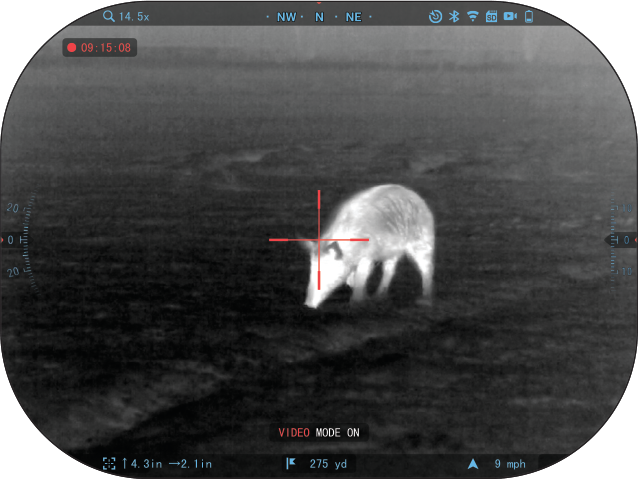
Every part of a thermal image scope exists to do one job: turn invisible heat into a picture your eye can trust. Pull that picture apart and you find a short assembly line — a sensor counts the heat, AI processing cleans it, a display paints it, and a color palette decides how it reads to you. Change any one link and the picture on the glass changes with it. Rather than rank these scopes by a single headline number, I want to walk each image-forming feature and show what it does to what you actually see, using the ATN ThOR 6 640x512 2-16x as the lead example.
Best for the longest reach: ATN ThOR 6 640x512 3-24x — the same image quality with more optical zoom for distant detail.
Best value: ATN ThOR 6 384x288 2.5-20x — the lightest option and a friendlier tier that still runs every image-forming feature.
Why ATN's 6th-gen scopes build a better thermal image
A clean thermal image is not one feature — it's every stage of the pipeline pulling its weight, and the 6th-gen ThOR line upgrades each stage. The sensor gathers heat, the processor sharpens it, and the display shows the result; a weak link anywhere drags the whole picture down. Every scope here runs a NETD rated at 15 mK or lower — NETD is the smallest temperature difference the sensor can resolve, and the lower it goes the less grainy and more detailed your picture looks. SharpIR AI then sharpens edges live, a 50Hz-class refresh keeps motion from smearing, and a Full-HD OLED puts all that detail in front of your eye without washing it out.
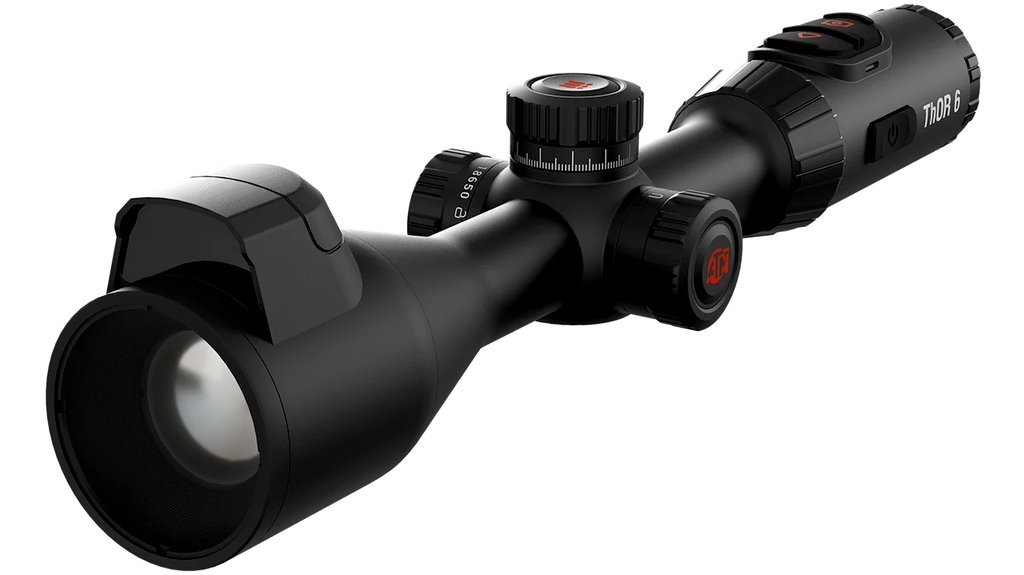
ATN ThOR 6 640x512 2-16x — the best all-round thermal image
This is the scope that shows what a full 6th-gen image pipeline looks like when nothing is compromised. The ATN ThOR 6 640x512 2-16x pairs the complete 640x512 sensor with a 35mm F/1.0 lens and a 2x base magnification, and that combination hands you a wide, sharp, easy-to-read picture. A 640x512 sensor works like the megapixel count on a camera: more picture elements means each warm object is drawn with more real detail rather than a coarse handful of dots.
Sensor resolution — the detail floor
Everything downstream can only sharpen what the sensor first captured, so resolution sets the ceiling on detail. The 640x512 array gives roughly 3.6 times the picture elements of a 384x288 sensor, which is why fine features on a distant object stay legible instead of blurring into one shape. SharpIR AI then works on that richer starting picture, so the edges it sharpens are real detail and not guesses.
SharpIR AI, refresh and the OLED display
SharpIR AI cleans and sharpens the image in real time, so a warm object keeps a crisp outline as you magnify instead of turning to mush. The 50Hz-class refresh rate matters the instant anything moves — it draws the frames fast enough that a running animal flows smoothly rather than smearing across the display. The Full-HD OLED is where you finally see it all, with the contrast to keep bright heat and dim background both readable. Picture-in-Picture adds a magnified aiming window without hiding your wider view.
Who it's for / not for
It's for anyone who wants the best-balanced thermal image — full detail, wide view, smooth motion — without paying for reach they won't use. It's not for the shooter who mainly needs maximum long-range magnification; the 3-24x below stretches farther. Either way the picture starts from the same full 640 pipeline in the ATN ThOR 6 640x512 2-16x.
ATN ThOR 6 640x512 3-24x — same image, more reach
If your image needs to hold together far out, the ATN ThOR 6 640x512 3-24x keeps every image-forming feature identical and simply adds optical zoom. Same 640 sensor, same SharpIR AI, same OLED — but a fast 50mm F/1.0 lens, 3-24x optical range and 8x digital zoom let you enlarge a distant object while the sensor still feeds the detail to make that zoom worthwhile.
Why magnification only helps a strong image
Zoom enlarges what the sensor already captured; it adds no new detail of its own. That's why the 3-24x pays off on the 640 sensor — there's real detail to enlarge, so a far object gets bigger and clearer rather than just bigger and blurrier. A 3650 m detection range means you can find heat well before you dial in, and Zeroing Freeze plus RAV support the precise long work.
Who it's for / not for
For the shooter who reaches out across open ground and wants distant detail. Not for someone doing wide, close work where the 2-16x base view frames a scene better without wasted magnification.
ATN ThOR 6 384x288 2.5-20x — the value image tier
The ATN ThOR 6 384x288 2.5-20x lowers the sensor to 384x288 to reach a friendlier tier, and at 790 g it's the lightest here. That step trims the detail floor a little — fewer picture elements means slightly less fine resolution at the far edge — but every other image-forming stage stays 6th-gen, so the picture is still crisp and honest for most work.
What the image keeps at this tier
You keep the same processing brain: SharpIR AI cleaning the picture, the low NETD holding contrast, the smooth refresh, the Full-HD OLED, and six color palettes so you can move between white-hot, black-hot and iron to suit the scene and your eye. A 2300 m detection range covers the vast majority of real distances, and the difference from the 640 only really surfaces when you push detail to the extreme edge.
Who it's for / not for
For the buyer who wants a genuine 6th-gen image without the flagship spend and who mostly works at moderate range. Not for the detail chaser who wants every last pixel far out — that's the 640's job.
How to choose a thermal image scope by its features
Decide which part of the picture matters most for how you shoot, then pick the scope that leads on it. Each feature shapes a different piece of what you see.
- Detail — driven by sensor resolution; the 640 models set the highest detail floor for identifying objects far out.
- Contrast — driven by NETD; all three sit at ≤15 mK so warm objects lift cleanly off cool backgrounds.
- Edge clarity — SharpIR AI sharpens the picture live on every model so outlines stay crisp as you zoom.
- Smooth motion — a 50Hz-class refresh keeps a moving object flowing instead of smearing.
- Readability — the Full-HD OLED and six color palettes let you tune how the image reads to your eye.
How we picked these ATN thermal scopes
This is an in-house comparison of ATN's own current lineup, not an independent lab review. We stayed inside the 6th-gen ThOR line and judged each scope on a single question about image quality: how well does the full feature chain build a picture you can read and trust?
- Sensor resolution — the detail floor for the whole image, which is why the 640 models lead over the 384.
- NETD (thermal sensitivity) — all rated ≤15 mK, the smallest temperature gap the sensor sees, for a cleaner, less grainy picture.
- SharpIR AI and refresh — real-time edge sharpening and a 50Hz-class refresh so the picture stays crisp and smooth in motion.
- Display and palettes — a Full-HD OLED and six color palettes that decide how readable the image is to your eye.
- Weight and battery — carry comfort and roughly 9 hours of runtime on swappable cells for real time behind the glass.
Honest trade-offs: the 640 3-24x delivers the most detail at the longest range but sits at the top tier and offers more magnification than close work needs. The 384 trims the detail floor at the far edge. None of these is a daytime-only day scope — they're thermal instruments. Check the features against how you actually shoot before you buy.
Frequently Asked Questions
What features actually build the image in a thermal image scope?
A short chain of them: the sensor's resolution sets how much detail is captured, its NETD sets the contrast, SharpIR AI sharpens the edges, the refresh rate keeps motion smooth, and the OLED and color palettes decide how it reads to your eye. The ATN ThOR 6 line upgrades every stage of that chain.
Does sensor resolution or magnification matter more for image detail?
Resolution. Magnification only enlarges what the sensor already captured, so zooming a low-resolution image just makes a blurry picture bigger. A 640x512 sensor, like the one in the ATN ThOR 6 640x512 2-16x, gives you far more real detail to enlarge, which is why the 640 models look sharper far out.
What does NETD do to the picture?
NETD is the smallest temperature difference the sensor can resolve. A lower NETD, like the ≤15 mK on these ThOR 6 scopes, means small heat differences show up as clear contrast, so the image looks less grainy and warm objects separate cleanly from a cool background.
Why does refresh rate matter for a thermal image?
Refresh rate is how many frames the scope draws per second. A 50Hz-class refresh, like on the ATN ThOR 6, is fast enough that a moving object flows smoothly across the display instead of smearing or stuttering, which keeps a running animal readable.
What do the color palettes change about the image?
Color palettes decide how the captured heat is displayed to your eye. The ATN ThOR 6 384x288 offers six, so you can switch between white-hot, black-hot and iron looks to whichever gives you the cleanest read against a given background without changing the underlying detail.
Is the 384 sensor's image good enough for real use?
For most work at moderate range, yes. The ATN ThOR 6 384x288 keeps the same SharpIR AI, low NETD, refresh and OLED as the 640 models; it just captures fewer picture elements, so the difference shows up mainly in fine detail at the far edge.
How long can you run these scopes behind the glass?
All three run roughly 9 hours on two 18650 cells, and you can swap fresh cells in the field even in the dark. That gives you a long session watching a clean image without going blind mid-outing.
If you want a thermal image scope whose whole feature chain builds a picture you can read and trust, start with the ATN ThOR 6 640x512 2-16x — the best-balanced image in this group. Need to reach farther? The 640 3-24x adds optical zoom on the same pipeline, and the 384 value pick keeps every image-forming feature at a lighter tier. Compare the full 6th-gen range, feature by feature, on the ATN thermal scope collection and match the picture to the way you actually shoot before you commit.
Created: August 5, 2026 · 19:53:44 UTC