Ask ten hunters what makes a good thermal image rifle scope and most will say "a strong sensor." That is only half the story. What you actually see downrange is the product of the sensor working together with the processing behind it — how many pixels are painting the target, how the software cleans up the raw signal, how small a temperature gap the detector can resolve, and how many frames per second reach your eye. Get all four of those right and a coyote steps out of the treeline as a crisp, readable shape. Get them wrong and the same animal is a fuzzy grey smudge you cannot confidently identify, let alone shoot at. This roundup is organized around exactly those image-quality features, because on a rifle scope the picture is the whole point.
Short answer: For the cleanest, most detailed thermal picture, the ATN ThOR 6 640x512 3-24x is our top pick — its high-resolution sensor, SharpIR AI enhancement, low NETD and smooth refresh combine into an image sharp enough for confident long-range identification. The 2-16x is the all-around value, and the 384 model brings the same image tech at a friendlier tier.
Quick answer: top ATN picksBest overall image quality: ATN ThOR 6 640x512 3-24x — flagship resolution, high magnification, cleanest picture for long range.
Best all-around value: ATN ThOR 6 640x512 2-16x — the same high-res sensor and image tech in a lighter, mid-tier package.
Best value entry: ATN ThOR 6 384x288 2.5-20x — full SharpIR and low NETD at the value tier for mid-range hunting.
Why ATN's 6th-generation thermal scopes lead our list
A word on how thermal actually forms a picture, since it changes how you read the rest of this roundup. Unlike night vision, which amplifies faint visible light, a thermal scope draws its image from heat — every object in the frame is painted by its own temperature, which is why a warm-blooded animal lights up against cooler ground and why nothing you see depends on ambient light at all. That also means the quality of the image is set almost entirely by how finely the scope can distinguish temperatures and how much detail it can render, not by how bright the moon is. So the four features this article keeps returning to — resolution, SharpIR, NETD and refresh — are not marketing checkboxes; they are the direct levers on what your eye actually receives.
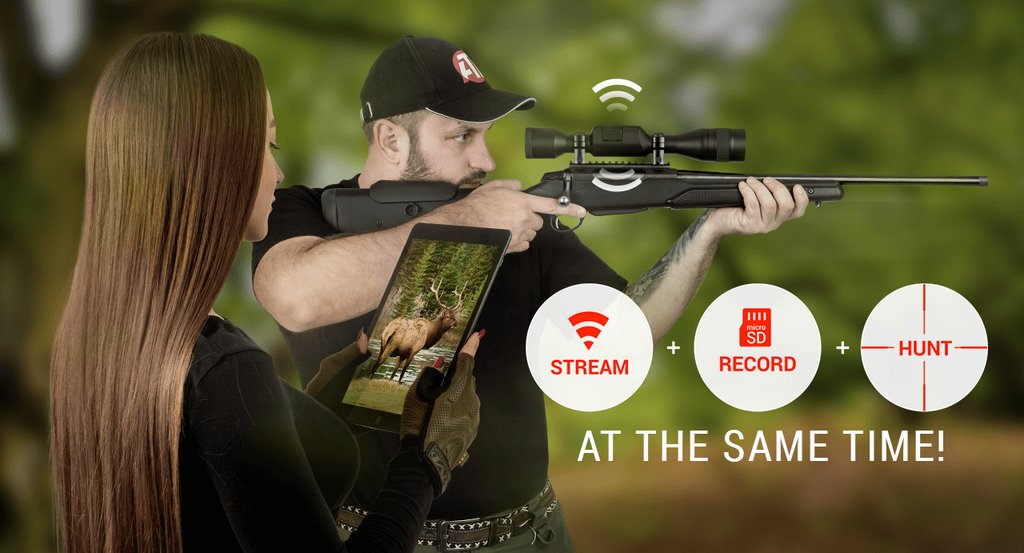
Every scope in this roundup is built on ATN's current 6th-generation platform, and that matters because the image-quality tools are shared across the line rather than reserved for the top model. SharpIR is ATN's AI image enhancement — it studies the raw thermal frame and sharpens edges, lifts fine detail and tames noise before the picture ever reaches your eye, so the difference between a blob and a recognizable animal often comes down to this processing rather than the sensor alone. Recoil Activated Video captures your shot automatically, Zeroing Freeze lets you lock the reticle while you dial your point of impact, and Picture-in-Picture floats a magnified aiming window so your zoom never costs you situational awareness. Hot Point Tracking tags the warmest object in frame, and built-in Wi-Fi with ATN Connect 6 streams that live image to your phone. All three scopes drive a Full-HD OLED display and carry an IP67 seal, so what you get across the tiers is the same image engine — you are really choosing how much sensor and magnification you put in front of it. You can see the full family on the thermal scopes page.
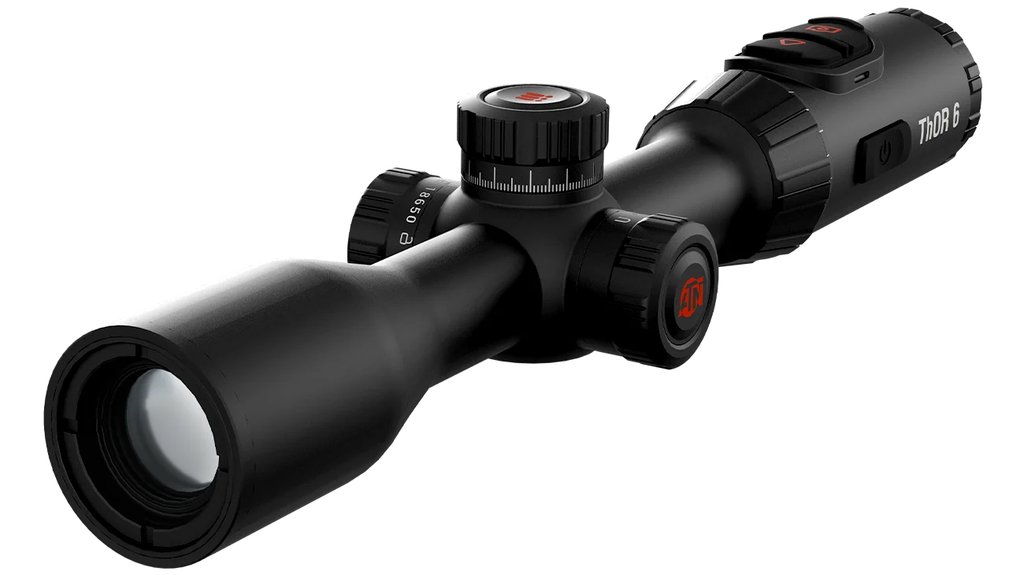
ATN ThOR 6 640x512 3-24x — the sharpest picture in the lineup
The ATN ThOR 6 640x512 3-24x is the model to reach for when the image itself is your priority. A 640x512 sensor packs roughly four times the pixels of a 384x288 detector, and that density is what carries detail when you zoom — think of it as stepping from standard definition to HD when you push in on a distant target. Where a lower-resolution scope turns to mush past a certain magnification, this one keeps enough pixels on the animal to read its posture, tell a hog from a stump, and place a shot with confidence. Pair that resolution with a detection range of 3650 m and the 3-24x optical zoom range, and you have a scope that resolves a clean picture at distances where cheaper thermal simply gives up.
What the image tech buys you
The sensor is only the raw feed; SharpIR is what polishes it. On this scope the AI enhancement has the most pixels to work with, so its edge-sharpening and noise reduction have the biggest payoff — fine detail like an ear, a tail or the line of a back survives the processing instead of being smoothed away. The scope carries an <=15 mK NETD rating — the lower the number, the cleaner the picture in damp, foggy air — which means the tiny heat difference between an animal and cool, wet ground still registers as usable contrast on a miserable night. And it runs a 50 Hz refresh rate, which keeps a moving animal smooth instead of smearing into a blur as it trots across your field of view. Those three working together are why this is the sharpest image in the roundup.
There is a practical benefit to that resolution beyond raw sharpness: it changes how far you can trust your identification. When each pixel covers less of the target, subtle cues you rely on — the difference between a coyote's tail and a fox's, the bulk of a mature boar versus a shoat — stay legible at magnification instead of washing into a single warm mass. The 50 mm lens gathers plenty of thermal energy to feed that high-resolution sensor, and Picture-in-Picture means you can hold a wide scanning view while a zoomed aiming window sits in the corner, so nothing sneaks in from the flanks while you study a distant animal. Hot Point Tracking, meanwhile, quietly flags the warmest thing in the frame, which is genuinely useful when you are working a big field and want your eye pulled straight to the animal rather than sweeping empty ground. None of this replaces glassing skill, but it stacks the odds toward a confident, ethical shot.
Who it is for — and who it is not
This is for the hunter who shoots at real distance and refuses to compromise on picture clarity — someone working open ground, long lanes, or anyone who wants the most detail a thermal image can give at high magnification. It is the flagship tier and it weighs 830 g, so if your hunting is all inside close cover where you rarely zoom past low power, you are paying for resolution and reach you will not use. For that hunter, one of the models below is the smarter buy.
ATN ThOR 6 640x512 2-16x — the same clean image, more balanced
The ATN ThOR 6 640x512 2-16x keeps the exact 640x512 sensor and the same <=15 mK NETD as the flagship, so the underlying image quality is identical — you are simply trading the top end of magnification and a little detection range for a wider, more usable low-power view. Its 2-16x zoom range starts lower, which makes it faster to get on a close animal, and detection still reaches 3100 m. For most hunters chasing hogs and predators at practical ranges, this is where the high-resolution picture meets everyday usability.
What the image tech buys you
Because the sensor and NETD match the flagship, SharpIR is working on the same rich data here — the picture that reaches your eye is just as clean, and the low NETD still cuts through humid, low-contrast air. The replaceable 18650 battery system is a quiet advantage on this model: when a cell dies mid-hunt you drop in a fresh one instead of waiting on a charge, so a long clean image session is never cut short by power. It is the practical choice for a hunter who wants flagship image quality without the flagship's reach.
The lower starting magnification is worth dwelling on, because it directly shapes the image you work with most of the night. Starting at 2x gives you a genuinely wide field of view for scanning, so when something moves at the edge of a food plot you catch it fast and can walk your zoom up smoothly rather than hunting blind through a narrow tube. The 35 mm lens keeps the package trim and the balance neutral on the rifle, which matters when you are holding on an animal that will not stand still. Recoil Activated Video runs here just as it does on the flagship, capturing the moment of the shot automatically so you can review your image and your hit later, and Zeroing Freeze makes sighting in painless by holding the reticle steady while you correct. For the majority of hunters whose shots land inside a few hundred yards, this scope's picture is indistinguishable from the flagship's — you simply are not paying for reach you rarely use.
Who it is for — and who it is not
Reach for the 2-16x if you want the best image the sensor can produce but do most of your shooting inside a few hundred yards, and you value a quick, wide field of view over maximum zoom. It is not the pick if you routinely stretch to the far edge of thermal detection — that is the flagship's job — but for all-around high-resolution hunting it is hard to beat.
ATN ThOR 6 384x288 2.5-20x — value pick with the full image engine
The ATN ThOR 6 384x288 2.5-20x proves that a value tier does not mean a stripped-down image. It carries a 384x288 sensor rather than the 640, so at heavy zoom the picture will not resolve quite as much fine detail as the flagship, but it still runs the same SharpIR AI enhancement, the same <=15 mK NETD and the full 6th-generation feature set — including six color palettes to tune the image to the conditions and your eyes. Detection reaches 2300 m, which is plenty for mid-range work, and at 790 g it is the lightest scope here.
What the image tech buys you
With fewer pixels, SharpIR is doing even more of the heavy lifting, and it holds up well — the noise reduction and edge sharpening keep the mid-range picture clean and readable. The low NETD still delivers usable contrast in damp air, and the six palettes let you swap between white-hot, black-hot and colorized views to pull an animal off a busy background. For a hunter who wants a genuinely clean thermal image without the flagship price step-up, this is the entry point.
Do not read "value tier" as "missing features," because the 6th-generation toolkit is all here. You still get Recoil Activated Video, Zeroing Freeze, Picture-in-Picture, Hot Point Tracking, built-in Wi-Fi with ATN Connect 6 and the same Full-HD OLED display, all wrapped in the same IP67 seal that keeps rain and dust out. The 25 mm lens and 2.5-20x zoom range are matched sensibly to the sensor — you get plenty of magnification for mid-range work without pushing the picture past the point where the 384 detector runs out of detail. At 790 g it is the lightest scope in the roundup, which you feel on a long stalk or a night of offhand scanning. For a first serious thermal scope, or a second rifle you do not want to spend flagship money on, the image it produces punches well above its tier.
Who it is for — and who it is not
This is for the mid-range hunter who wants ATN's real image tech at the value tier and does not need to squeeze detail out of the far edge of the sensor's range. It is not the scope for someone whose whole game is long-distance identification at high zoom — the 640 models pull ahead there — but for the money it delivers a surprisingly sharp picture.
How to choose a thermal image rifle scope for the sharpest picture
Since this roundup is about image quality, judge any scope by the four things that actually decide what you see, and match them to how far and in what conditions you hunt:
- Sensor resolution — more pixels means more detail survives when you zoom; 640x512 is like stepping from standard definition to HD when you push in, while 384x288 stays clean at mid range.
- SharpIR processing — the AI enhancement sharpens edges and strips noise before the frame reaches your eye, often making the biggest visible difference between a blob and a recognizable animal.
- NETD — an <=15 mK NETD rating; the lower the number, the cleaner the picture in damp, foggy air where heat contrast collapses.
- Refresh rate — a 50 Hz refresh rate keeps a moving animal smooth instead of smearing into a blur as it crosses your view.
- Weight and battery — a lighter scope is easier to carry and swing; a ~9-hour runtime on replaceable 18650 cells keeps the image up all night.
What a clean thermal image looks like on a real hunt
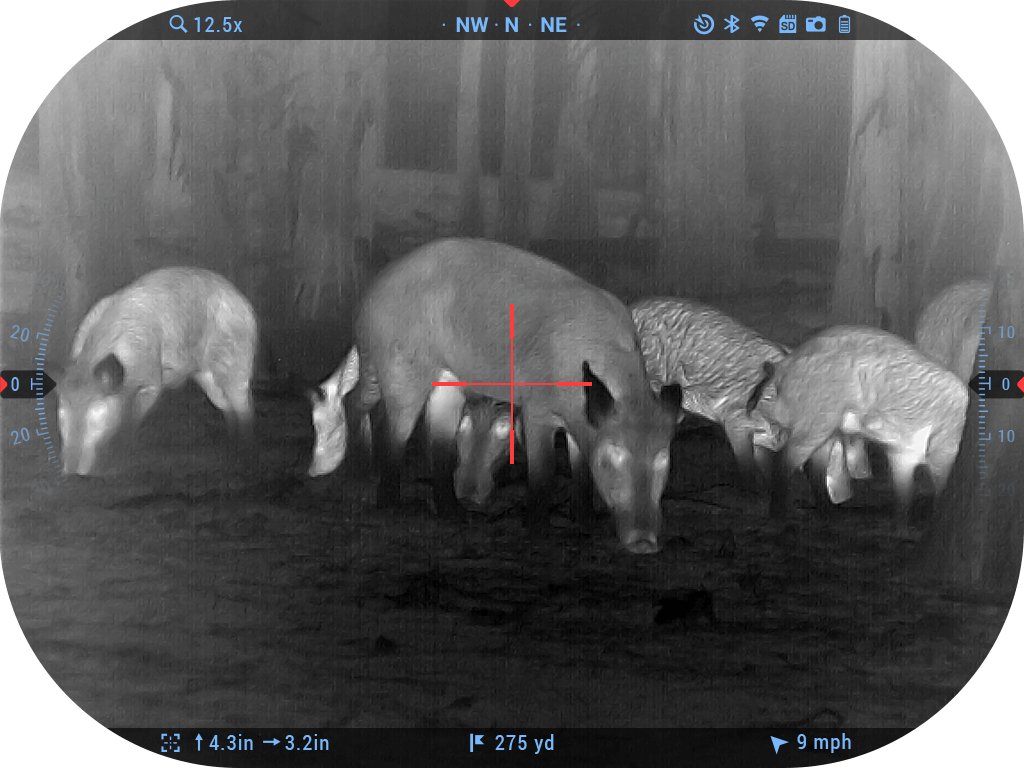
Picture a still night on a field edge. A shape drifts out of the timber 250 yards off. On a low-resolution optic you would see a warm blob and have to wait, guessing whether it is a hog or a stray dog. Through the 640x512 sensor with SharpIR running, the shape resolves — you can read the low head carriage and the stocky body of a hog, count that there are three of them, and pick the largest. The low NETD keeps them separated from the cool wet grass, and the 50 Hz refresh keeps them smooth as they root and move. That is the practical payoff of chasing image quality: not a spec sheet, but the confidence to identify and place a shot.
How we picked these ATN thermal scopes
A quick note on honesty: this is an in-house comparison of ATN's own 6th-generation range, not an independent lab test, so treat it as a guide to which ATN scope fits your image needs rather than a neutral shootout. Because the theme here is picture quality, we weighed sensor resolution and SharpIR processing most heavily, then NETD (how the image holds up in damp air), refresh rate (how smoothly it renders movement), and finally weight and battery life against the kind of hunting each model suits. The honest trade-off runs down the tiers: the flagship gives you the most detail and reach but costs the most and carries more weight, the 2-16x trades top-end zoom for balance, and the 384 gives up some fine detail at heavy zoom for a friendlier tier. Who these are NOT for: anyone who never hunts past close cover and rarely zooms — you would be paying for image resolution you will not tap. Check the numbers against your own ranges and conditions before you buy.
Frequently Asked Questions
What actually makes a thermal image rifle scope sharp?
Four things working together: sensor resolution (more pixels hold detail when you zoom), image processing like ATN's SharpIR (which sharpens edges and cuts noise), NETD (how small a heat difference the sensor can resolve), and refresh rate (how smoothly movement renders). A strong sensor alone is not enough if the processing behind it is weak.
Is 640x512 resolution worth it over 384x288?
If you shoot at distance or zoom in hard, yes — the extra pixels are what carry detail when magnified, roughly the difference between standard definition and HD when you push in. For mid-range hunting where you rarely max the zoom, a 384x288 sensor with the same SharpIR and NETD still delivers a clean, usable picture.
What does the NETD number mean for image quality?
NETD measures the smallest temperature difference the sensor can detect, and the lower the number the better. An <=15 mK rating means the scope still separates an animal from cool, wet ground on a damp or foggy night, when heat contrast is at its weakest. It is one of the biggest factors in how clean the picture looks in bad conditions.
Does refresh rate really matter for a rifle scope?
Yes, especially on moving game. A 50 Hz refresh rate keeps a walking or running animal smooth instead of smearing it into a blur, which makes it far easier to track and identify. A sluggish refresh can turn a trotting coyote into an unreadable streak right when you need clarity.
What is SharpIR and why does ATN emphasize it?
SharpIR is ATN's AI image enhancement. It analyzes the raw thermal frame and sharpens edges, lifts fine detail and reduces noise before the image reaches your eye. On the ThOR 6 line it often makes the visible difference between a shapeless blob and a recognizable animal, which is why it runs across all three scopes in this roundup.
Do all three ATN scopes share the same image features?
The core image engine is shared — SharpIR, the <=15 mK NETD rating, the Full-HD OLED display, Recoil Activated Video, Zeroing Freeze, Picture-in-Picture and Hot Point Tracking are all present. The main differences are sensor resolution and magnification range, which set how much detail and reach each model can deliver.
How long will the image stay up on a night hunt?
All three run about nine hours on two 18650 cells, which covers most single-night sessions. Because the batteries are replaceable, you can carry spares and swap in a fresh pair rather than ending your hunt when the charge runs low, so the image stays up as long as you have cells.
Ready to put a sharper thermal picture behind your reticle? The ATN ThOR 6 640x512 3-24x is our top pick for image quality, and you can compare it against the rest of the line on the thermal scopes page to match the sensor and zoom to your hunt.
Created: August 5, 2026 · 19:53:44 UTC