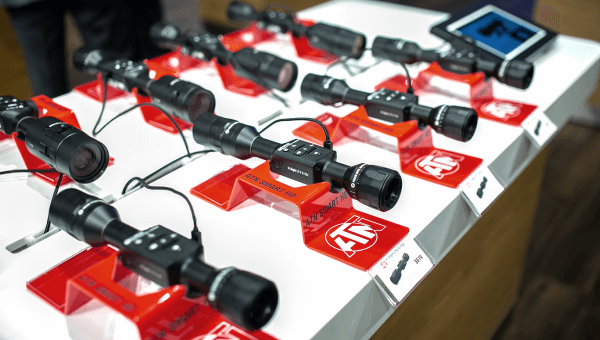
New hog hunters searching for a thermal clip on under 1000 hog hunting deal almost always hit the same wall, so let's clear it first: no real ATN clip-on lands under $1,000. The cheapest, the ATN TICO 6 256x192 1-8x, is $1,095. What changes with this guide is the lens we use-your experience level. A first-season pig hunter, a weekend regular and a seasoned night-caller each need a different rung, and knowing which one you are saves you from over- or under-buying.
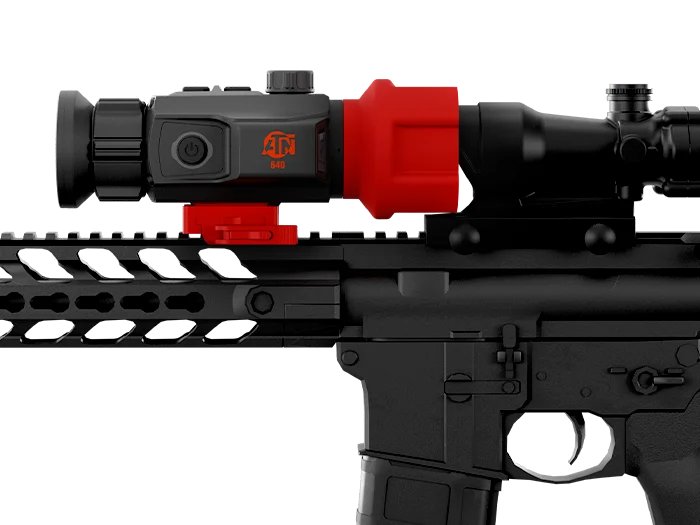
Why beginners can't find one under $1,000
Beginners can't find an ATN clip-on under $1,000 because the parts that make thermal usable-a real detector, germanium optics, image processing-set a floor, and ATN's cheapest, the TICO 6 256x192, sits just above it at $1,095. That is worth knowing before you fall for a bargain listing elsewhere: sub-$1,000 units almost always mean a resolution too coarse to tell a hog from a stump. Start where the real value begins rather than where the wishful price does.
First season: ATN TICO 6 256x192 1-8x
For your first season chasing pigs, the ATN TICO 6 256x192 1-8x at $1,095 is the right rung. As a newcomer you do not need long-range resolution-you need a clip-on that is simple, holds your zero, and puts a bright, obvious hog in the picture at the close-to-mid distances beginners actually shoot. This one clamps onto the day scope you already learned on, so nothing about your aiming changes.
Why it suits a newcomer
The included Quick Detach Mount and return-to-zero mean you are not learning a whole new optic-clip it on, and your familiar reticle sits over a heat image. Its ≤20 mK sensitivity separates a warm pig from cooler ground, which is exactly the confidence a first-timer needs. The removable eyepiece also lets you scan by hand before committing, a forgiving way to learn.
Who it's for-and not for
It is for the beginner who wants the cheapest real thermal path and already owns a day scope. It is not for the hunter who has outgrown timber ranges and now shoots wide fields-that person wants more sensor.
Weekend regular: ATN TICO 6 384x288 1-12x
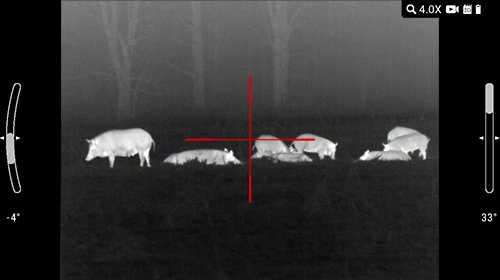
The weekend regular who has a season or two under their belt is the natural fit for the ATN TICO 6 384x288 1-12x at $2,195. By now you have found the edge of the entry sensor and you shoot more open ground. The bigger 384x288 detector and 35 mm lens hold a crisper hog farther out and at higher zoom, with 2710 m detection. It costs more than double the entry unit, and it is honest reach for someone who has grown into it.
Who it's for-and not for
It suits the improving hunter working longer, more open shots. It is not for a true beginner-the extra resolution is money spent on range you cannot yet use.
Seasoned caller: ATN TICO 6 640x512 1-15x
The seasoned long-range caller belongs on the ATN TICO 6 640x512 1-15x at $3,895. With the top detector and a 3500 m detection range, it turns a clip-on rig into a genuine long-reach tool that keeps up with a precise day scope. It is a flagship price, nowhere near an under-$1,000 idea, and it earns its cost only in expert hands working real distance.
Why beginners overspend chasing 'under $1,000'
New hog hunters overspend precisely because they anchor on an under-$1,000 number that doesn't exist, then get lured into a cheap off-brand listing that photographs a hog as a formless blur. The money isn't saved-it's wasted on a unit you'll replace within a season once you realize you can't confidently tell a pig from a possum at 80 yards. The honest entry point, the $1,095 TICO 6 256x192, costs a little more up front but does the job the first night and keeps doing it for years.
The other beginner trap is buying too much scope. Flush with excitement, a first-timer sometimes jumps straight to the 640x512 flagship, paying a premium for long-range resolution they'll never use in the creek bottoms and food plots where most new hunters cut their teeth. Start with the entry unit, learn where your shots actually land, and step up only when your hunting genuinely outgrows it. That discipline is how you avoid spending twice.
What changes as your skill grows
As your skill grows, the thing that changes most is the range and openness of the shots you're willing to take-and that is exactly what should drive an upgrade. A first-season hunter is thrilled to drop a pig at 60 yards in the timber; two seasons later that same hunter is comfortable reaching across a 200-yard field, and now the entry sensor's softness at distance becomes a real limit. The 384x288's extra resolution and longer lens answer that specific growth, holding a crisp hog where the 256x192 starts to smear.
What doesn't change is the clip-on advantage itself. Whatever rung you're on, you're still riding on top of a day scope you already trust, keeping your zero and your familiar reticle. That continuity is a gift to a developing hunter: the fundamentals you learn on the entry unit-scanning, identifying, holding-carry straight up the ladder. You're only ever upgrading the sensor, never relearning your rifle.
How to pick your rung
- First season - buy the $1,095 256x192; simplicity and holding your zero matter more than reach.
- Weekend regular - move to the 384x288 once open-field shots stretch past the entry sensor's comfort.
- Seasoned caller - the 640x512 pays off only when long-range hog work is routine.
- Everyone - keep the day scope you know and carry a spare 18650 for late sits.
A first night with the entry clip-on
Picture your first night out with the TICO 6 256x192 clipped onto the day scope you already shoot. You pull up to a field edge, drop the eyepiece on, and scan by hand-a warm hog lights up against the cool dirt from across the field, obvious even to eyes that have never used thermal. That handheld scan is the beginner's friend: you find and study the pig with no pressure, deciding whether it's a shooter before you ever shoulder the rifle.
When you're ready, you clip the unit back in front of your day scope, and there's the same reticle you've always used, now floating over a heat image. No new zero, no new aiming system-just your familiar rifle with night vision added. That continuity is what makes the entry unit forgiving for a newcomer: the only new skill is reading the thermal picture, and the 256x192 sensor makes that easy at the close ranges beginners hunt. It's the kind of first outing that builds confidence instead of frustration.
How your kit should grow over a few seasons
Over a few seasons your kit should grow with your shooting, not ahead of it. Season one, the entry 256x192 and a spare battery are all you need-master scanning, identification, and clean close shots. By the time open-field opportunities start appearing at the edge of the entry sensor's comfort, you'll feel the limit yourself, and that's the honest signal to consider the 384x288. Let the hunting tell you when to upgrade rather than buying reach on the first day that you can't yet use.
One more thing worth saying to a hunter still finding their feet: resist the pull of a suspiciously cheap off-brand clip-on marketed as an under-$1,000 bargain. Those units almost always run a coarse detector that renders a hog as a vague blur, and a blur is exactly what you can't afford to shoot at after dark. The honest $1,095 entry point exists for a reason-it's the price of a picture you can trust. Spend there first and you skip the expensive lesson of replacing a toy within your first season.
How we picked these ATN clip-ons
We matched each clip-on to a real experience level using the criteria that decide a night sit-resolution, NETD sensitivity, detection range, lens size, battery life and weight-judged against the distances a beginner versus a veteran actually shoots, and only within the 6th-gen TICO 6 line. The honest trade-off is that none of these clears an under-$1,000 bar, so we anchor on the $1,095 entry unit and are clear the step-ups cost more. This is an in-house look at ATN's own range, not an independent lab test-check the specs against your own skill and terrain.
Frequently Asked Questions
Can a beginner find an ATN thermal clip-on under $1,000?
No. Even for a first-timer, the cheapest ATN clip-on is the TICO 6 256x192 at $1,095, just over $1,000. There is no genuine sub-$1,000 ATN clip-on, and cheaper options elsewhere usually have resolution too low to identify a hog reliably.
What should a first-season hog hunter buy?
The ATN TICO 6 256x192 1-8x at $1,095. It is simple, reuses the day scope and zero you already know, and shows a clear hog at the close ranges beginners typically shoot. It is the cheapest real entry into ATN thermal.
When should I upgrade from the entry clip-on?
Upgrade to the 384x288 when your shots stretch into open country and the entry sensor starts to look soft at higher zoom. That usually happens after a season or two as you push range. Until then the 256x192 covers you.
Is a clip-on beginner-friendly?
Yes. Because it mounts in front of your existing day scope and holds return-to-zero, you keep the aiming you already learned instead of mastering a new optic. The removable eyepiece also lets a newcomer scan by hand before setting up a shot.
Do experienced hunters really need the 640x512?
Only if they routinely work long-range open ground. The 640x512 at $3,895 gives the sharpest long-distance image but is overkill and overpriced for timber and mid-range pigs. Most hunters are well served below it.
How many batteries should I carry?
Plan for at least one spare charged 18650 beyond the one in the unit. The TICO 6 256x192 runs about 8 hours per cell, so a single spare comfortably covers a long night sit for a hog hunter.
If you are new to hunting pigs after dark, skip the under-$1,000 rabbit hole and start where the value is real: the ATN TICO 6 256x192 1-8x at $1,095, clipped onto the day scope you already shoot. As your range and skill grow, the same lineup grows with you-see how the sensors scale on the ATN thermal clip-on page and move up only when your shots truly demand it.
Created: August 5, 2026 · 19:53:44 UTC