The one number that should steer a thermal clip on AR-15 hog hunting choice is the distance you actually shoot. Close brush, mid-range fields and long open pasture each want a different clip-on. This comparison sets the three ATN TICO 6 variants from the current 6th-generation thermal clip-on line against three range bands on the AR-15.
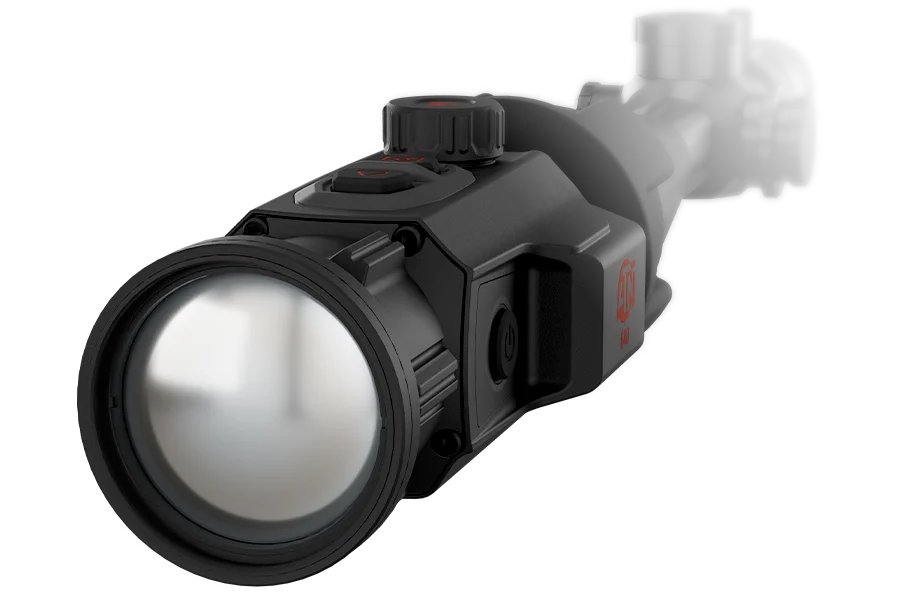
Why range band should drive the choice
Detection range and sensor resolution are what let you see and identify a hog at distance, and buying more of both than your ground demands is wasted money — while buying too little leaves you guessing at the far edge. On an AR-15, where the same rifle can shoot a 40-yard brush hog or a 200-yard pasture boar, the sensible move is to match the clip-on to the band you shoot most. The rest of the feature set is identical across the line.
The three variants by range band
Close band: TICO 6 256x192
For the AR-15 hunter working thick brush and short shooting lanes, the TICO 6 256x192 is matched to the job. At close range you do not need long detection — you need a light, quick-handling clip-on, and at 1.12 lbs this is the lightest of the three, keeping the AR fast on a hog that breaks cover at spitting distance. Its 1500 m detection and 256x192 sensor are more than enough inside those short lanes.
Mid band: TICO 6 384x288
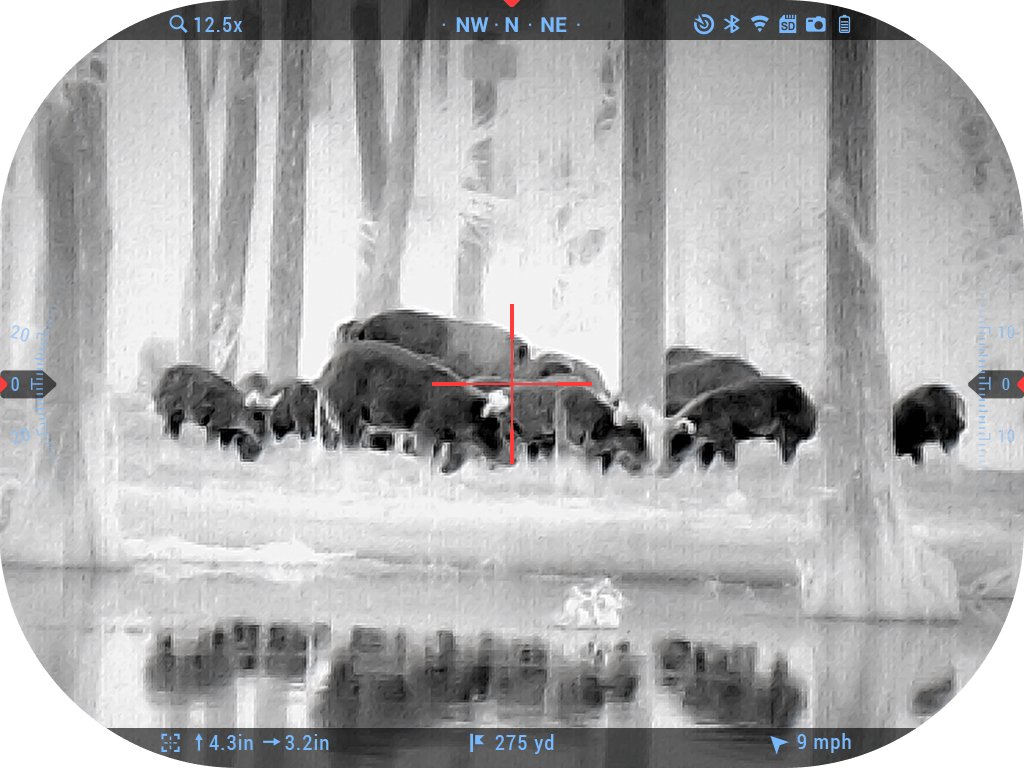
For the most common AR-15 hog scenario — mixed fields with shots from close out to a few hundred yards — the TICO 6 384x288 is the match. Its 384x288 sensor and 2710 m detection cover the whole mid band cleanly, and its ≤18 mK NETD keeps hogs readable in the humid air of transition ground. It is the variant that fits the widest slice of real AR hunting without over- or under-buying range.
Long band: TICO 6 640x512
When the AR-15 is set up to reach across open pasture, the TICO 6 640x512 is the range answer. Its 640x512 sensor resolves a hog as a clean, identifiable body at the far end of a big field, and detection to 3500 m lets you catch and read pigs long before they are in range. For the long band, the extra resolution is what turns a distant heat smear into a confident shot.
Match the band to your shots
- Mostly under ~100 yards in brush → the 256x192; light, quick, and matched to close range.
- Mixed fields, close to a few hundred yards → the 384x288; the widest-fitting mid-range choice.
- Regular long shots across open pasture → the 640x512; the resolution and reach for the far band.
- All bands share zero retention, recoil-activated recording and handheld monocular use.
Match the band to your cartridge, too
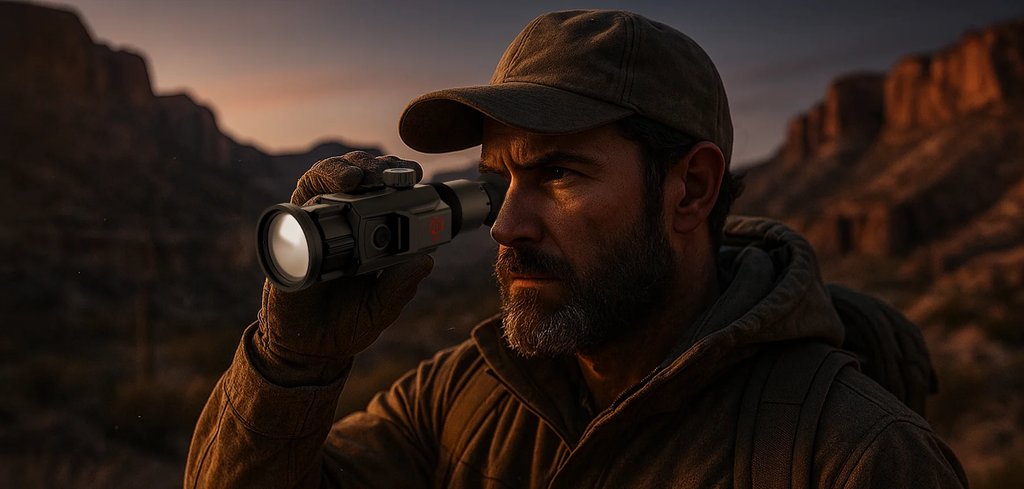
Range band is not just about the clip-on — it should line up with what your AR-15 is chambered for. A close-band brush hunter running a suppressed carbine is well matched to the light 256x192, because neither the rifle nor the optic is trying to reach far. A mid-band shooter working fields out to a couple hundred yards pairs naturally with the 384x288, whose 2710 m detection sees far past any realistic shot so nothing surprises you. And the long-band hunter set up to stretch across open pasture wants the 640x512, so the optic can identify a hog at a distance the cartridge can still cleanly reach.
The point of buying by band is honesty about your own shooting: the clip-on's detection range should always exceed your practical shot distance by a healthy margin, so you spot and identify well before you press the trigger — never the other way around.
How we compared them
This is an in-house, ATN-vs-ATN comparison of our current 6th-generation TICO 6 line, not an independent review, so measure the bands against the distances you actually shoot. We compared the three variants strictly by range capability: detection range and sensor resolution for reach and target ID, NETD for image quality in tough air, and weight for how the clip-on handles on the AR-15 at each band.
We speak in relative terms, not hard prices, and consider only the current line. The honest trade-off: buying a long-band clip-on for close work adds weight and cost you will not use, while a close-band model leaves you short on open ground — so the band, not the badge, should decide. Who it is not for: a shooter wanting a standalone thermal scope with its own reticle should choose a dedicated thermal weapon sight over a clip-on.
Frequently Asked Questions
How do I know which range band I hunt?
Look at your typical shot distance on hogs. If most shots are inside brush at short range, you are close-band; if you shoot mixed fields, mid-band; if you reach across open pasture, long-band. Match the TICO 6 variant to whichever you shoot most.
Is the 256x192 too little clip-on for an AR-15?
Not for close-range work. In brush and short lanes its 1500 m detection is plenty, and its light 1.12 lbs keeps the AR quick. It only falls short if you regularly shoot long across open ground.
Which variant fits the widest range of shots?
The 384x288. Its 2710 m detection and 384x288 sensor cover close-to-mid distances well, making it the best single choice for an AR-15 hunter who shoots a bit of everything.
Do I need the 640x512 for long shots?
If you regularly shoot across open pasture, yes. Its 640x512 sensor and 3500 m detection resolve and reach far enough to identify hogs at the far band, where the smaller sensors lose detail.
Does range band change how the clip-on mounts?
No. All three mount the same way, ahead of your day optic on an included Quick Detach mount, and all hold zero on the AR-15's rail. The range band only changes the sensor size, lens diameter and detection distance, not the way the clip-on attaches or the routine for using it.
Can one clip-on cover more than one band?
Yes, to a degree. The 384x288 stretches comfortably from close brush out to mid-range fields, and the 640x512 covers mid to long open ground. The 256x192 is best kept to the close band, where its lighter build and quick handling shine and its shorter detection range is no handicap.
Match the clip-on to your range: the close-band TICO 6 256x192, the mid-band 384x288, or the long-band 640x512 — all in ATN's thermal clip-on range.
Created: August 5, 2026 · 19:53:44 UTC