Thermal binoculars vs monoculars comes down to one honest trade: two eyes and long reach, or one eye and a light pack. A thermal binocular like the ATN Binox-6 lets you keep both eyes open for hours of comfortable, steady glassing at long range. A thermal monocular like the ATN BlazeTrek 6 is smaller, lighter, and faster to grab for a quick scan. Both read the heat off an animal, so both find game in the dark that your eyes miss. The right pick is about how you hunt, how far you look, and how much you want to carry. Here is a clear head-to-head.
Choose thermal binoculars for comfort and reach; choose a monocular for weight and speed. The ATN Binox-6 wins for long sits, long-range glassing, and eye comfort with its 640 sensor and rangefinder. The ATN BlazeTrek 6 wins when you want a light, pocketable one-hand scanner with a wide field of view. Both find heat in the dark.
How thermal binoculars work
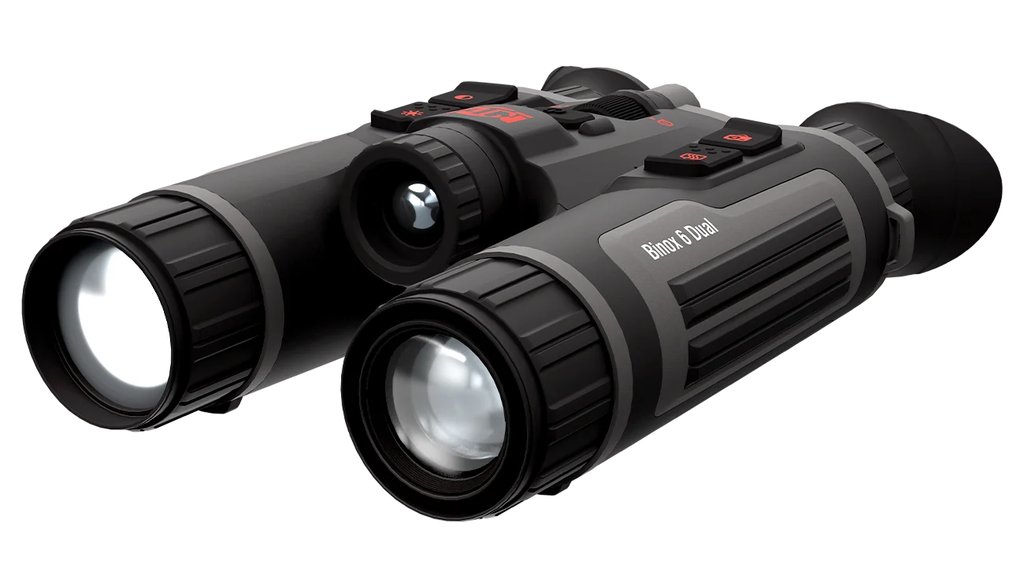
Thermal binoculars use two eyepieces so both of your eyes stay open and relaxed while you scan. The ATN Binox-6 gathers infrared heat through a 35mm germanium objective onto a 640x512 sensor, which means more dots in the picture and clean detail as you zoom from 3x all the way to 24x. Two-eye viewing is the big comfort win: your eyes are not fighting each other, so you can glass a distant tree line for an hour without a headache, and the picture feels natural and steady. The Binox-6 also carries a laser rangefinder, a 4K day channel, and night and twilight modes, so it doubles as your daytime glass and reads distance for you. Longer reach and comfort are what you buy with the added size and weight.
How thermal monoculars work
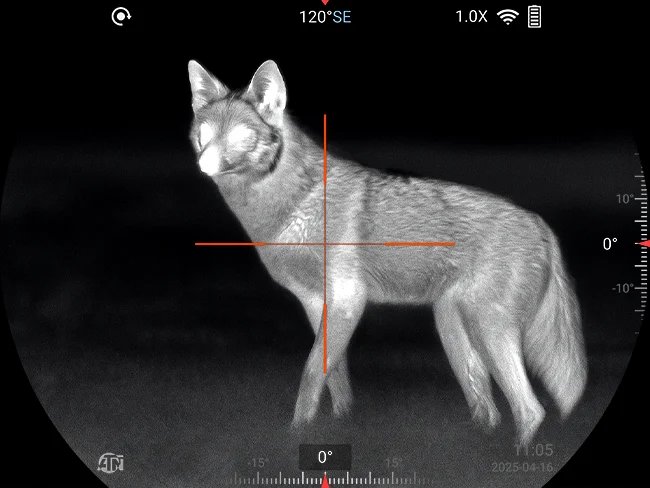
A thermal monocular puts everything behind a single eyepiece, which is why it is so much smaller and lighter. The ATN BlazeTrek 6 focuses heat through a 19mm germanium lens onto its own 640x512 sensor, giving you the same crisp, zoomable picture in a unit that weighs under three-quarters of a pound. Its 1.5x base magnification opens up a wide 22.8 by 18.3 degree field of view, so it sweeps a lot of ground fast and makes it easy to catch a running coyote. You hold it up with one hand, scan, and drop it into a chest pocket in a second. The trade is that one eye tires faster on very long sits, and the shorter reach suits medium ranges better than cross-canyon glassing. It is the grab-and-go tool of the pair.
When to choose thermal binoculars
Choose thermal binoculars when you glass for long stretches or across long distances. If you sit a stand or a field edge and watch for an hour at a time, two-eye comfort keeps you fresh and in the game far longer than a single eyepiece. Pick the Binox-6 if you want the longest reach here, with 3-24x zoom and 3100 m of detection range to pull detail out of distant country, plus the low 15mK NETD that holds a clean picture in fog and damp air. It also suits the hunter who wants one tool for everything, because its day channel, night vision, and built-in rangefinder replace several separate devices. If comfort, range, and all-in-one capability matter most, the binocular is your pick.
When to choose a thermal monocular
Choose a thermal monocular when weight, speed, and a wide view matter more than maximum reach. If you cover ground on foot, still-hunt, or want something you can carry all night without noticing it, the BlazeTrek 6 at 320 grams is the easy answer. Its wide 22.8 by 18.3 degree field of view makes it the better fast-scanning tool, catching movement across a big field and tracking a runner without a hunt to reacquire. One hand stays free for your rifle or a light. It is also the more affordable, more packable entry into 640-class thermal, so it is a smart pick if you want a serious sensor in a small, budget-friendlier body. For mobile hunters and quick scans, the monocular wins.
Our recommendation
For most hunters who spend real time behind the glass, our pick is the ATN Binox-6. Two-eye comfort, 3-24x reach, a 640x512 sensor, a built-in laser rangefinder, and a 4K day channel make it the most capable and most comfortable of the two for long sessions and long-range work, and it replaces several tools at once. That said, if you hunt light and fast and value a wide, quick-scanning view in your pocket, the ATN BlazeTrek 6 monocular is the right call. Many serious hunters end up owning one of each. Browse the full thermal binoculars range and the thermal monoculars range to match one to your ground.
How we compared them
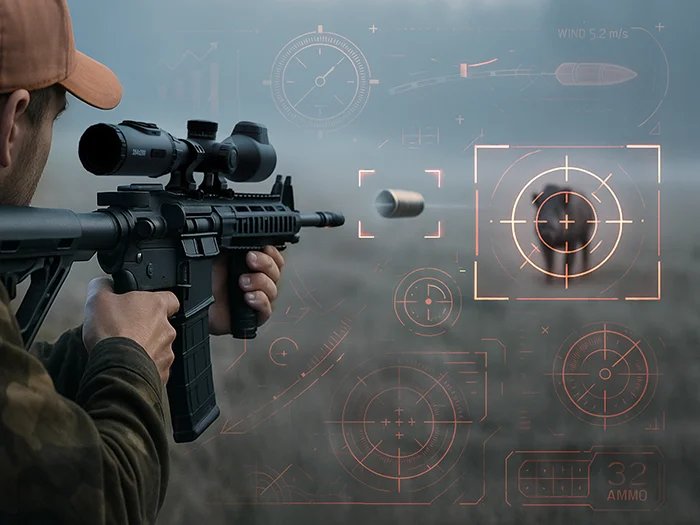
Both options here are judged on the same measuring stick — image clarity (resolution, NETD), reach (detection range), handling, and battery — all seen through thermal binoculars vs monoculars. They are both ATN's own current-generation devices, so this is an honest in-house comparison rather than an independent review: the trade-offs and the "when NOT to pick this" calls are spelled out so you can decide for your own situation.
Frequently Asked Questions
What is the main difference between thermal binoculars and monoculars?
Binoculars use two eyepieces for comfortable, steady viewing over long sessions and usually reach farther. Monoculars use one eyepiece, so they are smaller, lighter, and faster to grab. Both sense heat and find game in the dark the same way.
Are thermal binoculars better than monoculars for hunting?
Not universally. Binoculars are better for long sits and long-range glassing because both eyes stay relaxed. Monoculars are better when you are moving, want a wide fast-scanning view, and care about weight. It depends on how you hunt.
Which is more comfortable to use for a long night?
Binoculars, clearly. Keeping both eyes open avoids the eye strain that builds up when you stare through a single eyepiece for hours. The ATN Binox-6 is built for exactly those long sessions.
Is a monocular good enough for coyotes and hogs?
Yes. The ATN BlazeTrek 6 has the same 640x512 sensor and a wide field of view that makes catching moving predators easy. Its 1000 m detection range covers most predator and hog work at practical ranges.
Do binoculars and monoculars see the same distance?
Not always. The Binox-6 reaches out to 3100 m and the BlazeTrek 6 to 1000 m, so the binocular sees heat much farther. For long-country glassing that gap matters; for closer work the monocular is plenty.
Can I use one tool for both scanning and daytime glassing?
The ATN Binox-6 can. Its 4-in-1 design adds a 4K day channel, night vision, and twilight modes on top of thermal, so it works around the clock. The BlazeTrek 6 is a dedicated thermal scanner.
Still torn between two eyes and one? If comfort and reach top your list, the ATN Binox-6 gives you all-night two-eye glassing, 3-24x zoom, and a built-in rangefinder in a single four-in-one unit. If you hunt light and fast, the ATN BlazeTrek 6 drops the same 640 sensor into a pocketable, wide-view scanner. Look through the full thermal binoculars and thermal monoculars lineups, match the reach and weight to your ground, and step into your next night hunt seeing every warm shape out there.
Created: July 7, 2026 · 08:31:01 UTC