If you are searching for thermal binoculars under 1000 hog hunting, the most useful thing we can do is be straight with you: a genuine dual-tube thermal binocular built for running the hog fields does not exist at that number, and anything advertised that low is almost always a single-sensor monocular wearing a binocular badge. What we can show you is exactly where real thermal binoculars start, why the price sits where it does, and which ATN Binox-6 from ATN's current 6th-generation thermal binoculars is the sensible entry point for a hog hunter.
Why $1,000 does not buy real thermal binoculars
Thermal is expensive for one honest reason: the germanium optics and the microbolometer sensor behind each eyecup are costly to make, and a true binocular runs a full thermal channel that both eyes read together. That is the part that keeps prices well above $1,000. When you see a listing under that figure, it is nearly always a handheld monocular that you hold to one eye, not a two-eyed instrument you can glass a field with for an hour without eye strain. For hog hunting, where you sweep dark ground for long stretches, that difference matters.
So rather than pretend a $1,000 thermal binocular exists, this list ranks the real Binox-6 options a hog hunter should actually consider, and tells you plainly what the first rung costs.
Closest to your budget: Binox-6 Dual 384x288
If you are anchored to the idea of thermal binoculars for hogs and the entry price is what you care about, the Binox-6 Dual 384x288 is the model to look at first. It comes in at a promo $2,895.00 (regular $3,185.00) — well above $1,000, but it is the least costly true thermal binocular ATN makes, and it is a real dual-eyecup instrument, not a monocular in disguise.
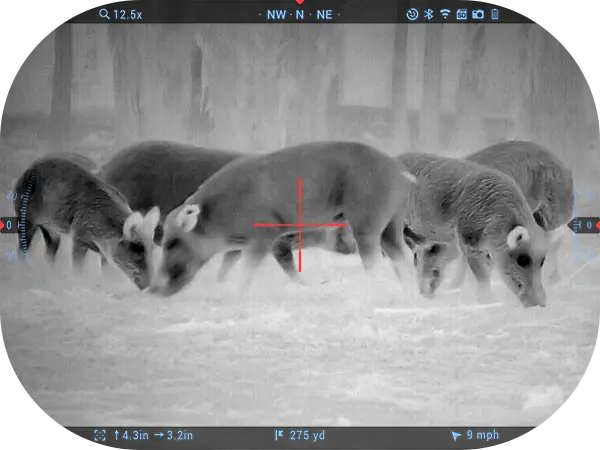
For the field, its high-magnification thermal channel reaches from 5.5x up to 44x, so once you catch a heat signature you can push in and read whether it is a lone boar or a sounder before you commit. The 384x288 sensor with an ≤15 mK NETD holds contrast in the damp, low-lying air that hogs love, and detection out to 2750 m means you spot heat across a bean field long before it is anywhere near a shot.
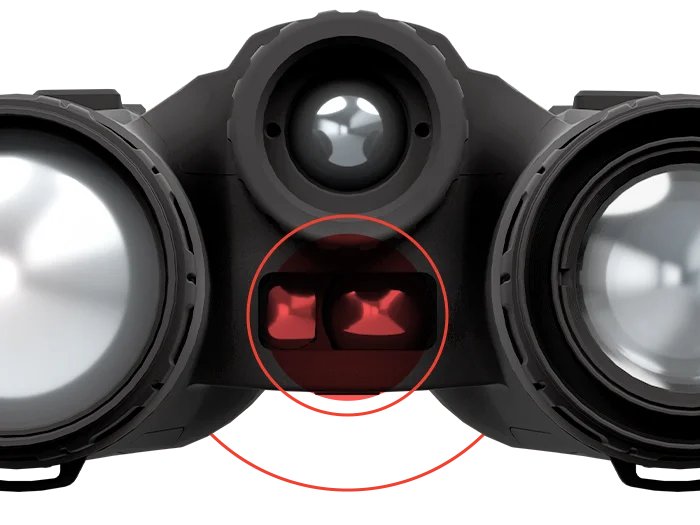
It is also a 4-in-1 unit — day, night, thermal and twilight — with a built-in laser rangefinder good to 1000 m, a 4K day camera and GPS. At 1.59 lbs it hangs comfortably on a chest harness through a full night of scanning.
Step up for reach: Binox-6 Dual 640x512
If you can stretch past the entry price, the Binox-6 Dual 640x512 at a promo $3,595.00 (regular $3,955.00) is the one that answers big, open hog country. The 640x512 sensor resolves a hog as a clean shape rather than a warm smudge, and detection to 3100 m gives you the earliest possible warning on wary pigs. The 3-24x range trades top-end zoom for a wider base field, which is often better for scanning a broad property.
Both models are honestly out of the sub-$1,000 bracket. That is the reality of true thermal binoculars — and the reason we would rather tell you where the price really starts than sell you a compromised optic that will disappoint you on the first hunt.
If $1,000 is a hard ceiling
- Look at a thermal monocular, not a binocular — a single-sensor handheld is where the realistic budget entry actually lives.
- Decide if two eyes matter to you — for long glassing sessions a true binocular is easier on the eyes, but it costs more.
- Do not chase the cheapest listing — a bargain-priced 'binocular' is usually a monocular, and its image and range will show it.
- Buy resolution to your distances — 384x288 for typical fields, 640x512 for wide, open ground.
- Weigh comfort against cost — if long glassing sessions strain a single eye, the two-eyecup design is worth saving toward rather than settling for a bargain monocular you will fight all night.
The through-line is simple: the sub-$1,000 search leads to monoculars, and the real entry to a true thermal binocular for hogs is the Binox-6 Dual 384x288. Deciding between them is really deciding how much time you spend behind the glass and how much your eyes will thank you for two eyecups over a long, cold sit.
Binocular or monocular for hogs — the real decision
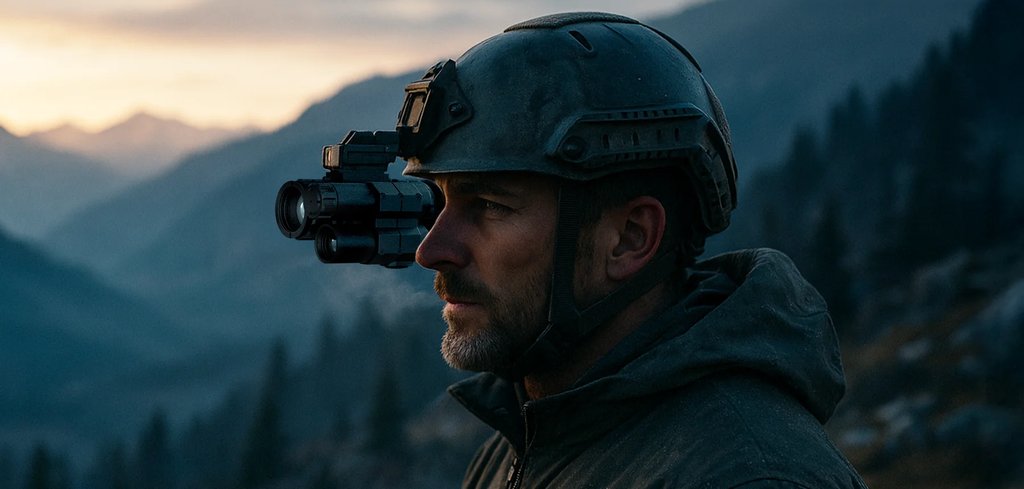
Since a true binocular is not a sub-$1,000 item, the honest question is whether two eyes are worth the step up for the way you hunt. Hog hunting rewards long observation — you often glass a field for many minutes waiting for a sounder to commit — and that is exactly where a binocular pays off. Looking through two eyecups is far easier on your eyes over a long sit than squinting through a single monocular tube, and it gives a more natural sense of depth when you are reading terrain in the dark.
A monocular, by contrast, is lighter, cheaper and quicker to stuff in a pack, which is why it is the realistic pick under $1,000. If your hog hunting is occasional, close-range and quick, a monocular may genuinely serve you better. If you spend real time behind glass on dark fields, the comfort and clarity of a Binox-6 binocular is what your money buys — and there is no way around the fact that the money is more than $1,000.
What the Binox-6 does beyond thermal
Part of why the Binox-6 sits where it does on price is that it is far more than a heat scanner. It is a 4-in-1 optic — day, night, thermal and twilight — so the same unit that finds a hog by heat can switch to its 4K day camera to confirm and record in colour once you are on it. The built-in laser rangefinder, accurate to about a metre out to 1000 m, means you never guess a hog's distance, and the onboard GPS and compass help you mark where a sounder is working so you can plan a stalk.
SharpIR AI cleans the thermal image in real time, DeFog and Wide Dynamic Range help when the air turns damp, and dual 18650 cells give roughly eight hours of runtime with easy field swaps. None of that exists on a bargain sub-$1,000 unit, and it is the honest reason a real thermal binocular costs what it does.
What it looks like on a real night
On a warm night over a cut field, hogs read as bright bodies moving low along the tree line. With the Binox-6 you catch that heat at distance, range it with the built-in laser, and push the magnification to confirm the count — all with two eyes on glass. That workflow is exactly what a monocular under $1,000 struggles to match, and it is why the honest price of real thermal binoculars sits where it does.
How we picked these ATN thermal binoculars
This is an in-house comparison of ATN's own current range, not an independent lab review, so weigh the specs against your own ground and budget. We judged the Binox-6 line on the things that actually decide a hog night: sensor resolution and NETD for a clean picture in damp air, detection range for early warning, magnification for identifying targets, and weight and battery life for comfort over long sits.
We only consider the current 6th-generation line, and we were deliberately honest about price: because the keyword asks for thermal binoculars under $1,000, we checked ATN's real figures rather than invent a fantasy budget model. The plain trade-off is that true thermal binoculars are not sub-$1,000 gear. Who this is not for: anyone who genuinely cannot exceed $1,000 should look at a monocular instead of forcing a binocular into a budget it does not fit.
Frequently Asked Questions
Are there any real thermal binoculars under $1,000 for hog hunting?
No. A genuine dual-eyecup thermal binocular does not exist at that price. The most affordable ATN Binox-6, the Dual 384x288, starts at a promo $2,895.00. Anything advertised under $1,000 is almost always a single-sensor thermal monocular, not a true binocular.
What is the cheapest ATN thermal binocular for hogs?
The Binox-6 Dual 384x288, at a promo $2,895.00 (regular $3,185.00). It is a real 4-in-1 thermal binocular with a 384x288 sensor, 5.5-44x magnification and a built-in rangefinder — the sensible entry point for a hog hunter.
Why are thermal binoculars so much more than $1,000?
The cost is in the germanium optics and the thermal sensors — a true binocular runs a full thermal channel both eyes read. That is what keeps real thermal binoculars well above $1,000 no matter the brand.
Should I just get a thermal monocular instead?
If $1,000 is a hard ceiling, yes. A monocular is where the realistic budget entry lives. You give up the two-eye comfort of a binocular for long glassing, but you get real thermal capability within a budget that a binocular cannot meet.
Is the 384x288 sensor enough for hog hunting?
Yes for most fields. A 384x288 sensor with ≤15 mK NETD detects hogs to 2750 m and holds contrast in humid air. Step up to the 640x512 only if you hunt wide, open ground where every extra bit of range and detail counts.
Does the Binox-6 range hogs for me?
Yes. Both Binox-6 models carry a built-in laser rangefinder accurate to about 1 m out to 1000 m, so you can confirm the distance to a hog before you ever move on it.
Want the honest starting point? See the entry Binox-6 Dual 384x288, or compare the full lineup of ATN thermal binoculars. We would rather point you to real gear at its real price than sell you a sub-$1,000 promise that falls apart on the first hog.
Created: August 5, 2026 · 19:53:44 UTC