Pigs move at night, travel in groups, and cover ground fast, so the tool that wins is the one that lets you find a sounder early and keep count as they mill and run. For a value-minded hog hunter, the smart play is a high-zoom thermal binocular that pulls warm pigs out of the dark from way off and lets you glass comfortably with both eyes for hours. Thinking about thermal binoculars under 1000 for hog hunting, the best value entry point is the ATN Binox-6 Dual 384x288, which leans on huge magnification to reach out over fields and feeders. This roundup is built around value: getting the most useful hog-finding glass for the money, and where stepping up actually earns it.
Step up for detail: ATN Binox-6 Dual 640x512 3-24x — flagship-tier picture with more dots for identifying and following individual pigs at distance.
Both are 4-in-1 day/night/thermal/twilight binoculars with a built-in 1000-yard rangefinder and IP67 build. Start with the 384x288 for value; move up to the 640 when picture detail matters more than saving.
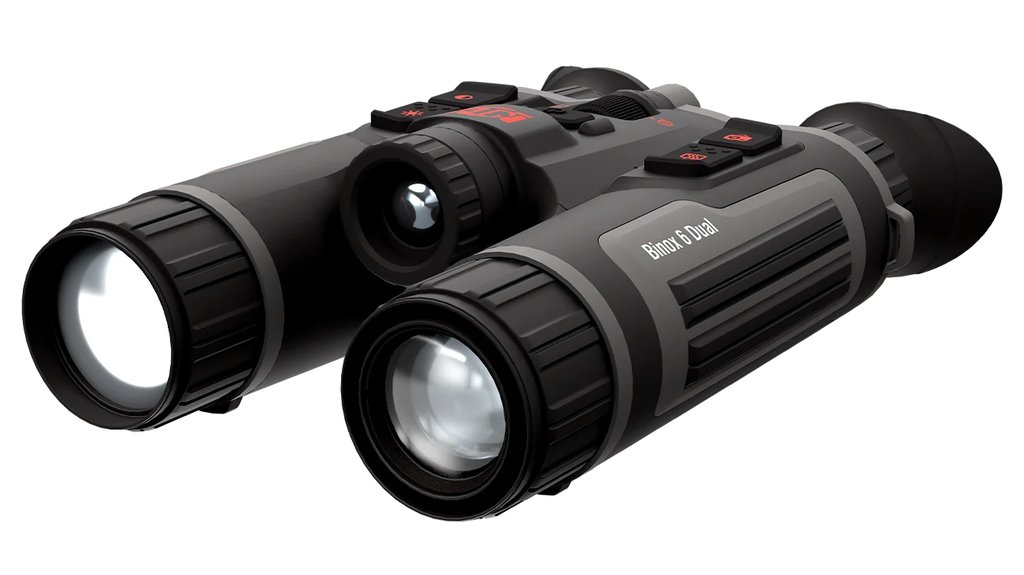
Why ATN's 6th-gen Binox-6 is the value choice for hogs
Hog hunting rewards spotting distance and comfort over everything, and that is exactly where a value-tier thermal binocular beats a pricier scope-only setup. The Binox-6 Dual 384x288 pushes magnification up to a big 5.5-44x, so you can sit on a rise and glass distant feeders and treelines where pigs stage before they move. Because a sounder can be a dozen animals shifting at once, the dual-eyepiece design matters: two eyes reduce strain so you can watch and count without your vision tiring the way it does through a single monocular. A 15mK NETD keeps the pigs sharp in the warm, humid air pigs love, and the 4-in-1 modes plus a 4K day camera mean the same unit scouts sign by day and hunts by night. It is current 6th-gen hardware, so the value model still gets ATN's up-to-date sensor and processor, not an old discontinued core. Add a built-in 1000-yard rangefinder and Hot Point Tracking and it is a complete pig-finding tool at a value price.
Best value for hog hunting: ATN Binox-6 Dual 384x288 5.5-44x
The ATN Binox-6 Dual 384x288 5.5-44x is the value pick for hogs because it puts its money into reach. With 5.5-44x magnification you can glass across an entire field and pick out a warm pig near a distant feeder long before it is in range of your rifle, which is exactly how you set up on a sounder instead of bumping it.
Why the high zoom suits pigs
Pigs stage and feed at distance, then filter in. The tall 5.5-44x zoom lets you count heads, judge the group's direction, and plan an approach from far enough away that you do not spook them. The 15mK sensor keeps each pig defined in humid night air, and detection range near 2,750m means you are seeing heat well beyond where you would ever shoot.
Who it's for and not for
It's for the hog hunter who wants maximum spotting reach for the money and hunts mostly open ground: fields, feeders, ag land. It's not the best fit in thick brush where the narrow high-zoom field of view slows scanning, or for someone who needs the finest picture detail to identify individual animals at long range.
Step up for detail: ATN Binox-6 Dual 640x512 3-24x
When you want to see pigs, not just find them, the ATN Binox-6 Dual 640x512 3-24x steps up in price and picture. Its 640x512 sensor packs far more dots, so at the same distance a pig reads with real detail: you can tell a boar from a sow, watch piglets, and follow one specific animal through a moving group.
Where the extra resolution pays off
More resolution means you can zoom in on a distant sounder before the picture turns blocky, which helps when you need to identify a target or keep track of one pig as the group shuffles. Detection range climbs to around 3,100m, and the same 1000-yard rangefinder and 4-in-1 day camera come along. It is the flagship of the pair.
Who it's for and not for
It's for the hog hunter who values picture quality and detailed identification and does not mind spending more. It's not necessary if your job is simply to locate and count pigs at distance, where the value 384x288 already does everything you need for less.
Why glassing comfort matters more on hogs than anywhere
Hog hunting is a waiting game, and the strain of that wait falls on your eyes. A sounder can take an hour to filter from a bedding area into a field, and you spend that whole time watching, judging direction, and keeping a running count as pigs shift and mill. Through a single-eyepiece monocular that kind of sustained watching tires one eye fast, and a tired eye starts missing detail exactly when a big boar finally steps clear. The Binox-6's dual-eyepiece design spreads the work across both eyes the way ordinary binoculars do, so you can glass a moving group far longer without fatigue. On a long, patient hog watch that comfort is not a luxury — it is what keeps you sharp enough to pick the right pig when the moment finally comes, and it is a big part of why a binocular beats a monocular for the spotting-and-counting side of a hog program.
A field scenario: setting up on a staging sounder
Picture a warm, still evening on a rise overlooking a corn feeder three hundred yards out, with a treeline behind it where pigs bed. You get comfortable and start glassing with the Binox-6 384x288. Twenty minutes in, warm shapes begin filtering out of the treeline — first two, then five, then a dozen, a full sounder staging near the feeder. The tall 5.5-44x zoom lets you count heads and pick out the biggest body without moving from your spot, and because you are watching with both eyes you can hold that count steady for the fifteen patient minutes it takes the group to settle. You range the feeder with the built-in laser to confirm the distance, note that the pigs are drifting toward a gap in the fence line, and plan an approach that keeps the wind in your face. By the time you move, you already know how many pigs there are, which one you want, and exactly how far. That is the whole value case for a spotting binocular on hogs: it turns a chaotic heat blob at distance into a plan you can execute, all before you ever close the gap.
How to choose value hog-hunting thermal binoculars
For pigs on a value budget, weigh reach and comfort first, then picture detail. Both models share the important night-hunting features, so the choice comes down to zoom versus resolution.
- Magnification for reach — a tall 5.5-44x zoom finds and counts pigs across open fields; 3-24x is a broader all-rounder if you also hunt closer cover.
- Resolution for detail — 384x288 is plenty to detect and follow a sounder; 640x512 adds dots so you can identify individual pigs at distance.
- Thermal sensitivity (NETD) — a low 15mK on both keeps pigs crisp in the humid air they favor.
- Comfort for long sits — dual eyepieces reduce eye strain over the long, patient watches hog hunting demands.
- Built-in rangefinder — both range to 1000 yards, so you can confirm distance before committing to a stalk.
- All-weather build and battery — IP67 waterproofing and about 8 hours on dual 18650 cells for both.
How we picked these ATN thermal binoculars for hogs
This is an in-house comparison of ATN's current 6th-generation Binox-6 range, not an independent lab test. Because the keyword is about value hog hunting, we judged each unit on what actually helps you find and follow pigs for the least outlay: magnification (reach), thermal sensor resolution, NETD (sensitivity in humid air), detection range, glassing comfort, refresh rate, weight, and battery. We speak only in value tiers, never exact figures. Only the current 6th-gen line is considered. Honest trade-off: the value 384x288 buys reach by giving up picture detail, so pigs at long range look less defined than through the 640; you cannot have top zoom and top resolution at the value tier at once. Who these are not for: a hunter who mainly needs a weapon-mounted sight to take the shot should look at a thermal scope instead, since binoculars are for spotting and counting, not aiming. Check these specs against how open your hog ground is.
Frequently Asked Questions
What thermal binoculars are best for hog hunting on a value budget?
The ATN Binox-6 Dual 384x288 is the strong value pick for hogs. Its high 5.5-44x magnification reaches across fields to spot and count pigs at distance, while its 15mK sensor keeps them crisp in humid air. It also includes a built-in 1000-yard rangefinder and a 4K day camera for scouting.
Why use binoculars instead of a thermal scope for hogs?
Thermal binoculars are for finding and counting pigs comfortably, often at long distance, using both eyes to reduce strain over long sits. A scope is for taking the shot. Many hog hunters pair the two: glass the sounder with the Binox-6, then move in with a mounted sight.
How far can the Binox-6 spot a hog?
The Binox-6 384x288 has a detection range around 2,750m and the 640x512 reaches about 3,100m for large heat sources like a group of pigs. That is far beyond normal shooting distance, so the binocular's job is to find and judge the sounder long before you close in.
Is 384x288 resolution enough for hunting pigs?
Yes. A 384x288 sensor gives a clear, detectable picture of pigs at hunting distances, especially with the low 15mK NETD keeping them sharp. If you want to identify individual animals with more fine detail at long range, the 640x512 model steps up, but the 384 handles find-and-count duties well.
Do these binoculars work by day for scouting sign?
Yes. Both Binox-6 models are 4-in-1 units with a 4K day camera, so you scout tracks, wallows, and rooting by day in color, then hunt by thermal at night. That day-and-night use is part of what makes them good value for a hog program.
Can I range a hog before I move on it?
Yes. Both models have a built-in laser rangefinder that measures to 1000 yards with plus-or-minus one-meter accuracy, with the distance shown right in your view. That lets you judge how far a sounder is and plan the stalk without lowering the glass or grabbing a separate device.
How long does the battery last for a night of hog hunting?
About 8 hours per session on the dual replaceable 18650 batteries, which covers a typical night. Because the cells are replaceable, carrying a spare set lets you keep glassing straight through even the longest hunts.
Are binoculars really easier on the eyes than a monocular for long hog watches?
Yes. Hog hunting often means an hour or more of sustained watching while a sounder stages and moves, and a dual-eyepiece binocular spreads that work across both eyes instead of straining one. That reduced fatigue keeps you sharp enough to pick the right pig and hold an accurate count when the group finally commits, which is exactly when a tired eye starts missing detail.
Find the sounder before it finds you. The ATN Binox-6 Dual 384x288 gives value-minded hog hunters big 5.5-44x reach to spot and count pigs across open ground, a 15mK sensor that holds them crisp in humid air, and a built-in 1000-yard rangefinder to plan the stalk. When picture detail matters more, step up inside the same thermal binoculars family to the 640x512. Either way, you get one tool that scouts by day and hunts pigs all night.
Created: July 7, 2026 · 11:11:27 UTC