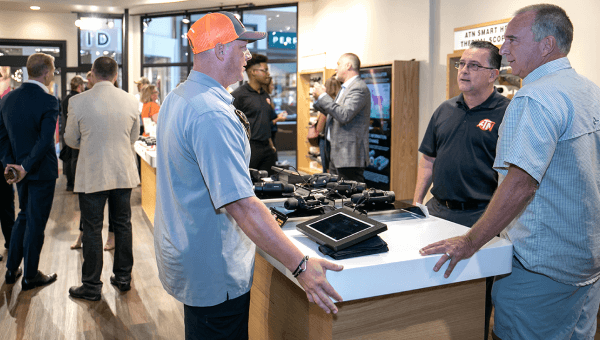
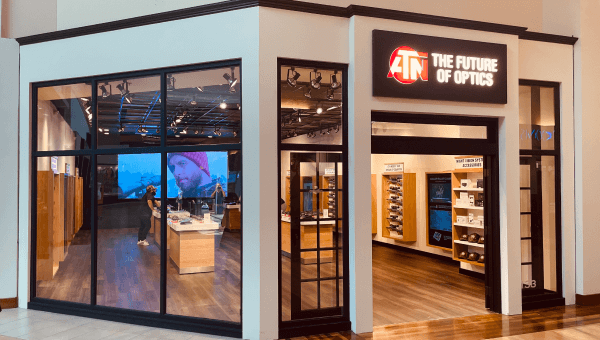
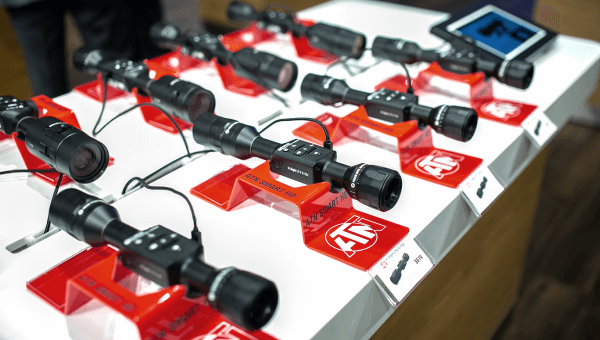
Thermal binoculars for hunting solve a problem every night hunter knows: your scanning eye gets tired long before the night is over. Squinting through a single-eye monocular for hours strains one eye and leaves your depth perception flat. Two eyes on the glass changes that. You scan longer, judge distance better, and stay in the game until the last coyote works into range. This guide is built around the ATN Binox-6, the all-night hunting glass that pairs a thermal channel with a full-color day sensor, a built-in rangefinder, and enough battery to see a night through. We will look at the 640 flagship as the lead and the higher-magnification 384 as its long-reach sibling.
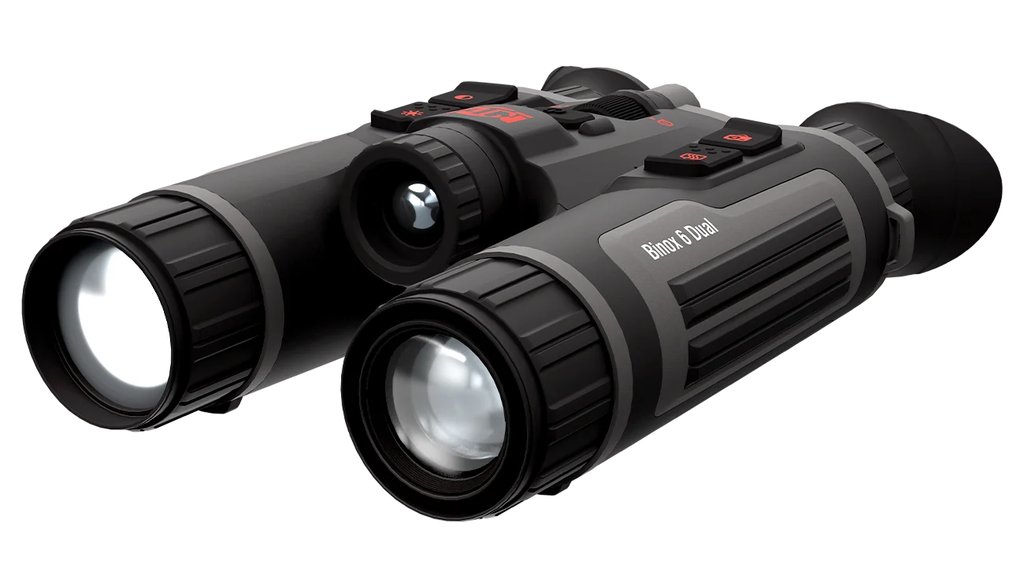
The best thermal binoculars for hunting are the ATN Binox-6 Dual 640x512. Two eyes on the glass cut fatigue on long scans, a 4-in-1 Day/Night/Thermal/Twilight view covers every light level, and a built-in laser rangefinder calls distance to 1000 yards. Its 640 sensor reads game clearly out to a 3100m detection range for an all-night hunt.
Quick answerBest overall for hunting: ATN Binox-6 Dual 640x512 3-24x — the crispest picture, widest base view and best all-round reach for scanning and glassing.
Best for high-magnification glassing: ATN Binox-6 Dual 384x288 5.5-44x — trades some resolution for a much higher top-end zoom to study distant animals.
Both are true 4-in-1 binoculars with a 4K day sensor, a built-in laser rangefinder, SharpIR image cleanup, six palettes, dual swappable batteries and IP67 waterproofing. The choice is resolution versus top-end magnification.
Why ATN's Binox-6 is built for the hunt
The Binox-6 is built for hunting because it does far more than see heat: it is a 4-in-1 optic that switches between Day, Night, Thermal and Twilight vision, so one device covers every light level from last light to full dark. During the day and at dusk, a 4K Ultra HD CMOS sensor gives you a sharp full-color picture, which is like watching in 4K instead of standard definition, so you can actually identify what you are looking at. When the light dies, the thermal channel takes over and heat becomes your flashlight. A built-in laser rangefinder reads distance to 1000 yards with plus-or-minus one meter accuracy on an eye-safe 905nm laser, so you know how far that animal really is before you commit. SharpIR AI enhancement cleans the picture, DeFog mode cuts through mist, Wide Dynamic Range balances hot and cold, and Hot Point Tracking flags the warmest object in frame. GPS and compass mark where you spotted game, Picture-in-Picture lets you watch two views at once, and dual replaceable 18650 batteries plus 64 GB of storage mean a full night of hunting and recording without a swap.
Best overall for hunting: ATN Binox-6 640x512
The ATN Binox-6 Dual 640x512 is the best thermal binocular for hunting because its 640 sensor gives the clearest, most trustworthy picture across the ranges most hunters actually shoot. A 640x512 sensor packs far more dots than a 384 unit, so when you zoom in to sort a hog from a stump at distance, the image holds together instead of dissolving into blocks. Its 3-24x magnification opens with a genuinely wide base view for fast scanning and reaches to 24 power when you need to study something farther out, and detection range runs to 3100m.
Two eyes for the long night
The real hunting advantage is comfort. Glassing with both eyes cuts the eye strain that ends single-eye scanning sessions early, and it restores the natural depth cues your brain expects. Pair that with the built-in rangefinder and you get a spot-and-range workflow in one motion: find the heat, press the button, know the distance. The 4-in-1 view means you never swap devices when the light changes, and about 8 hours of battery across swappable cells covers a full night. Who it's for: hunters who scan for hours and want the best all-round picture and ranging. Not for: anyone whose only need is extreme magnification of very distant, stationary animals.
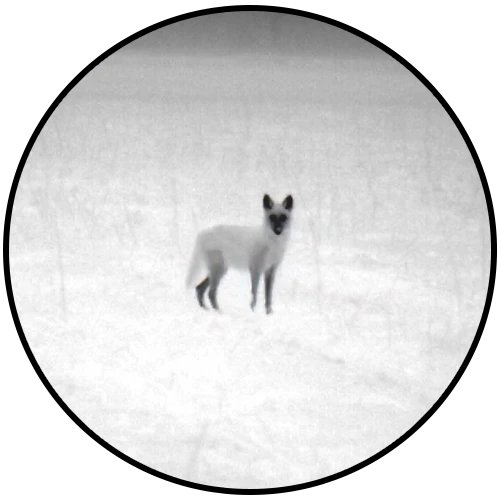
Best for high-magnification glassing: ATN Binox-6 384x288
The ATN Binox-6 Dual 384x288 is the best pick when you want maximum reach on distant, stationary game, because its 5.5-44x magnification climbs far higher than the 640's top end. That extra zoom lets you sit on a ridge or field edge and truly study an animal that is hundreds of yards out, judging size and behavior before you move. It trades some sensor resolution for that magnification, but on far-off subjects the extra power often wins.
Same 4-in-1 platform, more top-end zoom
This variant carries everything that makes the Binox-6 a hunting tool: the 4-in-1 Day/Night/Thermal/Twilight view, the 4K day sensor, the built-in 1000-yard rangefinder, SharpIR, DeFog, Wide Dynamic Range, GPS and compass, dual swappable batteries and IP67 waterproofing. A slightly faster F/0.9 thermal objective helps gather heat. Detection range is 2750m. The 5.5x low end is narrower than the 640's 3x, so it is less of a fast, sweeping scanner and more of a deliberate glass. Who it's for: hunters glassing wide-open country for distant animals. Not for: close-in scanning where a wide base view matters more.
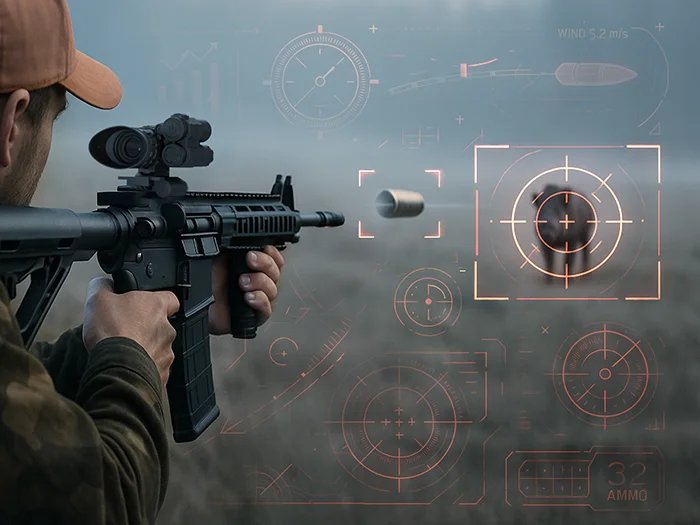
How thermal binoculars change a night hunt
Thermal binoculars change a night hunt by turning darkness from an obstacle into an advantage. Instead of sweeping a spotlight that spooks game and gives away your position, you sit quiet and let heat reveal every warm body in the field: the hogs rooting a fence line, the coyote slipping the edge of the timber, the deer bedded in the grass you would have walked right past. Because the Binox-6 sees through the tricks that beat the naked eye, tall grass, light brush, shadow, you find animals you never knew were there. The two-eye design matters most here. On a long sit, single-eye fatigue makes you scan less and miss more; two eyes keep you comfortable and in the game, so your last scan of the night is as sharp as your first.
The workflow is simple and quiet. Glass wide at low power to locate heat, zoom in to identify and count, then press the rangefinder to lock the distance. With the range in hand you can decide whether to move, wait, or shoulder the rifle, all before the animal knows you are there. Recording that whole sequence to the 64 GB of onboard storage means you can review a stand later, confirm what you saw, or settle an argument about how many hogs really came through. It is scouting, spotting and ranging in one device that rides on a harness and does not quit when the temperature drops.
How to choose thermal binoculars for hunting
Choose your hunting binoculars by matching resolution and magnification to your terrain, then lean on the shared features that make long nights easier. Both Binox-6 variants share the same platform, so the real decision is picture detail versus top-end zoom.
- Resolution — Higher resolution (640 vs 384) puts more dots in the picture, so you can zoom in further before it turns blocky. For clear identification across ranges, the 640 leads.
- Magnification — Base magnification sets your field of view; higher max zoom reaches farther but narrows the view. The 640's 3x low end scans wide; the 384's 44x top end studies distant game.
- Detection range — Longer detection range means you pick up heat from farther away: 3100m on the 640, 2750m on the 384. Match it to your longest sight line.
- The 4-in-1 view — Day, Night, Thermal and Twilight modes in one device mean you never swap optics as the light changes through the evening.
- Rangefinder — Both carry a built-in laser rangefinder to 1000 yards, so you can range and judge the shot without a separate tool.
- NETD and weather — A low <=15mK NETD keeps the picture clean in humid or foggy air, and IP67 waterproofing plus DeFog mode handle real weather.
For most hunters, the 640 is the answer: the clearest picture, the widest scan and plenty of reach. Reach for the 384 only if your hunting is defined by studying very distant animals at high power. Compare both on ATN's thermal binoculars page, and if you are weighing one eye against two, see our companion piece on thermal binoculars vs monoculars.
Getting the most from your Binox-6 in the field
You get the most from thermal binoculars for hunting by learning to scan slowly and use the right palette for the conditions. New users tend to sweep too fast and blow right past bedded animals; move the glass in slow, overlapping passes and let the heat register. Start at the low end of the magnification range to cover ground, and only zoom in once something catches your eye. Switch palettes to suit the night: White Hot reads clean on most evenings, Black Hot suits some hunters' eyes in open country, and Iron Red adds contrast when heat signatures are faint. On a still, humid night, DeFog and the low NETD do real work, so do not be afraid to lean on them.
A few habits pay off fast. Range early so you are not scrambling for distance when an animal steps into the open. Mark productive spots with the built-in GPS so you can find them again on the next hunt. Carry a charged spare pair of 18650 cells in a warm pocket, since cold shortens any battery, and swap them the moment you notice the display dimming rather than waiting for a shutdown. Finally, record your stands; reviewing footage teaches you how game actually moves through your ground and turns one good night into a pattern you can hunt again.
How we picked these ATN thermal binoculars
Before the picks, here is the yardstick they were measured against. The shortlist is drawn only from ATN's latest 6th-generation range, and each model was judged on the same measuring stick: resolution and NETD for image clarity, detection range and refresh rate for spotting and tracking, plus weight and battery for a full night out — all viewed through the lens of all-night hunting glass. When one pick trades sharpness for reach or price, that is stated openly. This is a manufacturer comparing its own current line, so the honest trade-offs and the "who it's not for" notes matter more than any single label.
Frequently Asked Questions
Are thermal binoculars good for hunting?
Yes. Thermal binoculars like the ATN Binox-6 let you find warm animals in total darkness and scan for hours with far less eye strain than a single-eye monocular. Two eyes on the glass restore depth perception and comfort, which matters on long night hunts for hogs and predators.
What is the best thermal binocular for hunting?
The ATN Binox-6 Dual 640x512 is the best thermal binocular for hunting overall. Its 640 sensor delivers a clear picture across common ranges, its 4-in-1 view covers every light level, and a built-in rangefinder calls distance to 1000 yards. Detection range reaches 3100m for an all-night hunt.
What does the 4-in-1 view actually do?
The Binox-6 switches between Day, Night, Thermal and Twilight vision in one device. In daylight and at dusk it shows a sharp 4K color image so you can identify game, and after dark the thermal channel reveals heat. You never swap optics as the light changes through the evening.
Do thermal binoculars have a rangefinder?
The ATN Binox-6 does. Both the 640 and 384 variants include a built-in laser rangefinder that reads distance to 1000 yards with plus-or-minus one meter accuracy on an eye-safe 905nm laser. You spot the animal, press a button, and know the range before you decide on a shot.
640 or 384 resolution for hunting?
Choose 640 for the clearest all-round picture and wide scanning, which suits most hunters. Choose the 384 only if you specialize in studying very distant, stationary game, because its 5.5-44x reaches a much higher top-end zoom. The 640 zooms in cleaner; the 384 zooms in farther.
How long do the batteries last on a hunt?
The Binox-6 runs about 8 hours on its dual 18650 batteries, which covers a typical night hunt. Because the cells are replaceable, you can carry charged spares and swap them in seconds, so a long night never ends because of a dead battery.
Will thermal binoculars work in rain or fog?
Yes. The Binox-6 is IP67 waterproof, so rain and snow are no problem, and its DeFog mode plus a low <=15mK NETD help the image stay clean in humid, foggy air. Thermal actually shines in poor visibility because it reads heat rather than reflected light.
If you hunt after dark and want glass that keeps up all night, the ATN Binox-6 Dual 640x512 is the one to beat. Two eyes on the glass cut fatigue, the 4-in-1 view follows the light from dusk to dark, and the built-in rangefinder turns a spot into a shot decision in seconds. If your hunting is all about studying distant animals, the 384 variant reaches higher. Compare both on ATN's thermal binoculars page, match the sensor to your terrain, and gear up for a full season of confident night hunting.
Created: July 7, 2026 · 08:31:01 UTC