The ground you hunt decides what a target for thermal scope actually looks like through the glass. A hog rooting in thick creek-bottom brush reads differently than a coyote crossing an open ridge a quarter mile out, and the scope has to hold up in both. This roundup sorts ATN's current thermal scopes by terrain, so you can pick the one that matches your dirt. The lead pick is the ThOR 6 640x512 3-24x, backed by ATN's 6th-generation line of thermal scopes. Every option here is an ATN model, judged on how it reads a live target across real country.
Best all-terrain: ThOR 6 640x512 2-16x — a wider view for switching between brush and open ground.
Best for close, mixed cover: ThOR 6 384x288 2.5-20x — lighter and value-priced for tight woods and creek bottoms.
Why ATN's 6th-generation thermal scopes lead our list
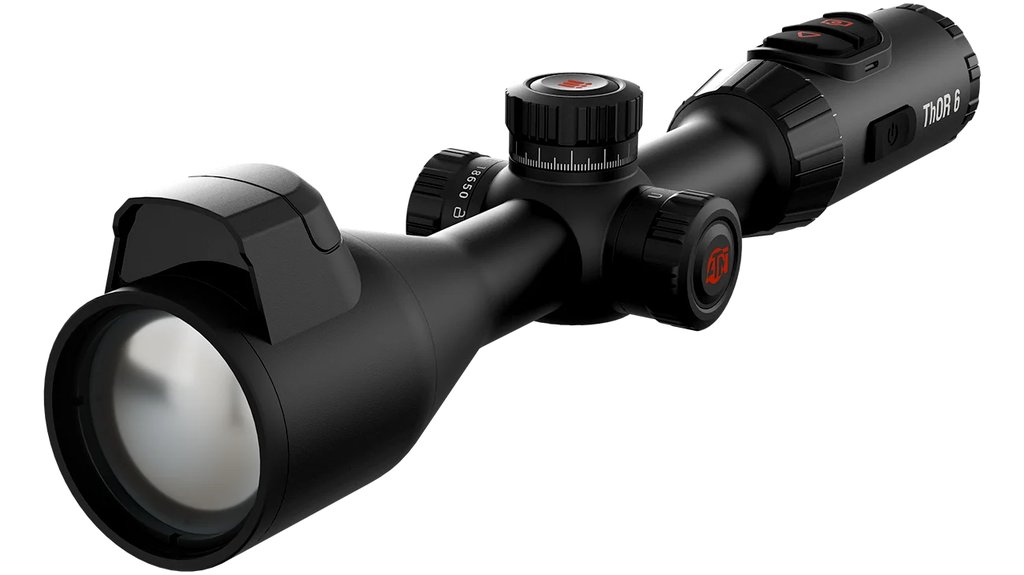
The 6th-generation line earns the top spots because it reads a target cleanly across the kind of ground where older thermals fell apart. The flagship pairs a 640x512 sensor — like stepping from standard definition up to HD when you zoom — with SharpIR, ATN's on-board AI image enhancement that sharpens edges in real time, so a bedded hog stays a hog and not a warm smudge in the brush. A 50 Hz refresh rate keeps a moving target smooth instead of smearing it into a blur, and an <=15 mK NETD rating tells you how it holds up in damp, foggy air: the lower the number, the cleaner the picture when a river bottom fogs over. Add user-replaceable batteries good for roughly 9 hours and every model shares the ATN Connect 6 app, on-board recording and an IP67 weather seal, so the real difference between the three comes down to reach and how wide a slice of terrain you want to watch.
Best for open country: ThOR 6 640x512 3-24x
The ThOR 6 640x512 3-24x is our pick when the target shows up across open ground. Its 640x512 sensor and 3-24x magnification let you pull a heat signature off a distant ridge and zoom in to confirm what you are looking at before it ever closes the gap. Detection reaches out to 3650m, which covers the ranges open-country shots actually happen at.
What you notice on the ridge
On a wide field the extra reach pays off first. The <=15 mK NETD keeps a faint, far-off glow from washing out, so you can tell a coyote from a warm stump at distance instead of walking closer to find out. Crank the magnification and SharpIR holds the edges together, so the target stays a crisp shape rather than a blob. When it starts moving, the 50 Hz refresh keeps it smooth across the glass.
Who it is for — and who it is not
It is for the hunter who works open ridges, cut fields and long sightlines and wants to read a target as far out as possible. It is not the pick if most of your shots come in thick, close cover — for that a wider view and lighter unit serves you better.
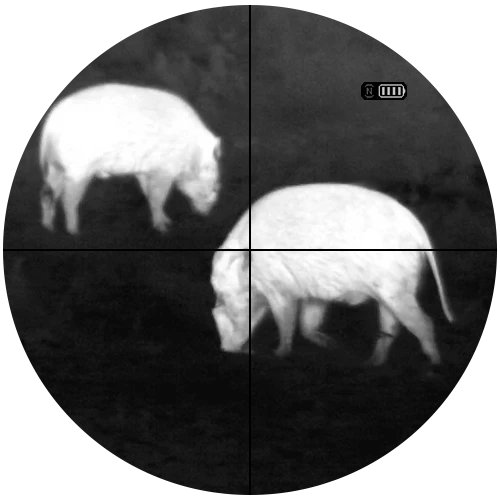
Best all-terrain: ThOR 6 640x512 2-16x
The ThOR 6 640x512 2-16x is our all-terrain pick for a target for thermal scope. It keeps the same 640x512 clarity but starts at a lower 2x, so the field of view is wider when you are scanning brush edges, then zooms to 16x when a target steps into the open. Detection reaches out to 3100m.
What you notice switching ground
The wider base view is the difference-maker when you move from woods to a food plot in one sit. You catch a target entering the frame sooner because you are watching more country at once. The <=15 mK NETD still cuts through creek fog, and the 50 Hz refresh keeps a trotting animal clean as it crosses from cover into the open.
Who it is for — and who it is not
It is for the hunter whose ground changes through the night — some brush, some open. It is not the pick if you only ever shoot long across bare fields, where the 3-24x reaches farther.
Best for close, mixed cover: ThOR 6 384x288 2.5-20x
The ThOR 6 384x288 2.5-20x is our pick for tight, close terrain. Its 384x288 sensor is plenty of detail for the ranges you shoot inside brush and creek bottoms, and at 790 g it is the lightest carry of the three for still-hunting through cover. Detection reaches out to 2300m — more than enough where the shots are close.
What you notice in the timber
In tight cover the value pick feels right at home. The lighter body is easier to swing and hold steady when a target appears fast and close. The <=15 mK NETD keeps a hog readable against warm, wet leaf litter, and six color palettes let you flip to whatever reads cleanest against the background.
Who it is for — and who it is not
It is for the hunter who lives in the brush and wants the lightest, most affordable full-featured option. It is not the pick if you need to read targets across open ground at long range.
How to choose the right thermal scope for your terrain
Start with the ground, not the spec sheet. Work through these in order and the choice gets obvious:
- Judge your ground first — open ridges reward reach and high magnification; tight cover rewards a wide view and light weight.
- Then resolution — a 640 sensor holds detail when you zoom on a distant target; a 384 sensor is lighter and plenty for close work.
- Then detection range — buy the range that comfortably covers your longest realistic shot, not the biggest number.
- Then field of view — a lower base magnification watches more country at once, which finds targets sooner in mixed terrain.
- Finally weight and battery — a scope you will carry all night beats a heavier one, and replaceable cells keep you out past midnight.
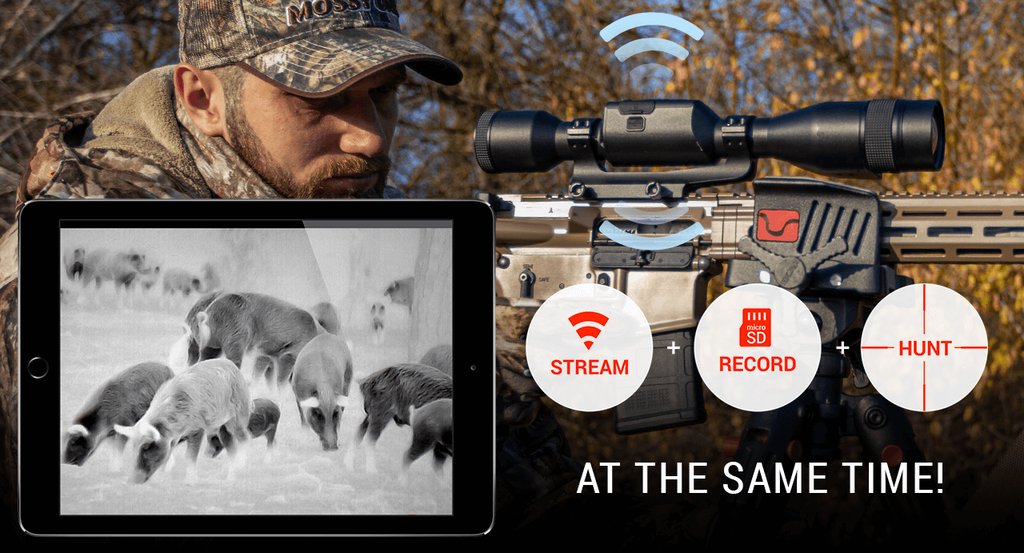
What it looks like on real ground
Here is how it plays out. You are set up where a brushy draw meets an open field, watching for the first target to move. With the ThOR 6 up, the black wall of ground turns readable — heat stands out as a bright shape, and SharpIR keeps the edges clean so you can tell a target animal from a warm rock long before it clears cover. You range it, settle the reticle, and the 50 Hz refresh means the picture never smears as it steps into the open. That is the whole point of matching the scope to your terrain: fewer missed targets, cleaner identification, and confidence in what you are looking at.
How we picked these ATN thermal scopes
These picks are an in-house comparison of ATN's own thermal scopes, not an independent lab review, so treat them as a starting point and check the specs against your own ground. We sorted by terrain and ranked on what decides a target read: sensor resolution and thermal sensitivity (NETD), detection range, field of view, refresh rate, weight and battery life. Only the current 6th-generation line was considered. The trade-offs are honest — the 3-24x reaches farthest but gives up some field of view up close, while the 384 stays light and affordable at the cost of long-range detail. Who it is not for: anyone wanting a cheap novelty. Each model rewards a hunter willing to learn the controls and zero carefully for the country they hunt.
Frequently Asked Questions
What makes a good target for thermal scope on open ground?
On open country the target is often far off and faint, so reach and resolution matter most. A 640x512 sensor like the ThOR 6 640x512 3-24x lets you spot a heat signature at distance and zoom in to confirm it before it closes the gap.
Does terrain really change which thermal scope I should buy?
Yes. Open ridges reward long detection range and high magnification, while thick brush rewards a wider field of view and a lighter body. Matching the scope to your ground is the difference between finding a target early and missing it entirely.
Can a thermal scope pick up a target in daylight?
Yes. Thermal reads heat, not light, so it works in full daylight, deep shade and total dark. The only limit is very hot ground in the middle of the afternoon, which can flatten the temperature difference that makes a target stand out.
How far can the ThOR 6 detect a target?
The 640x512 3-24x detects a heat signature out to 3650m, the 2-16x to 3100m, and the 384x288 to 2300m. Detection means spotting that something is there; identifying it clearly happens at shorter range and depends on sensor resolution.
Does fog or rain stop a thermal scope from reading targets?
Heavy rain and thick fog shorten the range because water scatters heat, but they do not blind it. A low NETD rating like the <=15 mK on the ThOR 6 keeps a target readable when a creek bottom fogs over.
Is the 384x288 model enough for close-cover hunting?
Yes. In tight brush and creek bottoms your shots are close, so the 384x288 sensor holds plenty of detail while keeping the scope lighter and more affordable. Save the higher-resolution models for open ground where you need to read targets far out.
Do I need a phone or Wi-Fi to use the scope?
No. Everything works standalone in the field. The ATN Connect 6 app is a bonus for streaming, changing settings and pulling video off the unit, but the scope is fully functional on its own.
Ready to match a scope to your ground? Start with the ThOR 6 640x512 3-24x — our top pick for reading a target across open country — or browse the full range of ATN thermal scopes to compare sensors, reach and field of view for the terrain you hunt. Every model is backed by ATN support and the Connect 6 app, so you are set to learn fast and hunt hard from the first night out.
Created: August 5, 2026 · 19:53:43 UTC