Terrain decides more about your scope thermal than any single spec sheet ever will. Timber closes shots down to fifty yards and rewards a wide view. Open fields blow distances out and reward reach. A snow-dusted ridge flips the contrast game entirely, since a warm animal blazes against frozen ground. Rather than crown one winner, this roundup walks the ATN ThOR 6 line across three kinds of country and shows which model settles into each. Read to the ground you actually hunt, and the pick makes itself.
Best for wide-open ground: ATN ThOR 6 640x512 3-24x — the flagship reach and detail for glassing distant field edges and ridgelines.
Best value across terrain: ATN ThOR 6 384x288 2.5-20x — every 6th-gen feature at the friendliest tier, ideal where your shots stay moderate.
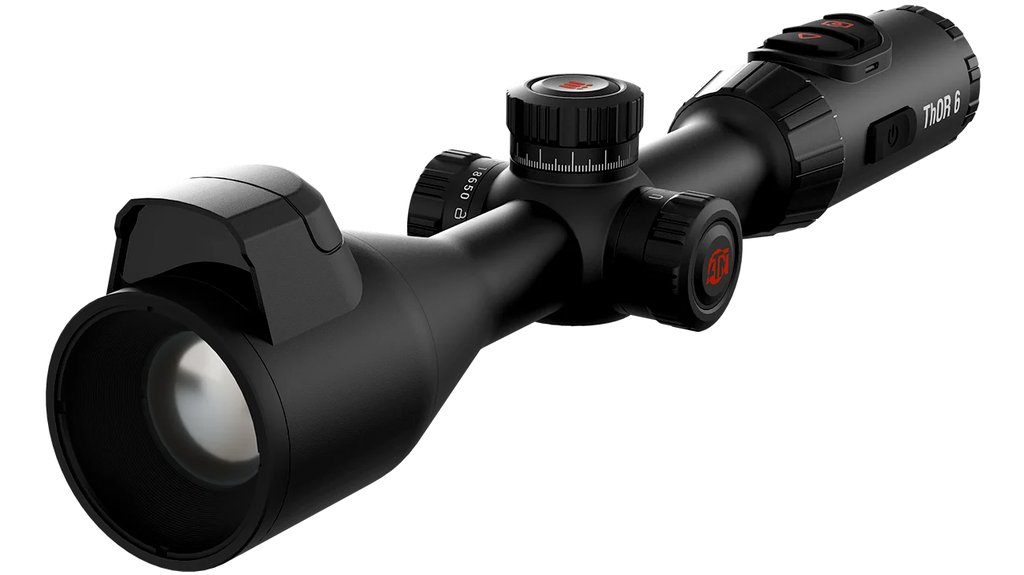
Why ATN's 6th-gen ThOR 6 holds up across ground
Terrain is where a weaker thermal shows its seams, and the 6th-generation ThOR 6 line was engineered to keep a steady picture whether the trees are pressing in or the horizon runs for a mile. The common platform underneath all three is a low-noise sensor at 15 mK NETD or better, SharpIR AI tidying the frame, and a Full-HD OLED that stays legible in black timber and across a moonlit snowfield alike. That NETD number is the smallest temperature gap the sensor can pick apart, measured in millikelvin — go lower and a coyote against cold winter ground reads clean instead of washing out. The rest of the toolkit rides along on every model: Recoil Activated Video, Zeroing Freeze, Hot Point Tracking, Picture-in-Picture, 8x digital zoom, and ATN Connect 6 Wi-Fi. Where the three part ways is resolution, magnification band, and reach — and which of those you lean on flips completely depending on the country under your boots.
ATN ThOR 6 640x512 2-16x — best for mixed terrain
The ATN ThOR 6 640x512 2-16x is the best pick for mixed terrain because its wide 2x low end and 640 sensor cover the two things different ground demands most: a big field of view when the trees crowd in, and enough resolution to identify game when the country opens up. Most hunters don't stay on one kind of terrain all season. You hunt a creek bottom one night and a bean field the next, and this scope never feels like the wrong tool at either.
In the woods, the wide view saves you
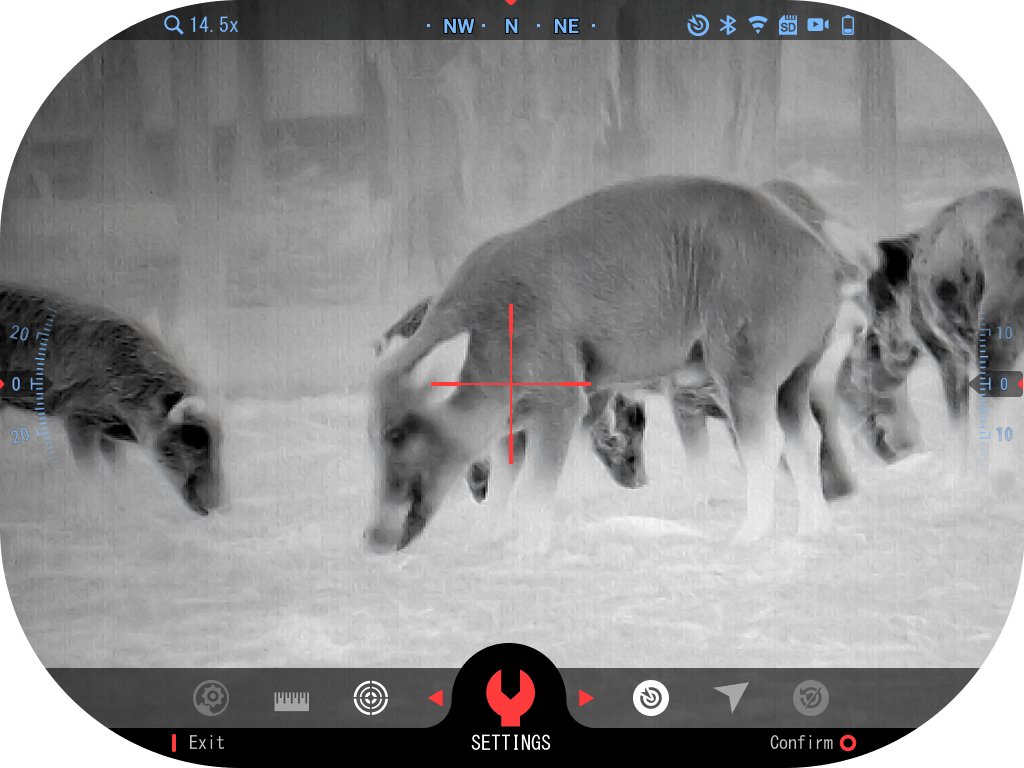
Timber is where the 2x low end proves its worth. When shots collapse to forty or fifty yards and a hog crashes out of the brush, a wide field of view keeps the whole animal on screen instead of trapping you in a narrow tube where it vanishes the second it moves. The 640 sensor still resolves clean shape at that range, so even inside thick cover you're identifying the animal, not reacting to a warm smear. Picture-in-Picture lets you float an aiming window without surrendering the wide look — a real edge when a sounder scatters in the trees.
In the field, it still reaches out
Step out onto open pasture and the same scope stretches to meet it. A 16x top end and a 3100-meter detection range let you glass a field edge, catch a heat signature, and zoom in to confirm before you close the distance. The 35mm F/1.0 lens pulls in enough thermal energy to keep that distant picture usable. It won't out-reach the flagship on the biggest ground, but for the mixed hunter who bounces between cover and open country, it hits the sweet spot where one scope does both without complaint.
Runs all night, records every shot
The replaceable 18650 battery system is the feature that keeps this scope on the terrain longer than the sit would otherwise allow. Roughly nine hours covers most outings, but when a cell finally fades you swap a fresh one in the dark and keep moving — no dead-scope walk back to the truck. Recoil Activated Video captures each shot on its own, so whether the animal dropped in the timber or across the field, the footage is waiting when you get home.
Who it's for: the hunter whose season crosses several kinds of ground — woods, edges, open fields — and who wants one scope that adapts instead of specializing. Who it's not for: someone locked to one extreme, either pure long-range fields or nothing but tight timber; the flagship or a wider fixed setup would edge it out on that single terrain. Put it on the rifle from the ATN ThOR 6 640 2-16x product page, or compare the whole family in the ATN thermal scope collection.
ATN ThOR 6 640x512 3-24x — best for wide-open ground
The ATN ThOR 6 640x512 3-24x is the terrain specialist for wide-open ground — big fields, cut ag land, and ridgelines where the horizon is the only wall. Its 3-24x band and 3650-meter detection range are built for country that punishes short optics. Out here, spotting an animal is half the battle, and this scope's reach means you find heat while it's still a distant speck and have time to plan an approach across the open.
Detail that survives the distance
The 640x512 sensor is what makes long-range terrain workable rather than frustrating. More pixels means a coyote at 300 yards holds its shape instead of dissolving into a warm dot you can't identify. Think of it like the difference between a grainy zoom and a clean one: the flagship's 640 grid keeps fine detail intact way out where the 3-24x range shines. The 50mm F/1.0 lens feeds that sensor plenty of thermal energy, so the far edge of a field stays readable instead of muddy.
The ridge and the snowfield
On a snow-dusted ridge the flagship really sings. Cold ground gives a warm animal enormous contrast, and the 15 mK sensor plus SharpIR turn that into a crisp, high-detail image at distances that would leave a lesser scope guessing. Crank the magnification to pick a bedded predator off a far slope, use Hot Point Tracking to keep tabs on it, and the picture stays clean. Who it's for: the open-country and mountain hunter who lives at distance. Who it's not for: the timber hunter who rarely sees past a hundred yards — the reach goes to waste and the 2-16x view suits close cover better.
ATN ThOR 6 384x288 2.5-20x — best value across terrain
The ATN ThOR 6 384x288 2.5-20x is the value play that still travels across terrain, because it packs the full 6th-gen feature set at the most approachable tier. The 384x288 sensor carries fewer pixels than the 640 models — think of it as a lower-resolution image that's still genuinely sharp and more than good enough to identify game inside a few hundred yards on most ground. It simply won't cling to as much fine detail at the far edge of a big open field.
Palettes for changing conditions
Different terrain reads differently, and this scope leans into that with six color palettes. Woods, open field, snow — each can look best in a different scheme, and being able to switch lets you dial in the contrast that pops on the ground you're standing on. It keeps SharpIR, Zeroing Freeze, Hot Point Tracking, Wi-Fi, and RAV too, so nothing important is missing. The 15 mK sensitivity matches its bigger siblings, so the image stays high-contrast even with the lower pixel count behind it.
Light on the hike, easy on the wallet
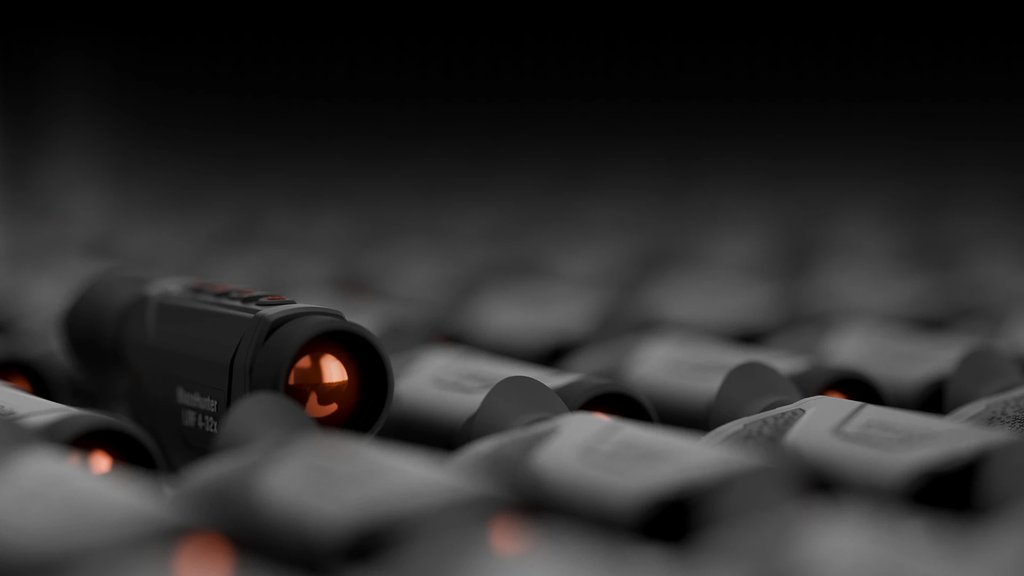
At 1.74 lbs it's the lightest of the three, which you notice on a long walk into a back field or up a ridge. The 2.5-20x range and 25mm lens suit moderate terrain well, and detection out to 2300 meters catches game long before any shot is on the table. Who it's for: the hunter who works mostly moderate ground and wants to bank the savings toward more nights out. Who it's not for: the hunter who lives on the biggest open fields and needs to identify small animals at the far edge — that's the 640 sensor's home turf.
How to choose a scope thermal for your terrain
Choosing a scope thermal for your terrain starts with an honest read of the ground you hunt most. Tight cover rewards a wide low-end view; open country rewards reach and a high-resolution sensor; mixed ground rewards a scope that refuses to specialize. Snow and cold flip contrast in your favor, so even a modest sensor performs above its weight there. Here's how the specs map to dirt:
- Woods and thick cover — prioritize a low 2x base and a wide field of view so close, fast animals stay on screen; the 2-16x fits best.
- Open fields and ridgelines — prioritize a 640 sensor and a tall top end for distant ID; the 3-24x flagship owns this ground.
- Mixed terrain — one scope that bridges both, which is exactly where the 2-16x lives.
- Snow and cold — high contrast makes life easy, so any 15 mK sensor here excels; palettes on the 384 help you tune the look.
- Detection range — a bigger figure buys spotting room on open ground, but it's a detection number, never a shooting distance.
- Weight and battery — under two pounds and about nine hours on all three; the swappable-cell 2-16x is easiest to keep alive on long, mobile hunts.
The trap most hunters fall into is buying for the most extreme terrain they occasionally visit rather than the ground they walk every week. If you spend most nights in mixed cover and only rarely glass a huge open field, the 2-16x will feel right far more often than a pure long-range setup. Match the scope to your common ground, keep the rare exception in mind, and you'll be happy on every kind of dirt you cross.
How we picked these ATN thermal scopes
This roundup is keyed to ground, so each scope was judged on how it behaves on real terrain rather than on a bench. Field of view and magnification band sat right beside sensor resolution in the scoring — a wide view carries the day in timber, reach carries it on open country, and resolution is what tells you whether the animal is a hog or a doe either way. We rounded that out with NETD, detection distance, weight, and runtime. Nothing outside the current 6th-gen ThOR 6 line was on the table. Being straight about it: the flagship rules open country and is plainly too much scope in the trees, the value 384 walks in light and easy but loosens its grip on fine detail way out, and the mixed-ground 2-16x surrenders a little reach so it's rarely the wrong call. This is ATN weighing its own ThOR 6 scopes in-house, not an outside lab review, so set each spec against the terrain you actually cover before you decide.
Frequently Asked Questions
Which ATN ThOR 6 scope thermal is best for hunting in the woods?
The ATN ThOR 6 640x512 2-16x is the best woods choice. Its wide 2x low end keeps close, fast-moving animals fully on screen in tight cover, and the 640 sensor still resolves clean shape at the short distances timber usually gives you.
What scope works best for open fields and ridgelines?
The ATN ThOR 6 640x512 3-24x is built for open ground. Its 3-24x magnification and 3650-meter detection range let you spot and identify game far out across fields and ridgelines, and the 640 sensor keeps distant animals sharp enough to identify.
Does terrain really change which thermal scope I should buy?
Yes. Tight cover rewards a wide field of view, while open country rewards reach and a high-resolution sensor. The same animal at fifty yards in timber and 300 yards in a field asks very different things of a scope, so the ground you hunt most should drive the pick.
How does snow affect thermal scope performance?
Snow and cold ground actually help. A warm animal shows enormous contrast against frozen terrain, so a 15 mK sensor like the ones in the ThOR 6 line produces an especially crisp, easy-to-read image in winter conditions.
Is the 384 sensor good enough for mixed terrain?
For moderate ground it is. The ATN ThOR 6 384x288 keeps every 6th-gen feature and a clean image inside a few hundred yards, and its six color palettes help you tune contrast for different terrain. Step up to a 640 model only if you regularly identify game at long range on big open fields.
How long will these scopes run on a mobile, all-terrain hunt?
All three run roughly nine hours on their internal cells. The 640 2-16x adds a replaceable 18650 battery system, which is the most convenient for long, mobile hunts across terrain since you can swap a fresh cell in the field and keep going.
Which ThOR 6 is the lightest to carry on a long hike?
The ATN ThOR 6 384x288 2.5-20x is the lightest at 1.74 lbs, which you feel on a long walk into a back field or up a ridge. It's a strong choice when weight and value matter more than maximum long-range resolution.
Ready to match a scope thermal to the ground you actually hunt? The ATN ThOR 6 line covers it all — tight timber, wide-open fields, and snowy ridgelines — on the same 6th-gen sensor and SharpIR processing. For the widest mix of terrain, start with the best-overall ATN ThOR 6 640 2-16x, then browse the full lineup on the ATN thermal scope collection page to weigh reach, resolution, and field of view against your terrain. Buy for the dirt you cross most, and the scope will feel right all season.
Created: August 5, 2026 · 19:53:43 UTC