If your search for a scheels thermal scope has narrowed to ATN's 640-class ThOR 6 optics, the real decision comes down to two models and one honest question: what do you actually hunt with it? The ATN ThOR 6 640x512 2-16x and the 640x512 3-24x share the same excellent sensor, so this is not a fight about image quality - it is about the job you are buying the scope to do. This is an ATN-only comparison, meant as a clear alternative to weigh against whatever else you have been looking at, and it puts the two head to head by use case: the all-around mixed-bag hunter versus the dedicated long-range predator specialist.
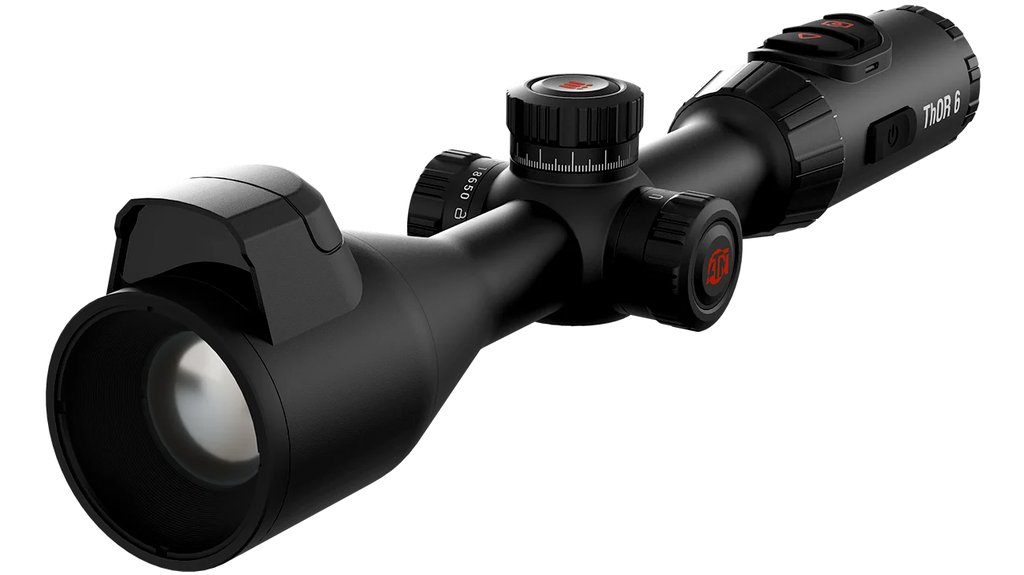
ATN ThOR 6 2-16x vs 3-24x at a glance
Both scopes use the same 640x512 sensor at NETD ≤15 mK, so they see equally well - a lower millikelvin number just means a more sensitive sensor, and here it is identical on both. The split is optics and reach, which is really a split in what you use the scope for. Here is how the two line up.
How the ThOR 6 2-16x works for the all-around hunter
The ThOR 6 640x512 2-16x is built for the hunter who shoots a bit of everything and never knows exactly what the night will bring. Its 2x base gives a wider field of view than the 3-24x, meaning you take in more of the scene at once - a real advantage when you are working hogs at one setup, a fox the next, and something crosses close and fast. Field of view is simply how much you see at a glance, and a wider base means you find the animal quicker. The 35 mm lens keeps the front end shorter and the whole optic swings fast onto a moving target. For the mixed-bag hunter whose distances change constantly, that flexibility is worth more than a bigger top-end number.
How the ThOR 6 3-24x works for the long-range specialist
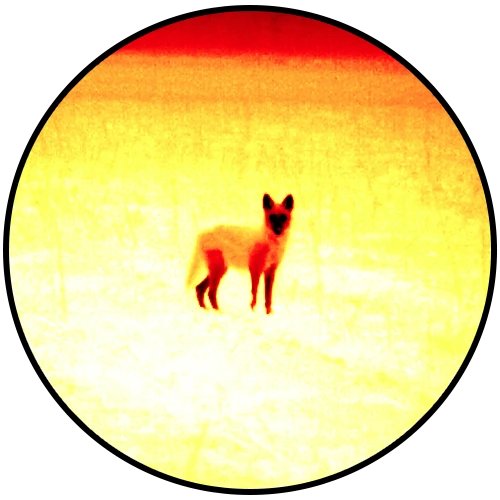
The ThOR 6 640x512 3-24x is built for one job done exceptionally well: identifying and taking predators at distance. Its 50 mm lens and 24x top magnification stretch detection to 3650 m and, more importantly, let you resolve what a far-off heat signature actually is before you commit. On open ground where a coyote hangs up at the edge of a field, the extra glass turns a distant warm dot into a shape you can positively identify and range. More pixels and more reach mean more certainty far out. The trade is a longer front end and a narrower base view, which the dedicated specialist happily accepts because they are almost never taking a close, snap shot.
When to choose the 2-16x
Choose the 2-16x if you are an all-around hunter with no single use case - hogs some nights, predators others, pests around the property in between, all at varied and often close distances. The wider base view and quicker handling cover the widest spread of situations, and you will rarely miss the top-end magnification you gave up. It is the practical everyday pick when your nights refuse to fit one mold. There is a comfort factor too: you spend most of a night scanning, not shooting, and a broader picture means fewer sweeps to cover the same ground and less chance of walking your eyes right past an animal that is closer than you expected.
When to choose the 3-24x
Choose the 3-24x if predators at range are your whole reason for buying a thermal - if you set up on open fields and cut ag ground specifically to reach coyotes and other dogs that will not let you close the gap. The longer reach and finer detail at distance justify the extra length and slightly slower swing, because your shots are deliberate, not reactive. If you keep passing on targets because you could not tell what they were far out, this is the scope that fixes that. For the dedicated long-range hunter, positive identification at distance is the entire game, and this is the tool that wins it.
What both scopes share regardless of use case
Whichever job you are buying for, both ThOR 6 scopes hand you the same core toolkit, so you are not trading away features to pick a lens. Each runs the same ≤15 mK sensor, a 50 Hz refresh for smooth tracking of moving game, SharpIR image cleanup, and Recoil Activated Video that saves every shot. Both include Wi-Fi with ATN Connect 6, Picture-in-Picture, Hot Point Tracking, Zeroing Freeze, and a Full-HD OLED display, and both run about 9 hours on two swappable 18650 cells so a spare pair covers a full night on either model. That shared foundation is why this really is a use-case decision and nothing more - you will not feel short-changed on the everyday features no matter which lens you mount.
Our recommendation
For the widest range of real hunting, we lead with the ATN ThOR 6 640x512 2-16x as the everyday pick - it handles a mixed bag at varied distances with the same 640 clarity and comes onto target faster, which is what most nights demand. Step up to the 3-24x only if you are genuinely a long-range predator specialist who lives on open ground. Either way you are on ATN's current 640-class sensor. Compare both in the ThOR 6 thermal scope category, and if a 384 sensor fits your budget better, the ThOR 6 384x288 2.5-20x keeps the same smart features at a lower tier.
How we compared them
We judged these two ATN ThOR 6 scopes against the one thing that separates them - use case - using base field of view and handling speed for the all-around hunter, and magnification plus detection range for the long-range specialist. Both were held to the same sensor resolution, NETD sensitivity, refresh rate, and battery, so the comparison isolates how you hunt rather than image quality. Only the current 6th-generation line was considered. This is an in-house comparison of ATN's own scopes, not an independent lab review; the honest caveat is that neither is perfect at both jobs, so match the choice to what you actually do most nights rather than the rare exception.
Frequently Asked Questions
Is the 2-16x or 3-24x the better all-around thermal scope?
The ATN ThOR 6 640x512 2-16x is the better all-around choice for a mixed-bag hunter. Its wider base view and faster handling cover the widest spread of distances and situations, while the 3-24x is a more specialized tool for long-range predator work.
Which ATN ThOR 6 is best for long-range coyotes?
The ThOR 6 640x512 3-24x is the pick for long-range predators. Its 24x top magnification and 3650 m detection range let you positively identify a coyote at the far edge of a field before you take the shot, which matters most on open ground.
Do the two scopes see equally well?
Yes. Both use the identical 640x512 sensor at NETD ≤15 mK, so raw image sensitivity and clarity are the same. The difference is purely optical - base field of view, maximum magnification, detection range, and how quickly each handles.
Which has the wider field of view?
The 2-16x, thanks to its 2x base magnification and 35 mm lens. A wider base view lets you scan more of a scene at once and get on close targets faster, which is why it suits the all-around hunter working varied and close distances.
Are they the same weight?
Both come in around 830 g. The 3-24x carries a larger 50 mm lens and a longer front end, so it balances slightly more forward and swings a touch slower, even though the listed weight is the same.
Can I record my shots on both?
Yes. Both include Recoil Activated Video, which senses recoil and automatically saves a clip of the shot, along with built-in Wi-Fi and ATN Connect 6 for reviewing and sharing footage from either scope.
Still weighing reach against flexibility? If you hunt a mixed bag at varied distances, mount the ATN ThOR 6 640x512 2-16x and enjoy the wider view and faster swing; if you are a dedicated long-range predator hunter, the 3-24x is your scope. Either way, browse both on the ThOR 6 thermal scope page and compare the base field of view against the way you actually hunt. Match the optic to your use case and every night gets easier.
Created: August 10, 2026 · 09:39:32 UTC