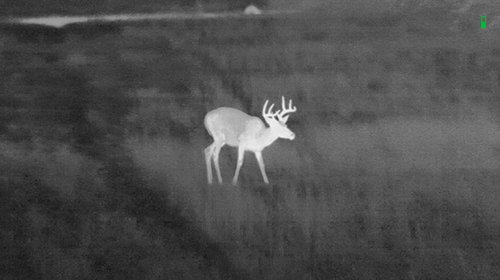
Movies made thermal look like a crisp green photograph with a name tag floating over every animal. A real life thermal scope is different: you read heat, not faces, and you learn the shapes fast. That gap between screen fantasy and field truth trips up a lot of first-time buyers, so this roundup ranks three current ATN ThOR 6 thermal scopes by what they honestly show you in the dark, at the ranges you will really shoot, with the limits nobody puts on the box.
Best all-around: ATN ThOR 6 640x512 2-16x — the same sharp 640 sensor with a wider real-world view for mixed ground.
Best value: ATN ThOR 6 384x288 2.5-20x — the complete ThOR 6 feature set on a lighter body at the value tier, plenty for close and mid-range work.
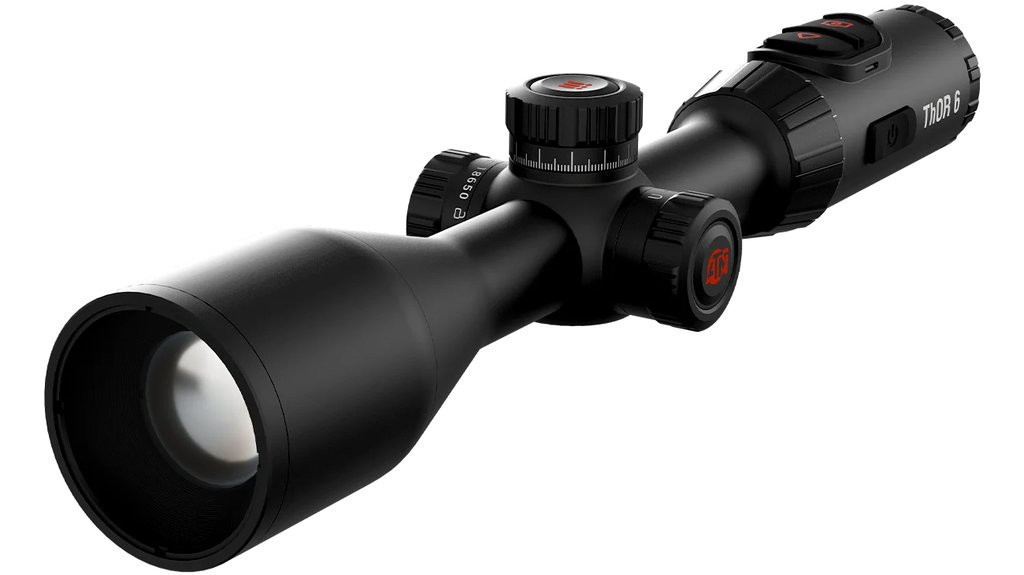
Why ATN's 6th-gen ThOR 6 holds up as a real life thermal scope
The ThOR 6 holds up in the field because it pairs a sensitive sensor with software that cleans the picture while you watch. In real use you are not reading a glossy heat map; you are reading contrast between a warm body and cooler ground, and that contrast is where a scope wins or loses. Every model here resolves a temperature difference as small as ≤15 mK, so a bedded deer separates from the dirt instead of blending in. SharpIR AI enhancement then firms up the edges each frame, and a steady refresh keeps a trotting hog from smearing. Those three traits are what a real life thermal scope lives or dies on once the tripod fantasy wears off.
ATN ThOR 6 640x512 3-24x: the real life thermal scope that reaches
The ATN ThOR 6 640x512 3-24x is the pick when you want the field picture to hold together at distance, not fall apart the moment something walks out to 250 yards. Think of the jump from a 384 to a 640 sensor the way you think about SD versus HD television: the same scene, but enough extra lines that a heat shape resolves into an animal with a posture you can read instead of a bright smudge you have to guess at.
What you actually see through it
A 640x512 detector carries roughly four times the dots of a 384 sensor across the same view, and in real life that density is the whole ballgame. It is the difference between knowing you are looking at a coyote quartering away and only knowing something warm is out there. That detail is why detection stretches to 3650 m before a warm target thins out on the display, though remember detection just means "something is there" — confidently naming what it is happens closer in.
50 mm glass and honest zoom
The wide 50 mm germanium lens gathers more heat energy than a smaller objective, so the sensor gets a brighter starting signal to work with. Run the base 3x up to 24x and the image stays worth using because there is real resolution underneath the magnification, not enlarged pixels. This is where marketing and reality part ways: zoom on a weak sensor just gives you a bigger blur, while zoom on this one still shows you shoulders and legs.
Who it's for: the hunter working big cut fields, pasture, or open desert who wants the longest honest reach ATN builds into a ThOR 6. Who it's not for: anyone slipping through tight timber, where its narrow high-mag field of view is more scope than the ground calls for.
ATN ThOR 6 640x512 2-16x: the easy-scanning real life pick
Same sensor, a wider honest sweep
The 2-16x carries the identical 640x512 sensor and ≤15 mK sensitivity as the top pick, but its 2x base magnification opens a noticeably wider view. In the field that matters more than the spec sheet suggests: a wider first look means you catch movement at the edge of a field before it clears cover, and you spend less of the night panning back and forth hunting for the heat signature you know is out there. You find first, then zoom to confirm.
Batteries you can swap in the dark
Its replaceable 18650 battery system means a dead cell is a ten-second fix on the tailgate, not the end of a good night. Detection out to 3100 m keeps it honest for most real shots, and a fresh pair of cells extends a hunt that started paying off after midnight. Small thing on paper, big thing at 1 a.m.
Who it's for: the all-purpose hunter who wants full 640 clarity but works mixed ground, from feeders to field edges to timber breaks. Who it's not for: the pure long-range shooter who would rather trade the wider view for the 3-24x's extra reach and top magnification.
ATN ThOR 6 384x288 2.5-20x: the value real life thermal scope
The whole toolkit, a friendlier tier
The 384x288 model runs the same SharpIR processing, Recoil Activated Video, and six color palettes as its 640 siblings; it simply reads fewer dots. For hogs and coyotes inside a few hundred yards — which is where most real shots actually happen — that is genuinely enough. It sits at the value tier, so a first-time thermal buyer can get in without stepping down to an older or stripped-out design, and it detects warm targets out to 2300 m.
Lightest to carry all night
At 1.74 lbs it is the easiest of the three to carry on a long walk-in and rides well on a lighter rifle, without giving up the ThOR 6 controls you would learn on either 640 model. In real life the scope you actually carry beats the one that stayed home because it felt heavy, and this is the one that stays on the gun.
Who it's for: the value-minded buyer stepping into thermal for the first time who hunts close to mid range. Who it's not for: anyone who regularly needs to identify targets past 300 yards, where the extra dots of a 640 sensor clearly pull ahead.
How to choose a real life thermal scope
Match the sensor and lens to the distance and terrain you truly hunt, not the one long shot you took once. Everything else in the ThOR 6 line is shared, so your money mostly buys detail and reach. Be honest about your ground first, then pick:
- Wide open ground, long looks — go 640x512 3-24x for the detail and honest reach at distance.
- Mixed terrain, general hunting — the 640x512 2-16x pairs a crisp sensor with a wider, easier-scanning view.
- Value first, close to mid range — the 384x288 2.5-20x gives you the full feature set for less.
- Moving targets — all three refresh fast enough to keep a runner sharp, so decide on sensor, not motion handling.
- Long nights out — the 2-16x's swappable 18650 cells stretch your window without hunting for a charger.
How we picked these ATN thermal scopes
We ranked these three on the specs that decide what you really see in the dark: sensor resolution, NETD thermal sensitivity, detection range, refresh rate, weight, and battery life, each weighed against what a "real life thermal scope" shopper actually does, which is spot a warm animal, identify it honestly, and take an ethical shot. We only considered ATN's current 6th-gen ThOR 6 line. This is an in-house comparison of ATN's own scopes rather than an independent lab test, so hold these figures against your own ranges and terrain. The honest trade-off: the sharpest, longest-reaching pick is also the heaviest and steps up in price, and none of these replaces a plain day optic when the sun is up and you just need simple glass.
Frequently Asked Questions
What does a real life thermal scope actually look like?
It shows heat as brightness, not a photographic image with labels. Warm bodies glow against cooler ground, and you learn to read animals by shape, size, and how they move rather than by fine facial detail. A high-resolution scope like the ThOR 6 640x512 makes those shapes far easier to read, but even the best thermal reads heat contrast, not a movie-style picture.
How far can I really identify an animal, not just detect it?
Detection range and identification range are very different in the field. The ThOR 6 detects warm targets from about 2300 m on the 384 model to 3650 m on the 640x512 3-24x, but that only means you know something warm is out there. Confidently identifying what it is happens much closer and depends on your sensor resolution and magnification, which is why the 640 models pull ahead for honest ID.
Does a thermal scope see through walls or brush?
No, and that is one of the biggest myths. Thermal reads surface heat, so it cannot see through solid walls, glass, or thick vegetation. It does cut through light brush, smoke, and total darkness far better than the eye, which is its real advantage. Dense cover still blocks the heat behind it.
Why does sensor resolution matter more than magnification?
Magnification only helps if there is resolution underneath it. Zooming a low-resolution sensor just enlarges a blur, while the 640x512 models have enough dots that the image stays useful when you crank the power. That is why the 3-24x reaches farther in real use than its zoom number alone would suggest — the sensor and 50 mm lens give it real detail to enlarge.
What does the ≤15 mK NETD figure mean in practice?
NETD is the smallest temperature difference the sensor can detect, measured in millikelvin, and lower is better. A ≤15 mK rating means the ThOR 6 picks up fine heat contrast, so a warm animal stands out cleanly from cooler brush right behind it. In the field that translates to fewer missed targets on cold, damp nights when contrast is low.
Can I record what I see through the scope?
Yes. Every ThOR 6 here includes Recoil Activated Video, which begins recording the instant you fire, plus built-in Wi-Fi and ATN Connect 6 to stream and pull footage to your phone. It is a genuinely useful real-world feature for confirming a hit and reviewing a stalk later.
Which ThOR 6 should a first-time thermal buyer get?
For most new buyers hunting close to mid range, the ThOR 6 384x288 2.5-20x is the sensible entry: it carries the full ThOR 6 feature set at the value tier and is the lightest of the three. If you know you will regularly reach past 300 yards or hunt wide-open ground, stepping up to one of the 640x512 models is worth it for the added detail at distance.
Ready to see what a real life thermal scope shows on your own ground? The ATN ThOR 6 640x512 3-24x is our pick for the most honest detail and reach, but every scope in the ATN ThOR 6 thermal scope lineup shares the same sensitive sensor and smart image processing. Match the sensor and lens to the distance and terrain you actually hunt, set your expectations to heat contrast rather than movie footage, and let the field do the convincing. Your first clear signature in full dark usually settles it.
Created: August 5, 2026 · 19:53:43 UTC