Thermal vs Night Vision Scope 2026: Why ATN BlazeSeeker 6 Wins for Low-Light Clarity
Night vision scope vs thermal 2026: the ATN BlazeSeeker 6 is the clear choice for low-light clarity. Its 256×192 thermal sensor with ≤20mK NETD detects heat signatures through complete darkness, fog, and rain without any IR illuminator — delivering reliable detection out to 460 m in a 270 g body.
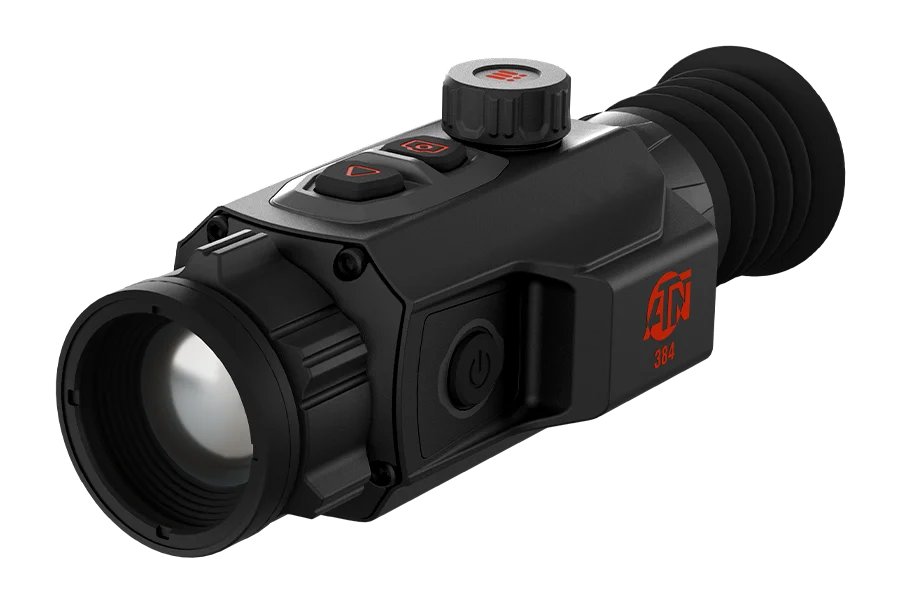
ATN BlazeSeeker 6 — Key Specs
| Spec | Value |
|---|---|
| Generation | Gen 6 |
| Sensor Resolution | 256×192 | 50 Hz | 12 μm | NETD ≤20mK |
| Detection Range | 460 m (BlazeSeeker-210) |
| Display | 800×600 OLED |
| Battery Life | ~8 hrs (internal rechargeable + USB-C external) |
| Weight | 270 g / 0.6 lb |
| MSRP | See current pricing at ATN |
What You Need to Know
- Thermal scopes detect heat signatures through fog, rain, and total darkness — night vision requires ambient or IR light to function. In zero-light conditions, a thermal device operates independently of any illumination source.
- The ATN BlazeSeeker 6 delivers a crisp thermal image with detection out to 460 m, outperforming Gen 3 night vision in dense-cover and adverse-weather scenarios where light amplification fails entirely.
- Detection vs. identification: thermal imaging excels at rapid detection, and the BlazeSeeker 6's high-resolution 256×192 sensor with ≤20mK NETD bridges the gap by delivering sharp target ID at extended distance.
- Total cost of ownership favors thermal — no image-tube replacement cycles and no IR illuminator accessories required, making the BlazeSeeker 6 a lower long-term investment than comparable night vision systems.
- The BlazeSeeker 6 integrates Wi-Fi connectivity and the ATN Connect 6 app with a built-in AI assistant, adding operational utility — live view, media management, and guided setup — that standalone night vision optics cannot match.
- IP67 waterproofing, a working temperature range of −30°C to 55°C, and 32 GB of internal storage make the BlazeSeeker 6 a purpose-built field tool ready for demanding conditions year-round.
Our Pick: ATN BlazeSeeker 6
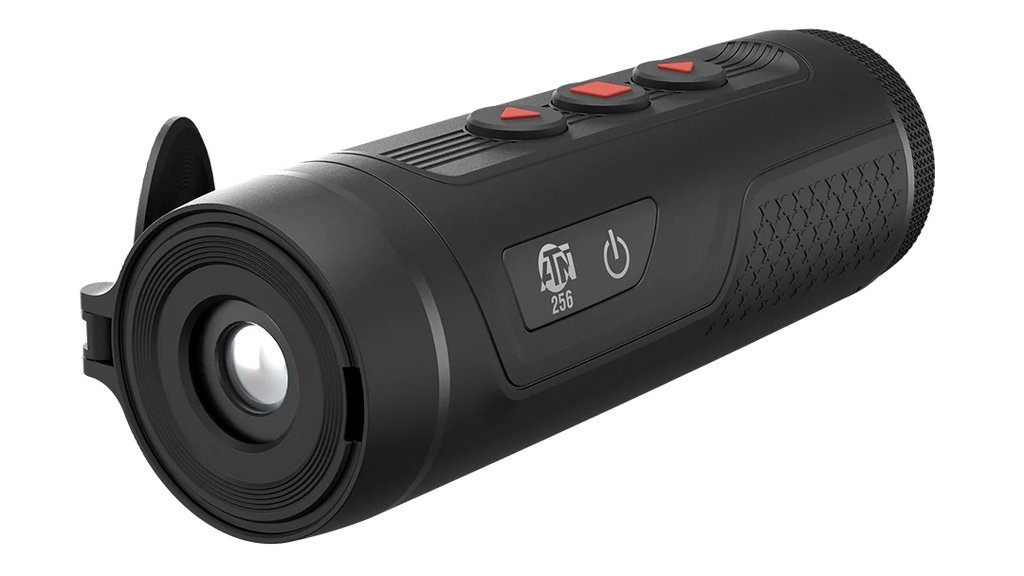
The ATN BlazeSeeker 6 is the definitive answer to the night vision scope vs thermal debate in 2026. Its 12 μm VOx uncooled focal plane array with ≤20mK thermal sensitivity renders heat signatures in sharp relief through conditions — total darkness, dense fog, heavy rain — where any night vision device dependent on light amplification simply cannot function. At 270 g with up to 8 hours of continuous battery life, it provides all-night operational endurance in a form factor that fits a jacket pocket, eliminating the weight penalty and accessory dependency that traditional night vision setups impose.
View ATN BlazeSeeker 6 on ATN →Night Vision Scope vs Thermal: How the Technologies Actually Differ
Understanding why this comparison matters in 2026 starts with how each technology gathers information. Night vision scopes amplify existing ambient light — moonlight, starlight, or artificial sources — using an image intensifier tube to produce a visible image. Gen 3 tubes achieve impressive low-light performance, but they share one fundamental limitation: they require photons to work. In a blacked-out building, a dense tree line, or under heavy overcast, that light simply is not present at usable levels. Supplement it with an IR illuminator and you introduce a visible signature on any opposing thermal device — the exact opposite of operational discretion.
Thermal imaging operates on a completely different physical principle. It detects the infrared radiation emitted by all objects with a temperature above absolute zero. A deer at 37°C standing in front of 5°C brush creates a temperature differential that a quality thermal sensor resolves with high contrast — regardless of whether there is a single photon of visible light present. Fog, light rain, and smoke scatter visible and near-infrared light heavily, degrading night vision performance significantly. Thermal infrared, operating at longer wavelengths, passes through these atmospheric obscurants with far greater efficiency. The result: thermal detection capability in conditions where night vision produces only a degraded, unreliable image.
The historical argument in favor of night vision — superior target identification at close range due to better image resolution — has narrowed considerably with Gen 6 thermal sensors. The BlazeSeeker 6's 256×192 array with ≤20mK NETD and ATN's SharpIR© image processing delivers target identification quality that closes the gap substantially, while retaining every weather and illumination advantage that thermal inherently provides.
What to Look for When Choosing Between Thermal and Night Vision in 2026
The decision framework comes down to four practical criteria: operating environment, use case, budget trajectory, and system complexity tolerance. On operating environment: if the primary scenario involves dense cover, variable weather, or any possibility of zero ambient light, thermal wins without qualification. Night vision scopes remain competitive in open terrain with consistent ambient light — clear nights in open country where the illumination advantage is reliable. On use case: thermal excels at rapid area scanning and detection — the 50 Hz refresh rate of the BlazeSeeker 6 tracks moving targets smoothly with no motion blur at any zoom level. Night vision retains a marginal edge for close-range identification when extreme image detail is required and conditions are favorable, though the gap narrows with each sensor generation. On budget trajectory: a quality Gen 3 night vision tube carries significant cost, and image tubes degrade over time with use and UV exposure — requiring eventual replacement. The BlazeSeeker 6's uncooled VOx detector has no consumable element subject to the same degradation cycle, making the total cost of ownership calculation favor thermal over a multi-year horizon. On system complexity: night vision setups frequently require IR illuminators, anti-reflection devices, and careful management of what can be seen on opposing thermal devices. The BlazeSeeker 6 is a self-contained system — sensor, display, storage, app connectivity, and power in a single 270 g unit. There is no accessory dependency and no signature management requirement. For clients who want operational simplicity without sacrificing detection capability, the complexity argument alone justifies the thermal choice in 2026.
Why the ATN BlazeSeeker 6 Settles the Debate for Most Clients in 2026
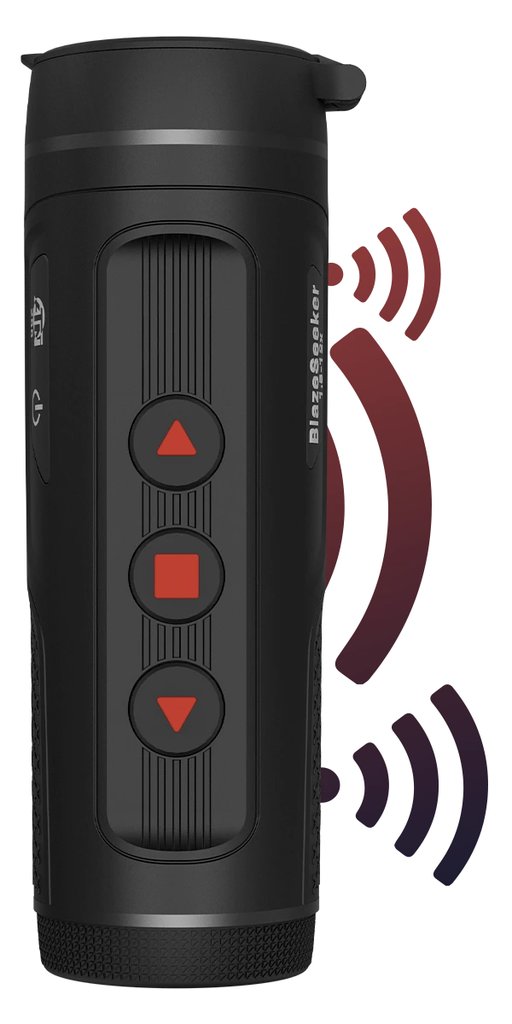
The ATN BlazeSeeker 6 does not simply win on thermal fundamentals — it wins on execution. The 800×600 OLED display renders the sensor output at a pixel density that makes the 256×192 thermal feed visually clean and easy to read at any magnification step. Six color palettes — White Hot, Black Hot, Iron Red, Alarm, Green Hot, and Sepia — give clients full control over contrast presentation for different background conditions, a meaningful practical feature when scanning between warm soil and cool vegetation at dusk. Hot Point Tracking automatically locks onto the highest-temperature object in frame, reducing reaction time in dynamic environments. The ATN Connect 6 companion app, available on iOS and Android, pairs via built-in Wi-Fi to deliver live view streaming, remote control, and direct access to a built-in AI assistant trained on the full product manual — a capability that addresses setup and field-use questions instantly without referencing documentation. At 149×57×50 mm and IP67-rated, the BlazeSeeker 6 fits a standard chest pocket and operates through immersion conditions that would compromise many competing optics. For clients evaluating the night vision scope vs thermal question in 2026, the answer that covers the widest range of real-world conditions — weather, darkness, cover density, system simplicity — is thermal. And within the thermal category at this sensor tier, the BlazeSeeker 6 delivers Gen 6 performance in a form factor and feature set that justifies the investment on first use.
Frequently Asked Questions
Is thermal better than night vision for all scenarios?
Thermal provides decisive advantages in zero-light conditions, adverse weather, and dense cover where night vision light amplification is degraded or completely ineffective. In open terrain with consistent clear-sky ambient light, a quality Gen 3 night vision scope remains competitive at close range. For the broadest range of real-world conditions in 2026, thermal is the more capable and versatile choice.
Can the ATN BlazeSeeker 6 be used in rain?
Yes. The BlazeSeeker 6 carries an IP67 waterproof rating, meaning it is rated for submersion up to 1 meter for 30 minutes and is fully protected against water ingress from rain, splashing, and heavy field moisture. It also operates across a working temperature range of −30°C to 55°C (−22°F to 131°F).
Does thermal imaging work through glass?
Standard glass blocks the thermal infrared wavelengths that thermal sensors detect. Thermal imaging does not work through conventional glass windows. This is a known physical limitation of all thermal devices — not specific to the BlazeSeeker 6. Germanium lenses, as used in the BlazeSeeker 6, are transparent to thermal infrared and are the industry standard for thermal optics.
How long does the BlazeSeeker 6 battery last in the field?
The internal rechargeable battery provides approximately 8 hours of continuous operation. The device also supports external power via USB Type-C (5 VDC / 2A), allowing clients to extend runtime indefinitely with a portable power bank — a significant practical advantage for extended overnight operations.
What is the detection range of the BlazeSeeker 6?
The BlazeSeeker-210 variant (1.7–13.6× magnification, 10mm lens) has a stated detection range of 460 m. The BlazeSeeker-207 variant (1.2–9.6× magnification, 7mm lens) has a detection range of 345 m. Both share the same 256×192 sensor, 50 Hz refresh rate, and ≤20mK NETD sensitivity.