Night Hunting Laws: Is a Thermal Scope Legal in Your State?

There is nothing quite like the adrenaline of a night hunt. Sitting in the pitch black, listening to the woods come alive, and waiting for a sounder of hogs or a smart old coyote to step into the clearing—it is an experience every hunter should have. Modern thermal optics have completely changed the game for night hunting, turning pitch-black fields into high-contrast landscapes. But before you mount a new optic to your rifle and head out into the dark, you have to ask the big question: is it legal to hunt with a thermal scope?
Here is the deal: wildlife management in the United States is handled at the state level, which means the rules change the second you cross a state line. What is standard practice in Texas might get your truck confiscated in another state.
Disclaimer: I am a hunter, not a lawyer. The information in this article is for educational and general guidance purposes only. Wildlife laws vary wildly by state, county, and even specific tracts of public land, and they change frequently. Never rely on an online article for legal advice. Always check the most current, official regulations from your state’s wildlife agency or local game warden before heading into the field.
If you are trying to make sense of all the red tape, you are in the right place. In this guide, we are going to break down the basics of thermal scope hunting laws, explore common night hunting regulations, and look at how to safely and legally use this technology in the field.
What Is a Thermal Scope and Why It’s Regulated
Before we dig into the law books, let's talk about the tech. Unlike traditional night vision, which amplifies ambient starlight or relies on an infrared (IR) flashlight, a thermal scope detects heat signatures. It reads the infrared radiation emitted by objects, animals, and the environment, turning temperature differences into a clear image on a digital screen.
Because thermal doesn't need any light at all, it allows hunters to see animals hiding in thick brush, light fog, or absolute darkness.
So, why are state agencies so strict about it? It comes down to a few key factors:
- Fair Chase: State agencies want to ensure game animals (like deer and elk) have a sporting chance. Giving a hunter the ability to see a deer's body heat at midnight violates the traditional principles of fair chase for those specific species.
- Safety: Shooting in the dark comes with inherent risks. Regulators want to ensure hunters can positively identify their targets and what is beyond them.
- Poaching: Unfortunately, outlaws use advanced technology to take game illegally. Strict laws on night hunting help game wardens crack down on poachers.
Is It Legal to Hunt with a Thermal Scope?
If you want the short answer to ""is it legal to hunt with a thermal scope?"", here it is: It depends.
Legality almost always hinges on what you are hunting, where you are standing, and what time the clock says. Here are the three main factors that dictate the rules.
Game vs. Non-Game Animals
This is the biggest dividing line. In almost every state in the U.S., it is strictly illegal to hunt traditional ""game"" animals—like whitetail deer, elk, moose, turkeys, and waterfowl—with a thermal scope or at night.
However, when it comes to ""non-game"" animals, predators, and invasive species—like feral hogs, coyotes, raccoons, and bobcats—the rules open up significantly. Many states actively encourage hunters to help control these populations and allow the use of thermal optics to get the job done.
Private Land vs. Public Land
Where you hunt matters just as much as what you hunt. States that permit thermal predator hunting often restrict it entirely to private property. Public lands, such as state forests or Wildlife Management Areas (WMAs), usually have much stricter regulations, and night hunting of any kind is often outright banned.
Time of Day
This sounds obvious, but it trips up a lot of folks. Some states allow you to mount a thermal scope on your rifle for daytime hunting, but prohibit its use after official sunset. Other states might ban the possession of a thermal scope entirely while you have a firearm in your vehicle at night, even if you are just driving home from a daytime hunt.
Overview of Thermal Scope Hunting Laws in the U.S.

Because we cannot list the exact legal code for all 50 states (and because those codes change every season), it helps to group thermal scope hunting laws into three broad categories.
1. The Green Light States
Many Southern and Midwestern states fall into this category. Places dealing with massive feral hog problems or heavy coyote predation on livestock tend to have very relaxed laws. In these states, hunting invasive species at night with thermal optics is common practice. You can often hunt year-round, with no bag limits, using centerfire rifles and suppressors.
2. The "Yes, But..." States
This is where the majority of the country sits. These states allow night hunting with thermal optics, but they wrap it in red tape. You might be required to use a specific type of weapon (like a rimfire rifle or a shotgun). You might only be allowed to hunt during specific winter months. Or, you might need to apply for a specialized depredation permit from the state to hunt on your own private farm.
3. The Red Light States
A handful of states take a hardline approach. In these jurisdictions, it is generally illegal to hunt any animal at night, or it is illegal to use any electronic device that transmits or detects light/heat attached to a firearm. In these states, thermal scopes are effectively banned for hunting purposes.
Night Hunting Regulations You Need to Know
If you find out that thermal hunting is allowed in your area, your research isn't done yet. You still need to navigate the specific night hunting regulations that govern how you operate in the field.
Here are the details you must pin down before your hunt:
- Licensing and Permits: Do you need a standard hunting license, or does the state require a specific ""furbearer"" or ""night hunting"" permit? If you are doing pest control for a farmer, do you need a state-issued depredation tag?
- Weapon Restrictions: Some states get very specific about what you can shoot at night. You might be limited to a .22 caliber rimfire or a shotgun. Centerfire rifles might be deemed too dangerous for night hunting in flat or densely populated areas.
- Land Permissions: Even if night hunting is legal on private land, many states require you to have written, signed consent from the landowner in your pocket while you hunt.
- Notification Rules: In some jurisdictions, you are legally required to call the local sheriff's dispatch or game warden before you start shooting at night, so they don't respond to ""shots fired"" calls from neighbors.
Common Mistakes Hunters Make
When navigating these laws, hunters often fall into a few predictable traps. Avoid these common mistakes:
- Assuming neighbor states have the same rules: Just because you can hunt hogs with a thermal in one state does not mean you can drive 20 miles across the border and do the same thing.
- Confusing Night Vision and Thermal: Legally, some states define image-intensifying night vision (which uses ambient light) differently than thermal imaging. Make sure the regulations specifically permit ""thermal imaging"" devices.
- Taking forum advice as gospel: Hunting forums and social media groups are great for sharing tactics, but they are terrible places for legal advice. Never risk your hunting privileges on something a stranger told you online.
How to Check Laws in Your State (Step-by-Step)
The only way to be 100% sure you are compliant is to go straight to the source. Here is the step-by-step process you should follow every single season:
- Find the Official Source: Go to your state's Department of Natural Resources (DNR), Fish and Game, or Wildlife Commission website. Download the current year's hunting regulation booklet.
- Search the Document: Use the search function to look up terms like ""thermal,"" ""night hunting,"" ""electronic sights,"" and ""artificial light."" Read those sections cover to cover.
- Check Local Ordinances: Remember that county or township laws might have additional noise ordinances or firearm discharge rules that apply at night.
- Call the Game Warden: This is the most important step. Find the phone number for the local game warden in the specific county you plan to hunt. Tell them exactly what you plan to do, what gear you are using, and where you are hunting. Their word is the one that matters in the field.
Ethical Considerations of Thermal Hunting
Legality is the baseline, but ethics are what define us as responsible hunters. Just because you can take a shot doesn't mean you should.
When using a thermal scope, you have to understand the difference between detection, recognition, and identification. A good thermal sensor can detect a heat source from over 1,000 yards away. At that distance, it is just a glowing pixel. As you get closer, you might recognize it as an animal. But you must get close enough to positively identify exactly what that animal is before your finger ever touches the trigger.
Shooting at a glowing blob is how hunters accidentally shoot a neighbor's calf, a hunting dog, or a protected species. If you aren't 100% sure what the animal is, and you aren't 100% sure what lies behind it, you do not take the shot.
Product Reference: Understanding Modern Thermal Gear
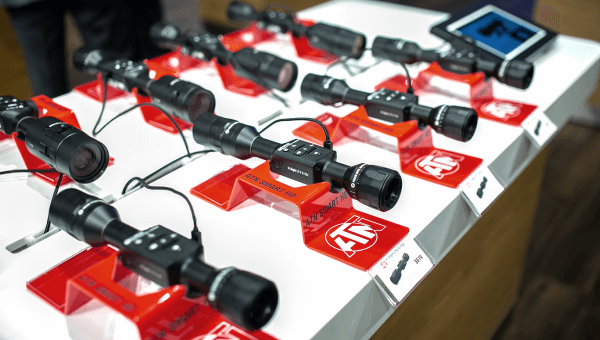
To help hunters make ethical, precise shots, manufacturers produce various tiers of thermal optics. While this is not a sales guide, looking at the ATN thermal lineup provides a good reference for how these tools are structured for different hunting needs.
- Entry-Level Utility (ATN ThOR LTV): Designed for simplicity and light weight. These scopes (using 256, 320, or 640 sensors) provide standard thermal capabilities—like Black Hot and White Hot modes—without complex menus. They are often used on crossbows or lightweight pest-control rifles.
- Advanced Features (ATN ThOR 4 and ThOR 5): These represent the standard for dedicated night hunters. They include features like integrated ballistic calculators and options for built-in Laser Rangefinders (LRF). Distance estimation at night is notoriously difficult, so an LRF ensures hunters aren't guessing bullet drop in the dark.
- High-Resolution Sensors (ATN ThOR XD): Pushing into 1280 resolution sensors, these high-end units provide maximum clarity, which heavily aids in the positive identification of an animal at longer distances.
Regardless of the device used, the responsibility of employing the technology safely and legally always falls squarely on the hunter looking through the eyepiece.
The Bottom Line
So, is it legal to hunt with a thermal scope? Yes, in many places and for specific species, it is perfectly legal and heavily utilized as a conservation tool. But the privilege of using this incredible technology requires an equal level of responsibility.
Take the time to read the rulebook. Make that phone call to your local game warden. Understand your thermal scope hunting laws and night hunting regulations inside and out. By doing things the right way, you protect yourself, you respect the wildlife, and you help ensure that night hunting remains a legal, viable option for generations to come.
Stay safe out there, know your target, and happy hunting.