Search for an n vision thermal scope and you land in a crowded aisle of look-alike optics. The label matters less than the parts inside: the sensor that reads heat, the glass that gathers it, and the software that sharpens what you see. This roundup sorts three current ATN ThOR 6 thermal scopes by the one feature that changes your night the most, the sensor, so you can match a scope to the way you actually hunt.
Best all-around: ATN ThOR 6 640x512 2-16x — same crisp 640 sensor, a wider view for closer country.
Best value: ATN ThOR 6 384x288 2.5-20x — the full ThOR 6 toolkit on a lighter body at the value tier.
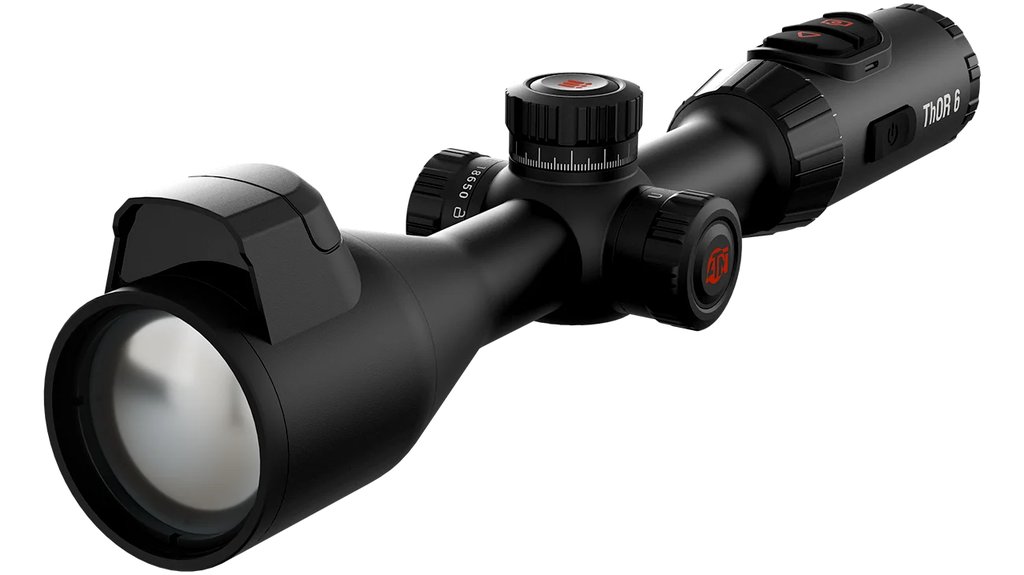
Why ATN's 6th-gen ThOR 6 leads the n vision thermal scope pack
The ThOR 6 leads because it pairs a sensitive sensor with software that cleans the image in real time. Every model here reads a temperature difference as small as ≤15 mK, so a warm animal separates from cool brush instead of smearing into it. SharpIR AI enhancement then sharpens edges frame by frame, and a 50 Hz refresh keeps a running coyote from turning to jelly. These are the traits that decide whether an n vision thermal scope actually earns its place on your rifle.
ATN ThOR 6 640x512 3-24x: the top n vision thermal scope
The ATN ThOR 6 640x512 3-24x is the pick when detail at distance is the whole point. Its 640x512 sensor is the difference between a smartphone photo and a proper camera: more dots in the frame means the shape 300 yards out reads as a hog and not a blob.
The sensor does the heavy lifting
A 640x512 detector packs roughly four times the dots of a 384 sensor into the same view. That extra pixel density is what lets you tell a coyote from a stray dog at range, and it is why this scope stretches detection out to 3650 m before a warm target drops off the display.
50 mm glass and 3-24x reach
The wide 50 mm germanium lens gathers more heat energy than a smaller objective, feeding the sensor a brighter signal. Dial the base 3x up through 24x and the image stays usable because there is real resolution underneath the zoom, not just enlarged pixels.
Who it's for: the hunter working big fields, cut soy, or open desert who wants the longest honest reach ATN builds into a ThOR 6. Who it's not for: anyone hunting tight timber, where its narrow high-mag field of view is more than you need.
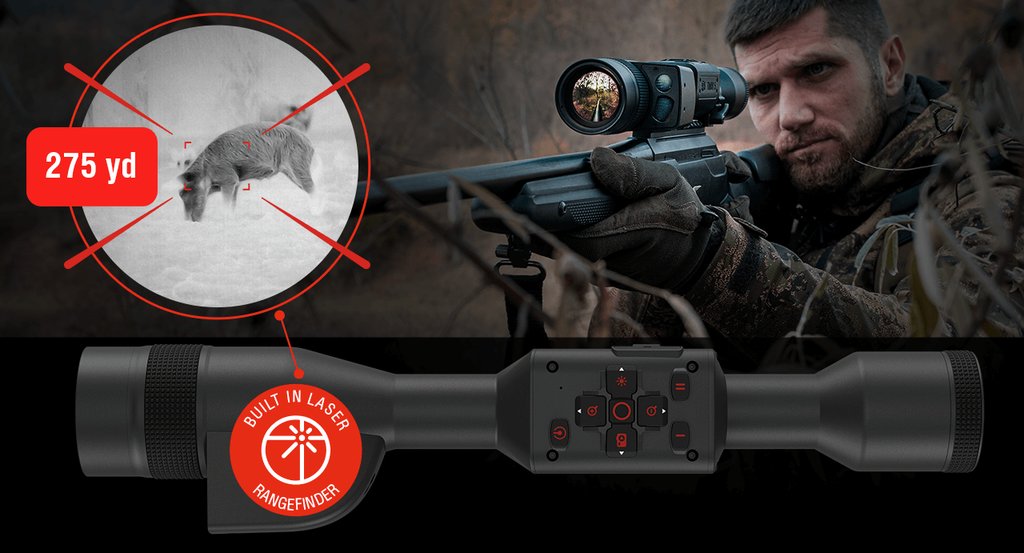
ATN ThOR 6 640x512 2-16x: the all-around 640
Same sensor, a wider first look
The 2-16x carries the identical 640x512 sensor and ≤15 mK sensitivity as the top pick, but its 2x base magnification opens a wider field of view. On a night stand you find animals faster because you are scanning more country in a single sweep before you zoom to confirm.
Swap-and-go batteries
Its replaceable 18650 battery system means a dead cell is a 10-second fix in the dark, not the end of the night. That is a real feature for anyone who stays out past midnight.
Who it's for: the all-purpose hunter who wants full 640 clarity but hunts mixed terrain from feeders to field edges. Who it's not for: the pure long-range shooter who would rather trade width for the 3-24x's extra reach.
ATN ThOR 6 384x288 2.5-20x: the value n vision thermal scope
The full toolkit, lighter tier
The 384x288 model runs the same SharpIR processing, RAV recording, and six color palettes as its 640 siblings; it simply reads fewer dots. For hogs and coyotes inside a few hundred yards that is plenty, and it sits at the value tier where a first thermal buyer can get in.
Lightest of the three
At 1.74 lbs it is the easiest to carry all night and rides well on lighter rifles, without giving up the ThOR 6 interface you would learn on either of the others.
Who it's for: the value-minded buyer stepping into thermal for the first time who hunts mid range. Who it's not for: anyone who regularly needs to identify targets past 300 yards, where a 640 sensor pulls ahead.
How to choose your n vision thermal scope
Start with distance and terrain, then pick the sensor to match. The rest of the ThOR 6 features are shared, so the sensor and lens are where your money actually goes.
- Long open ground — go 640x512 3-24x for the reach and detail.
- Mixed terrain, general hunting — the 640x512 2-16x balances a wide view with a crisp sensor.
- Value first, mid-range shots — the 384x288 2.5-20x gives you the full feature set for less.
- Moving targets — every model's 50 Hz refresh keeps runners sharp, so choose on sensor, not motion.
- Late nights — the 2-16x's hot-swap batteries extend your window without a charger.
How we picked these ATN thermal scopes
We ranked these three on the specs that decide a night hunt: sensor resolution, NETD thermal sensitivity, detection range, refresh rate, weight, and battery life, all judged against what "n vision thermal scope" shoppers actually do, which is spot and identify warm targets in the dark. We only considered ATN's current 6th-gen ThOR 6 line. This is an in-house comparison of ATN's own scopes, not an independent lab test, so read the specs against your own ranges. The honest trade-off: the sharpest, longest-reaching pick is also the heaviest and priciest, and none of these is the right tool for daytime target work where a standard day optic is simpler.
Frequently Asked Questions
Is an n vision thermal scope the same as night vision?
Not quite. Traditional night vision amplifies faint light, so it needs some ambient light and can be fooled by cover. A thermal scope like the ThOR 6 reads heat instead of light, so it works in total darkness and cuts through light brush. Shoppers often use "n vision" loosely to mean any see-in-the-dark optic.
What sensor resolution should I look for?
For general hunting inside a few hundred yards, a 384x288 sensor like the ThOR 6 384 is enough. If you want to identify targets at longer range, step up to the 640x512 models, which pack roughly four times the pixels for a sharper picture at distance.
How far can the ATN ThOR 6 detect a target?
Detection range runs from about 2300 m on the 384 model up to 3650 m on the 640x512 3-24x. Detection means spotting that something warm is there; identifying it clearly happens at a shorter distance and depends on your magnification and the sensor.
Does higher magnification make a scope better?
Not on its own. Zoom only helps if there is sensor resolution beneath it. The 3-24x reaches farther because its 640 sensor and 50 mm lens give the image real detail to enlarge; cranking magnification on a low-res sensor just makes bigger blur.
What does the ≤15 mK NETD figure mean?
NETD is the smallest temperature difference a sensor can detect, measured in millikelvin. A low number like ≤15 mK means the ThOR 6 sees fine heat contrast, so a warm animal stands out cleanly from cooler brush behind it. Lower is better.
Can I record what I see through the scope?
Yes. Every ThOR 6 here includes Recoil Activated Video, which starts recording the moment you fire, plus built-in Wi-Fi and ATN Connect 6 to stream and pull footage to your phone.
Ready to put a real n vision thermal scope on your rifle? The ATN ThOR 6 640x512 3-24x is our pick for reach and detail, but every model in the ATN ThOR 6 thermal scope lineup shares the same sensitive sensor and smart software. Compare the three by the terrain you hunt and the distance you shoot, then match the sensor and lens to your night. Your first clear heat signature in full dark tends to settle the question fast.
Created: August 5, 2026 · 19:53:43 UTC