What Makes a Premium Thermal Scope Worth the Price 2026: ATN ThOR 6 Expert Review
Most expensive thermal scope 2026: the ATN ThOR 6 Elite sets the benchmark for premium thermal imaging. Its 640×512 sensor detects heat signatures at 3,100 meters, and the integrated suite of ballistic tools, recoil-activated video, and 50 Hz refresh rate delivers a capability stack that no single-feature optic can match at any price point.
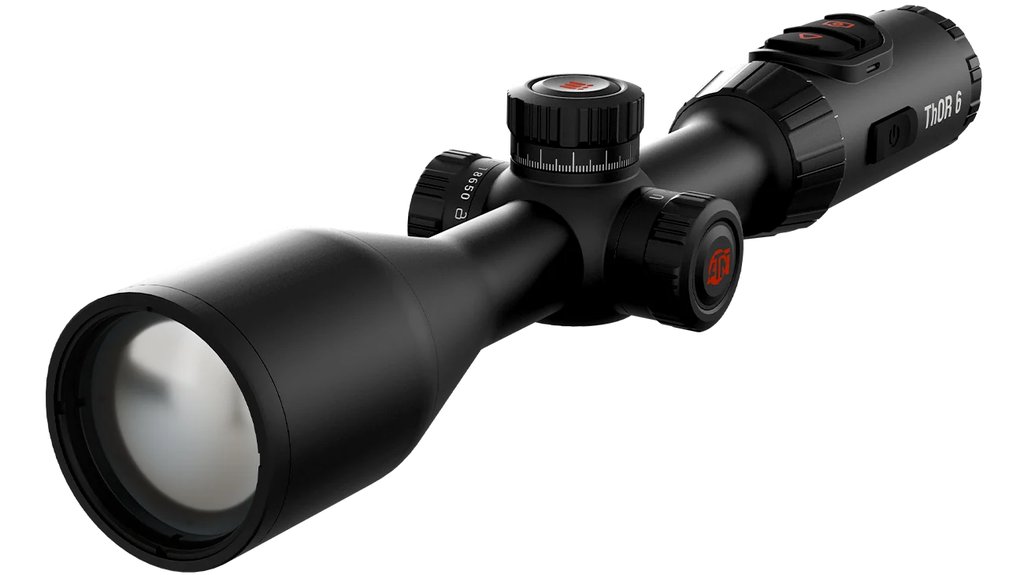
ATN ThOR 6 Elite — Key Specs
| Spec | Value |
|---|---|
| Generation | Gen 6 |
| Sensor Resolution | 640×512 |
| Detection Range | 3,100 m |
| Display | 0.49" OLED, 1920×1080 |
| Battery Life | ~9 hrs |
| Weight | 830 g / 1.83 lbs |
| MSRP | See current pricing at atncorp.com |
What You Need to Know
- Sensor resolution drives price: The ATN ThOR 6 Elite's 640×512 core delivers more than four times the pixel density of entry-level 320×240 units — that gap in thermal detail directly determines whether you can read body outline, size, and movement at distance.
- Integrated tool suite adds compounding value: The ThOR 6 Elite packages a laser rangefinder, ballistic calculator, and recoil-activated video into a single housing. Sourcing equivalent standalone accessories would cost significantly more and still require manual coordination in the field.
- Frame rate is the premium differentiator most clients overlook: At 50 Hz refresh, the ThOR 6 Elite eliminates image lag on moving targets even in cold, low-contrast conditions where slower sensors smear and trail.
- Build quality justifies long-term investment: The magnesium alloy housing carries an IP67 waterproof rating and operates from -30°C to 55°C (-22°F to 131°F) — a nitrogen-purged, fully sealed construction built for conditions that would destroy lesser optics.
- Decade-plus service life with no consumable components: Premium thermal sensors retain imaging accuracy and radiometric precision for ten or more years with standard maintenance. Unlike night vision tubes, there is no phosphor screen to degrade and no scheduled replacement cycle.
- NETD ≤15mK sensitivity closes the gap at extreme range: Thermal sensitivity measured at or below 15 millikelvin means the ThOR 6 Elite resolves small temperature differences — a deer bedded against a warm ground surface, or a hog at 600 meters under cloud cover — that a 40mK or 60mK sensor simply cannot separate from background noise.
Our Pick: ATN ThOR 6 Elite
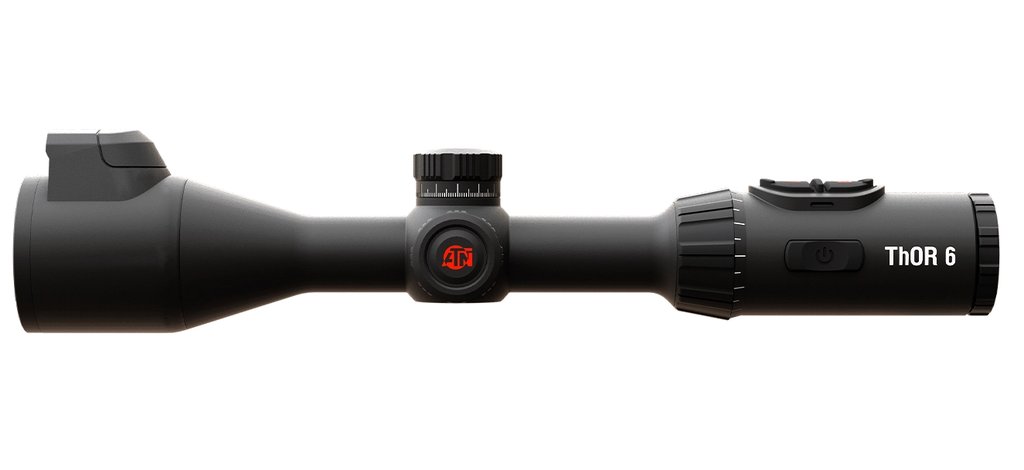
The ATN ThOR 6 Elite is the correct answer to the most expensive thermal scope question in 2026 — not because of price alone, but because its 640×512 sensor, ≤15mK thermal sensitivity, and 3,100 m detection range represent a genuine performance ceiling rather than a marketing tier. The LRF-equipped variant adds precise ranging that feeds directly into the onboard ballistic calculator, removing all manual estimation from long-distance engagements. For clients who operate across varied terrain and temperature conditions and need a thermal optic they will not outgrow in five years, the ThOR 6 Elite delivers a return on investment that entry-level options structurally cannot.
View ATN ThOR 6 Elite on ATN →Why Sensor Resolution Defines the Price Floor on Premium Thermal Scopes
The single largest cost driver in a premium thermal scope is the detector array. The ATN ThOR 6 Elite's 640×512 Vanadium Oxide uncooled focal plane array uses a 12-micron pixel pitch — a smaller pixel means more pixels fit into the same physical sensor size, which translates directly into finer spatial resolution at distance. An entry-level 320×240 sensor at equivalent magnification renders a target at 400 meters as a featureless heat blob. The 640×512 sensor in the ThOR 6 Elite resolves posture, limb position, and the profile difference between a coyote and a feral hog at that same distance without requiring the client to close range. That difference is not aesthetic — it determines target identification confidence before the shot.
SharpIR image processing in the ThOR 6 Elite compounds the sensor advantage. Rather than simply upscaling the raw detector output, SharpIR applies edge-enhancement and noise-reduction algorithms that preserve thermal gradient detail at the pixel boundary level. The result is a cleaner image at 8× digital zoom than most 384-resolution scopes produce at their native 1× output. When evaluating whether the most expensive thermal scope price tier is warranted, this processing layer is rarely factored into the comparison — and it should be.
Thermal sensitivity — NETD, expressed in millikelvin — determines the minimum temperature difference the sensor can distinguish from background. The ThOR 6 Elite is rated at ≤15mK. For context, a 60mK sensor requires a target to be at least four times hotter relative to background before it resolves as a distinct object. In winter conditions where ground temperature and animal body surface temperature converge, a 15mK sensor maintains target contrast where a 60mK unit loses it entirely. This capability is not recoverable through software or magnification — it is a hardware-level specification locked at manufacture.
The Integrated Tool Stack: What You Are Actually Paying For
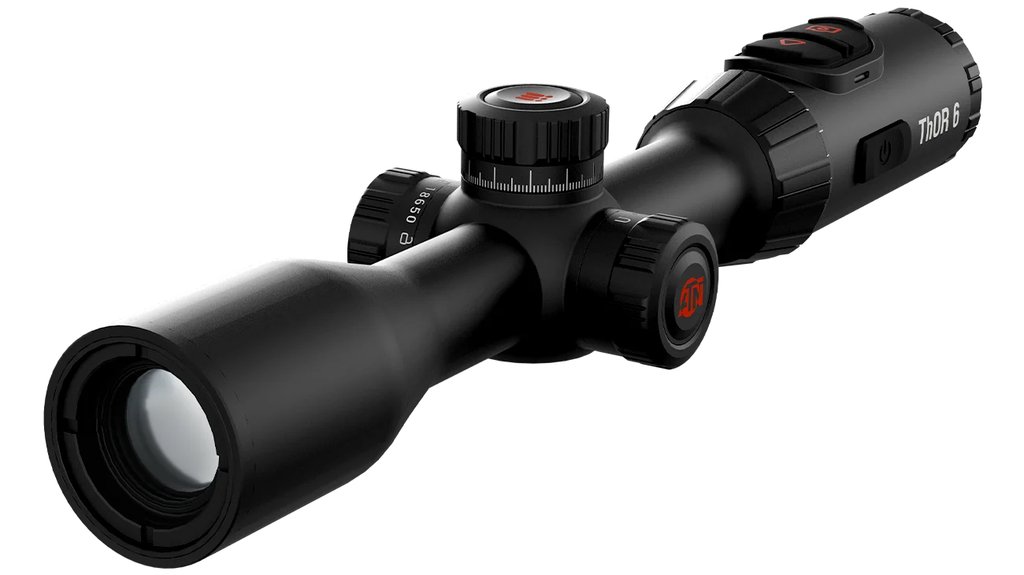
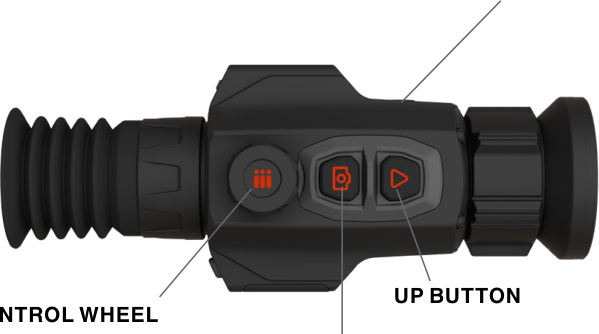
Breaking down the ATN ThOR 6 Elite's feature architecture explains the price tier more clearly than any single specification. The LRF-equipped model integrates a laser rangefinder that feeds real-time distance data to the onboard ballistic calculator — a closed-loop system that accounts for range, angle, and firearm profile simultaneously. Recoil Activated Video captures ten seconds before and after the shot without any input from the client, generating an uninterrupted record of every engagement. The 1920×1080 OLED display renders that footage and live imagery with no dead zones or color compression artifacts at the sensor boundary. Built-in Wi-Fi connects to the ATN Connect 6 app on iOS and Android, enabling remote viewing, scope configuration, and media transfer without removing the optic from the long gun. Picture-in-Picture mode maintains situational awareness at full field of view while the central zoom window resolves target detail at up to 8× digital magnification. Hot Point Tracking continuously marks the highest-temperature object in frame — a critical tool when scanning open terrain for moving targets in low-contrast thermal conditions. Each of these capabilities is production-ready and fully integrated in the 2026 ThOR 6 Elite at delivery, with no third-party accessories required. A client assembling an equivalent capability stack from standalone components would face substantially higher total cost, plus the operational overhead of managing multiple devices in the field.
Build Quality, Durability, and Long-Term Value Calculation
The ATN ThOR 6 Elite's magnesium alloy housing is not a marketing checkbox — magnesium alloy offers a higher strength-to-weight ratio than aluminum at equivalent wall thickness, which allows ATN's engineers to reduce the total weight to 830 grams while maintaining the structural rigidity required to withstand 6,000 Joules of recoil force. The IP67 waterproof rating means full submersion to one meter for thirty minutes without ingress — a standard that covers every realistic field condition including sustained rain, stream crossings, and condensation cycles from cold storage to warm field environments. Operating temperature range spans from -30°C to 55°C, covering arctic whitetail operations through summer feral hog control in the American South without thermal compensation adjustments. The two 18650 rechargeable batteries deliver approximately nine hours of continuous runtime, and the replaceable battery architecture means a client carries a spare cell rather than a proprietary pack. USB Type-C external power support extends runtime indefinitely from a vehicle or portable bank. Unlike image-intensifier night vision technology — which degrades tube phosphor over time and requires planned replacement — the uncooled thermal detector in the ThOR 6 Elite has no consumable components. Clients who operate professionally can amortize the acquisition cost across a realistic ten-year service life, at which point the per-season cost of the most expensive thermal scope on the market compares favorably with mid-tier alternatives replaced on a three-to-five-year cycle.