The military thermal scope view you get on a July night and the one you get in January are not the same picture, even through the same optic - and that is the real reason to think hard before you pick between ATN's two 640-class scopes. Summer heat and thick foliage flatten contrast and hide targets; winter's cold ground makes a warm body glow. The ATN ThOR 6 640x512 2-16x and 640x512 3-24x share the same excellent sensor, so this is not about which sees better - it is about how each one's view holds up as the seasons swing. This comparison puts the two head to head across the calendar and tells you which to mount.
ATN ThOR 6 2-16x vs 3-24x at a glance
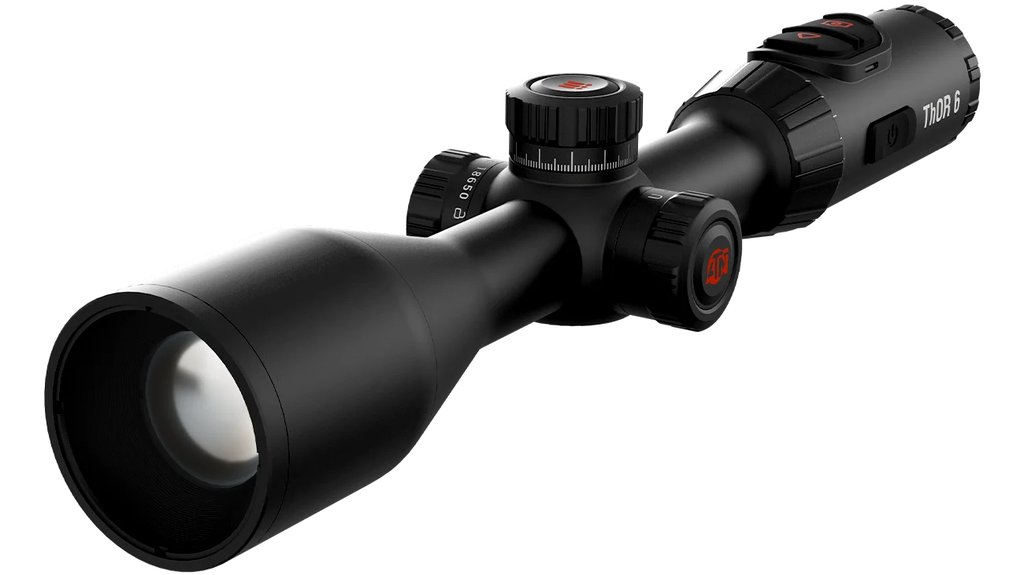
Both scopes use the same 640x512 sensor at NETD ≤15 mK, so raw sensitivity is identical - the seasonal split is all in optics and reach. Here is how the two line up.
How the 2-16x's view holds up in summer
The ThOR 6 640x512 2-16x is the scope whose view fights summer conditions best. In warm months the whole scene runs hot - sun-baked ground, warm rocks, dense leafy cover - so the temperature gap between a target and its background shrinks and contrast goes flat. That is exactly when a wide view earns its keep: the 2-16x's 2x base takes in more of the scene at once, so a warm animal that only barely stands out from the clutter is easier to catch as you sweep. Its 35 mm lens keeps the optic quick to swing, which matters when a hog breaks from thick foliage a few yards off. NETD ≤15 mK still teases out that faint contrast; the wider picture just gives you more chances to notice it before it moves.
How the 3-24x's view holds up in winter
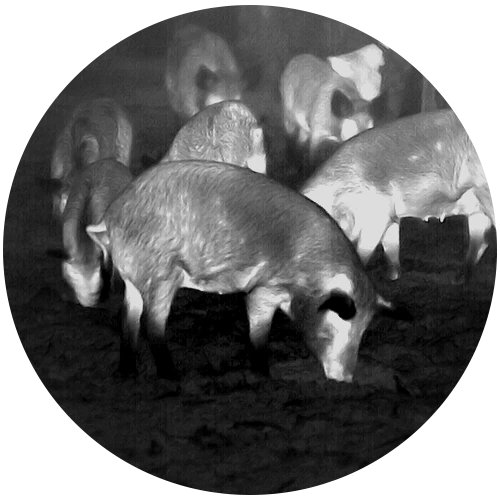
The ThOR 6 640x512 3-24x comes into its own in the cold months, when the view is at its most dramatic. Bare trees, frozen ground, and cold air open up the temperature gap, so a warm body glows against a dark, high-contrast background and you can see it a long way off. Winter also strips the leaves, opening up sightlines across fields and cut ag ground - which is where the 3-24x's 50 mm lens and 24x top magnification pay off. That extra glass stretches detection to 3650 m and, more useful, turns a distant glowing dot into a shape you can actually identify before you commit. When the season hands you range and contrast, this is the scope that uses both.
When to choose the 2-16x
Choose the 2-16x if your busiest seasons are the warm ones and your ground is close and cluttered. Summer and early fall bring thick foliage, flat contrast, and targets that appear close and fast, and the wider base view is worth more than magnification you would rarely dial up. There is a comfort payoff too: the broader picture makes long scanning sessions less tiring, because you cover the same ground in fewer sweeps and are less likely to walk your eyes right past a bedded animal that is barely warmer than the brush around it. For hunters who put in most of their nights when the woods are green, this is the practical everyday pick.
When to choose the 3-24x
Choose the 3-24x when your prime season is winter and your ground opens up. Cold nights and leafless country give you both the contrast and the sightlines to shoot long, and the 3-24x is built to cash in on that - the reach and fine detail at distance justify its longer front end and slightly slower swing. If you spend the cold months watching cut fields, frozen flats, or ridgelines and keep passing on targets because you could not tell what they were far out, this is the view that fixes that. When the season hands you a target glowing across open ground, the 3-24x lets you identify it with confidence instead of guessing.
What both views share, season to season
Whichever season you build around, both ThOR 6 scopes give you the same core toolkit, so you are not trading away features to pick a lens. Each runs the same ≤15 mK sensor, a 50 Hz refresh that keeps a running target smooth on the Full-HD OLED display, SharpIR image cleanup for low-contrast summer air, and Recoil Activated Video that saves every shot. Both offer Picture-in-Picture and color-palette choice, so you can flip to Black Hot or Iron when a season's conditions call for more contrast. Both run about 9 hours on two swappable 18650 cells, so a spare pair covers a full night in any weather. That shared foundation is why this really is a seasonal decision and nothing more.
Our recommendation
For the widest span of real seasons, we lead with the ATN ThOR 6 640x512 2-16x as the everyday pick - its wider view handles summer's flat contrast and close, cluttered cover, which is when most hunters put in the most nights, and it still reaches well into mid-range work the rest of the year. Step up to the 3-24x only if winter and open country dominate your calendar and you truly need that long-range detail. Either way you are on ATN's current 640-class sensor. Compare both in the ThOR 6 thermal scope category and match the lens to the seasons you actually hunt.
How we compared them
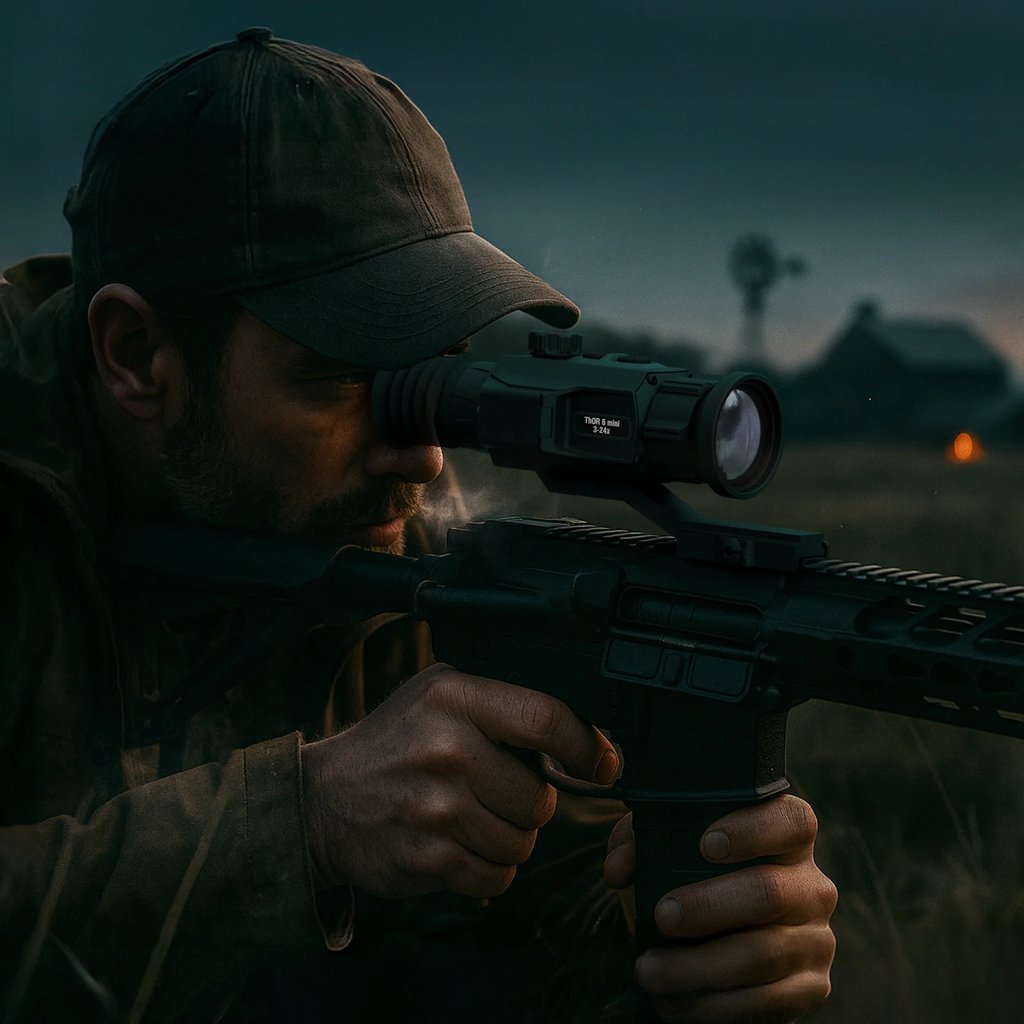
We judged these two ATN ThOR 6 scopes against the one variable that changes their view over the year - season - using base field of view and handling speed for summer's close, low-contrast, foliage-heavy nights, and magnification plus detection range for winter's open, high-contrast country. Both were held to the same sensor resolution, NETD sensitivity, refresh rate, and battery, so the comparison isolates optics rather than image quality. Only the current 6th-generation line was considered. This is an in-house comparison of ATN's own scopes, not an independent lab review; the honest caveat is that neither view is ideal in every season, so match the choice to the months you spend the most nights out.
Frequently Asked Questions
Does the thermal view really change with the season?
Yes. In summer the ground, rocks, and foliage all run warm, so the contrast between a target and its background shrinks and the picture flattens. In winter, cold ground and bare trees open that gap up, so a warm body glows and is far easier to spot. Both ATN ThOR 6 scopes handle this with a ≤15 mK sensor, but the wider 2-16x view has an edge in low-contrast summer scenes.
Which ThOR 6 gives the better summer view?
The ATN ThOR 6 640x512 2-16x. Its wider 2x base view takes in more of a cluttered, low-contrast summer scene at once, so a faintly warm animal in thick foliage is easier to catch as you sweep. The shorter 35 mm lens also swings faster when a target breaks from cover close in, which is common in the warm months.
Which ThOR 6 gives the better winter view?
The ATN ThOR 6 640x512 3-24x. Cold air and bare country create high contrast and long sightlines, and the 3-24x's 50 mm lens and 24x magnification resolve a glowing target far across open ground. It detects out to about 3650 m and, more importantly, lets you identify what you are seeing at distance before you commit.
Do the two scopes see equally well in the same conditions?
In terms of raw sensitivity, yes - both use the identical 640x512 sensor at NETD ≤15 mK, so neither picks up heat better than the other. The difference is purely optical: base field of view, maximum magnification, lens size, and detection range. That is why the choice comes down to your terrain and season, not image quality.
Can I use color palettes to improve the view in bad conditions?
Yes. Both ThOR 6 scopes offer multiple color palettes, and switching them can rescue a hard-to-read scene. In flat summer contrast, Iron or a warmer map can make a faint target stand out from clutter; in winter, Black Hot or White Hot reads terrain cleanly. Flipping palettes to suit the season is a quick way to sharpen what you see through either scope.
Do both hold up for a full night in cold weather?
Both run about 9 hours on two 18650 cells, and because those cells are replaceable you can carry a charged spare pair and hot-swap them, which comfortably covers a full winter night. Cold can shorten any battery's life, so keeping spare cells warm in an inside pocket helps. Either scope will get you through a full session with a spare set on hand.
Still weighing summer width against winter reach? If most of your nights come in the warm, green months and close cover, mount the ATN ThOR 6 640x512 2-16x for its wider, faster view; if you live for cold, open country, the 3-24x is your scope. Either way, browse both on the ThOR 6 thermal scope page, compare the base field of view and reach against the seasons you actually hunt, and match the optic to your calendar. Pick for the months you are out most, and every season gets easier to glass.
Created: August 10, 2026 · 09:39:32 UTC