Looking through a thermal scope, the first thing you notice is that the terrain in front of you changes the picture. Step into thick timber and heat comes back at you from bark, rocks, and the ground itself, so a warm animal has to stand out from all that clutter. Walk out into an open field and the picture calms down, letting a distant heat signature float clean against a cool background. Add snow and cold air, and contrast jumps because the world behind your target is genuinely cold. This roundup organizes ATN's 6th-gen ThOR 6 thermal scope lineup by that idea: which model gives you the cleanest read in the terrain you actually hunt.
Looking through a thermal scope, the ATN ThOR 6 640x512 2-16x is the best all-around view because its 640x512 sensor and NETD of 15 mK or lower separate a warm animal from heat clutter in dense woods, resolve detail across open fields, and hold sharp contrast in the cold. Higher-resolution sensors and lower NETD mean a cleaner, more readable picture in every terrain.
Quick answerBest overall view (any terrain): ATN ThOR 6 640x512 2-16x — the 640x512 sensor and low NETD keep the picture clean whether you are fighting heat clutter in the woods or reading a field edge.
Best for open ground and long looks: ATN ThOR 6 640x512 3-24x — more magnification and reach for pulling a distant signature out of a wide field.
Best value view: ATN ThOR 6 384x288 2.5-20x — a lighter, tidier picture that shines most in high-contrast terrain like snow and cool open fields.
Why ATN's 6th-gen ThOR 6 gives you a cleaner view across terrain
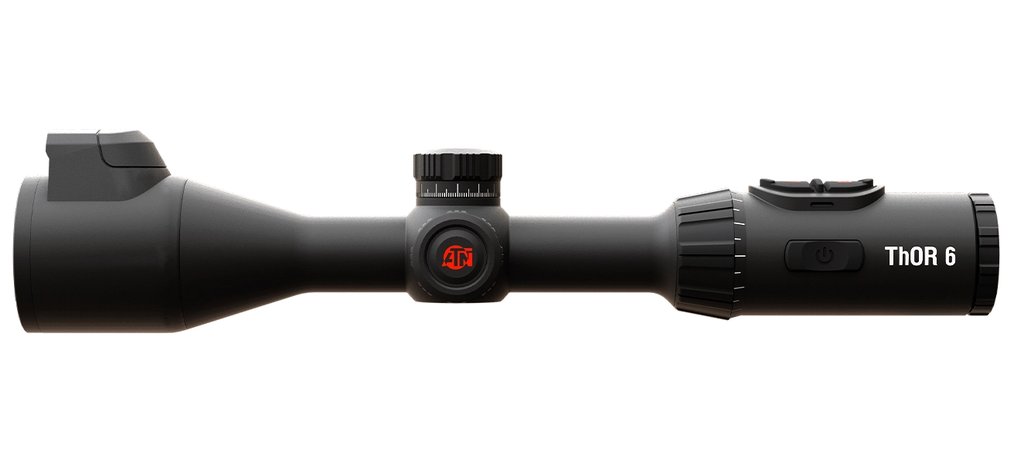
The 6th-gen ThOR 6 line matters because the picture you see is only as good as the sensor and the processing behind it, and terrain is what tests both. Two numbers drive the view. Resolution (640x512 or 384x288) sets how much detail the picture holds, so a higher count means an animal reads as an animal instead of a warm blob at distance. NETD, quoted at 15 mK or lower, sets how small a temperature difference the sensor can see, which is exactly what pulls a warm hide out of sun-baked timber or off a mild field. On top of that, every ThOR 6 adds SharpIR-class image tuning, multiple color palettes, a Full-HD OLED display, and Recoil-Activated Video, so the same scene stays readable when the ground is loud with heat or nearly flat and cold. Older discontinued ATN models are not part of this comparison; only the current 6th-gen line is.
ATN ThOR 6 640x512 2-16x — the best overall view in any terrain
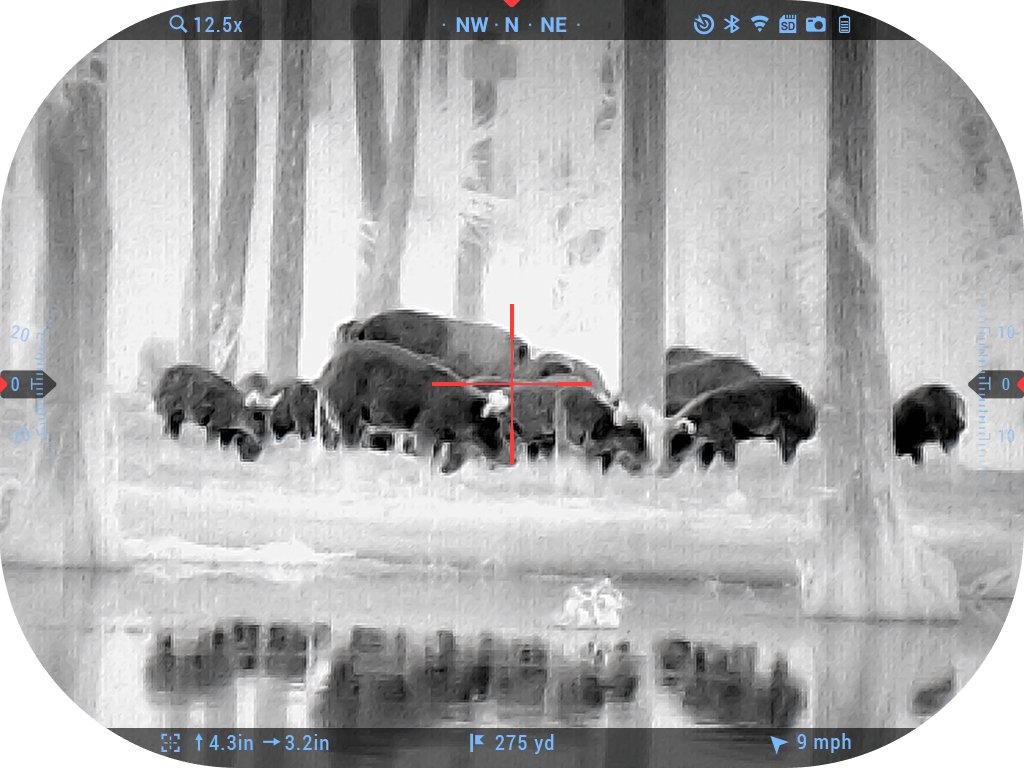
The ATN ThOR 6 640x512 2-16x is the pick when you want one scope that reads well no matter where you set up. Its 640x512 sensor packs roughly twice the dots across the frame of a 384 sensor, so think of it like stepping from a fuzzy old broadcast to a sharp HD feed: the extra detail is what lets you tell a hog from a stump when the woods are throwing heat everywhere. Paired with an NETD of 15 mK or lower, it reads the small temperature gap between a warm animal and warm ground, which is the exact problem thick timber creates.
How it handles heat clutter in thick woods
In dense timber the background is noisy, because sun-warmed bark, rocks, and leaf litter all glow. The 640x512 sensor and low NETD keep an animal crisp against that clutter, and the 35mm lens with a 2-16x range gives you enough zoom to confirm the target without pushing so far that the picture turns to mush. SharpIR sharpens edges so a coyote slipping through brush stays an outline instead of a smear, and the palettes let you flip to whatever separates the animal from the background on that particular night.
Who it is for and who it is not
This one is for you if you hunt mixed ground and want a single scope that never leaves you guessing at what you are looking at. It carries a 3,100 m detection range, about 9 hours on two replaceable 18650 cells, and useful tools like Zeroing Freeze, Picture-in-Picture, Hot Point Tracking, RAV, and Wi-Fi with ATN Connect 6, all on a 1.83 lb body. It is not the pick if your shots are almost always at the far edge of a big field and you crave the most magnification you can get — in that case step up to the 3-24x below.
ATN ThOR 6 640x512 3-24x — the reach for open fields
The ATN ThOR 6 640x512 3-24x is the flagship view for open country, where the challenge is not clutter but distance. It shares the same 640x512 sensor and 15 mK or lower NETD as the 2-16x, so detail and sensitivity stay identical, but a 50mm lens and a 3-24x range give you the pulling power to read a signature at the far side of a cut field. A 3,650 m detection range and 8x digital zoom mean a warm shape that is a dot to your naked eye still resolves into a real animal in the display.
How the view reads across open ground
Open fields hand thermal an easy background: the ground is usually cooler and flatter than timber, so a warm animal floats clean against it. That is where extra magnification pays off, because the picture stays useful as you zoom to confirm species and count before you decide anything. Full-HD OLED keeps that magnified image tight, and Recoil-Activated Video captures the moment without you touching a button.
Who it is for and who it is not
Reach for the 3-24x if most of your looking happens across wide, open distance and you want every bit of magnification. It is still a 1.83 lb scope with RAV, Zeroing Freeze, PiP, Hot Point Tracking, Wi-Fi, and roughly 9 hours of runtime. It is not the best choice for close, brushy timber, where a wide field of view and quick target pickup matter more than raw reach — there the 2-16x is easier to run.
ATN ThOR 6 384x288 2.5-20x — the value view that loves contrast
The ATN ThOR 6 384x288 2.5-20x is the value pick, and it looks its best in high-contrast terrain like snow and cool open fields. Its 384x288 sensor holds fewer dots than the 640 models, so picture it as a smaller mosaic: still perfectly readable, just built from larger tiles. When the background is genuinely cold, a warm animal already stands out hard, so the sensor has an easy job and the view comes across clean and honest. NETD stays at 15 mK or lower, and a 25mm lens with 2.5-20x covers mid-range work at the lightest weight in the group, 1.74 lbs.
How snow and cold sharpen the picture
Cold weather is a gift to thermal. Snow and frozen ground sit far below body temperature, so the gap between a deer and its background is wide, and even the value sensor draws that contrast plainly. Six color palettes let you dial the look — a high-contrast palette makes a warm body pop against white, while a softer one helps you read terrain detail. This is the scope for the hunter who spends winters in open, cold country and wants a clean view without paying for the top tier.
Who it is for and who it is not
Choose the 384 model if you want a capable, lighter, budget-tier view and you mostly hunt high-contrast terrain. It carries a 2,300 m detection range, about 9 hours of runtime, RAV, Zeroing Freeze, PiP, Hot Point Tracking, and Wi-Fi. It is not the pick if you regularly fight heavy heat clutter in summer timber or push to extreme distance — that is where the 640 sensor's extra detail earns its keep.
How to choose the right ThOR 6 for your terrain
Start with the ground you actually hunt, then match the sensor and the reach to it. The terrain in front of you does more to shape the view than any menu setting.
- Thick woods with heat clutter — favor the 640x512 sensor and low NETD so a warm animal separates from warm bark and ground; the 2-16x is the easy all-rounder here.
- Open fields and long looks — favor magnification and detection range; the 640x512 3-24x pulls a distant signature clean against a cool, flat background.
- Snow and cold, high-contrast country — contrast is already high, so the value 384x288 2.5-20x gives a clean view without stepping up in price.
- Mixed ground, one scope — the 640x512 2-16x is the safe default because it reads well in clutter and across distance alike.
- Palette habits — plan to switch White Hot, Black Hot, or a color palette by scene; the same terrain can read differently after you flip the look.
How we picked these ATN thermal scopes
We judged these scopes by the one thing this article is about: how the view actually reads when you are looking through them in the field, terrain by terrain. Our weighting leaned on sensor resolution and NETD first, since those decide whether an animal separates from a busy or a flat background; then detection range and magnification, which set how far the picture stays useful across open ground; then weight and battery, which decide whether you keep the scope up long enough to see anything. We only considered the current 6th-gen ThOR 6 line, so nothing here is discontinued. Honest trade-offs: the 640 models cost more and the top reach of the 3-24x is wasted in tight brush, while the value 384 leans on high contrast and works less hard once summer timber gets loud with heat. This is an in-house comparison of ATN's own range, not an independent lab test, so read the specs against the terrain you hunt and pick from there. It is not the right guide if you want head-to-head numbers against other brands.
Frequently Asked Questions
How does the view through a thermal scope differ by terrain and palette?
Terrain sets the background heat, which is what a warm animal must stand out against. Thick woods throw heat clutter from bark and ground, so you need a higher-resolution sensor and low NETD to keep an animal crisp; open fields and snow give a cooler, flatter background where contrast is naturally high. Color palettes like White Hot, Black Hot, and Iron let you flip which parts of the scene glow, so the same view can read very differently once you switch.
What do the numbers I am looking at actually mean?
Resolution, like 640x512 or 384x288, is how many dots build the picture — more dots means finer detail, similar to moving from standard video to HD. NETD, quoted at 15 mK or lower on the ThOR 6, is how small a temperature difference the sensor can see, which is what pulls a warm animal off warm ground. Detection range tells you how far a heat signature is picked up, and magnification sets how much you can zoom to confirm it.
Which ATN ThOR 6 is best for the cleanest all-around view?
The ATN ThOR 6 640x512 2-16x. Its 640x512 sensor and NETD of 15 mK or lower keep an animal readable both when the woods are loud with heat and when you are scanning an open edge, so one scope covers mixed terrain without leaving you guessing at what you are looking at.
Do I really need 640x512, or is 384x288 enough?
It depends on your terrain. In high-contrast country like snow and cool open fields, the 384x288 view is clean and honest because the background does most of the work. In summer timber full of heat clutter, or at longer range, the extra detail of a 640x512 sensor is what separates a real animal from a warm blob.
Why does an animal look sharper in cold weather?
Cold ground, frost, and snow sit far below body temperature, so the gap between a warm animal and its background is wide. Thermal reads that gap as strong contrast, which makes the animal pop clearly even on the value 384 sensor. In warm timber the gap shrinks, which is why a higher-resolution sensor and lower NETD help more there.
Can I change how the view looks in the field?
Yes. Every ThOR 6 gives you multiple color palettes you can switch on the fly, plus tools like Picture-in-Picture and Hot Point Tracking that change what you focus on inside the frame. A high-contrast palette helps a warm body pop against a cold background, while a softer palette can help you read terrain detail around it.
Are these the current ATN thermal scopes?
Yes. All three are part of ATN's current 6th-gen ThOR 6 line, so nothing in this roundup is a discontinued model. You can see the full family on the ATN thermal scope category page and compare variants there.
The terrain you hunt should pick your scope. If you want one clean view that reads heat clutter in the timber and holds up across an open field, the ATN ThOR 6 640x512 2-16x is the safe all-around choice. If your looks run long across open country, step up to the 3-24x; if you hunt cold, high-contrast ground and want a lighter value pick, the 384x288 delivers a clean picture. Compare every current variant side by side on the ATN thermal scope lineup, match the sensor and reach to your terrain, and you will know exactly what you are looking at before you ever settle in.
Created: August 5, 2026 · 19:53:43 UTC