Every long range thermal scope decision eventually comes down to how far up the range you need to climb. ATN's ThOR 6 line runs three tiers — value, mid and flagship — and each step adds real long-range capability rather than just badge. This comparison lines the tiers up so you can see exactly what moving up buys you. The value tier is the ThOR 6 384x288 2.5-20x, compared against the mid and flagship variants from ATN's thermal scope line.
What a tier actually is here
It is worth being clear about what separates the tiers, because in the ThOR 6 line they are not arbitrary trim levels. Each step up changes something a long shot depends on. Moving from value to mid swaps the 384 sensor for a 640x512 detector and adds a replaceable 18650 battery — a jump in identification and endurance. Moving from mid to flagship keeps that 640 sensor but stretches detection from 3100m to 3650m and tightens the top-end zoom for the far edge of the country. Weight and the shared tech — SharpIR AI, the 50 Hz refresh, <=15mK NETD, Recoil Activated Video and Hot Point Tracking — stay effectively constant, so a tier is really a package of reach, sensor and power, not a change in base image quality. Read each tier below as the specific long-range capability that step buys.
The value tier: ThOR 6 384x288 2.5-20x
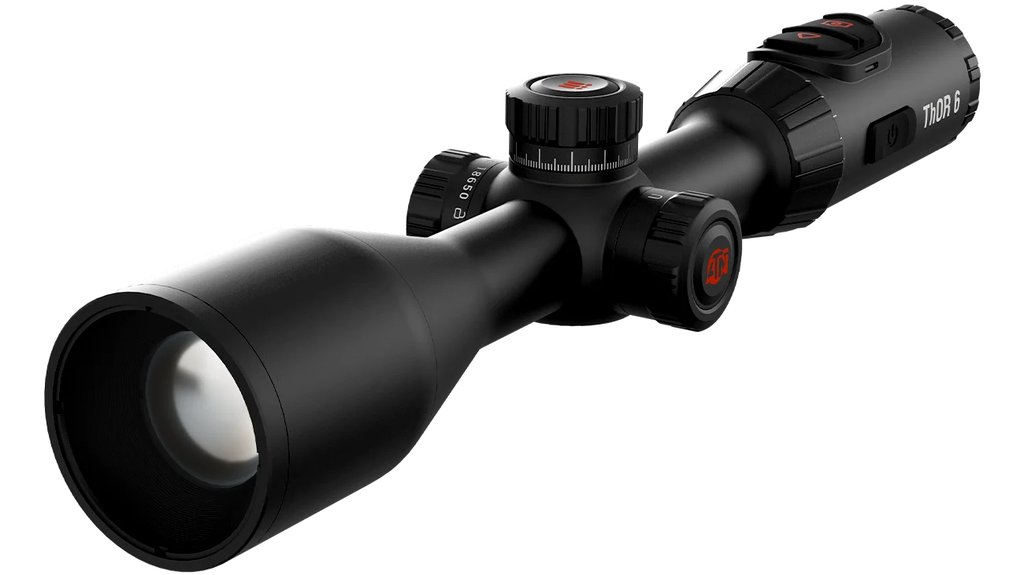
The ThOR 6 384x288 2.5-20x is the entry into ATN's long-range line, and it is far from a token one. A 384 sensor with a 2300m detection range and a 2.5-20x zoom band covers a great deal of long-range hunting, and at 790 g / 1.74 lbs it is the lightest of the three. Six colour palettes and the same SharpIR AI as the pricier tiers mean the image is genuinely good, not a cut-down.
What you give up at this tier
You trade the finer detail a 640 sensor holds at maximum zoom, and roughly 1,300m of top-end detection versus the flagship. For shots inside the 384's comfortable range that gap never shows; it only matters if you routinely push beyond it.
Who this tier is right for
The value tier fits the hunter who covers a lot of ground on foot and wants the least weight hanging off the rifle — 790 g / 1.74 lbs is the lightest ThOR 6, and on a long walk-in that is the body you resent least. It suits shooters whose realistic engagements sit inside 2300m, who value the six colour palettes for reading contrast in changeable conditions, and who would rather put budget elsewhere in the setup than chase a longer top-end. If you rarely stretch past a couple thousand metres and mobility matters more than the last stretch of reach, the 384x288 is a deliberate choice, not a compromise.
The mid tier: ThOR 6 640x512 2-16x
Stepping up to the ThOR 6 640x512 2-16x is where the sensor jumps to 640x512, the single biggest upgrade for long-range identification. Detection climbs to 3100m, the 2x low end widens the scan, and the tier's signature feature is a replaceable 18650 battery system for uninterrupted nights.
What the step up buys
The 640 sensor is the reason to move here — it holds detail as you zoom, so a target that was a warm shape at the value tier becomes identifiable. Add hot-swap batteries and a wider field of view and you have the tier most long-range hunters land on and stay.
Who this tier is right for
The mid tier suits the hunter who wants the full 640-sensor upgrade without paying for the last stretch of reach they may never use. Its 3100m detection and 2x low end handle both far scanning and closer, faster work, so it rarely feels like the wrong tool. The signature draw is the replaceable 18650 battery: for anyone running true all-night sits, a pocketed spare turns the roughly 9-hour clock into an open-ended one. This is the tier for the shooter who prizes flexibility and uninterrupted power over maximum top-end range — the reason most long-range hunters settle here and stop climbing.
The flagship tier: ThOR 6 640x512 3-24x
At the top, the ThOR 6 640x512 3-24x keeps the 640 sensor and pushes detection to 3650m on a 50mm objective, with the tightest high-end zoom in the line. This is the tier for shots at the far edge of what thermal allows.
What the top tier buys
You pay the most for the last stretch of reach and the tightest magnification. It is worth it for a hunter whose ground genuinely opens up that far; for everyone else the mid tier delivers the same 640 clarity for less. The flagship is a specialist, not a default.
Who this tier is right for
The flagship tier is for the shooter whose sight lines genuinely run to the far edge of what thermal allows — the person who has stood on ground that opens to 3650m and wished for more reach, not less. Its 24x top end lets that hunter dwell on a distant signature and read it before committing, and the 640 sensor keeps the picture legible at that magnification. It is the wrong tier for a buyer who mostly shoots inside mid-range: the extra reach and the small weight bump over the value tier simply go unused. Pick the 3-24x when the ground demands its 3650m, not to have the biggest number on the box.
How the tiers feel side by side
Run the three tiers back to back on the same ridge and the differences stop being spec-sheet numbers. Start on the value 384x288 and the setup feels quick and light in the hands, the picture clean out to its comfortable range; you simply stop reaching for detail sooner. Swap to the mid 640x512 2-16x and a far signature that was a soft shape firms into something you can name, the wider 2x scan sweeps the middle distance faster, and the knowledge of a spare 18650 in your pocket quietly changes how long you are willing to sit. Move up to the flagship 3-24x and the far corners of the country pull in tight, the 3650m reach and 24x ceiling giving you room the other two never offered. The base feel — SharpIR AI, the 50 Hz refresh, the <=15mK sensitivity — is identical throughout; what climbs is confidence at distance and time on the glass, tier by tier.
Which tier should you climb to?
- Stop at value if your long shots stay inside the 384's comfortable range and weight matters.
- Step to mid if you want 640-sensor detail and uninterrupted all-night power.
- Go flagship only if your ground opens up far enough to use 3650m of detection.
- Remember the constant — SharpIR AI, 50 Hz refresh and <=15mK NETD are the same at every tier, so the base image quality never drops.
How we compared them
This is an in-house, ATN-vs-ATN comparison of the ThOR 6 tiers, not an independent lab review, so use it to decide how far up the range your hunting justifies and confirm the numbers against your own distances. We held the comparison to the specs that define long range — detection range, sensor resolution, magnification band, weight, battery and NETD — across only the current 6th-generation line. The honest trade-offs are the tiers themselves: more reach and detail cost more and, in the case of the flagship, add a little weight, while the value tier keeps things light and affordable at the price of top-end reach. Who this is not for: a buyer who wants to be told to simply buy the most expensive option regardless of how far they actually shoot.
Frequently Asked Questions
What does moving up a tier actually buy for long range?
The mid tier adds a 640 sensor for detail at zoom and swappable batteries; the flagship adds reach, pushing detection to 3650m with a tighter high-end zoom. Each step is a real capability gain, not just a price change.
Is the value 384 tier good enough for long range?
For many hunters, yes. Its 2300m detection and 2.5-20x band cover a lot of long-range work in the lightest body. You only outgrow it if you routinely shoot beyond that range.
Which tier is the sweet spot?
The mid tier, the ThOR 6 640x512 2-16x, because it delivers the big 640-sensor upgrade and hot-swap batteries while leaving the last stretch of reach — and cost — to the flagship.
Does image quality drop at the value tier?
No. SharpIR AI, the 50 Hz refresh and the <=15mK NETD are identical across all three tiers, so the base image is just as clean; the differences are sensor pixels, reach and battery.
When is the flagship worth the extra outlay?
When your ground genuinely opens up far enough to use its 3650m detection and tight zoom. If your shots do not reach that far, the mid tier gives you the same 640 clarity for less.
Do the tiers share the same features otherwise?
Yes. Zeroing Freeze, Recoil Activated Video, Hot Point Tracking, Picture-in-Picture and the Connect 6 app run on every tier, so climbing the range only changes sensor, reach, weight and battery.
Know how far up you need to climb? Start with the light, capable ThOR 6 384x288 2.5-20x, or compare it against the rest of ATN's thermal scopes to see what each tier adds in reach and build. Whichever tier you pick, the same SharpIR AI and Connect 6 app carry across, so the core experience never changes.
Created: August 5, 2026 · 19:53:43 UTC